

New Rescue Support in Finchley
Calm, one-to-one help for rescue, nervous and reactive dogs
If you are considering a rescue dog or have recently taken on a rescue dog, or you’re struggling with behaviour on walks, you’re not alone.
Many rescue dogs need time to adjust.
They may be:
- unsure of new environments
- sensitive to noise or movement
- reactive to other dogs or people
- overwhelmed on walks
This isn’t bad behaviour.
It’s often a response to stress, change, or past experiences.
I offer calm, one-to-one support for rescue dogs in Finchley, both on walks and through consistent, routine-based care.
Keeping things consistent is very important, as well as using the right equipment, remember you do not need loads of equipment to start with some basic essentials for a rescue dog
If you want the wider picture, my rescue dog advice hub pulls the main rescue guides together in one place.
What I mean by rescue dog support
This isn’t formal training.
It’s practical, day-to-day support that helps your dog cope better with the world around them.
That includes:
- calmer, structured walks
- working at your dog’s pace
- avoiding overwhelming situations
- building confidence gradually
The aim is to help your dog feel more settled, not to rush progress.
Common challenges with rescue dogs
Every dog is different, but many rescue dogs experience similar difficulties.
You might be dealing with:
- pulling or refusing to walk
- barking or lunging at other dogs
- freezing in certain situations
- constant scanning or tension
- difficulty settling at home
Some of the dogs I work with couldn’t initially leave their street calmly, so we start small and build from there.
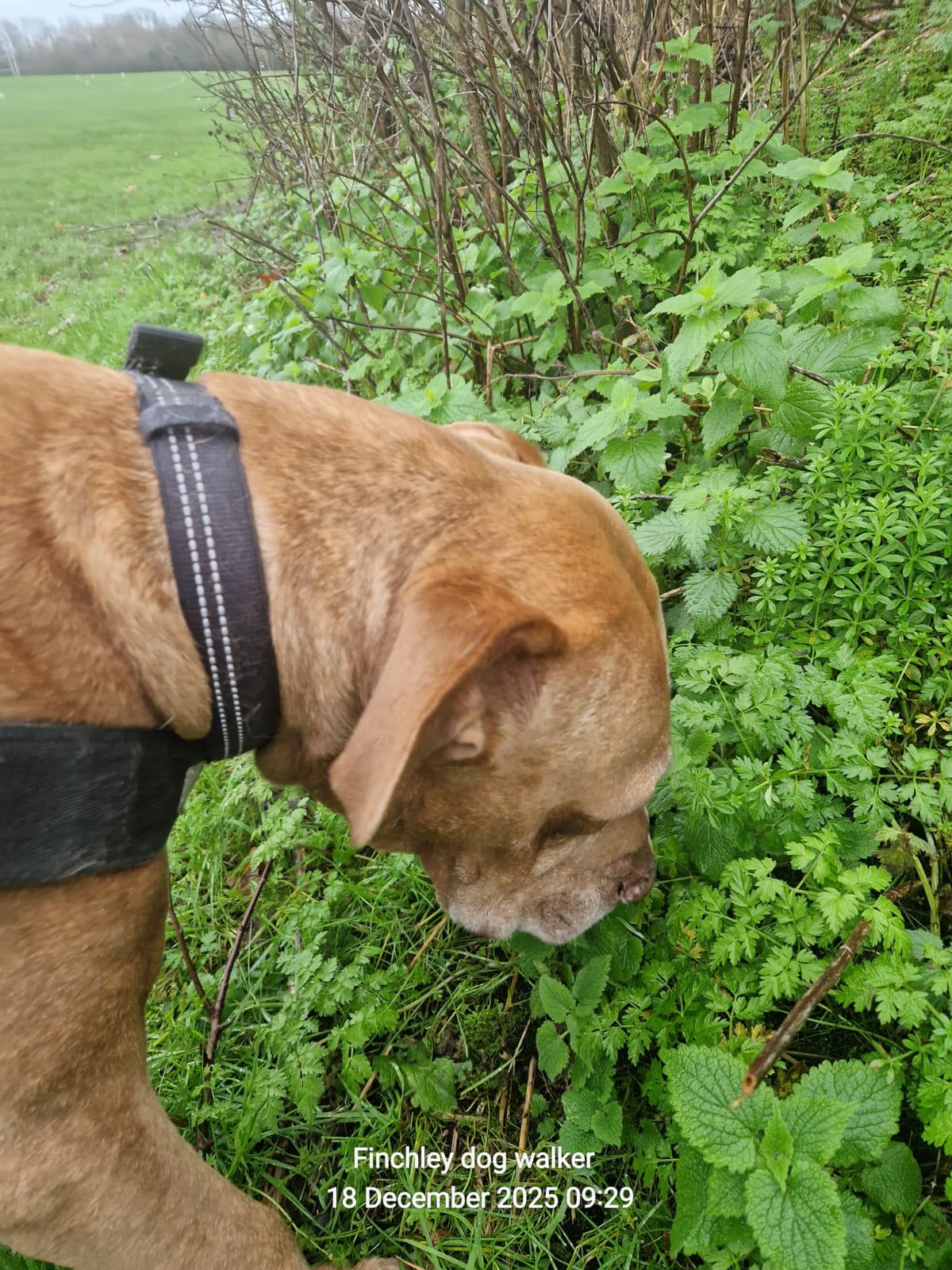
How I approach walks
Walks are kept simple and predictable.
That means:
- no group walks
- no vans or car transport
- no rushing from one booking to another
Everything is done on foot from your home.
During the walk, I focus on:
- giving space where needed
- choosing quieter routes
- keeping your dog under threshold
- allowing time to sniff and decompress
You can read more about this approach here:
→ Solo dog walks
Starting with shorter, simpler walks often helps.
→ link: First Walks
Working with reactive dogs
Many rescue dogs show some level of reactivity.
That might include:
- barking at other dogs
- reacting to people or movement
- struggling in busy environments
I don’t try to force dogs through these situations.
Instead, I:
- create distance from triggers
- adjust routes and timing
- focus on calm, manageable exposure
Progress is often gradual, but it builds over time.
If your dog needs more focused support, you can read more here:
→ Reactive Dog Walker Page
If you have a larger rescue dog, this guide on walking big rescue dogs may help.
Building confidence over time
Confidence doesn’t come from pushing dogs into situations they can’t handle.
It comes from:
- consistency
- predictability
- small, manageable steps
Some dogs need:
- short walks close to home
- quiet routes
- time to observe rather than engage
Others build confidence more quickly.
Every dog is different.
Remember that no dog should be walked in hot weather, so I have put together a hot-weather survival kit. You can see here Hot weather survival kit
Support beyond walks
Rescue dogs don’t just need help outside.
Routine at home matters too.
If you’re going away, keeping your dog in a familiar environment can make a big difference.
If you are planning time away, this guide on choosing the right holiday care for a rescue dog may help
You can read more about this here:
→ House sitting
What a typical progression looks like
There’s no fixed timeline.
But for many dogs, progress looks like:
- becoming more comfortable leaving the house
- reacting less frequently or less intensely
- recovering more quickly after triggers
- walking more calmly overall
Some changes are subtle at first.
But they add up.
Getting started
Before any walks begin, I arrange a meet and greet.
This allows me to:
- understand your dog’s background
- learn about triggers and behaviour
- see how your dog responds
There’s no pressure.
It’s about making sure this approach fits your dog.
Read my guide on first walk with a rescue dog
If this sounds like your dog
If you’re dealing with any of this, you’re not doing anything wrong.
Rescue dogs often just need time, space and the right approach.
If you’d like to talk things through, you’re welcome to get in touch.
Frequently asked questions
Do you work with reactive rescue dogs?
Yes. Many of the dogs I support are reactive in some way. Walks are adapted to keep things calm and manageable.
Can this replace training?
No. This is not formal training. It’s practical support to help your dog cope better day to day.
How long does it take to see improvement?
It varies. Some dogs settle quickly. Others take more time. Progress is usually gradual.
What if my dog is too nervous to walk far?
That’s fine. Some dogs start with very short walks or just time outside the house.
Do you use vans or group walks?
No. Everything is one-to-one and done on foot from your home. Find out why i dont use vans
If your dog is struggling to settle at home, I’ve written more about how to help here.
→ How to Help a Nervous Dog Settle at Home
Related support and guides
- → Solo Dog Walks Page
- → Reactive Dog Walker
- → Solo Walks FAQ
- → Settling in a rescue dog
- → Dog Care Guides Hub
- → Staycation checklist
- → Rescue dog walking kit list
- Microchips and your rescue dog
Get in touch
If your dog needs a calmer, more structured approach, feel free to get in touch.
We can chat and see what works best for your dog.