Dog and Pet Products I Recommend: Practical UK Buying Guides
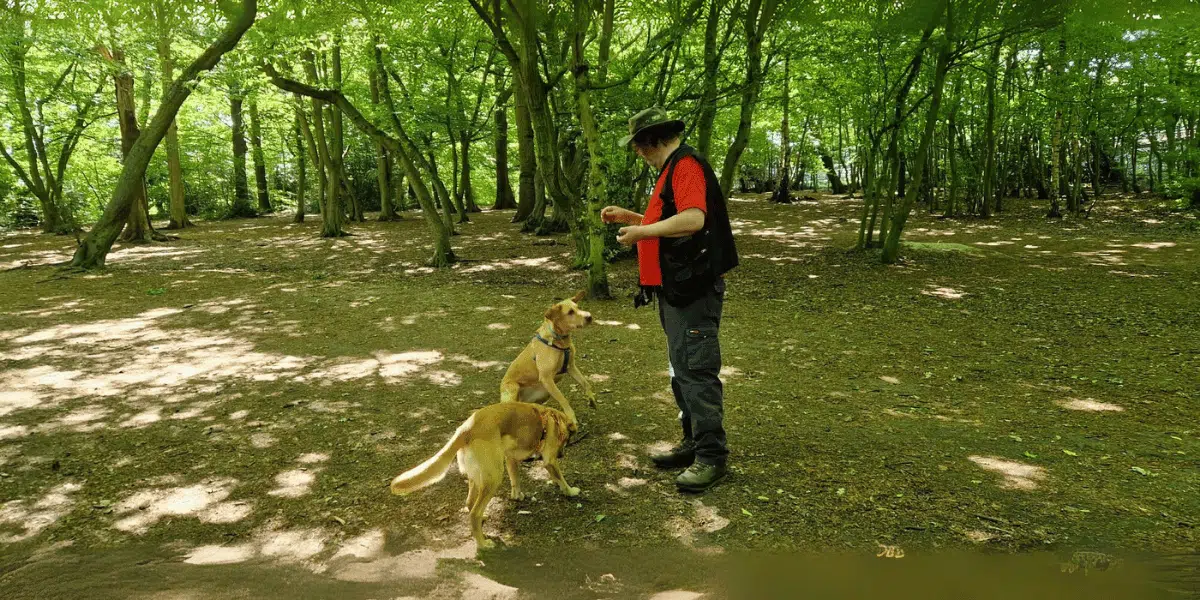
Useful pet products, honest recommendations and advice from a professional dog walker and pet sitter since 2011.
You don’t need a cupboard full of expensive gadgets to give your dog, cat, or small pet a happy, healthy life.
You do need equipment that is safe, comfortable, suitable for the individual animal and practical to use.
I’m Del, and I’ve been providing professional dog walking and pet care around Finchley and North London since 2011.
Over the years, I’ve used a wide range of harnesses, leads, training treats, enrichment toys and everyday pet-care equipment. Some have genuinely made life easier. Others have looked impressive but offered very little practical benefit.
This is where I bring together my recommended dog and pet products, buying guides and useful resources.
You’ll find products I’ve used personally, products I’ve recommended through my work and other carefully selected options. I’ll distinguish between them rather than pretend I’ve personally tested everything.
The aim is simple: help you buy what you actually need, avoid unsuitable equipment and spend your money wisely.
Affiliate disclosure
This page contains affiliate links. If you buy through a qualifying link, I may earn a small commission at no additional cost to you.
As an Amazon Associate, I earn from qualifying purchases.
Some recommendations also involve other affiliate partners, including Tug-E-Nuff and Rachel Bean’s canine first-aid training.
Affiliate relationships do not determine my recommendations. I prioritise animal welfare, practical usefulness and suitability. Prices, availability and product specifications can change, so please check the exact item before ordering.
Veterinary and professional advice disclaimer
I am a professional dog walker and pet sitter with canine first-aid training, not a veterinary surgeon, veterinary nurse or clinical animal behaviourist.
The information on this page is general guidance, not veterinary advice, diagnosis or treatment. Products, supplements, diets and equipment may be unsuitable for particular animals or medical conditions.
If your pet is unwell, injured, showing signs of pain or experiencing a significant behaviour change, contact your vet. For emergencies, seek urgent veterinary help rather than relying on a product or website guide.
My recommended pet products at a glance
Not sure where to start? These are some of the products and resources I recommend most often.
| What you need | My recommendation | Where to start |
|---|---|---|
| Everyday dog harness | PerfectFit modular harness | View PerfectFit |
| Everyday dog lead | Halti double-ended training lead | View on Amazon |
| More freedom for sniffing | Waterproof long line | View on Amazon |
| Stuffable enrichment toy | KONG Classic | View on Amazon |
| Licking and food enrichment | LickiMat Tuff Soother Pro | View on Amazon |
| Interactive reward-based play | Tug-E-Nuff | Explore Tug-E-Nuff |
| Canine first-aid education | Rachel Bean RVN’s course | View the course |
| Holiday cat-care equipment | Cat feeders, fountains and enrichment | Read my buying guide |
PerfectFit is a direct manufacturer recommendation, not an affiliate link. The other product and course links above are affiliate links.
The correct size, model and suitability always matter more than a product appearing on my shortlist.
1. Dog walking essentials: harnesses, leads and useful accessories
A comfortable harness and a dependable lead are the foundation of most everyday dog walks.
I prefer simple, well-made equipment that allows dogs to move comfortably and lets the person holding the lead manage it safely.
Before buying, read my Best Dog Leads and Harnesses: A Practical UK Guide.
PerfectFit modular dog harness
My preferred everyday harness recommendation.
I particularly like the PerfectFit harness because its separate sections allow a more individual fit than a single standard-size harness.
Its modular design can help dogs with unusual proportions, especially when a standard harness is too tight in one area and too loose in another.
However, no harness is automatically escape-proof or suitable for every dog.
Measure carefully, follow the manufacturer’s instructions and check that your dog can move comfortably.
Explore the PerfectFit dog harness
Direct manufacturer link. Not an affiliate link.
You can also read Dogs Trust’s advice on choosing and introducing a harness.
Halti double-ended training lead
My everyday lead recommendation.
An adjustable double-ended lead is one of the most useful pieces of dog walking equipment I own and recommend.
The Halti Training Lead offers different length and attachment options, making it useful when moving between pavements, quieter paths and busier environments.
The linked product is the large, black, two-metre version. Check the size and fittings for your own dog.
View the Halti Training Lead on Amazon UK
Remember that a double-ended lead is a handling aid. Don’t use it to pull a dog around by the neck or keep continuous pressure on two attachment points.
Waterproof dog long line
Useful for recall practice, sniffing and appropriate decompression walks.
I like long lines because they can provide more freedom while maintaining a physical connection.
They are especially useful for dogs who cannot safely be off-lead, including some rescue, nervous and easily distracted dogs.
The linked X XBEN long line is an easy-to-clean waterproof rubber-coated option. It is not genuine BioThane, so check the exact material, length and clip before purchasing.
View the waterproof long line on Amazon UK
Always attach a long line to a secure harness, not an ordinary collar. Avoid using extended lines beside roads, in crowded areas, or anywhere they could entangle people or other animals.
A washable silicone treat pouch
A small item I find particularly useful.
When you’re rewarding good choices, timing matters.
A treat pouch lets you reward your dog without spending thirty seconds trying to dig something out of a coat pocket.
I like washable silicone pouches because they are practical when using small, moist training treats.
View a silicone treat pouch on Amazon UK
Collapsible water bowls
A lightweight, collapsible water bowl can be useful for longer walks, holidays and days out.
View collapsible travel bowls on Amazon UK
I still recommend carrying enough fresh water and giving your dog opportunities to drink. A bowl is useful only when you have water to put in it.
2. Dog enrichment toys: KONGs, lick mats, puzzles and play
This is one of my favourite areas of dog care.
Enrichment is not simply about tiring your dog out. It means giving them appropriate opportunities to sniff, search, lick, chew, explore, play, make choices and settle.
Sometimes a few minutes of easy food searching can be more useful than another complicated toy.
My Dog Enrichment Guide explains how to choose activities for different dogs.
KONG Classic
A versatile stuffable enrichment toy.
The KONG Classic can be used with suitable foods to encourage licking and food exploration.
I particularly like the flexibility. You can keep things very easy for a beginner or make the activity a little more involved as the dog gains confidence.
The linked version is the medium KONG Classic. It isn’t automatically the right size or rubber strength for your dog.
View the KONG Classic on Amazon UK
Before choosing a size or filling, read my Complete KONG Guide: Sizes, Types, Fillings and Safety.
LickiMat Tuff Soother Pro
Useful for suitable licking and food-enrichment activities.
Lick mats can provide an alternative way to offer part of a dog’s normal food allowance.
Start with a thin layer of suitable food rather than making the activity unnecessarily difficult.
The linked product is the LickiMat Tuff Soother Pro, not the standard LickiMat Classic.
View the LickiMat Tuff Soother Pro on Amazon UK
Always supervise its use, particularly with dogs likely to chew or swallow pieces of the mat.
For filling ideas, safety and common mistakes, read my Complete Guide to Lick Mats for Dogs.
Nina Ottosson beginner puzzle
A useful introductory food puzzle.
Not every dog enjoys complicated puzzles.
For dogs who are new to this type of enrichment, I prefer starting with an easy activity they can understand and succeed with.
The linked Nina Ottosson Level 1 puzzle is a beginner option.
View the beginner dog puzzle on Amazon UK
Watch for frustration, chewing or attempts to dismantle the puzzle. It should be enjoyable, not an exam.
Snuffle mat
An option for dogs who enjoy searching for food.
Snuffle mats encourage dogs to use their noses to find small pieces of suitable food.
They can be particularly useful when owners want simple enrichment at home without turning every activity into a training session.
View the OSDUE snuffle mat on Amazon UK
Supervise dogs who may pull apart or swallow fabric. You can also try simple food searches using a towel or another safe household setup before buying a mat.
Read my Snuffle mat guide
Tug-E-Nuff interactive dog toys
One of my preferred brands for interactive play.
Tug games can be a useful part of reward-based training and building a positive relationship with your dog.
Tug-E-Nuff offers a range of toys, including styles designed for tugging, chasing and rewarding play.
The important part is choosing a suitable toy and playing in a way your dog enjoys.
You can also read my Guide to Playing Tug Safely With Your Dog.
A word about toy safety
No toy is suitable for every dog, and no toy should be treated as indestructible.
Check the size, material, age suitability and condition of toys regularly.
Remove damaged toys, loose parts or anything your dog is trying to swallow.
My Guide to Choosing Safe Dog Toys explains what I check before allowing a dog to play.
3. Dog training treats and food rewards
A good training treat does not have to be expensive.
It needs to be something your dog enjoys, can eat safely and can receive in suitably small portions.
I generally prefer soft, easy-to-handle rewards, particularly when supporting dogs who need calm, positive reinforcement.
Nature’s Menu treats
These were popular with my own dogs, Roxy and Missy, as well as many dogs I’ve walked.
The chicken varieties have been particularly useful as everyday rewards.
View Nature’s Menu treats on Amazon UK
Pâté-style training treats
Pâté-style food can be practical because it can be cut into small pieces, making it useful for reward-based training.
Suitable pâté can also be used in stuffable food toys.
View the linked pâté product on Amazon UK
Some dogs need different rewards because of allergies, digestive problems, weight management or veterinary dietary restrictions.
If your dog has a medical condition or prescribed diet, ask your vet before introducing something new.
For the wider picture, visit my Dog Food and Nutrition Guide or read my Dog Training treats guide
4. Puppy essentials: start with the basics
Bringing home a puppy is exciting, but it’s easy to buy far more than you need.
I would start with a comfortable sleeping area, suitable food, safe equipment, identification, cleaning supplies and a few carefully chosen enrichment items.
KONG Puppy
Puppy KONGs are designed for younger dogs and offer a good introduction to stuffable enrichment.
The linked option is the medium KONG Puppy. Check the size, age recommendations and your puppy’s chewing habits.
View the KONG Puppy on Amazon UK
Introduce activities gradually and supervise their use.
My Bringing a Puppy Home Guide covers preparing your home, the first few days, routines and making the adjustment manageable.
Puppies need plenty of rest as well as appropriate social experiences and opportunities to learn. More toys and more activity are not always better.
5. Rescue and nervous dog essentials
A newly adopted rescue dog does not necessarily need a large selection of toys, puzzles and training equipment.
They may initially benefit far more from familiar routines, a safe place to rest, secure walking equipment and people who give them enough space.
My Rescue Dog Starter Kit explains the essentials I would prioritise.
For dogs who are frightened outdoors, I pay particular attention to harness fit, lead security and the environment.
Useful starting points include:
- A properly fitted harness and suitable backup connection where needed
- A dependable fixed or double-ended lead
- Simple food rewards the dog already tolerates
- Familiar bedding and an undisturbed resting area
- Gentle, optional enrichment rather than constant stimulation
I would not expect a harness, toy or supplement to cure fear or reactivity.
If your dog is very worried, reacts aggressively or experiences a sudden behaviour change, speak with your vet and seek appropriate professional behaviour support.
For local help, read about my Rescue Dog Support in Finchley and One-to-One Dog Training Support.
6. Dog first-aid kits, emergency equipment and first-aid training
This is an area where I believe preparation matters far more than buying an impressive-looking kit.
I hold an Ofqual Level 3 qualification in Canine First Aid and have completed additional canine first-aid training.
Knowing what to do, what not to do and when to contact a vet is just as important as having equipment available.
What should a dog first-aid kit contain?
Useful items may include clean dressings, disposable gloves, sterile saline, blunt-ended scissors, suitable bandaging supplies and contact details for your normal and emergency vets.
A small walking kit and a more complete home kit can be sensible, depending on your circumstances.
My Dog First-Aid Kit for Home and Walks explains what to include, what to avoid and how to check your supplies.
You can also browse my Dog Health and First Aid Hub.
Rachel Bean’s Canine First Aid and Wellbeing Course
A training course I have personally completed and recommend.
Rachel Bean is a registered veterinary nurse who provides canine first-aid education.
I rate her training because it gives owners a structured opportunity to learn how to recognise problems, respond appropriately, and understand the limits of first aid.
Explore Rachel Bean RVN’s Canine First Aid and Wellbeing Course
Online education can be useful, but practical skills benefit from supervised, hands-on training too.
Remember that canine first aid is not a replacement for veterinary care.
If you need to find a veterinary practice, the Royal College of Veterinary Surgeons Find a Vet service is a useful official starting point.
7. Cat-care products: feeding, water, enrichment and holidays
My recommendations are not limited to dogs.
I also provide cat-sitting visits around Finchley and Muswell Hill, so I know how important reliable feeding arrangements, fresh water, familiar routines and suitable enrichment can be.
One thing I would emphasise is that automatic equipment is not a substitute for responsible human care.
Stainless-steel cat water fountain
Some cats enjoy moving water, and a fountain may encourage them to visit another drinking location.
The linked option is a 2.2-litre stainless-steel fountain.
View the cat water fountain on Amazon UK
Always provide ordinary water bowls as a backup and maintain the fountain according to its instructions.
Faroro automatic cat feeder
An automatic feeder can help with established feeding routines.
The linked Faroro model has a four-litre capacity.
View the Faroro automatic cat feeder on Amazon UK
Test and introduce it while you’re home. A feeder can jam, lose power or dispense food without confirming that your cat has eaten.
Nina Ottosson Buggin’ Out cat puzzle
Some cats enjoy searching for food or exploring a simple puzzle feeder.
Begin with an easy activity and let your cat decide whether they want to take part.
View the Nina Ottosson cat puzzle on Amazon UK
A comfortable cat hideaway
Cats often appreciate somewhere quiet and familiar where they can retreat without being disturbed.
An appropriate enclosed bed or hideaway can be one option, particularly for cats who enjoy covered resting spaces.
View the cat hideaway on Amazon UK
Affiliate link.
Choose a suitable size and material, and make sure your cat can enter and leave freely. A cardboard box with an appropriate opening may be just as popular.
Read the complete cat-care buying guide
For litter equipment, feeders, fountains, enrichment and preparing for holidays, read my Best Cat Care Products for When You Go Away.
You can also read Cats Protection’s advice about going away without your cat.
If you need someone to visit in person, my Cat Sitting Service in Finchley provides familiar home-based care.
8. Rabbit and small-animal essentials
Rabbits and other small animals have their own welfare requirements.
For rabbits, suitable accommodation, constant access to hay, fresh water, companionship and appropriate enrichment are much more important than buying novelty accessories.
Rosewood stoneware bowl
A sturdy ceramic bowl is a simple, useful item for many rabbit-care arrangements.
View the Rosewood stoneware bowl on Amazon UK
Affiliate link.
Check the bowl’s size, stability, and condition, and keep water clean and accessible.
Small-animal holiday care
If you’re going away, familiar routines and careful daily observations matter.
My Rabbit Holiday Care Essentials Guide explains what to leave for a pet sitter, including feeding instructions, water arrangements, cleaning supplies and veterinary contacts.
For independent welfare guidance, visit the Rabbit Welfare Association & Fund.
If a rabbit stops eating or stops producing normal droppings, seek prompt veterinary advice. Do not wait for a new feeding product to arrive.
I also offer Rabbit and Small-Animal Care Visits in Finchley.
9. Hot weather, travel and seasonal pet-care products
Seasonal products can be useful, but they should never encourage owners to put their pets into unsafe situations.
A cooling mat does not make it safe to walk a dog in dangerous heat. A coat does not make every winter outing appropriate. A travel accessory does not make an unsuitable journey safe.
Portable dog water bottle
A portable drinking bottle is useful when water isn’t readily available.
The linked product has a 550 ml capacity.
View the portable dog water bottle on Amazon UK
Make sure you carry enough water for your dog, your planned activity and the conditions.
Useful seasonal and travel guides
For more detailed guidance, I recommend starting with:
- Hot Weather Dog Kit for summer walking accessories and their limitations.
- Travelling With Dogs in the UK for practical travel preparation.
- Seasonal Pet Safety Guide for year-round safety, including fireworks, winter, Christmas and summer hazards.
- Dog Staycation Packing List for preparing for care away from your normal routine.
If your dog cannot cope comfortably with the weather, travel or environment, changing the plan is often better than buying another accessory.
10. Equipment and products I do not recommend
My approach to dog walking and training support is force-free and reward-based.
I do not recommend:
- Prong collars, choke chains or check chains
- Electronic training collars
- Slip leads as ordinary walking or training equipment
- Rattle bottles or other aversive training products
- Retractable leads for normal urban walking
- Rawhide chews
- Very hard chews that may damage teeth
- Unsafe, damaged or incorrectly sized toys
- Products marketed as quick cures for anxiety, fear or aggression
I am also cautious about products claiming to solve pulling, barking, reactivity or separation-related distress without addressing the underlying cause.
Sometimes a product is genuinely useful. Sometimes what your dog needs is less pressure, more rest, a change of environment, veterinary advice or an appropriately qualified professional.
I would rather recommend something simple that works than something expensive that doesn’t.
11. Frequently asked questions
Have you personally used every product you recommend?
No. Some are products I have used personally with my dogs or during professional pet care. Others are carefully selected examples or products I consider worth exploring.
Where I have personal experience, I try to explain it. I do not claim to have tested an item when I haven’t.
Are these recommendations suitable for every dog or pet?
No. The correct product depends on the individual animal’s size, health, age, behaviour, preferences and circumstances.
A suitable product for one animal may be inappropriate or unsafe for another.
Do you receive a commission when I buy something?
Some links are affiliate links, including qualifying Amazon purchases and selected partner products or courses.
If you use one of these links, I may earn a commission at no extra cost to you.
You are under no obligation to buy anything.
Do expensive products work better?
Not necessarily.
A properly fitted mid-priced lead may be more practical than an expensive novelty design. A cardboard box or towel-based search game may provide perfectly good enrichment.
Suitability and safety matter more than price.
What should I buy for a nervous or reactive dog?
I would first look at secure, comfortable walking equipment, familiar routines and ways of reducing avoidable stress.
A suitable harness, dependable lead and appropriately managed reward-based activities may help, but products cannot diagnose or cure reactivity.
Seek veterinary or qualified behavioural advice where appropriate.
What if an affiliate link shows a different size or product?
Check the listing carefully before ordering.
Affiliate retailers can change availability, variants, packaging and sellers. If the item no longer matches the description here, do not assume it is the recommended version.
Do you recommend calming supplements?
I do not recommend choosing supplements or medicated calming products as a substitute for investigating why an animal is worried or behaving differently.
If your pet has significant anxiety, persistent distress or a medical condition, discuss appropriate options with your vet.
12. Need personal help with your pet?
Products can make everyday pet care easier, but they are only part of the picture.
Sometimes the most useful support is having someone who understands the animal, their routines and the environment they live in.
I provide calm, one-to-one pet care around Finchley, Muswell Hill and selected nearby areas.
My services include:
House Sitting and Overnight Pet Care
Your pets can stay in their familiar home while I follow their usual routine as closely as possible.
Cat Sitting and Feeding Visits
Home visits for feeding, water, litter care, companionship and general welfare checks.
Calm, individual walks from your front door. No vans and no groups of unrelated dogs.
One-to-One Dog Training Support
Practical reward-based confidence building, games and everyday training support.
If you are looking for pet care rather than equipment, you can contact me here.
Keep exploring the free pet-care guides
I’ve been writing about dogs and pet care for many years, and I want the information on this website to remain genuinely useful.
You can explore more topics through my Dog and Pet Care Guides.
If you have found a guide helpful and would like to support the work, you can also support my free guides.
You’re not obligated to purchase anything. A recommendation only matters if it is right for your pet.