Street & Public Transport Confidence for Dogs in Finchley
Calm, one-to-one help for puppies, rescue dogs and dogs finding London life a little overwhelming
London can be noisy and busy, especially when you’re a dog.
Buses pulling up beside you, motorcycles, delivery bikes, people rushing past and trains arriving at stations are all part of our everyday lives.
But have you ever stopped to think about what all of this must feel like to a dog?
I’ve worked with dogs around Finchley and North London since 2011, and one thing I’ve noticed is how differently dogs respond to the world around them.
Some are perfectly happy exploring the woods but become worried when they reach a busy road. Others freeze when a bus approaches, hesitate outside their front door or struggle with unfamiliar noises.
And then there are puppies and newly adopted rescue dogs who may be experiencing some of these things for the very first time.
That’s why I’ve introduced my Street & Public Transport Confidence service.
I offer calm, practical, one-to-one support to help you and your dog feel more comfortable with everyday London life.
I’m not going to drag a frightened dog towards a bus or expect them to cope with a busy high street just because that’s where we eventually want to go.
I’d much rather start somewhere they feel comfortable and build from there.
Does your dog struggle with everyday streets?
You might recognise some of these situations.
- Your puppy stops walking when a bus or motorcycle passes.
- Your rescue dog seems frightened of traffic or unfamiliar surroundings.
- Your dog freezes or refuses to walk along particular roads.
- Busy pavements, bicycles or scooters make walks difficult.
- Your dog becomes overwhelmed when several things happen at once.
- You’d like to travel with your dog on a bus or train but aren’t sure where to begin.
- Your dog is happy in quiet places but struggles in busier environments.
- You’ve been working with a trainer and would welcome some practical help outdoors.
If that sounds familiar, I’d be happy to have a chat.
Not every dog needs a formal training programme. Sometimes they simply need a little more understanding, some carefully chosen experiences and an owner who knows when to give them space.
Helping your dog feel more comfortable on London streets
One thing I enjoy about working one-to-one is that I don’t have to follow a set route or timetable for every dog.
If your dog finds a particular road difficult, we don’t have to walk along it.
If they’re worried about buses, we can start somewhere quiet enough to watch one pass without getting too close.
And if all your dog can comfortably manage today is a short walk outside the house, we’ll start there.
Depending on what your dog needs, we might practise:
- Watching traffic from a comfortable distance.
- Getting used to everyday street sounds.
- Walking along quieter residential roads.
- Building confidence around bicycles, scooters and pushchairs.
- Checking in with you during walks.
- Moving away calmly when something becomes too much.
- Exploring different surfaces and unfamiliar objects.
- Taking sniffing breaks and having time to process what’s happening.
I won’t expect your dog to concentrate on me for an entire walk.
Dogs need opportunities to sniff, explore and simply enjoy being dogs.
And sometimes, the best thing we can do is stop trying to achieve something and give them a little breathing space.
Puppy confidence: learning about the world
Puppies have an enormous amount to take in.
When people talk about puppy socialisation, they often think about meeting other dogs and people.
But it’s much more than that.
A puppy growing up in Finchley, North London also needs to get used to the ordinary sights and sounds of London life.
That might include a bus pulling into a stop, somebody wheeling a suitcase, a bicycle passing, roadworks or even a noisy wheelie bin.
I can help you introduce these experiences gradually, making sure your puppy has opportunities to observe, explore and move away when they need to.
We can also practise useful everyday skills, such as walking comfortably on a suitable harness and lead, checking in with you and learning to settle between activities.
I don’t believe puppies need to experience everything as quickly as possible.
I’d much rather help them have a few positive experiences than overwhelm them with too much at once.
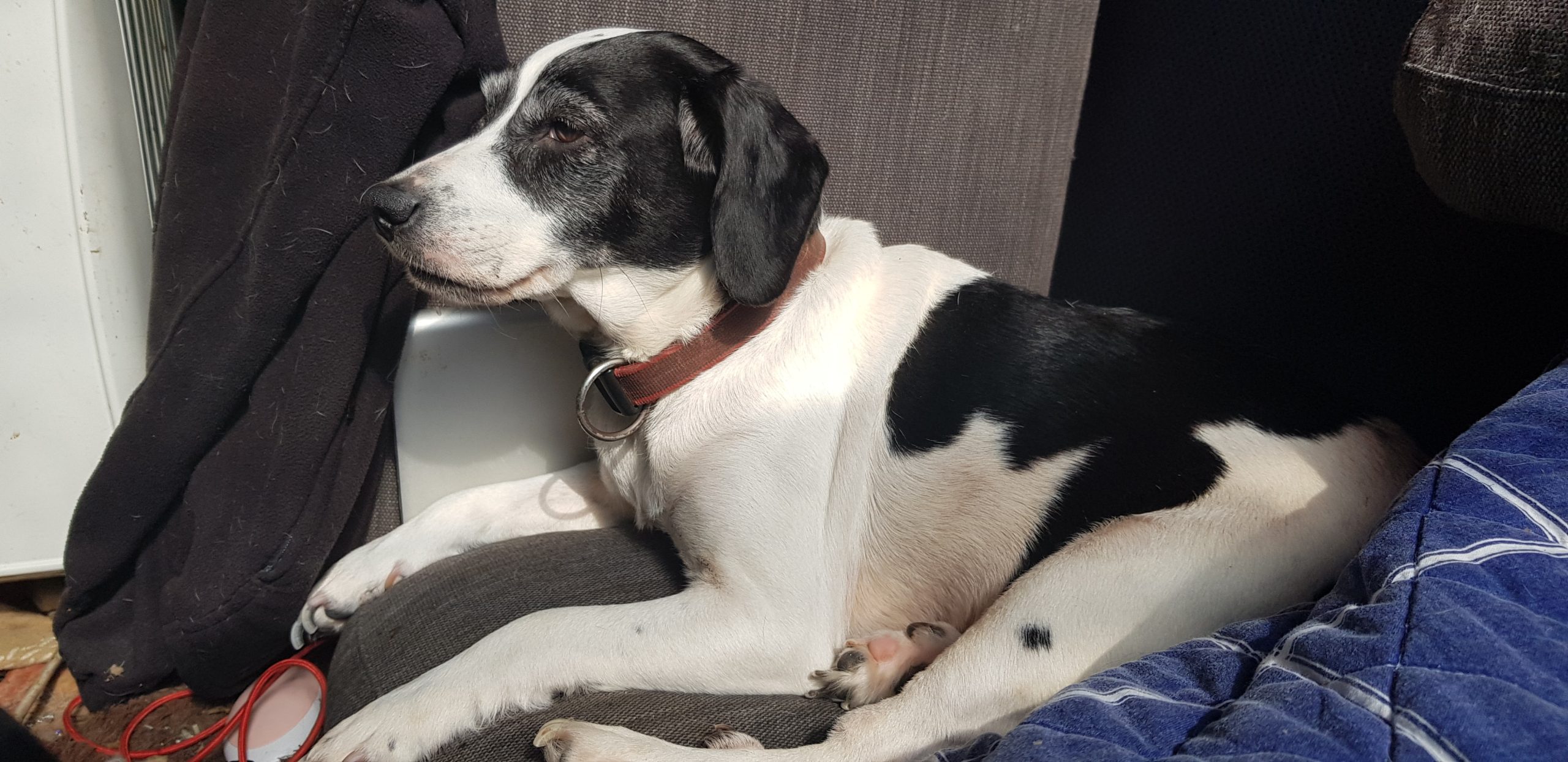
Rescue dogs and the challenges of London life
Rescue dogs have always been particularly important to me.
My own rescue dog, Roxy (photo above), was one reason I started Finchley Dog Walker in the first place.
Over the years, I’ve met rescue dogs with all sorts of backgrounds and experiences.
Some settle into their new homes remarkably quickly. Others need much more time.
A dog who has previously lived somewhere quiet may find Finchley traffic rather alarming. Another may be comfortable around cars but become worried when people approach unexpectedly.
And sometimes we simply don’t know what a dog has experienced before coming into our lives.
I try not to make assumptions.
Instead, I look at the dog in front of me, listen to what their body language is telling us and work at a pace they can manage.
For some rescue dogs, that might mean spending time just outside their front door.
For others, we might gradually explore a quiet road before moving towards busier surroundings.
There’s no race to get somewhere.
If you’ve recently adopted a dog, you can also read more about my Rescue Dog Support in Finchley.
Getting your dog used to buses, trains and the Tube
Public transport is another part of London life that can be surprisingly difficult for dogs.
Think about everything happening when a bus arrives.
There’s the engine noise, the movement, the doors opening, people getting on and off, and sometimes very little space.
A railway or Underground station can be even more challenging.
If you’d like to travel with your dog, I can help you work towards it gradually.
We don’t have to get on a bus straight away
In fact, we might not go anywhere near the inside of a bus during our first few sessions.
We could begin by watching buses from a comfortable distance, perhaps somewhere your dog can still sniff, take treats or explore without becoming worried.
As they become more comfortable, we might gradually approach a quieter bus stop.
Eventually, if your dog is ready, we can consider a short journey.
The same applies to trains and the Tube.
We might start outside a station, getting used to the surroundings before even thinking about going inside.
I’ll also consider practical safety, including busy platforms, noise, escalators and the transport operator’s rules. Dogs must not use moving escalators unless safely carried, so lifts or stairs may be more appropriate.
Not every dog will become comfortable using public transport, and that’s fine.
I won’t promise that your dog will be travelling happily across London after a set number of sessions.
What I can offer is patient, practical support and an approach that puts your dog’s welfare first.
What happens if your dog becomes frightened?
I think this is particularly important.
If your dog stops, freezes, tries to move away or becomes distressed, I won’t insist that they carry on.
Instead, I’ll look at what’s happening.
Perhaps we’re too close to something worrying. Perhaps there’s too much noise, or your dog has simply had enough for the day.
We can move somewhere quieter, take a break or return home.
That doesn’t mean the session has failed.
Sometimes recognising that your dog needs help and responding appropriately is one of the most useful things you can learn.
If a dog suddenly becomes reluctant to walk or shows an unexpected change in behaviour, I’ll also suggest speaking to your vet to rule out pain or another health concern.
Learning to understand your dog’s body language
Dogs have plenty to tell us, even when they’re not barking or making a fuss.
A change in posture, a hesitation, looking away or becoming unusually still may all give us information about how they’re feeling.
During our sessions, I’ll help you notice these little changes.
I want you to feel more confident recognising when your dog is comfortable, when they’re becoming unsure and when it might be time to give them more space.
Because ultimately, you’ll be the person walking your dog most of the time.
My aim isn’t simply to help your dog feel more comfortable while I’m there.
I want you to understand what we’re doing and why, so you can continue supporting them afterwards.
You can also explore my Dog Behaviour & Body Language Hub.
What happens during a street-confidence session?
Before we arrange anything, I’ll ask you to tell me a little about your dog.
I’d like to know their age, background, what they enjoy, what worries them and what you’d eventually like to achieve.
For example, you might want your dog to walk comfortably along the road outside your home.
Or maybe your goal is to take a short bus journey together.
We’ll discuss what’s realistic and choose a sensible starting point.
I generally prefer you to be involved in these sessions because I want you to understand how to help your dog between visits.
We may spend part of our time observing, practising simple activities or discussing what your dog’s body language is telling us.
There will be breaks, opportunities to sniff and plenty of time to take things slowly.
I won’t fill every minute with exercises simply because you’ve booked a session.
Sometimes doing less is exactly what a dog needs.
Already working with a trainer or behaviourist?
That’s absolutely fine.
In fact, one reason I’ve been developing my training-support services is that owners sometimes need help putting what they’ve learned into practice.
Your dog might be doing really well with exercises in a quiet environment, but things become much more difficult when you’re standing beside a busy road.
If you’ve already been given a programme by your trainer or behaviourist, I’m happy to discuss how I can help you practise the suitable parts.
With your agreement, I can also work from their guidance so we don’t give your dog conflicting information.
I’m not looking to replace your trainer.
I want to help you make use of what you’ve already learned.
If your dog needs specialist behavioural assessment or treatment, I’ll tell you rather than try to work outside my experience.
How this fits with my other services
One-to-One Dog Training Support
Sometimes it makes sense to practise somewhere quieter before introducing busy streets.
I also offer One-to-One Dog Training Support in Finchley, with access to a private training venue in N6, close to East Finchley.
There’s an indoor hall, enclosed garden and small private woodland area.
This can be useful for practising engagement, lead skills, recall foundations, confidence-building and enrichment without immediately dealing with all the distractions of a busy street.
For some dogs, we’ll start there and gradually move into everyday environments.
For others, a quiet area near home may be the better starting point.
Solo Dog Walks
Not every dog needs a dedicated confidence-building session.
Some benefit from regular, predictable walks with somebody who understands their needs.
My Solo Dog Walking Service is always one dog or one household at a time.
There are no group walks, van journeys or unfamiliar dogs added to the walk.
I can choose quieter routes, allow plenty of sniffing time and adapt the walk to suit the dog.
For some dogs, that consistency can make a real difference.
If regular walks would be more suitable than formal sessions, I’ll happily tell you.
A little about me and my approach
I’m Del, and I’ve been running Finchley Dog Walker since 2011.
Over the years, I’ve worked with puppies, older dogs, rescue dogs and plenty of those wonderfully individual characters I sometimes call awkward but awesome.
I’ve continued learning about canine body language, reward-based training, enrichment, Tellington TTouch and supporting nervous and reactive dogs.
I also hold an Ofqual Level 3 qualification in canine first aid.
I don’t use choke chains, prong collars, electronic collars, rattle bottles or other aversive training methods.
I’d rather work out why a dog is struggling and look at how I can make things easier for them.
I also know my limits.
I’m not a clinical animal behaviourist, and this service isn’t a replacement for veterinary treatment or specialist behaviour work.
If I believe your dog needs support from somebody with different qualifications, I’ll say so.
For me, helping a dog become more confident isn’t about making them obedient in every situation.
It’s about helping them feel more comfortable in the world they live in, while giving you the understanding and practical skills to support them.
Where do I offer street and public transport confidence sessions?
I mainly work around:
- East Finchley, N2
- Finchley Central, N3
- North Finchley, N12
- Muswell Hill, N10
- Bounds Green and Arnos Grove, N11, where suitable
Because I work locally and on foot, I’ll need to know your postcode before confirming whether I can help.
Sessions are planned around the individual dog, the environment and my availability.
For public transport work, we’ll agree on an appropriate location and plan before the session.
Frequently asked questions
My dog is frightened of buses. Can you help?
Possibly, yes. I’ll want to understand what happens when your dog sees or hears a bus. We can then consider whether gradual confidence-building is suitable or whether specialist behavioural help would be a better starting point.
Can you help my puppy get used to London traffic?
Yes, where suitable. I can help you introduce everyday street activity gradually, with plenty of opportunities for your puppy to observe and take breaks.
Will you take my dog on the Tube?
Only if we agree that it’s appropriate and your dog is ready. We may need to spend time working around the station environment before considering a journey.
Does my dog have to be a rescue?
Not at all. I can help suitable puppies, rescue dogs and adult dogs who are finding everyday surroundings difficult.
Do I need to come along?
Generally, yes. I want you to understand what we’re practising so you can continue helping your dog when I’m not there.
How many sessions will we need?
That depends on your dog and what you’d like to achieve. Some dogs may benefit from a few focused sessions, while others will need more time. I won’t promise results within a fixed number of appointments.
Can you help if my dog barks or lunges at traffic or other dogs?
Possibly, but I’ll need more information first. Significant fear, aggression, bite risk or complex reactivity may need assessment by an appropriately qualified trainer, clinical animal behaviourist or vet before we begin.
Can I combine this with your solo dog walking service?
Yes, where appropriate. Once we’ve discussed your dog’s needs, we can consider whether regular solo walks would help maintain a familiar routine and provide suitable opportunities to practise.
Let’s talk about your dog
If your puppy is worried by traffic, your rescue dog is struggling with busy streets or you’d simply like some help preparing your dog for public transport, I’d be happy to hear from you.
You don’t need to have everything worked out before getting in touch.
Just tell me a little about your dog, what happens when you’re out together and what you’d eventually like to be able to do.
Please include your postcode, your dog’s age and any relevant training or behaviour support you’ve already received.
I’ll let you know whether I think my Street & Public Transport Confidence service is suitable, or whether one of my other services might be a better fit.
And if I don’t think I’m the right person to help, I’ll tell you.