One-to-One Dog Training Support in Finchley
Practical, reward-based help for everyday life with your dog.
One-to-one dog training support in Finchley gives you and your dog time and space to practise without the pressure of a busy group class or immediately trying to learn in a distracting park.
I offer individual support in a private venue in N6, close to the East Finchley/Highgate boundary, for everyday skills including recall, loose-lead walking, engagement, settling, puppy foundations and confidence-building.
You don’t have to be starting from scratch either.
If you’ve already attended puppy classes, worked with a dog trainer or been given a training plan by a trainer or behaviourist, I can help you put that advice into practice between your professional sessions.
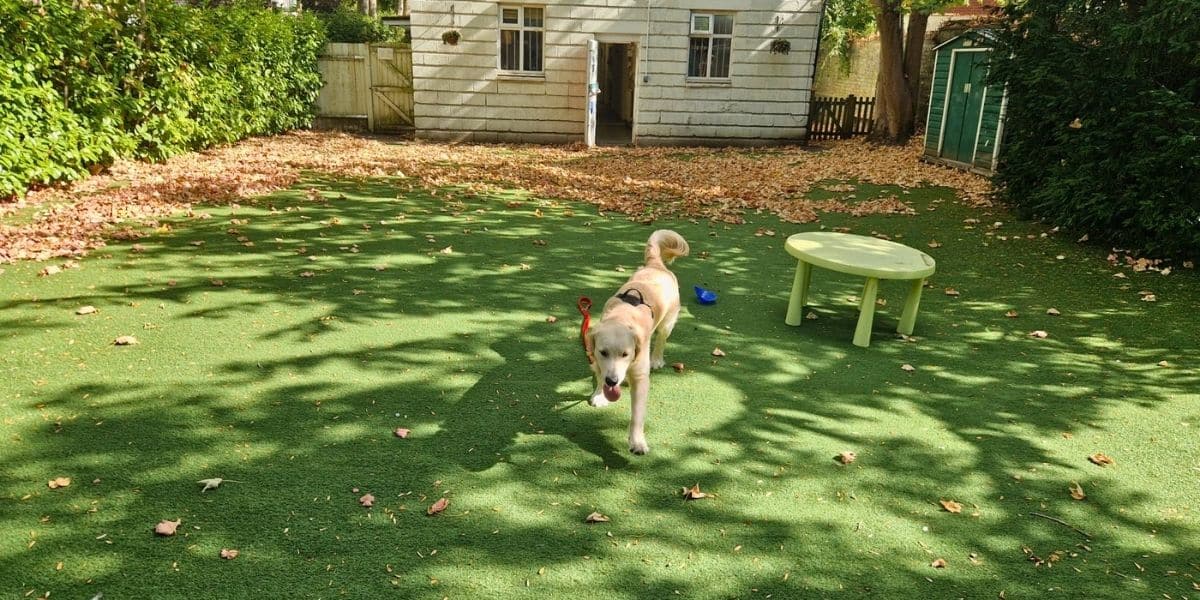
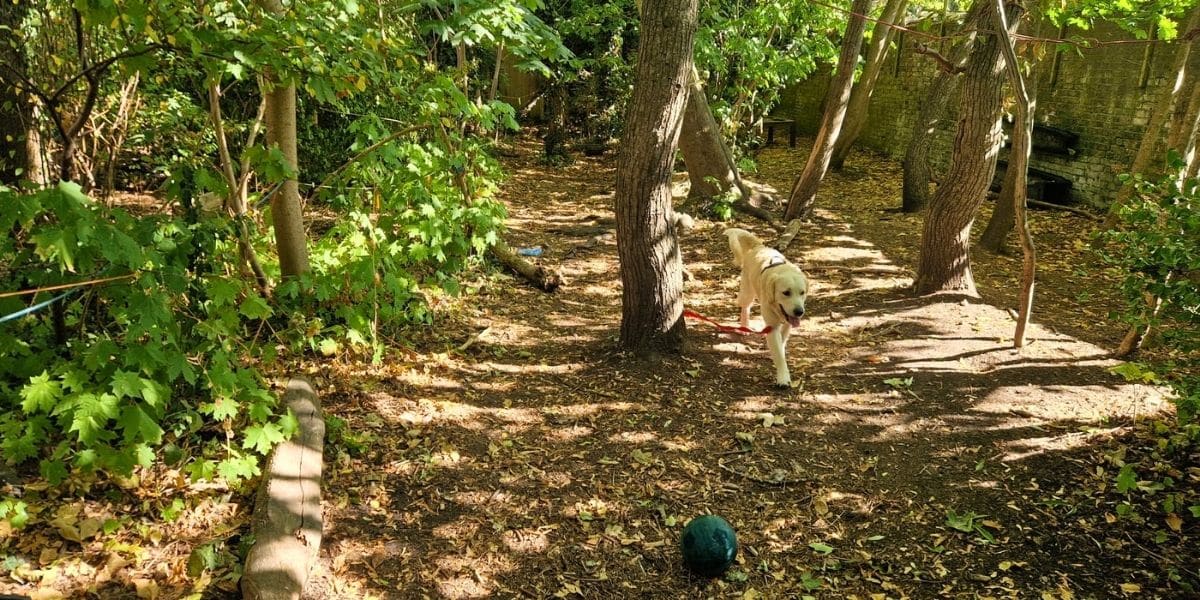
Sessions can use a private venue in N6, on the borders of East Finchley, with an indoor hall, an enclosed garden, and a small private woodland area. Where appropriate, we can then take what you’ve practised into normal streets and local walking environments.
Initial 75-minute session: £60
60-minute follow-up: £55
Three 60-minute follow-ups: £150
Contact me about one-to-one training support
In brief
- One dog and household at a time
- Practical support for everyday training
- Help putting existing trainer or behaviourist advice into practice
- Private East Finchley venue
- Large indoor hall
- Enclosed outdoor garden
- Small private woodland training area
- Reward-based, dog-centred approach
- No busy group classes
- Puppy, rescue and adult-dog support
- Real-world practice where appropriate
- Mainly weekend appointments
- Clear referral to an appropriately qualified professional when a dog’s needs fall outside my scope
Training doesn’t stop when the class finishes.
Going to a puppy class or working with a good dog trainer can give you the knowledge and exercises you need. The difficult bit is often putting them into practice afterwards.
Your dog may walk beautifully on the lead during a training session but struggle again on your normal route home.
Recall may work well in a quiet training environment but become much harder when there are interesting smells, squirrels or other dogs around.
Or you may understand what your trainer has asked you to do, but feel you would benefit from having someone alongside you while you practise.
That’s one of the reasons I’ve introduced my one-to-one training support.
Already working with a trainer or behaviourist?
That’s absolutely fine.
I’m not looking to replace the professional you’re already working with.
If you’ve been given exercises or a training plan, bring them with you. My role can be to help you practise what you’ve already been taught, build consistency and gradually use those skills in different environments.
With your agreement, I’m also happy to work from instructions provided by your trainer or behaviourist so that the support remains consistent with their programme.
For example, we might begin practising an exercise in the indoor hall, move into the enclosed garden, introduce more natural distractions in the woodland area and, when appropriate, practise in an everyday environment.
You’ve learned what to do. I can help you put it into practice.
If I see something that I believe needs further assessment or falls outside the scope of my training support, I’ll say so and recommend that you go back to your trainer, speak to your vet or seek help from an appropriately qualified professional.
The aim is simple: to give you some extra practical support between professional appointments, rather than asking you and your dog to start again with somebody completely different.
Already working with a trainer or behaviourist?
I’m not looking to replace them.
If you’ve been given exercises or a training plan, bring them with you. We can work on what your trainer or behaviourist has already recommended and help you practise it consistently.
“If you’re already following a programme from your trainer or behaviourist, my role is to help you practise it consistently, not replace it with a different approach.
Where appropriate and with your agreement, I’m also happy for your trainer or behaviourist to explain what they’d like you to practise so that the support you receive remains consistent.
Think of it as the practical bit between professional appointments:
You’ve learned what to do. I can help you put it into practice.
And if something develops that I believe needs assessment or specialist behavioural work, I’ll tell you rather than trying to work outside my scope.
A private place for one-to-one dog training in Finchley
Dogs don’t automatically understand how to perform a skill in every situation just because they’ve managed it once.
A dog who recalls beautifully indoors may suddenly seem to have forgotten everything when a squirrel is in the distance.
A puppy who walks nicely around a training hall may find a busy pavement completely different.
That’s normal.
One advantage of the Private venue in N6, close to the East Finchley/Highgate boundary, is that we can choose an environment appropriate for the dog and the skill we’re practising.
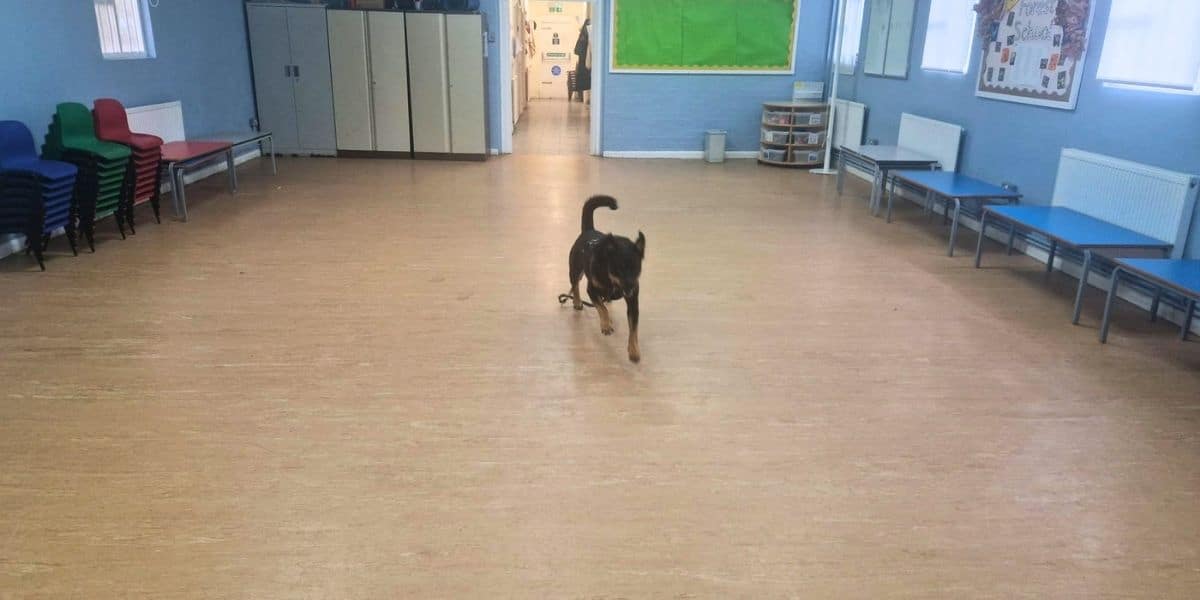
Indoor training hall
The hall gives us a large indoor space where we can introduce appropriate exercises with fewer outdoor distractions.
It can be particularly useful for:
- Engagement and attention
- Recall foundations
- Lead skills
- Puppy exercises
- Settling
- Handling
- Confidence work
- Introducing new games and exercises
It also gives us considerably more flexibility when the North London weather isn’t cooperating.
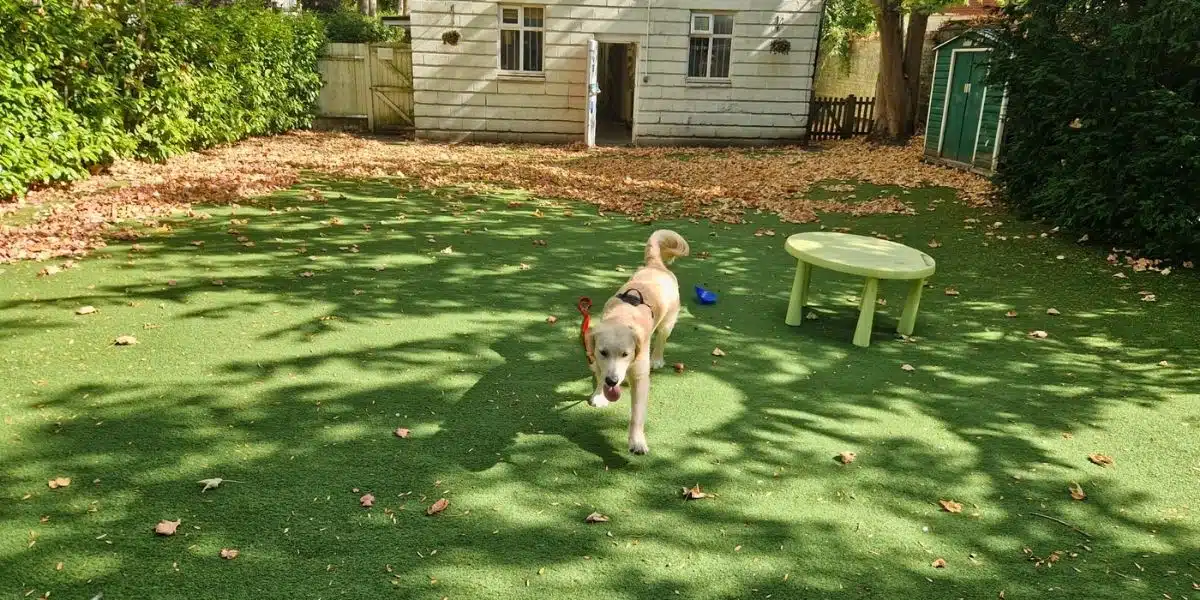
Enclosed garden
The outdoor garden allows us to introduce more smells, sounds and environmental distractions while remaining in a relatively controlled environment.
For some dogs, this can provide a useful step between working indoors and moving into the woodland or real world.
Private woodland area
The small private woodland area is approximately 24m × 12m.
It isn’t intended to be a large dog exercise field.
Instead, it gives us a natural environment containing trees, leaves, smells and other everyday distractions.
That can make it useful for:
- Recall practice
- Long-line work
- Engagement
- Checking in with you
- Confidence-building
- Sniffing and enrichment
- Practising around natural distractions
Depending on the individual dog and what we’re working on, I may still recommend using a long line.
A secure environment isn’t a substitute for good management or gradually building reliable skills.
From the training venue to everyday life
Ultimately, you probably don’t want a dog who can only perform an exercise inside a training hall.
You want skills that help when you’re actually living with your dog.
That’s why, where appropriate, training support can progress through different environments.
For example:
Hall → enclosed garden → woodland → real-world practice
Recall might begin somewhere with relatively few distractions before gradually becoming more challenging.
Loose-lead walking might start in the hall or garden before progressing onto an ordinary East Finchley pavement.
A nervous dog might need a completely different progression.
There isn’t one fixed route every dog has to follow.
The aim is:
Learn → practise → build confidence → take it into everyday life.
What can I help you with?
One-to-one training support can be useful for everyday skills including:
- Recall foundations
- Loose-lead walking
- Engagement and attention
- Voluntary check-ins
- Jumping up
- Everyday manners
- Settling and switching off
- Puppy foundations
- Confidence-building
- Supporting newly adopted and rescue dogs
- Appropriate enrichment and sniffing
- Understanding your dog’s body language
- Building communication between you and your dog
- Practising exercises recommended by your existing trainer or behaviourist
The aim isn’t to produce a perfectly obedient dog.
I want to help you develop useful everyday skills while improving communication and confidence between you and your dog.
You can find more practical advice in my Dog Training Hub and Dog Behaviour and Body Language Hub.
One-to-one support without the pressure of a group class
Group classes can be excellent for many dogs and owners.
But they aren’t the best learning environment for everybody.
A puppy may be too excited by the other puppies to concentrate.
A newly adopted dog may need more time to process an unfamiliar environment.
A nervous dog may find several unfamiliar dogs in the same room overwhelming.
Sometimes it’s the human who benefits from one-to-one support. You may prefer to have time to ask questions and practise without feeling that you’re holding up the rest of the class.
Here, there is no pressure to keep up with anybody else.
It’s your dog, your situation and your pace.
Puppy training support
Those first weeks and months with a puppy can bring a lot of conflicting advice.
It is tempting to concentrate on teaching as many commands as possible.
I’d rather concentrate on useful foundations for everyday life.
Depending on your puppy’s age and individual needs, we might work on:
- Responding to their name
- Choosing to engage with you
- Recall foundations
- Introduction to loose-lead walking
- Appropriate play
- Settling
- Handling
- Confidence around new experiences
- Appropriate enrichment
- Understanding when your puppy needs rest
- Helping you recognise your puppy’s body language
The aim isn’t to rush your puppy through a checklist.
It’s to help you build useful skills and positive experiences while developing your understanding of the dog as it grows up in front of you.
You can also explore my puppy and new-dog advice for more help during those early weeks.
Rescue and nervous dog support
I’ve worked professionally with dogs since 2011, and a significant part of my work has involved dogs who benefit from patience, space and an individual approach.
Some rescue and nervous dogs struggle when they’re expected to learn in an environment they already find overwhelming.
Being able to choose among an indoor hall, an enclosed garden, and woodland gives us options.
Sometimes progress means teaching a new skill.
Sometimes progress is giving a dog enough space, choice and time to investigate something safely without putting pressure on them.
You can read more about my approach on Rescue Dog Support in Finchley.
What happens at the first session?
Your first appointment lasts approximately 75 minutes.
That doesn’t mean we’ll spend 75 minutes continuously asking your dog to perform exercises.
Dogs need opportunities to sniff, process information, take breaks and be dogs.
We’ll start by talking about:
- What you’re currently finding difficult
- What you’d like to achieve
- Your dog’s normal routine
- Relevant training you’ve already done
- Any advice or programme you’ve already received from another professional
I’ll also spend time observing your dog.
Behaviour is communication, so before deciding what we should practise, I want to consider what your dog may already be telling us.
We’ll then choose a small number of priorities and work through appropriate exercises together.
Most importantly, you’ll be involved.
I’m not interested in demonstrating something with your dog, handing the lead back and leaving you wondering why it doesn’t work when you try it yourself.
I want you to understand what we’re doing, why we’re doing it and how you can continue practising afterwards.
At the end, you’ll leave with a manageable number of things to practise rather than a huge list of homework.
Follow-up training support
Dog training rarely changes because of one magical session.
Progress usually comes from repetition, consistency and successful experiences.
Follow-up sessions allow us to see what has improved, look at anything you’re finding difficult and gradually increase the challenge when appropriate.
If you’re already working with another trainer or behaviourist, follow-up sessions can also give you somewhere to practise their programme between appointments.
My approach
I use reward-based, dog-centred methods.
I don’t use intimidation or equipment designed to cause pain, fear or discomfort.
That means I don’t work with choke chains, prong collars, electric collars or similar aversive equipment.
Instead, I look at what is happening, what the dog may be communicating and how we can make the behaviour we want easier and worthwhile.
Food can be a useful reward, but rewards aren’t limited to treats. Depending on the dog, sniffing, play, toys, movement, access to something they enjoy, or simply increasing distance can all matter.
Choice, appropriate enrichment and opportunities to decompress are part of the picture too.
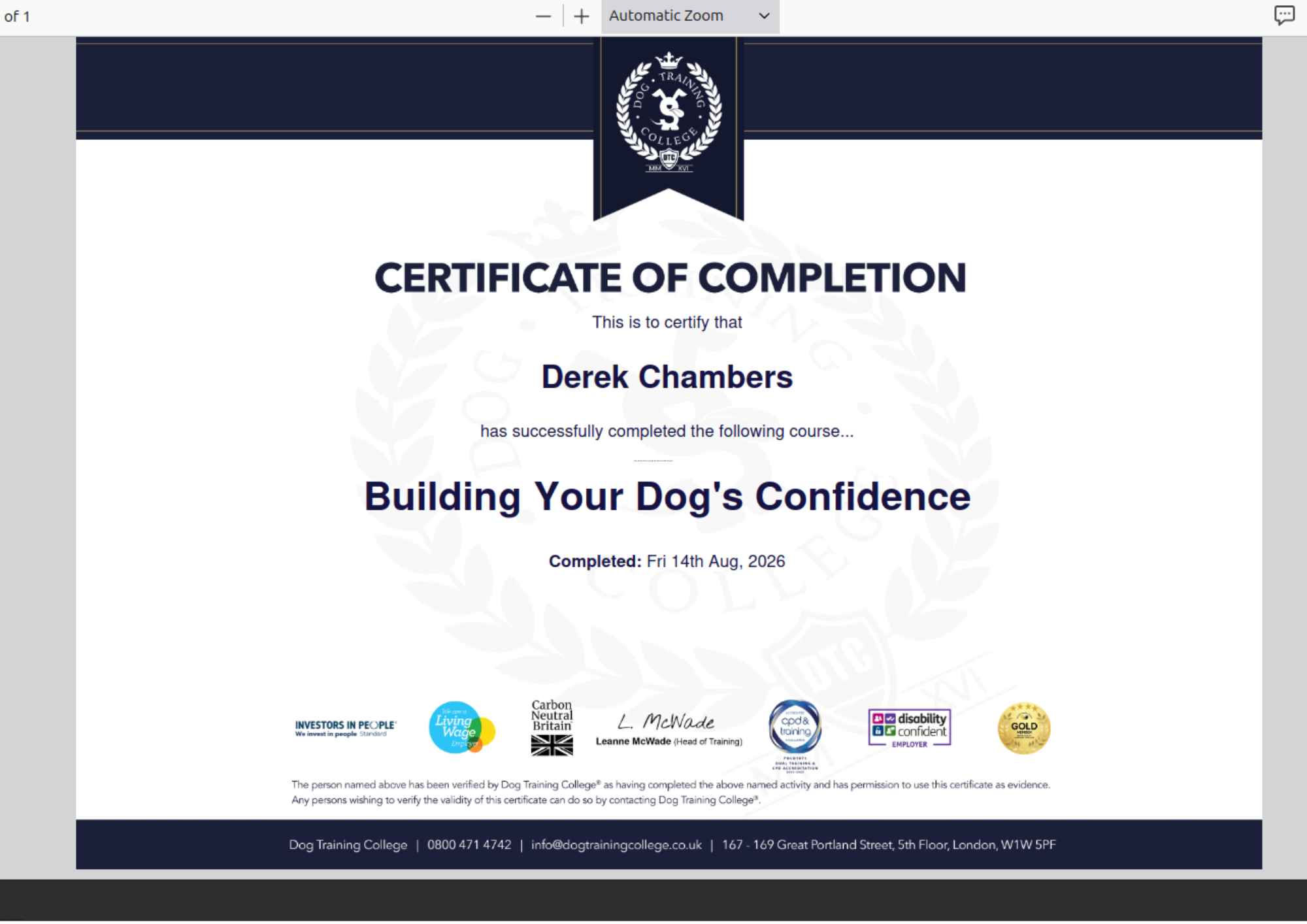
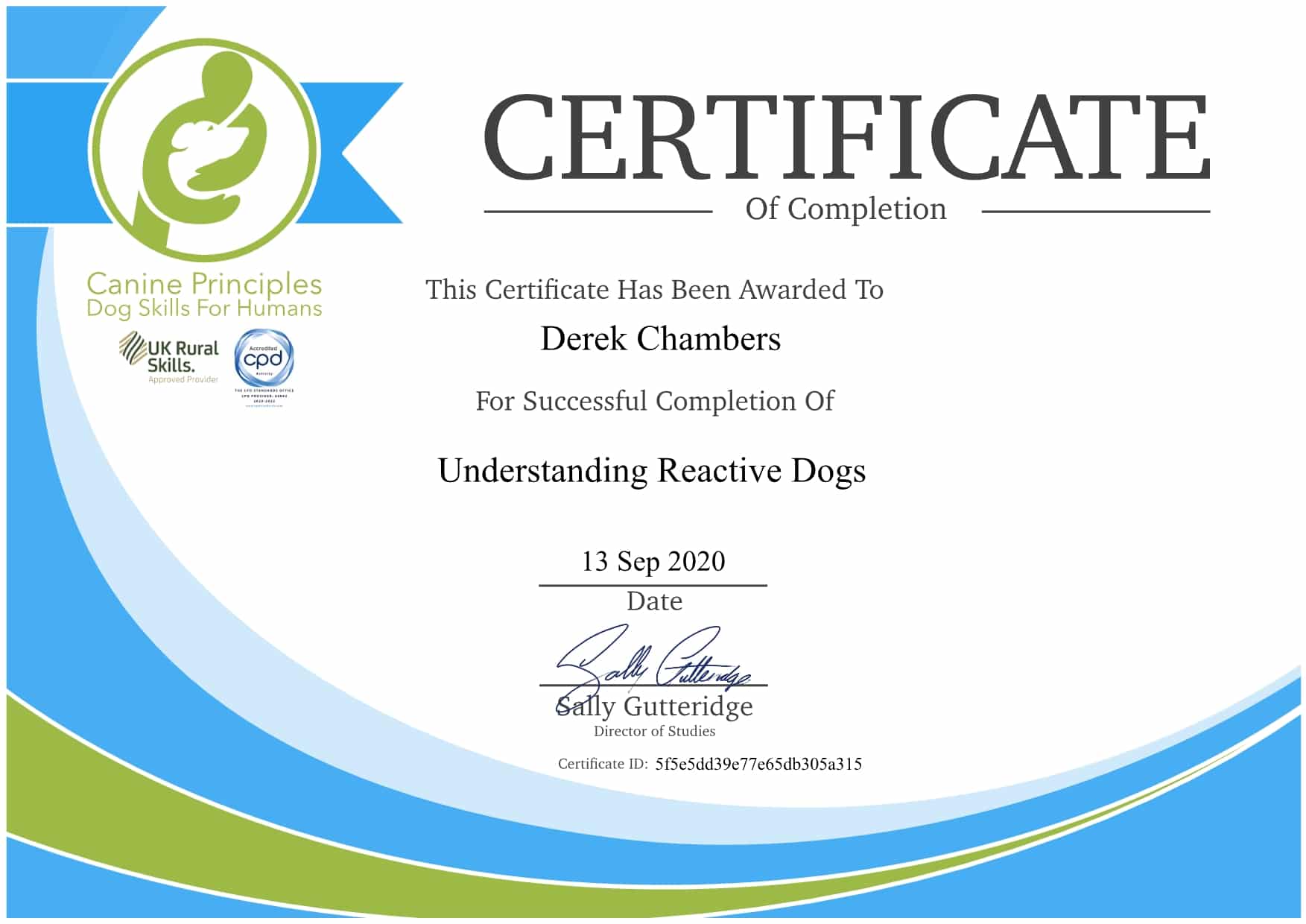
I’ve worked professionally with dogs since 2011 and continue to undertake education in canine training, behaviour, body language and first aid.
You can read more about my experience and ongoing learning on my qualifications and continuing professional development page.
For more information about reward-based training, see the RSPCA’s dog training advice.
Knowing when somebody else is better placed to help
One-to-one training support isn’t a substitute for veterinary treatment or specialist clinical behaviour work.
Some problems need assessment by somebody with different qualifications or expertise.
This can include serious aggression, significant bite histories, severe resource guarding, severe separation-related behaviour or cases where pain or another underlying medical condition may be contributing to the behaviour.
If I believe your dog’s needs are outside my professional scope, I’ll tell you.
Where appropriate, I may recommend speaking to your vet, trainer or an appropriately qualified behaviour professional.
The Animal Behaviour and Training Council provides information about recognised practitioner roles and finding appropriately qualified professionals.
I’d much rather help you find the right person than pretend to have expertise I don’t have.
Prices
Initial One-to-One Training Support
75 minutes – £60
We’ll discuss what you’re finding difficult, review your dog’s behaviour, agree on some priorities, and start practising appropriate exercises together.
If you’re already working with a trainer or behaviourist, you’re welcome to bring the programme or exercises you’ve been given.
Follow-Up Training Support
60 minutes – £55
For progressing skills, troubleshooting difficulties and gradually introducing more challenging environments where appropriate.
Three Follow-Up Sessions
3 × 60 minutes – £150
A useful option when you know you’d like continued support and time to practise between sessions.
Where do sessions take place?
Private training sessions are based at a private venue in N6, close to the East Finchley/Highgate boundary in North London.
The exact location and arrival information are provided when your booking is confirmed.
Most private venue appointments are available at weekends. Depending on what we’re working on, some sessions may subsequently take place in appropriate local public environments.
The venue includes:
- A large indoor hall
- An enclosed outdoor garden
- A small private woodland area
The exact location and arrival information are provided when your booking is confirmed.
Most private venue appointments are available at weekends.
Depending on what we’re working on, some sessions may subsequently take place in appropriate local public environments.
Frequently asked questions
Do I stay with my dog?
Yes.
These sessions are primarily about helping you and your dog work together.
The aim isn’t for me to take your dog away, train them and hand them back. I want you to understand and practise the skills too.
Is this a dog training class?
No.
Sessions are one-to-one, with one dog and household at a time.
I’ve already got a dog trainer. Is that a problem?
Not at all.
In fact, one of the reasons I’ve introduced this service is that owners have previously asked what help I can provide after attending training.
If you’ve already been given a training plan or exercises, I can help you practise them.
I’m not there to replace your trainer or contradict their advice.
Can my trainer or behaviourist tell you what they want me to practise?
Yes.
With your agreement, I’m happy to work from exercises or a programme supplied by another professional.
Can you help with a rescue dog?
Potentially, yes.
I have considerable practical experience supporting shy, nervous and rescue dogs.
I’ll want to understand your individual dog first. If I believe they need specialist behavioural assessment, I’ll explain that and recommend seeking appropriate professional help.
Is one-to-one training suitable for puppies?
Yes, for many puppies.
Sessions can focus on useful foundations such as engagement, recall, settling, handling, confidence, and an introduction to lead skills.
Can you guarantee my dog’s recall?
No.
No responsible professional can guarantee that a dog will recall regardless of circumstances.
What we can do is build stronger foundations, practise progressively and help you manage your dog safely while those skills develop.
Can we use the woodland for off-lead training?
Possibly, but it depends on the individual dog and what we’re working on.
A secure environment doesn’t automatically mean removing the lead is the right decision. A long line can be extremely useful for practising recall safely.
What happens if it rains?
Where available and appropriate, we can use the indoor hall.
Having both indoor and outdoor environments gives us much more flexibility than relying entirely on outdoor training.
Do you use treats?
Food can be a very useful training reward, but rewards aren’t limited to food.
Depending on your dog, sniffing, toys, play, movement and access to other things they value can all be useful.
My dog is reactive. Can you help?
Possibly, but “reactive” describes a very wide range of behaviour.
Contact me first and tell me what’s happening, including whether your dog has ever bitten or attempted to bite a person or another dog.
I’ll consider whether my one-to-one training support is appropriate, or whether you would be better served by a suitably qualified trainer, behaviourist, or veterinary professional.
Ready for some practical training support?
You don’t need a perfectly behaved dog.
And your dog doesn’t need to learn everything at once.
You might be starting from scratch.
You might have been to puppy classes.
You might already have a trainer and need some extra help putting their advice into practice.
Sometimes what you need is somewhere quieter, somebody beside you and the opportunity to practise one thing successfully before making it harder.
That’s what my one-to-one training support is designed to provide.
Initial 75-minute session: £60
60-minute follow-up: £55
Three 60-minute follow-ups: £150
Established 2011 | One dog and household at a time | Reward-based support | Ofqual Level 3 Canine First Aid