

Why Use a Dog Walker
If you’re wondering whether a dog walker is worth it, you’re not alone. I hear this a lot from owners across Finchley and Muswell Hill.
Some people feel guilty about it. Others aren’t sure what a dog walker actually does day-to-day. And some just want to know if it will genuinely help their dog.
I’ll walk you through it properly, based on what I see every week out in Coldfall Woods, Highgate Woods, and the quieter streets around North London.
This page may contain affiliate links, including Amazon links. As an Amazon Associate, I earn from qualifying purchases. If you choose to buy through these links, I may earn a small commission at no extra cost to you. It helps support the site and allows me to keep sharing practical dog care advice.
What a Dog Walker Actually Does (Beyond Just a Walk)
A good dog walker isn’t just there to “get energy out”.
On most walks, I’m watching:
- body language around other dogs
- how a dog responds to new environments
- lead pressure and pulling habits
- signs of stress or over-arousal
- recall reliability
- how they settle after excitement
For some dogs, especially rescues or reactive dogs, the walk is where most of the learning happens.
It’s also where problems tend to show up first.
When a Dog Walker Makes the Biggest Difference
You’re Out at Work All Day
This is the most common reason.
Dogs that are left for long stretches often:
- hold in toilet needs
- become restless or vocal
- develop pacing or chewing habits
A midday walk breaks that cycle.
I’ve seen dogs go from unsettled to relaxed just from having a consistent routine.
Your Dog Has Too Much Energy
Some dogs don’t struggle because they’re “bad”. They’re just under-stimulated.
But more exercise isn’t always the answer.
What helps more is:
- calm, structured walking
- sniffing time
- small bits of training during the walk
An enrichment-based walk often tires a dog out far more than a fast hour of running.
You don’t need fancy gear, but a simple long line can help safely give more freedom where appropriate.
Waterproof and easy to clean long line from Amazon
You’ve Got a Young Dog or Adolescent
This is where things often start to unravel.
Pulling, ignoring recall, reacting to everything.
A few consistent, calm walks each week can:
- build better habits early
- prevent rehearsal of unwanted behaviour
- make your own walks easier
I often step in at this stage to steady things before they become ingrained.
Your Dog Struggles Around Other Dogs or People
Reactive dogs don’t benefit from busy, chaotic group walks.
They need:
- space
- predictability
- calm handling
This is where one-to-one walks matter.
I’ll choose quieter routes like parts of Parkland Walk or quieter stretches near Cherry Tree Wood, and build confidence gradually.
You’re Recovering, Busy, or Life Has Changed
Sometimes it’s not about the dog. It’s about life.
- new baby
- injury, such as a broken limb
- , illness
- long work shifts
- travel
A dog walker keeps things steady for your dog when your routine shifts.
That consistency matters more than people realise.
What Dogs Gain from a Good Walk
Mental Stimulation
Sniffing is work for dogs.
A slow, sniff-led walk can be more tiring than a long march.
I often pause and let the dogs investigate properly instead of rushing them along.
You can support this at home, too, with simple enrichment toys:
Puzzle toys are great for enrichment at home and can be picked up on Amazon or from other places, such as Zooplus, an online pet supermarket and offer membership discounts
Better Behaviour at Home
A well-balanced walk often leads to:
- more rest
- less pacing
- reduced barking
- better focus
But only if the walk itself is calm and structured.
Overstimulating walks can make behaviour worse.
Social Confidence (Done Properly)
Dogs don’t need to greet every dog.
In fact, most do better when they don’t.
What I focus on instead:
- neutral passing
- calm observation
- appropriate distance
That’s what builds real confidence.
Physical Health
Regular movement helps with:
- weight management
- joint mobility
- digestion
But it needs to match the dog.
Older dogs, puppies, and certain breeds all need different pacing.
If you’re unsure, it’s always worth checking with your vet. I don’t diagnose or give medical advice, in line with the UK Veterinary Surgeons Act.
Common Mistakes I See Owners Make
“They Just Need a Longer Walk”
Length isn’t the main issue.
A frantic hour pulling on the lead often does less good than a calm 40 minutes.
Too Many Dog Interactions
Letting your dog greet every dog:
- builds frustration
- increases pulling
- can lead to reactivity
I’m often undoing this habit when I first start working with a dog.
Inconsistent Walking Styles
If one walk allows pulling and the next doesn’t, dogs get confused.
Consistency matters more than perfection.
Choosing the Cheapest Walker
This can backfire.
Large group walks, little supervision, rushed schedules.
It might be fine for some dogs, but not for:
- nervous dogs
- reactive dogs
- young or still-learning dogs
It may be worth checking out my training walks
What I Personally Look for on Every Walk
Every dog is different, but I’m always scanning for:
- subtle stress signals
- changes in movement or gait
- over-arousal building
- environmental triggers
- fatigue
For example, in Highgate Woods, some dogs become overstimulated by runners. In Coldfall Woods, it’s often off-leash dogs approaching too quickly.
Adjusting early prevents problems.
Choosing the Right Dog Walker
Not all dog walkers work the same way.
Here’s what I suggest you look for.
Ask about the walk style
- group or solo?
- structured or free-running?
- How many dogs at once?
If your dog is sensitive, solo or small group walks are often a better fit.
Ask How They Handle Problems
A good walker should be able to explain:
- what they do if a dog reacts
- how they avoid risky situations
- how they introduce new dogs
Insurance and Experience
Basic, but important.
Also ask about experience with:
- rescues
- nervous dogs
- training walks
Trial Walks Matter
You’ll learn more from one proper walk than from any website.
I always suggest starting slowly and seeing how your dog responds.
how to choose a dog walker guide
Simple Kit That Helps on Walks
You don’t need loads of gear. But a few things make life easier.
Long Line
Gives freedom without losing control.
A good waterproof and easy-to-clean long line can be bought from Amazon
Treat Pouch
Helps reward calm behaviour at the right moment.
A good treat pouch I have found is this one with a belt, and a poo bag holder and can be bought from amazon.
Enrichment Toy (For Home)
Supports calmer behaviour between walks.
Fun puzzle toys from Amazon
Scent boxes are also very good; you can read my guide to making your own scent box here.
Local Insight: Walking in Finchley, Muswell Hill, and North London
Walking in North London or indeed any other busy town comes with its own challenges.
Busy parks, mixed dog behaviour, narrow paths.
Some quick local observations:
- Coldfall Woods can be great early morning, but busy later
- Cherry Tree Wood is smaller and easier for controlled walks
- Highgate Woods has more distractions and foot traffic
- Parkland Walk offers quieter stretches if you time it right
Knowing when and where to go makes a big difference.
External Advice Worth Reading
For general guidance on dog welfare and exercise, the Dogs Trust offers a clear, practical overview of dog care and routine needs.
This fits well alongside what I see day to day on walks.
Do You Always Need a Dog Walker?
No.
Some dogs are perfectly fine without one.
Especially if you:
- work from home
- Already provide structured walks
- meet their mental needs
But for many households, a dog walker helps keep things balanced.
It’s not about replacing you. It’s about supporting your dog.
FAQ
Is a dog walker worth the money?
For many dogs, yes. Especially if they’re left alone for long periods or struggling with behaviour. It often improves both routine and well-being.
How many times a week should I use a dog walker?
It depends on your schedule and your dog. Some need daily support. Others benefit from two or three structured walks a week.
Will my dog behave better with a dog walker?
Often, yes. But only if the walks are calm and consistent. Overstimulating walks can make behaviour worse.
Are group walks safe?
They can be, but they’re not right for every dog. Nervous or reactive dogs usually do better with solo walks.
What if my dog is reactive?
This is where the right walker matters most. Look for someone experienced in reactive dog support and one-to-one handling.
Final Thoughts
A good dog walker doesn’t just “walk your dog”.
They support behaviour, routine, and overall well-being.
If you’re feeling stretched or your dog isn’t quite settled, it’s worth considering.
Gentle Next Step
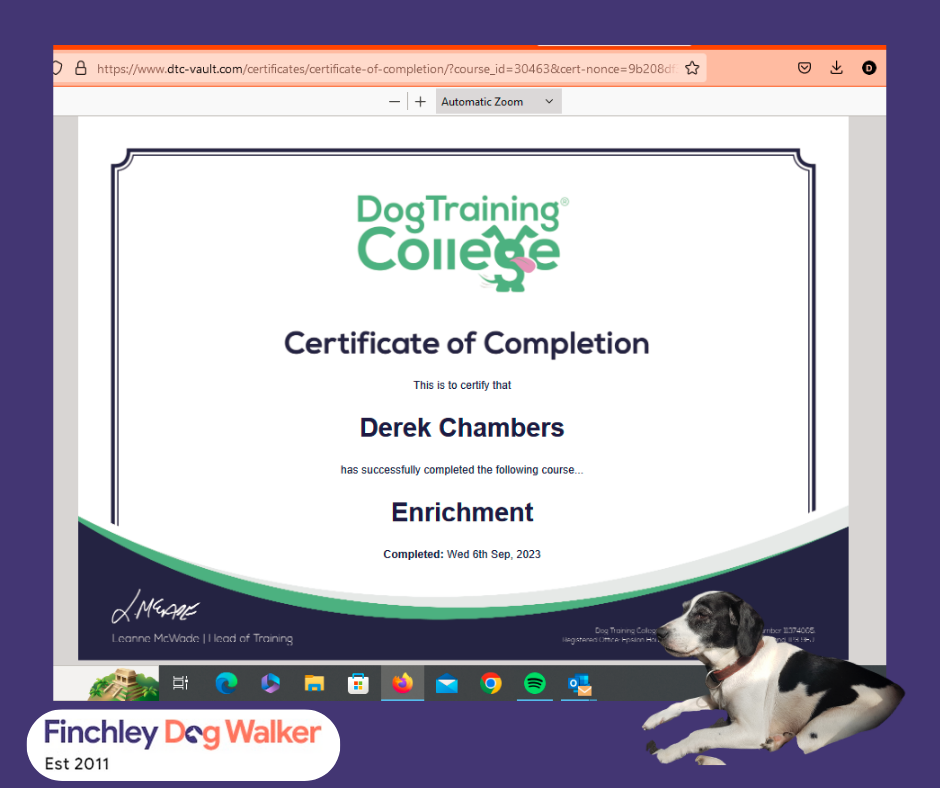
If you’re in Finchley or nearby areas in North London, I offer calm solo walks, training walks, and support for rescue or sensitive dogs.
I also provide house sitting, cat sitting, and small animal care.
If you’re unsure what would suit your dog, you’re always welcome to start with a conversation.
Updated March 2026
About the Author
I’m a Finchley-based dog walker working one-to-one with dogs around Finchley and Muswell Hill. I focus on calm, structured walks, especially for rescue and sensitive dogs. My aim is simple: help dogs feel more settled and make walks easier for both of you.