
A Simple Way to Keep Greetings Safer
Updated April 2026
Estimated reading time: 9 minutes
Letting dogs meet on walks can feel awkward.
One person says, “Mine’s friendly.”
The other person is trying to work out if their dog is comfortable.
The dogs are already looking at each other.
Then everyone is standing still, leads tighten, and the greeting goes on for too long.
That is often where things go wrong.
The 3-second rule is a simple way to stop greetings from turning tense. It does not mean every dog should meet. It does not make an anxious dog feel safe. It is not a replacement for training, space, or common sense.
But used carefully, it can help owners avoid the long, stiff, face-to-face greetings that many dogs find difficult.
What is the 3 second rule?
The idea is simple.
If two dogs are going to greet, keep the first greeting very short. Around three seconds. Then calmly move away.
You can think of it as:
One second to sniff.
Two seconds to gather information.
Three seconds, then move on.
If both dogs stay loose, calm and interested, you may be able to circle away, settle, and allow another short greeting. If either dog looks tense, worried, stiff, or too excited, you end the greeting and give them space.
The point is not the exact number.
The point is not letting the greeting drag on until one dog has had enough.
Why short greetings are often safer
Many dogs cope better with brief contact than a long, direct meeting.
On walks around Finchley, I often see this. Two dogs start well. They sniff. Their bodies look fairly soft. Then the humans keep chatting, the dogs stay nose-to-nose or nose-to-tail, and one dog stiffens.
That small change matters.
A greeting that felt fine at second two can feel too much by second six.
Short greetings help because they:
- give both dogs a quick chance to gather information
- prevent pressure building
- make it easier to move away before tension rises
- keep the owner more aware
- reduce the chance of leads becoming tight
Dogs Trust explains that dogs use their whole bodies to show how they feel, including whether they are relaxed, worried or frightened. That is why watching the whole dog matters more than relying on “friendly” labels. (dogstrust.org.uk)
When I would not use the 3-second rule
Some dogs should not be doing on-lead greetings at all, or not yet.
I would avoid a greeting if:
- either dog is staring
- either dog is pulling hard to get there
- one dog is barking, lunging or freezing
- either owner looks unsure
- one dog is trapped with no space to move away
- the path is narrow
- either dog has a history of guarding, snapping or panic
- the greeting would happen face-to-face with tight leads
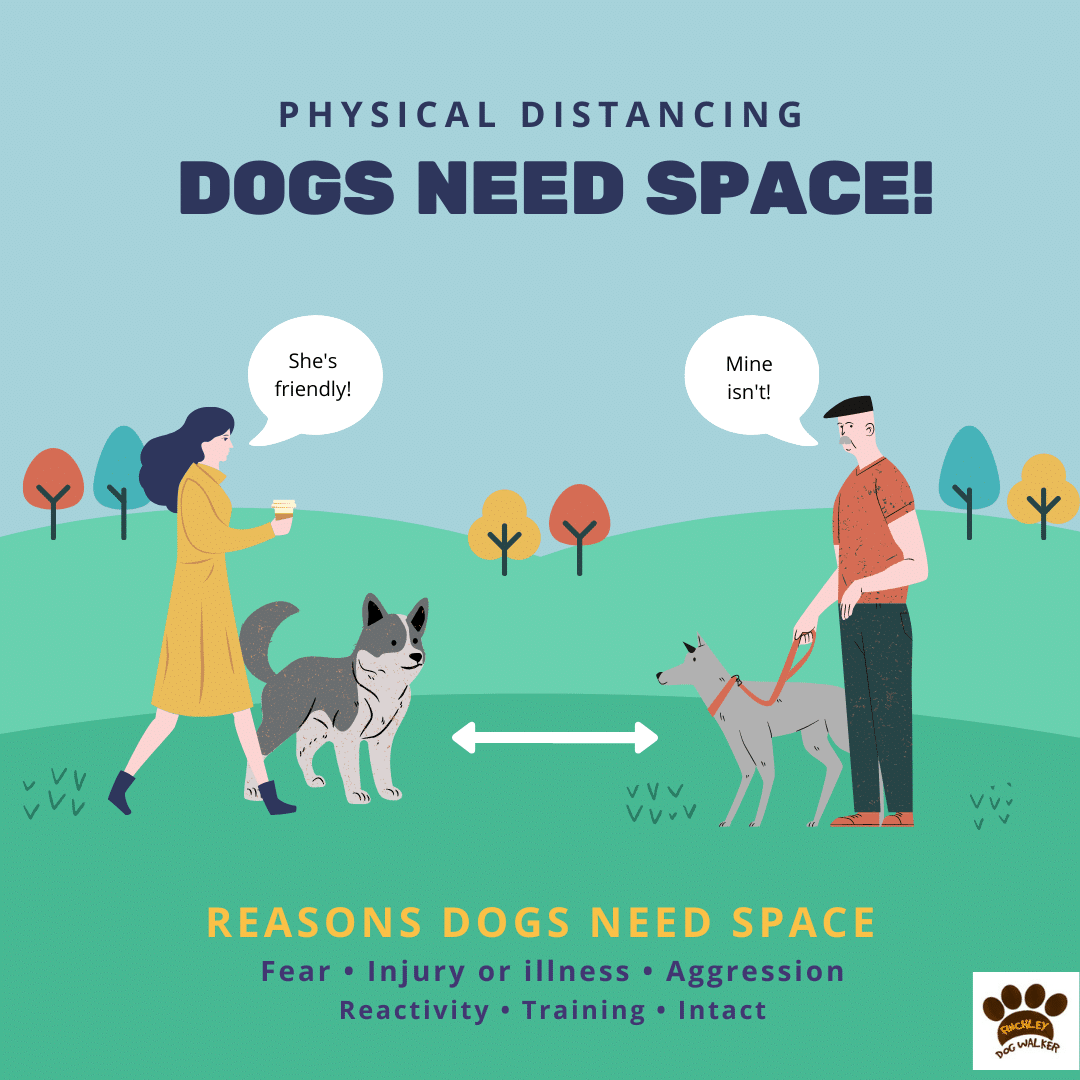
In these situations, distance is kinder.
A calm “not today, thank you” is often the best choice.
Ask before letting dogs meet
This matters.
Never assume another dog wants to say hello. Never assume another owner is being rude because they move away.
Some dogs are recovering from surgery. Some are elderly. Some are nervous. Some are rescue dogs still learning that the world is safe. Some are fine at a distance but struggle when another dog comes straight towards them.
If you want to let your dog greet another dog, ask first.
A simple “Are they okay to say hello?” is enough.
If the answer is no, move on calmly.
What a good short greeting can look like
A better greeting is usually calm and brief.
Both dogs approach with loose bodies. The owners keep the leads relaxed. The dogs sniff briefly. Nobody forces them to stay. After a few seconds, both dogs are guided away.
You are looking for:
- soft bodies
- curved movement rather than straight-on pressure
- loose tails
- brief sniffing
- easy disengagement
- both dogs choosing to move away without fuss
A good greeting often looks quite boring.
That is fine.
Boring is usually safer than over-excited.
Warning signs to watch for
I would end the greeting straight away if I saw:
- staring
- freezing
- stiff legs
- a high, rigid tail
- lip licking
- turning the head away
- tucked body posture
- growling
- snarling
- one dog trying to climb over the other
- one dog repeatedly trying to leave
The RSPCA advises owners to pay close attention to signs of fear, stress or aggression, and to seek professional help if behaviour changes or stress signs are regular. (RSPCA)
A growl is not your dog being naughty. It is communication. Listen to it.
Loose leads matter
Tight leads can make greetings worse.
When a lead tightens, the dog can feel trapped. Their body position changes. They may not be able to move naturally. The tension from the owner can also travel straight down the lead.
That does not mean dropping the lead or letting dogs tangle.
It means giving just enough slack for a brief, natural sniff, while staying ready to move away.
If you cannot keep the lead relaxed because the path is narrow, the other dog is too close, or your dog is pulling, skip the greeting.
Why face-to-face greetings can be difficult
Many dogs find direct, head-on greetings uncomfortable.
Humans tend to walk straight towards each other. Dogs often prefer a curve. They gather information by sniffing and moving, not by standing still in a tight, direct line.
This is one reason I often create space on pavements in North Finchley or East Finchley. Narrow paths do not give dogs many choices. A dog who might cope well in an open space may struggle when pinned between a wall, a lead, and another dog.
In places like Coldfall Woods or Cherry Tree Wood, there is often more space to arc away. That makes greetings easier to manage, but it still does not mean every dog needs to meet.
What I would focus on first
If your dog gets over-excited or tense around other dogs, I would focus on these before planned greetings:
- walking past dogs calmly at a distance
- teaching your dog to turn away with you
- rewarding check-ins
- keeping the lead relaxed
- learning your dog’s early stress signs
- choosing quieter routes where possible
Meeting dogs is not the only way to build social skills.
For many dogs, especially nervous or reactive ones, calmly observing other dogs without interacting is a much better starting point.
A simple checklist
Before letting dogs meet, ask yourself:
- Have both owners agreed?
- Do both dogs look relaxed?
- Is there enough space?
- Are both leads loose?
- Can I move away easily?
- Is my dog able to disengage?
- Would I feel comfortable ending this after three seconds?
If the answer to any of these is no, keep walking.
What about puppies?
Puppies do need good social experiences, but that does not mean meeting every dog.
A puppy who is rushed, overwhelmed or bounced on by a larger dog may learn that other dogs are scary. A puppy that is allowed to charge at every dog may learn poor manners.
For puppies, I prefer calm, carefully chosen meetings with steady dogs.
Short greetings can help, but the bigger goal is quality. Not quantity.
What about rescue dogs?
With rescue dogs, I would be even more careful.
You may not know their full history. They may look calm, but be holding a lot in. They may cope with one greeting, then react to the next dog because their stress has built up.
For many rescue dogs, I would skip close greetings at first and focus on:
- predictable walks
- space from unknown dogs
- calm observation
- sniffing breaks
- trust with the person handling them
The 3-second rule can come later, if it suits the dog.
What if the other owner says, “Mine is friendly”?
This is one of the most common things owners hear.
It may be true. Their dog may be friendly.
But your dog still has a choice.
A friendly dog can still be too much. A bouncy young dog can overwhelm an older dog. A large dog can frighten a smaller dog without meaning to. A nervous dog may not want contact, even if the other dog has good intentions.
A calm answer is enough:
“Thanks, but we’re giving him space today.”
You do not need to explain.
What if your dog is the one who wants to rush over?
If your dog pulls towards every dog, I would not start with greetings.
I would work on calm passing first.
Try giving your dog more distance, changing direction before they hit the end of the lead, and rewarding them for checking back in with you. If they are already pulling hard, they are probably too excited to greet politely.
A greeting should not be the reward for dragging you across the pavement.
Related guides
You may also find these useful:
Dog & Cat Care Guides
Use this guide as part of the wider walking and behaviour section.
Rescue Dog Help in Finchley
Helpful if your dog is nervous, reactive, newly adopted or easily overwhelmed.
Solo Dog Walks in Finchley
A good fit for dogs who need calm, one-to-one walks without group pressure.
Reactive Dog Walking Kit
Useful if your dog needs a safer, calmer setup for walks.
Dog Walking Etiquette for Dog Owners
A natural companion guide for owners who want clearer walking manners.
FAQ
Some dogs can manage short, calm on-lead greetings. Others find them stressful. If the lead is tight, the dogs are head-on, or either dog looks tense, it is better to create space.
Not always. Many reactive dogs need distance first, not greetings. The 3 second rule may be useful later for some dogs, but it should not be used to push a dog into contact.
Stay as calm as you can. Move away in an arc if there is space. Put yourself between the dogs if safe. Avoid shouting unless you need to interrupt the situation. After that, give your dog time to decompress
Look at what happens after. A dog who shakes off, moves on easily, and stays relaxed has probably coped well. A dog who barks, pulls back, freezes, scans the area or becomes jumpy may have found it too much.
Growling is communication. It means your dog is uncomfortable and needs space. Punishing the growl can remove the warning without changing how the dog feels. NEVER punish the growl
Plan early. Cross the road, step into a driveway if safe, turn around, or use a calm cue to move your dog away. Waiting until the dogs are nose-to-nose makes it much harder. am probabl on every ring bell in the Finchley and Muswell Hill area, where I use people’s front gardens/driveways to avoid extra stress to the dog
Final thoughts
The 3 second rule is not about forcing dogs to be social.
It is about keeping greetings short, calm and easy to end.
Some dogs enjoy meeting others. Some dogs prefer space. Both are normal.
If your dog finds greetings difficult, or you would rather they had quieter one-to-one walks, my solo dog walks, and rescue dog support may be a better fit than busy group walks. I work with dogs across Finchley who need calm handling, space, and walks that suit the dog in front of me. Simply get in touch or take a look at my other services
