
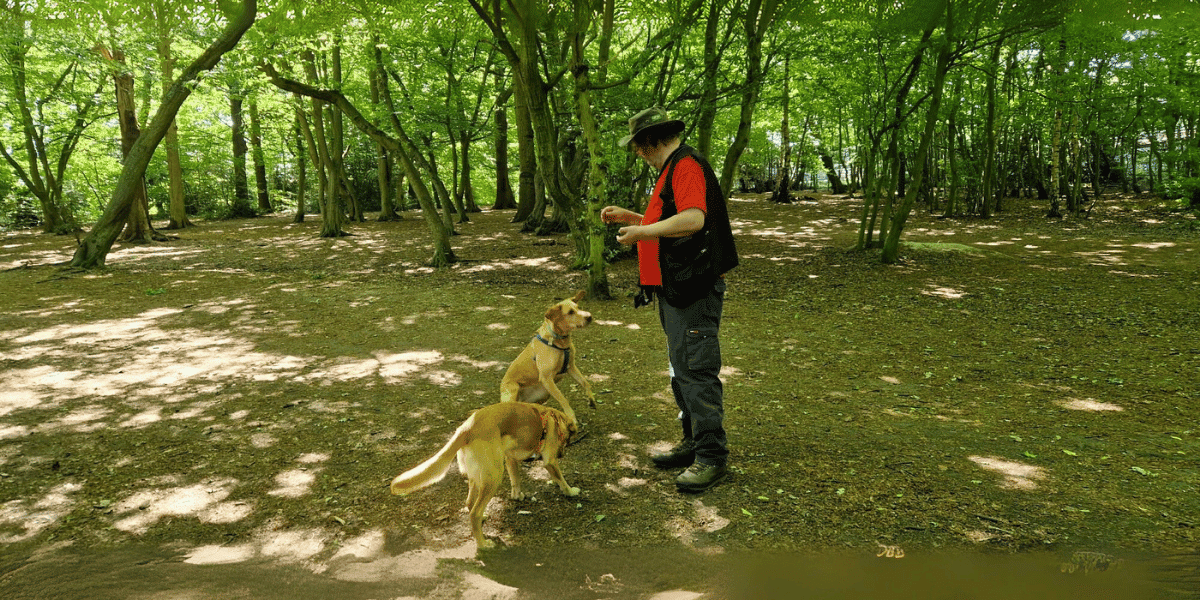
When the weather warms up, one question comes up again and again.
Should I cut my dog’s exercise?
It sounds simple. But in reality, it depends on the dog, the temperature, and how you adjust your approach.
I see this every year in Finchley. Dogs still need to move. But how you meet that need changes quite a bit once the temperature rises.
Do dogs actually need less exercise?
In short, no.
But they need different exercises.
Most dogs still need:
- movement
- mental stimulation
- routine
- time outside
What changes is:
- intensity
- duration
- timing
A one-hour walk at midday in July is not the same as a one-hour walk on a cool March morning.
So instead of thinking “less exercise”, think:
You’re swapping physical effort for calmer, safer activity.
Why heat changes everything
Dogs don’t cool down the way we do.
They don’t sweat through their skin. They rely mainly on panting.
That means heat builds up faster, especially when:
- the ground is warm
- there is no shade
- they are moving continuously
- they are stressed or excited
Some dogs cope worse than others:
- flat-faced breeds
- older dogs
- overweight dogs
- thick-coated breeds
- nervous dogs that stay “on edge” outside
This is why I often slow things right down in places like Coldfall Woods or Highgate Woods, where there is shade and space to move at a calmer pace.

Signs your dog is struggling in the heat
You don’t always get a clear warning.
But these are early signs I watch for:
- heavy, fast panting
- slowing down or stopping
- seeking shade constantly
- lying down mid-walk
- glazed or unfocused behaviour
If it progresses, you may see:
- wobbling
- vomiting
- collapse
At that point, you’re dealing with heat exhaustion, which needs urgent action.
For a clear overview of symptoms and first aid, the RSPCA has a useful guide.
How I adjust walks in warm weather
This is where most people get stuck.
It’s not about doing nothing. It’s about doing things differently.
I change the timing
Early morning or later evening.
That alone makes the biggest difference.
I shorten and slow the walk.
Instead of pushing distance, I focus on:
- slower pace
- more sniffing
- more breaks
This links directly to how I approach walks anyway. If you’re not familiar with that, it’s worth reading my guide on sniff and decompress walks.
I use shade and familiar routes.
I avoid open, exposed areas.
Instead, I stick to:
- shaded parks
- tree-lined streets
- routes the dog knows well
Less novelty often means less stress and less overheating.
I swap physical for mental work
This is the bit most people miss.
If you reduce walking, you need to replace it with something.
That could be:
- scatter feeding in the garden
- short training sessions
- simple enrichment toys
- calm indoor games
You’re still meeting their needs, just in a safer way.
I watch the dog, not the clock
This matters more than anything.
Some dogs will tell you clearly they’ve had enough.
Others will push on and get into trouble.
So I don’t aim for “30 minutes” or “1 hour”.
I aim for:
The dog finishes the walk calm, not exhausted.
What I would focus on first
If you’re not sure where to start, keep it simple.
- Walk earlier or later
- Cut the pace, not just the distance
- Add mental stimulation at home
- Stick to shaded routes
- Watch your dog closely
That will cover most situations.
What I would avoid
This is where problems usually come from.
- Midday walks in direct sun
- Hot pavements
- Long, continuous walks without breaks
- Over-excited play (ball throwing, chasing)
- Assuming your dog will stop when needed
Dogs often don’t make sensible decisions in heat. That’s on us.
A simple checklist
Before heading out, I run through this quickly:
- Is it early or late enough?
- Can I walk in the shade?
- Do I need to shorten this walk?
- What will I do instead of high-energy exercise?
- Is my dog already warm or unsettled?
If something feels off, I adjust.
Real-world example
I often see dogs come out full of energy, especially younger or more reactive ones.
On a cool day, that’s fine.
On a warm day, that same energy can push them too far.
So instead of trying to “burn it off”, I:
- slow things down
- allow more sniffing
- Keep the session shorter
- follow up with calm indoor enrichment
The result is a dog that settles better, without being pushed into overheating.
Related guides
If you’re dealing with warm weather, these will help:
- Dog & Cat Care Guides hub
- Summer pet safety guide
- How much exercise does a dog need
- Hot weather dog kit
- Solo dog walks in Finchley
FAQs
Most do, but they may need shorter, slower walks at safer times. Some days, mental stimulation at home can replace part of the walk.
Yes. On very hot days, skipping a walk is often the safer option. Replace it with indoor enrichment instead.
There’s no single number. It depends on the dog and the conditions. But once the pavement feels hot and shade is limited, you should adjust or avoid walks.
Yes. Early morning and late evening are usually the safest times.
Trying to stick to the same routine. Summer requires flexibility.
Final thoughts
Dogs don’t suddenly need less exercise in warm weather.
But they do need you to think differently about how you meet that need.
If you’re unsure, keep things simple. Slow down, shorten the walk, and use a calmer, more thoughtful activity instead.
If you need help adjusting your dog’s routine, especially if they’re reactive, older, or struggle in the heat, I offer calm one-to-one walks and support across Finchley and the surrounding areas.
I am part of a blog circle. Find out what K9 and Kats have to say about Autumn changes and your pets
Below are some other related articles you may be interested in


