
Planning a holiday should feel straightforward. But if you have a dog, it rarely is.
I see this all the time. Owners start by looking at dates and flights. Then it hits them. What do I do about my dog?
You might be weighing up kennels, boarding, a dog walker, or asking a friend. Each option sounds fine on the surface. But once you think about your dog’s personality, routine, and stress levels, it becomes less clear.
Some dogs cope well with change. Others don’t. Some settle quickly in new places. Others struggle if their routine shifts even slightly.
If you have a rescue dog, a nervous dog, or one that needs a bit more understanding, the decision matters even more.
This guide walks you through your options in a calm, realistic way. I’ll share what I see from real clients, what tends to work, and what often causes problems.
The aim is simple. Help you choose the option that keeps your dog safe, settled, and as close to their normal routine as possible.
This page may contain affiliate links, including Amazon links. As an Amazon Associate, I earn from qualifying purchases. If you choose to buy through these links, I may earn a small commission at no extra cost to you. It helps support the site and allows me to keep sharing practical dog care advice.
Why Your Dog’s Personality Matters More Than the Option
Before looking at services, it helps to step back and look at your dog.
Not all dogs need the same setup.
Think about your dog honestly.
• Do they settle quickly in new environments
• Do they get anxious when you leave
• Do they rely heavily on routine
• Do they struggle with other dogs
• Do they need space, time, or slower introductions
I often meet dogs who are described as “fine with anything”. But when you dig deeper, they just cope quietly.
That’s different from being comfortable.
Dogs that cope can still be stressed. It just shows up in subtle ways. Pacing. Not eating. Over-alert behaviour.
The best care option is the one that fits your dog, not the most popular one.
Kennels – When They Work (and When They Don’t)
Kennels are often the first thing people consider.
They can work well for some dogs. Especially dogs that:
• are used to busy environments
• are confident around other dogs
• cope well with noise and movement
• have stayed in kennels before
But I also see dogs struggle.
Common issues I hear from owners after kennels:
• weight loss
• unsettled behaviour for days after
• increased reactivity on walks
• poor sleep
That doesn’t mean kennels are bad. It means they’re not the right fit for every dog.
If your dog is sensitive, older, or routine-driven, kennels can feel overwhelming.
The RSPCA highlights the importance of familiarity and routine in reducing stress in dogs.
Ask yourself:
Would my dog relax in a busy, unfamiliar setting?
Dog Boarding in Someone Else’s Home
Home boarding feels more relaxed than kennels. Your dog stays in a home environment with a sitter.
This can work well for social, adaptable dogs.
But there are still things to think about.
• Other dogs in the home
• New smells and routines
• Different rules
• Lack of familiar surroundings
Some dogs settle quickly. Others don’t.
I’ve worked with dogs after boarding who come back overstimulated. Not because anything went wrong, but because it was too much for them.
If you’re considering boarding, ask:
• How many dogs will be there
• What the daily routine looks like
• How rest time is managed
And be honest about whether your dog enjoys that kind of environment.
If you are looking at home boarding, please make sure they are licensed by the local authority
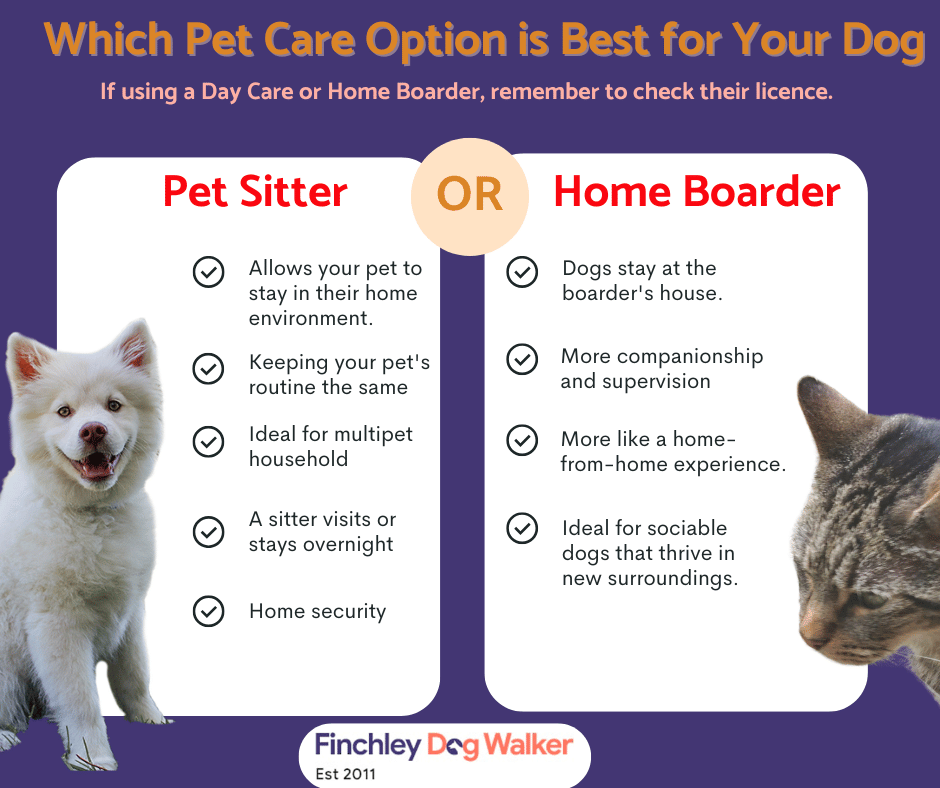
House Sitting – Keeping Your Dog at Home
For many dogs, this is the calmest option.
Your dog stays in their own home. Same bed. Same smells. Same routine.
That makes a big difference.
This is especially important for:
• rescue dogs
• anxious or reactive dogs
• older dogs
• dogs with medical needs
• dogs who struggle with change
I often recommend house sitting for dogs who need stability.
From experience, these dogs tend to:
• eat normally
• sleep better
• stay calmer overall
You remove the biggest stress trigger: change.
You also get peace of mind. Your home is looked after. Your dog is in a familiar space.
Find out about my house sitting service
Mixing Services
Sometimes the best option is a mix.
For example:
• house sitting
• plus a familiar walker during the day
• plus enrichment activities
This works well for dogs who:
• benefit from consistency
• already know their walker
• need structured activity
This is something I often support with local clients.
A familiar face makes a big difference. Especially for dogs who take time to trust.
What I Look For When Supporting Dogs During Owner Holidays
When I support a dog while their owner is away, I focus on a few key things.
Routine first.
• same walk times
• same feeding pattern
• same walking style
Then behaviour.
• how quickly they settle
• how they respond to the environment
• whether anything changes
And pacing.
Some dogs need slower walks during this time. More sniffing. Less pressure.
Places like Coldfall Woods or Cherry Tree Wood are ideal for this. Quiet, natural, and less overwhelming.
It’s not about tiring the dog out. It’s about helping them feel safe.
Common Mistakes I See Owners Make
These are things I see every year.
Choosing based on budget and convenience, not the dog
It’s easy to go with what’s available. But the best choice is the one your dog can cope with.
Not doing a trial run
Always test the setup before your trip.
A short overnight stay or trial visit can reveal a lot.
Changing too much at once
New sitter, new routine, new environment.
That’s a lot for a dog.
Not sharing enough information
Your sitter needs to know:
• triggers
• routines
• feeding details
• behaviour patterns
The more they know, the better they can support your dog.
Helpful Products That Make Holiday Care Easier
These are simple things that help dogs settle.
• Enrichment toy – Amazon affiliate link
• Lick mat – Amazon affiliate link
• Waterproof and easy to clean long line – affiliate link
• Treat pouch – Amazon affiliate link
Enrichment is key.
It gives your dog something familiar to focus on, especially during change.
FAQ
For most dogs, staying at home with a house sitter is the least stressful. It keeps their routine and environment consistent
Some do. Especially rescue dogs, dogs that are sensitive, older, or not used to busy environments.
It depends on the dog. Some dogs do well. Others still struggle with the change.
Keep routines consistent. Use familiar items. Choose the right care setup. Do a trial run first.
Yes, where possible. Familiar people reduce stress significantly. If usng family and frends check that your dog is still insured
Conclusion
There isn’t one perfect answer.
The best option depends on your dog.
If your dog is confident and adaptable, you may have more flexibility. If your dog is sensitive or routine-driven, stability matters more.
Think about how your dog actually feels, not how you hope they will cope.
When you choose the right setup, you don’t just make your holiday easier. You make your dog’s experience calmer, safer, and far less stressful.
If you found this guide helpful, you can support the site via Buy me a coffee
If your dog prefers to stay at home, house-sitting can make a big difference.
Keeps things calm. Keeps routines steady. Please get in touch to see how I can help
Updated March 2026