Dog Walks for Older Dogs in Finchley & Muswell Hill
Calm, one-to-one walks that move at your older dog’s pace
Updated August 2026
Your dog may still love going for a walk even though they no longer want to travel as far or move as quickly as they once did.
Perhaps they need more time to sniff. Maybe they tire more easily, hesitate on steps or prefer a quiet twenty or thirty minutes close to home rather than a long trip to the park.
That is absolutely fine.
I provide calm, one-to-one dog walks for older dogs in Finchley, North Finchley, Finchley Central, East Finchley and Muswell Hill.
Every walk starts and finishes at your dog’s own home.
There are no vans, collection rounds or groups of unfamiliar dogs.
The walk is adapted around the dog in front of me.
Older dog walks at a glance
30-minute one-to-one walk: £18
60-minute one-to-one walk: £25
Walk style: Calm, local and adapted to your dog’s pace
Dogs walked: One dog at a time, or compatible dogs from the same household where agreed and manageable
Transport: None. I walk locally from your dog’s front door
Areas: Finchley N2, N3 and N12, Muswell Hill N10 and selected nearby addresses
Suitable for: Older dogs, dogs slowing down, dogs who prefer shorter walks and senior dogs who benefit from individual attention
Medication: Straightforward medication may be supported where discussed and agreed beforehand
Weather: Walks may be shortened or adapted when conditions make the normal outing unsuitable
See my current dog-walking and pet-care prices or check the full Finchley Dog Walker service area.
What you need to know
- Older dogs can still benefit from regular opportunities to walk, sniff and explore, but the pace and distance may need to change.
- My senior dog walks are one-to-one and begin at your dog’s own front door, with no van journeys or group walks.
- I pay attention to the individual dog rather than trying to follow a fixed route or a set number of miles.
- A shorter walk can still provide useful movement, sniffing, toileting, enrichment and companionship.
- New or significant changes in mobility, stamina or willingness to walk should be discussed with your vet.
Table of contents
- Calm, one-to-one walks that move at your older dog’s pace
- Older dog walks at a glance
- What you need to know
- Your older dog does not have to keep up.
- Do older dogs still need walks?
- A slower walk is still a proper walk
- Sniffing matters
- What happens during a senior dog walk?
- Thirty minutes or sixty minutes?
- How do I know what length of walk my dog needs?
- I watch how your dog moves
- Pain does not always look obvious
- I do not try to exercise through pain.
- Recovery after the walk matters too
- Familiar local routes can help
- No vans and no collection rounds
- One-to-one means I can adapt
- Weather matters more as some dogs age.
- Hot weather and senior dogs
- Cold and slippery weather
- Your dog’s home matters as well as the walk
- What equipment do I use?
- I will follow sensible veterinary restrictions
- A dog on restricted exercise still needs interest
- Food and weight can affect the bigger picture
- Can you give my older dog medication?
- What if my dog can no longer manage a full walk?
- Senior dogs who are nervous or reactive
- What I need to know before we start
- We start with a meet-and-greet
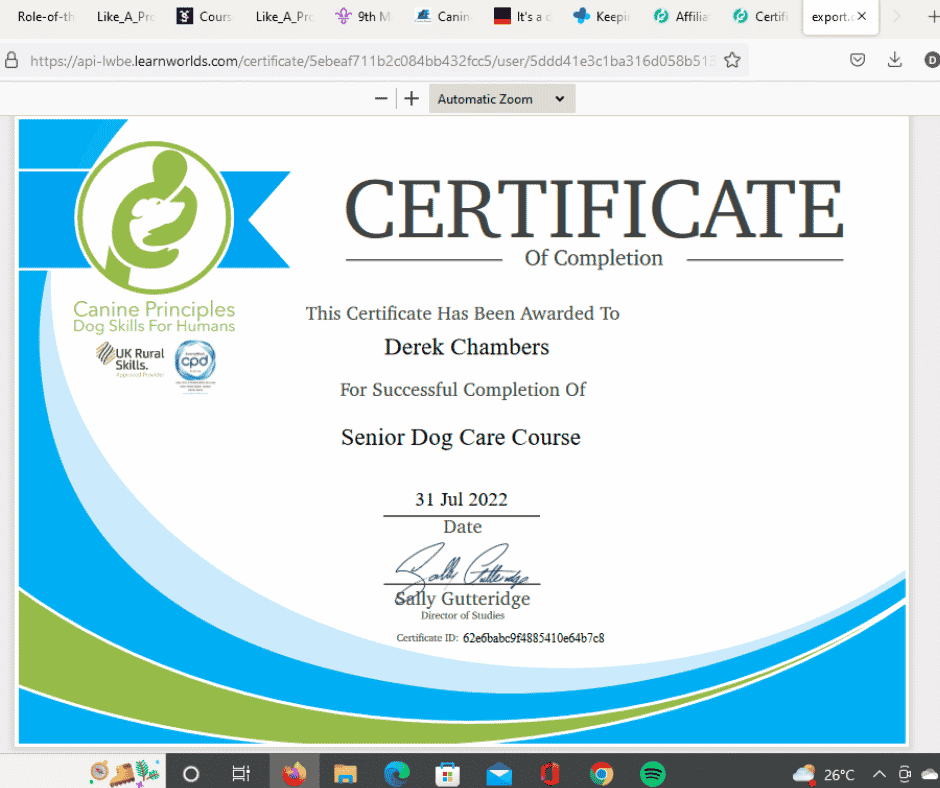
- Calm care backed by experience
- Local walks in Finchley and Muswell Hill
- House sitting for older dogs
- Related senior dog guides
- Frequently asked questions about dog walks for older dogs
- Do old dogs still need walks?
- Is a 30-minute walk enough for an older dog?
- Do you walk senior dogs for a full hour?
- What happens if my dog gets tired halfway through?
- What if my old dog refuses to walk?
- Can you walk a dog with arthritis?
- Can you give medication?
- Will my dog be walked with younger dogs?
- Do you use a van?
- Can you shorten walks in hot weather?
- Do you walk dogs who are blind or deaf?
- How much do senior dog walks cost?
- Where do you offer older-dog walks?
- Is a one-to-one senior walk right for your dog?
- Ready to discuss your older dog’s walks?
- Final thought
Your older dog does not have to keep up.
One of the reasons I prefer one-to-one dog walking is that no one else is setting the pace.
Your dog does not have to keep up with younger dogs.
They do not have to wait in a van while several dogs are collected.
They do not have to complete the same route every day simply because that is where the group is going.
If your dog wants to stop and sniff, we can stop.
If they need a slower route, I can slow down.
If they are having a particularly good day, we can enjoy it.
If today is more of a potter-around-the-block day, that is useful too.
The walk should fit your dog.
Your dog should not have to fit the walk.
Do older dogs still need walks?
Many older dogs continue to enjoy and benefit from appropriate exercise.
What often changes is the amount, pace and type of activity.
The PDSA guide to exercising a senior dog recommends regular, gentle exercise tailored to the individual dog, with shorter routes and opportunities to move at their own pace.
I think that is a much better approach than looking at a dog’s birthday and deciding they should either stop exercising or continue doing exactly what they did when they were five.
Your older dog may benefit from:
- a shorter walk
- a slower pace
- familiar routes
- flatter ground
- more sniffing
- extra pauses
- quieter times of day
- an easier route home
- more recovery afterwards
If your dog has an existing medical condition or veterinary exercise restriction, I follow the routine you and your veterinary team have agreed on.
A slower walk is still a proper walk
I do not judge a dog walk by how many miles we cover.
That is particularly important with older dogs.
A senior dog may spend ten minutes investigating an interesting hedge, walk gently around a few familiar streets and then head home perfectly satisfied.
That walk has still provided:
- movement
- toileting
- scent information
- mental stimulation
- fresh air
- time outside
- individual attention
There is no prize for reaching the furthest lamp post.
Sometimes less distance and more time is exactly what an older dog needs.
For the wider principles behind adapting activity as dogs age, read my Senior Dog Exercise and Enrichment Guide.
Sniffing matters
Older dogs do not necessarily need constant physical activity to enjoy a walk.
Sniffing is an important part of how dogs explore their environment.
I am quite happy for a senior dog to stop and investigate.
That might mean:
- sniffing a hedge
- exploring familiar grass
- stopping at a favourite tree
- standing quietly and watching the world
- choosing a slightly different direction where safe
A slower dog does not need to be hurried simply because we have stopped moving forward.
Sometimes the sniffing is the point.
What happens during a senior dog walk?
There is no single routine that every older dog has to follow.
Before regular walks begin, I want to understand your dog’s normal routine and what has changed as they have got older.
Depending on your dog, a visit might include:
- collection from their home
- a calm local walk
- plenty of sniffing time
- an appropriate walking pace
- pauses where needed
- a toilet opportunity
- returning home before they become overtired
- checking or topping up fresh water
- agreed food where relevant
- agreed straightforward medication where suitable
- a brief update about anything unusual I notice
The exact routine depends on the dog.
Thirty minutes or sixty minutes?
My current one-to-one dog walking prices are:
30-minute solo walk: £18
For many older dogs, thirty minutes can be an excellent option.
It may suit a dog who:
- tyres more quickly
- mainly needs a daytime toilet opportunity
- enjoys a shorter sniff walk
- cannot comfortably manage a full hour
- needs a quieter outing close to home
- is returning to activity following veterinary advice
The aim is not to make your dog walk continuously for thirty minutes.
I will pay attention to the dog and adapt appropriately.
60-minute solo walk: £25
Some senior dogs remain active and thoroughly enjoy a longer outing.
An hour also gives us more time to move slowly without feeling hurried.
For an older dog, sixty minutes does not have to mean sixty minutes marching along the pavement.
It can include walking, sniffing, pauses and time exploring at an appropriate pace.
You can always see my current charges on the Finchley Dog Walker prices page.
How do I know what length of walk my dog needs?
There is no standard answer based purely on age.
I look at the individual dog.
Useful things to consider include:
- what they normally do with you
- health
- mobility
- stamina
- weight
- current veterinary advice
- weather
- walking surfaces
- recovery after exercise
- enthusiasm for going out
A twelve-year-old dog may comfortably enjoy more exercise than another dog several years younger.
The dog’s response matters more than the number on their birthday card.
I watch how your dog moves
With a regular senior dog, I get to learn what their normal looks like.
That can make subtle changes easier to notice.
I might notice that your dog:
- is walking more slowly
- takes longer to stand up
- hesitates at a kerb
- stops more frequently
- appears more tired
- avoids a particular surface
- suddenly wants to turn towards home
- seems stiffer than usual
I am not diagnosing why.
My role is to notice and tell you.
If a change is new, persistent or concerning, veterinary advice may be appropriate.
For more about what to watch for, see Is My Dog Just Getting Older? Signs Your Senior Dog May Be Slowing Down.
Pain does not always look obvious
A dog does not have to cry out before something is uncomfortable.
Changes can be subtle.
For example, a dog may:
- hesitate before standing
- walk more slowly
- avoid steps
- stop jumping
- become less tolerant of handling
- lag behind
- need more recovery after a walk
The Canine Arthritis Management guidance on modifying exercise encourages owners to watch the dog carefully during activity for signs of tiredness or difficulty and adapt the route accordingly.
If your dog’s movement has changed, talk to your vet.
You can also read my guide to helping your pet when movement causes pain.
I do not try to exercise through pain.
If your dog suddenly appears uncomfortable, I will not try to solve the problem by walking them harder.
Likewise, I will not assume that reluctance to walk means stubbornness.
There may be many reasons a dog is unwilling to continue.
That could include:
- tiredness
- pain
- heat
- fear
- reduced eyesight
- an overwhelming environment
- simply having had enough
If something appears wrong, getting home safely is more important than completing the planned route.
Recovery after the walk matters too
A dog can appear enthusiastic while they are outside and become stiff later.
That is why it helps to think about what happens after exercise.
You may notice your dog:
- sleeps for much longer
- struggles to stand afterwards
- appears stiff that evening
- is reluctant to walk the following day
- avoids stairs
- seems unusually restless
If that happens repeatedly, tell your vet and consider whether the normal walk needs changing.
For dogs with diagnosed arthritis, Canine Arthritis Management also emphasises adapting exercise to the individual rather than repeatedly pushing through fatigue.
Familiar local routes can help
Older dogs can benefit from familiar surroundings, particularly if hearing, eyesight or confidence are changing.
Because I walk from your dog’s front door, there is no need to transport them somewhere unfamiliar to begin exercising.
Depending on where you live, we can use familiar local streets and green spaces around Finchley and Muswell Hill.
A familiar route may mean your dog already knows:
- where the kerbs are
- the quieter streets
- where they normally toilet
- their favourite sniffing areas
- the easiest route home
We can still vary walks where suitable.
But novelty is not compulsory.
No vans and no collection rounds
Your dog stays at home until I arrive.
I collect them from their own front door and walk locally.
I do not load them into a van, drive around collecting other dogs and then travel to a central walking area.
For an older dog, this avoids:
- climbing in and out of transport
- waiting during collection rounds
- travelling with unfamiliar dogs
- unnecessary disruption to their routine
It also means the booked walking time is centred on your dog.
Read more about the wider service on my Solo Dog Walks in Finchley and Muswell Hill page, and any questions you may have
One-to-one means I can adapt
If I were walking several unrelated dogs together, changing the route for one dog could affect everybody.
That is not an issue here.
If your older dog needs to slow down, we slow down.
If they need to go home, we go home.
If a particular route suddenly looks difficult, I can change it.
That flexibility is one of the biggest advantages of individual walking for senior dogs.
Weather matters more as some dogs age.
A normal walk may not be the right walk during very hot, humid, icy or unusually cold weather.
Older dogs can sometimes cope less comfortably with temperature extremes, and wet or icy surfaces can create additional problems for dogs with reduced stability.
I therefore consider:
- temperature
- humidity
- shade
- ground conditions
- wind
- ice
- the individual dog
During difficult conditions, the sensible option may be a shorter toilet walk with more time at home rather than pushing through the booked route.
Read my Extreme Weather Policy for more about how walks may be adapted.
Hot weather and senior dogs
On hot days, I may:
- walk earlier where possible
- shorten the route
- choose shade
- reduce pace
- allow more stops
- spend part of the visit providing calm company at home
The goal is not to prove that we completed the walk.
The goal is to care for your dog safely.
Cold and slippery weather
Cold itself is not the only consideration.
Wet leaves, mud, frost and ice can make the ground more difficult for a dog who is less steady than they used to be.
I would rather avoid an unnecessarily difficult route than turn an ordinary walk into an obstacle course.
Your dog’s home matters as well as the walk
I sometimes notice that the hardest part of an older dog’s outing begins before we even reach the pavement.
Perhaps they struggle standing up from a bed.
Maybe the hallway floor is slippery.
There might be an awkward step at the back or front door.
For practical ways to make everyday movement easier, read Adapting Your Home for a Senior Dog.
What equipment do I use?
I work with safe, suitable walking equipment agreed with you.
Depending on the dog, that may include:
- a well-fitting harness
- an appropriate flat collar
- a fixed-length lead
- a long line where appropriate and agreed
I do not use aversive walking equipment such as prong collars, choke or check chains or electronic collars.
I also do not use retractable leads as my standard walking equipment.
If your dog’s mobility or health means their equipment needs changing, speak to your veterinary professional or suitably qualified rehabilitation professional before making assumptions about what will help.
I will follow sensible veterinary restrictions
If your vet has advised:
- shorter walks
- lead-only exercise
- flat routes
- specific activity limits
- avoiding certain movements
tell me.
I am happy to work within an agreed routine where I believe I can provide the care safely.
I will not override veterinary advice because your dog appears energetic that day.
A dog on restricted exercise still needs interest
Sometimes the amount of physical exercise has to reduce dramatically.
That can happen following:
- surgery
- injury
- a flare-up of an existing condition
- veterinary investigation
Where appropriate and agreed, the visit may focus more heavily on calm companionship and low-pressure enrichment rather than trying to tire your dog physically.
My Brain Games for Senior Dogs and Dogs on Restricted Exercise contains ideas for dogs who temporarily or permanently need less strenuous activity.
Food and weight can affect the bigger picture
I do not give nutritional treatment or prescribe diets.
However, weight, appetite and activity are useful parts of the overall picture with an older dog.
If I notice that a regular dog’s shape seems to have changed or that food is being left when that is unusual, I will mention it.
For practical information about feeding older dogs, see my Senior Dog Nutrition Guide.
Can you give my older dog medication?
Straightforward medication may be possible where:
- it has been discussed before the booking
- instructions are clear
- the medication has been prescribed or appropriately supplied
- I can administer it safely
- your dog accepts the process without creating an unreasonable risk
I do not diagnose conditions or alter doses.
I do not replace veterinary or nursing care.
Tell me about medication before walks begin rather than leaving tablets unexpectedly on the kitchen counter.
What if my dog can no longer manage a full walk?
That does not automatically mean I cannot help.
Depending on your dog’s needs, we can discuss whether a shorter walk or another type of pet-care visit is more suitable.
A visit could potentially focus on:
- a short toilet opportunity
- a gentle potter near home
- garden time
- fresh water
- calm companionship
- agreed food
- suitable enrichment
The important thing is choosing the correct service rather than forcing a dog to do something they no longer enjoy.
See my current pet-care prices and visit options.
Senior dogs who are nervous or reactive
Age does not make every behavioural difficulty disappear.
Some older dogs still need:
- distance from unfamiliar dogs
- quieter routes
- patient introductions
- more space
- predictable handling
Others become less tolerant as they get older.
That can sometimes be related to discomfort or sensory change rather than a new training problem.
If your dog’s behaviour changes suddenly, veterinary assessment is sensible.
Where I believe I can safely manage them, one-to-one walks can be particularly helpful because no unfamiliar dogs are added to the walk.
What I need to know before we start
Please tell me about:
- your dog’s age
- current walking routine
- normal walk duration
- medical conditions
- medication
- mobility problems
- hearing or eyesight changes
- previous injuries
- normal toileting routine
- behavioural concerns
- anything your vet has advised
- anything that has changed recently
There is no benefit in hiding a problem because you are worried I might say no.
The more accurate information I have, the better I can decide whether I am the right person to help.
We start with a meet-and-greet
Regular dog walking normally starts with a meeting at your home.
This gives me the opportunity to:
- meet your dog
- see how they move around home
- discuss their routine
- look at their walking equipment
- understand access and security
- talk about medication
- discuss the normal route
- understand any mobility or behavioural concerns
It also gives your dog a chance to meet me before I arrive to take them out without you.
Some dogs need longer to become comfortable with somebody new.
That is fine.
Calm care backed by experience
I have provided professional dog walking and pet care since 2011.
My approach is calm and individual.
I am:
- fully insured
- Enhanced DBS checked through Scouting
- Ofqual Level 3 Canine First Aid trained
- committed to reward-based, non-aversive handling
Older dogs are one of the reasons one-to-one walking makes so much sense to me.
They should not be treated as an inconvenience because they no longer want to move at somebody else’s speed.
Local walks in Finchley and Muswell Hill
My regular dog walking is centred around:
- East Finchley N2
- Finchley Central and West Finchley N3
- North Finchley N12
- Muswell Hill N10
- selected suitable nearby addresses
Because I walk locally on foot, my availability depends on how your address fits with my regular walks.
Send me your postcode and I can tell you whether I cover your road.
See the full Finchley Dog Walker service area.
House sitting for older dogs
Some senior dogs also benefit from staying in their own home when their owners go away.
Familiar surroundings can be especially useful for dogs who:
- have reduced mobility
- need medication
- need regular toilet opportunities
- rely on familiar sleeping arrangements
- find unfamiliar environments difficult
My House Sitting in Finchley and North London service is based around maintaining the pet’s normal routine where practical.
You can also read Holiday Care for Senior Dogs for advice about preparing an older dog for care while you are away.
Related senior dog guides
For the complete overview of ageing, health, mobility, enrichment and everyday care, start with my Senior Dog Care Guide.
If your dog has started to change recently, read “Is My Dog Just Getting Older?” Signs Your Senior Dog May Be Slowing Down.
For exercise ideas away from regular walks, see Senior Dog Exercise and Enrichment.
For feeding, appetite and weight, read Senior Dog Nutrition.
For changes involving movement or discomfort, read Helping Your Pet When Movement Causes Pain.
For dogs who cannot currently exercise normally, see Brain Games for Senior Dogs and Dogs on Restricted Exercise.
For practical changes around the home, read Adapting Your Home for a Senior Dog.
Why certain breeds suffer more from joint pain
Frequently asked questions about dog walks for older dogs
Do old dogs still need walks?
Many older dogs continue to enjoy and benefit from appropriate opportunities to walk, sniff and explore. The duration, pace and frequency should reflect the individual dog and any veterinary advice.
Is a 30-minute walk enough for an older dog?
It can be. Some senior dogs are comfortable with much less, while others remain capable of longer outings. I judge the walk around the individual dog rather than assuming every dog needs the same distance.
Do you walk senior dogs for a full hour?
Yes, where an hour is suitable for that dog. A 60-minute booking does not mean your dog must march continuously for sixty minutes. We can walk slowly, sniff, pause, and adapt the outing as needed.
What happens if my dog gets tired halfway through?
I will not force them onwards simply to finish a route. I can shorten the walk, turn towards home and let you know what happened.
What if my old dog refuses to walk?
I will not drag them. I will consider the situation, follow the routine we have agreed and discuss unexpected or recurring reluctance with you. A new reluctance to exercise can be worth discussing with your vet.
Can you walk a dog with arthritis?
Potentially, where the dog has an appropriate exercise plan, and I believe I can safely provide the agreed walk. I am not treating the arthritis. Please tell me about the diagnosis and any veterinary restrictions before walking begins.
Can you give medication?
Straightforward medication may be possible by prior agreement, where it can be administered safely. I do not change doses, diagnose conditions or provide veterinary treatment.
Will my dog be walked with younger dogs?
No unrelated dogs are added to your dog’s walk. I provide one-to-one walks, although compatible dogs from the same household may sometimes be walked together where appropriate.
Do you use a van?
No. I collect your dog from their home and walk locally on foot.
Can you shorten walks in hot weather?
Yes. I follow my Extreme Weather Policy and will adapt or shorten a walk where conditions make the normal outing unsuitable.
Do you walk dogs who are blind or deaf?
Possibly. It depends on the individual dog’s confidence, safety, routine and any other health considerations. Familiar local routes and one-to-one attention can sometimes be particularly useful for dogs with sensory changes.
How much do senior dog walks cost?
My standard one-to-one walking prices are £18 for 30 minutes and £25 for 60 minutes. Check my prices page for the latest charges before booking.
Where do you offer older-dog walks?
My regular walking area centres on Finchley N2, N3 and N12, Muswell Hill N10 and selected nearby addresses. Send me your postcode so I can confirm whether I cover your road.
Is a one-to-one senior walk right for your dog?
A senior walk may be worth discussing if your dog:
- still enjoys going outside but needs a slower pace
- would benefit from a shorter daytime walk
- needs more time to sniff
- no longer suits a busy group
- prefers familiar local routes
- needs individual observation
- benefits from somebody working around their routine
I will tell you if I believe a different type of care would suit your dog better.
Ready to discuss your older dog’s walks?
Tell me:
- your postcode
- your dog’s age
- breed or type
- current normal walk
- days you need
- approximate times
- health or mobility considerations
- medication
- anything that has changed recently
I will let you know whether I cover your area, whether I have a suitable regular slot and whether I think my walking service is appropriate for your dog.
Contact Del about one-to-one dog walking
Final thought
Getting older does not mean that walks stop mattering.
It may simply mean they become different.
Less rushing.
Less distance.
More sniffing.
More observation.
More flexibility.
And, sometimes, knowing that turning for home early was exactly the right decision.
For wider advice about supporting your dog as they age, visit my Senior Dog Care Guide.
Veterinary disclaimer: This page describes my dog-walking service and provides general information about exercise for older dogs. It does not replace veterinary assessment or an individual rehabilitation plan. New or significant changes in mobility, breathing, stamina, behaviour or willingness to exercise should be discussed with your veterinary practice. Follow your vet’s specific exercise restrictions where your dog has a diagnosed condition, recent injury or is recovering from surgery.
I