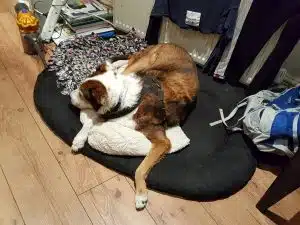
Watching your dog grow older can bring mixed emotions.
They may move more slowly, sleep for longer and need help with things they once managed easily. However, getting older does not mean that your dog has stopped enjoying walks, sniffing, food, play or time with you.
They may simply need you to notice what has changed and adapt their routine accordingly.
I have provided professional dog walking and pet care in Finchley and surrounding areas since 2011. Some of the most rewarding dogs I work with are older dogs who no longer need speed, distance or excitement.
They need patience.
They need familiar routines.
They need someone to notice whether today is a walking day, a pottering day or a short toilet break followed by a comfortable sleep.
This senior dog care guide explains how to support your older dog’s health, mobility, exercise, enrichment, comfort and everyday routine. It also brings together my more detailed guides about senior dog walking, nutrition, pain, brain games and in-home care.
Affiliate disclosure: This guide contains affiliate links. If you buy something through one of these links, I may earn a small commission at no extra cost to you. I only recommend practical products that may genuinely help an older dog. As an Amazon Associate, I earn from qualifying purchases.
Summary
- Senior dogs can still enjoy walks, sniffing, enrichment and family life, but their routine may need to change as they age.
- Watch for changes in mobility, appetite, weight, drinking, behaviour, hearing, eyesight and toileting rather than assuming everything is simply old age.
- Gentle regular exercise, suitable nutrition, secure flooring and accessible resting areas can help older dogs remain comfortable.
- Shorter walks, more rest and familiar routines may become increasingly important. New, persistent or significant changes should be discussed with your veterinary team.
Table of contents
- Summary
- Senior dog care at a glance
- When is a dog considered senior?
- Five things your old dog would like you to understand
- Normal ageing or a health problem?
- Pain does not always look dramatic
- Exercise for senior dogs
- Let your older dog set the pace
- Watch how your dog recovers
- Dog walks designed around older dogs
- Enrichment and brain games for older dogs
- Avoid turning enrichment into another physical challenge
- Feeding and weight management
- Make your home easier to navigate
- Useful enrichment products for senior dogs
- Equipment and activities I would avoid
- Grooming, teeth and nails
- Sleep, rest and recovery
- Toileting and continence
- Caring for a senior dog while you are away
- When to seek urgent veterinary help
- Senior dog care checklist
- Senior dog care guides
- Frequently asked questions about senior dog care
- At what age is a dog considered senior?
- Should senior dogs still be walked every day?
- Is it normal for an older dog to sleep more?
- Why is my older dog suddenly refusing walks?
- Can older dogs still learn new things?
- What are suitable brain games for senior dogs?
- How can I make slippery floors safer?
- Should I give my senior dog a joint supplement?
- Is house sitting suitable for an elderly dog?
- When should I contact my vet?
- Calm care for senior dogs in Finchley
- Final thoughts
Senior dog care at a glance
A good senior dog routine usually includes:
- regular veterinary care
- suitable food and careful weight management
- gentle, consistent exercise
- time to sniff and explore
- comfortable and accessible resting places
- non-slip surfaces
- regular toilet opportunities
- gentle mental enrichment
- familiar routines
- observation of changes in movement or behaviour
- plenty of sleep and recovery time
- patience when your dog needs more help
The aim is not to make an older dog behave like the younger dog they once were.
The aim is to help them continue enjoying life as the dog they are today.
When is a dog considered senior?
There is no single age at which every dog becomes senior.
Large and giant breeds may begin experiencing age-related changes earlier than smaller dogs. Health, genetics, lifestyle and previous injuries can also affect how quickly an individual dog ages.
The number on your dog’s records matters less than the changes you observe.
You may notice that your dog:
- walks more slowly
- takes longer to stand up
- hesitates before using stairs
- sleeps for longer
- needs more recovery time
- becomes less tolerant of lively dogs
- struggles in hot or cold weather
- hears or sees less clearly
- asks to go outside more frequently
- becomes more unsettled at night
- finds unfamiliar places confusing
- changes where or how they choose to rest
Some changes happen gradually and can be managed by adapting your dog’s routine.
Others may indicate pain or illness.
Do not assume that limping, confusion, appetite changes, toileting accidents or reluctance to walk are simply unavoidable signs of old age.
Five things your old dog would like you to understand
The original version of this guide was based on five things an older dog might want their owner to understand.
Those five messages remain just as important.
I may not hear or see as well as I used to
Your older dog may not be ignoring you.
They may not have heard you.
Age-related changes to hearing and eyesight can make familiar situations feel less predictable. A dog who does not hear you approaching may startle when touched. A dog with reduced eyesight may hesitate on steps, bump into furniture or struggle to locate a toy.
You can help by:
- speaking before touching them
- approaching from where they can see you
- avoiding sudden handling while they are asleep
- using familiar hand signals
- keeping bowls and beds in consistent places
- avoiding unnecessary furniture changes
- keeping floors and routes through the home clear
- using gentle lighting at night
- keeping them on a secure lead near roads
Do not test a dog’s hearing by making increasingly loud noises behind them.
If you notice a change in hearing, eyesight or confidence, arrange a veterinary check.
The Dogs Trust guide to looking after an older dog includes further advice about supporting dogs with reduced hearing or sight.
I may feel more worried or confused
An older dog may become less comfortable with change.
They might follow you around more, become unsettled when left, react differently to visitors or find busy walks harder than they once did.
Pain, hearing loss, reduced eyesight and cognitive changes can all affect how secure a dog feels.
Your first step should be to rule out a health problem rather than treating the change as disobedience.
Try to keep important parts of your dog’s day predictable:
- meals at familiar times
- regular toilet breaks
- familiar walking routes
- consistent sleeping arrangements
- calm introductions to visitors
- clear access to beds and water
- plenty of uninterrupted rest
Some older dogs become confused about where they are or what normally happens next.
They may:
- appear lost in a familiar room
- become stuck behind furniture
- stare at walls
- pace during the night
- bark without an obvious trigger
- forget previously reliable routines
- toilet indoors
- struggle to settle
- become unusually clingy or withdrawn
These changes should be discussed with your vet.
They are not something your dog is doing deliberately.
I may feel heat, cold and difficult weather more than before
Older dogs can become less comfortable in very hot, cold, wet or slippery conditions.
A walk that is manageable on a mild morning may be too demanding during heat, humidity, freezing weather or heavy rain.
During warm weather:
- walk at cooler times
- choose shaded routes
- shorten the outing
- slow the pace
- carry water where appropriate
- allow more recovery time
- replace a longer walk with calm enrichment when necessary
During cold or wet weather:
- keep walks manageable
- avoid long periods standing still
- dry your dog properly afterwards
- provide a warm resting place away from draughts
- consider a suitable coat where your dog benefits from one
- take extra care on ice and slippery surfaces
Older dogs do not need to complete their normal route simply because it is part of the usual routine.
My Extreme Weather Policy explains how I adapt walks and visits when weather conditions may affect an older dog’s safety or comfort.
I may need more help looking after myself
Your older dog may find grooming, scratching, stretching and changing position more difficult.
Regular gentle grooming allows you to check for:
- new lumps
- sore skin
- mats
- parasites
- changes in coat condition
- areas your dog does not want touched
- swelling
- unusual heat
- changes in body shape
Nails may need more attention because shorter walks provide less natural wear. Long nails can also affect how comfortably a dog stands and walks.
Dental problems can cause pain, appetite changes and reluctance to chew.
Ask your vet or veterinary nurse for advice about your dog’s:
- teeth
- nails
- ears
- coat
- skin
- weight
- grooming routine
Do not force a stiff or painful dog into an uncomfortable position for grooming.
Use short sessions, provide secure footing and allow breaks.
I am not being difficult when I cannot do what I used to do
An older dog may stop doing something for a reason.
They may refuse the stairs because climbing hurts.
They may stop jumping onto the sofa because they no longer feel secure.
They may pull towards home because they are tired.
They may growl when handled because an area is painful.
They may have an accident indoors because they need more frequent opportunities to go to the toilet.
They may not respond to a familiar cue because they did not hear it or have become confused.
Before assuming that your dog is stubborn, ask:
- Could this hurt?
- Can they hear or see me?
- Is the surface slippery?
- Are they tired?
- Are they too hot or cold?
- Do they need the toilet?
- Is the environment confusing?
- Has something changed recently?
Behaviour is information.
A sudden or persistent change should be investigated rather than punished.
Normal ageing or a health problem?
Ageing can lead to gradual changes, but age itself is not a diagnosis.
It is important to notice changes early and tell your vet what you have observed.
Contact your veterinary practice if your dog develops:
- unexplained weight loss or gain
- increased thirst
- appetite changes
- difficulty eating
- persistent bad breath
- vomiting or diarrhoea
- coughing
- reduced stamina
- a new lump
- limping
- stiffness
- difficulty standing
- reluctance to walk
- changes in toileting
- confusion
- restlessness
- changes in sleep
- increased panting
- reduced tolerance of touch
- sudden behaviour changes
You can read my guide to five signs of disease in older dogs for a more focused look at changes that should not be ignored.
The Blue Cross guide to caring for older dogs also covers common age-related health changes and when veterinary advice may be needed.
Pain does not always look dramatic
A dog in chronic pain may not cry, yelp or hold a leg in the air.
Changes can be far more subtle.
Possible signs include:
- walking more slowly
- reluctance to leave home
- hesitating on stairs
- difficulty settling
- sleeping more
- panting when it is not hot
- licking a joint
- changing posture
- becoming less tolerant of handling
- reacting to other dogs or people
- appearing withdrawn
- losing interest in play
- taking longer to stand up
- scuffing or dragging a paw
- changing how they sit or lie down
Pain can affect behaviour.
A dog who suddenly becomes irritable, worried or reactive may be trying to avoid something that hurts.
My guide to helping your pet when movement causes pain explains how discomfort can affect movement and everyday behaviour.
You may also find the Canine Arthritis Management guide to recognising signs of arthritis helpful.
Only a veterinary professional can diagnose the cause and recommend treatment.
Exercise for senior dogs
Older dogs still benefit from suitable movement, fresh air, sniffing and time outside.
What often changes is the intensity.
Your senior dog may prefer:
- shorter walks
- a slower pace
- several gentle outings
- familiar routes
- flatter surfaces
- more time to sniff
- quieter times of day
- extra rest stops
- an easier route home
- longer recovery periods
Do not stop walking your dog purely because they have reached a certain age.
At the same time, do not push them to complete a route that no longer feels comfortable.
The PDSA guide to exercising a senior dog recommends adapting activity to the individual dog and allowing them to move at their own pace.
My complete senior dog exercise and enrichment guide contains more detailed advice about walks, gentle games, home adaptations and signs that your dog may have done too much.
Also worth reading are how much exercise does my dog really need and exercising your dog on a lead
Let your older dog set the pace
A senior dog walk does not have to cover a long distance to be worthwhile.
Allow your dog time to:
- sniff
- pause
- look around
- choose a direction where safe
- rest
- turn towards home
Sniffing provides interest without requiring speed or repeated high-impact movement.
A dog who spends ten minutes investigating a familiar hedge may gain more from that experience than they would from being hurried around a longer route.
I often judge the success of an older dog’s walk by how comfortable and interested they appear, not by how many miles we cover.
Read an older dog still needs daily exercise for more ideas about maintaining a consistent but manageable routine.
Watch how your dog recovers
Do not only watch your dog during the walk.
Look at how they move:
- when they return home
- later that evening
- after sleeping
- the following morning
- before their next outing
A dog may appear willing to continue while they are outside but become unusually stiff afterwards.
Possible signs that the walk was too demanding include:
- lagging behind
- repeatedly stopping
- lying down
- heavy panting
- limping
- dragging a paw
- difficulty standing after rest
- reluctance to use steps
- restlessness
- unusual tiredness
- refusing the next walk
A simple activity diary can help.
Record the route, weather, approximate duration, surface, rest stops and how your dog recovered afterwards. This can provide useful information for your vet.
Dog walks designed around older dogs
Some senior dogs no longer suit fast or busy group walks.
They may need:
- individual attention
- a slower pace
- familiar local routes
- no van journey
- no pressure to keep up with younger dogs
- opportunities to stop and sniff
- someone who notices small changes
My dog walks for older dogs are adapted around the individual dog.
My walks begin and end at your dog’s home. I do not use vans, collection rounds or group walks.
Depending on the dog and the routine agreed, a visit might involve:
- a steady local walk
- a shorter toilet outing
- sniffing near home
- time in the garden
- fresh water
- agreed food or medication
- calm companionship
- an update about anything I notice
You can also read about my wider solo dog-walking service in Finchley and Muswell Hill.
Enrichment and brain games for older dogs
Reduced mobility does not automatically mean reduced interest in life.
Older dogs can still enjoy:
- sniffing
- searching
- making choices
- gentle training
- food activities
- exploring safe objects
- interacting with familiar people
- resting somewhere they can observe the household
Keep activities simple and comfortable.
Suitable ideas may include:
A visible food search
Place several pieces of your dog’s normal food on a non-slip surface where they are easy to see and reach.
Avoid sending a stiff dog repeatedly across a large room.
Which hand?
Place a small piece of food in one hand and allow your dog to investigate both closed hands.
Reward their choice without turning it into a difficult test.
Choosing between two objects
Offer two familiar toys or safe objects and let your dog decide which one they want to investigate.
Choice is enrichment.
A loosely rolled towel
Sprinkle a small amount of food across a towel and roll it loosely.
Supervise your dog and stop if they chew or swallow fabric.
Gentle nose targeting
Teach or practise touching your hand with their nose.
Bring your hand to a comfortable height rather than making your dog stretch or repeatedly change position.
Quiet observation
Some dogs enjoy resting near a window or in the garden and watching the world.
This should be relaxing. Move them away if watching outside leads to barking, frustration or distress.
My gentle brain games for senior dogs and dogs on restricted exercise include further low-pressure ideas.
You can also explore my broader dog enrichment guide.
Avoid turning enrichment into another physical challenge
An indoor game is not automatically low impact.
Some activities encourage dogs to:
- twist
- scramble
- jump
- paw repeatedly
- chase rolling objects
- bend awkwardly
- slip on smooth floors
A senior dog may also become frustrated by a puzzle that is too difficult.
Place activities within easy reach and use stable, non-slip surfaces.
Dogs recovering from injury or surgery must follow the exercise restrictions given by their vet. Do not increase activity simply because your dog appears energetic.
Feeding and weight management
Older dogs may need dietary changes, but there is no single food that suits every senior dog.
Your dog’s diet may need to account for:
- weight
- activity level
- dental health
- digestion
- allergies
- kidney, liver or heart conditions
- medication
- other diagnosed health problems
Speak to your vet before making a major change, particularly if your dog has an existing condition.
Watch for:
- steady weight gain
- unexplained weight loss
- reduced appetite
- increased hunger
- difficulty chewing
- increased thirst
- changes in stools
- vomiting
- reluctance to lower their head towards a bowl
Do not begin supplements because an advertisement promises to restore your dog’s youth.
Supplements can interact with medication or be unsuitable for particular health conditions. Ask your vet whether a specific product is appropriate.
My senior dog nutrition guide covers food, weight, treats and feeding routines in more detail.
Make your home easier to navigate
Small changes can make everyday movement safer and less tiring.
Improve grip on slippery floors
Laminate, wood and tiles can be difficult for dogs with reduced strength, balance or confidence.
Consider placing secure non-slip surfaces:
- beside the bed
- near food and water
- through frequently used walkways
- near doors
- at the bottom of stairs
- wherever your dog needs to stand and turn
Make sure rugs lie flat and do not create a trip hazard.
A non-slip floor runner suitable for pet homes may help provide a more secure route across a smooth floor. This is an affiliate link.
Provide accessible resting places
Place comfortable beds in rooms where your dog spends time.
A useful bed should be:
- supportive
- easy to enter
- large enough for your dog to change position
- washable
- positioned away from draughts
- placed somewhere your dog can rest undisturbed
An expensive label does not guarantee that a bed will suit your dog.
Look at whether your dog can get in, lie comfortably and stand up again.
Keep essentials within reach
Your dog should not need to climb stairs every time they want water, rest or access to the garden.
You may need:
- additional water bowls
- a bed on each level
- night lighting
- a clearer route to the door
- more frequent opportunities to toilet
- a stable ramp where professionally recommended
- gates to prevent unsafe stair access
Ask your vet or a qualified veterinary physiotherapist for advice where your dog has significant mobility problems.
Useful enrichment products for senior dogs
You do not need to buy large amounts of equipment.
Start with the dog in front of you.
Lick mat
A straightforward lick mat can provide a calm food activity.
Choose one that is stable, easy to clean and suitable for your dog’s size and teeth.
See this simple LickiMat option. This is an affiliate link.
Snuffle mat
A snuffle mat may allow an older dog to search for food without energetic movement.
Use part of their normal food allowance and supervise dogs who chew fabric.
See this washable non-slip snuffle mat. This is an affiliate link.
Food-stuffable toy
A correctly sized food-stuffable toy can make part of a meal more interesting.
Make the food easy to reach when introducing it. A senior dog should not need to become frustrated before they can eat.
My complete guide to Kong toys, sizes and fillings explains how to choose and use one safely.
All food-based enrichment counts towards your dog’s daily allowance.
Equipment and activities I would avoid
I would avoid:
- retractable leads for everyday walking
- choke, check or prong collars
- electronic collars
- repeated high-speed ball chasing
- frequent sharp turns
- slippery indoor games
- forcing a tired dog to continue walking
- difficult puzzles that cause frustration
- very hard chews without considering dental health
- unverified supplements marketed as a cure
- unstable ramps or steps
- equipment that restricts comfortable movement
A product does not become suitable simply because it is advertised for senior dogs.
Grooming, teeth and nails
Regular grooming is useful for more than keeping your dog tidy.
It gives you an opportunity to notice:
- new lumps
- sore areas
- matting
- skin changes
- parasites
- coat changes
- sensitivity to touch
- changes in body condition
Keep sessions short and work on a secure surface.
Check nails regularly. Older dogs may wear them down less because they walk shorter distances.
Dental discomfort can affect eating, behaviour and sleep. Arrange veterinary advice if your dog has:
- persistent bad breath
- bleeding gums
- loose or damaged teeth
- difficulty eating
- dropping food
- chewing on one side
- rubbing their mouth
- refusing previously enjoyed food
Sleep, rest and recovery
Older dogs often need more sleep.
Allow them to rest without being repeatedly disturbed by:
- children
- visitors
- younger dogs
- household noise
- unnecessary handling
Provide more than one comfortable resting place where possible.
Rest is not a lack of enrichment.
It is part of your dog’s physical and emotional recovery.
A senior dog may enjoy a short sniffing walk, eat breakfast and then sleep for several hours. They do not need another activity simply because they appear to be doing nothing.
Toileting and continence
Older dogs may need more frequent opportunities to toilet.
They may also find it harder to:
- wait for their normal outing
- reach the garden quickly
- manage steps
- maintain a toileting posture
- signal that they need to go outside
Indoor accidents should not be punished.
Arrange veterinary advice if your previously clean dog begins toileting indoors, strains, passes urine more frequently or appears uncomfortable.
Practical changes may include:
- more frequent toilet breaks
- easier access to the garden
- night lighting
- washable bedding
- protective throws
- keeping the route to the door clear
- a final toilet opportunity later in the evening
Caring for a senior dog while you are away
Older dogs often rely heavily on familiar surroundings and routines.
Moving into kennels or an unfamiliar boarding home may be difficult for a dog with:
- reduced eyesight
- hearing loss
- mobility problems
- confusion
- anxiety
- medication routines
- frequent toileting needs
House sitting allows your dog to remain:
- in their own home
- near their familiar bed
- on their usual walking routes
- close to their normal garden
- within their established feeding and sleeping routine
My house-sitting service in Finchley and North London is often well suited to older pets who benefit from continuity.
Before leaving your senior dog with any sitter, provide clear written information about:
- meals
- medication
- toilet routines
- normal walk length
- preferred routes
- mobility
- stairs
- hearing or sight changes
- signs of tiredness
- sleeping arrangements
- how long they can be left
- your veterinary practice
- emergency contacts
- what should happen if their condition changes
For a complete checklist covering care options, medication, walking instructions, veterinary information and emergencies, read Holiday Care for Senior Dogs.
When to seek urgent veterinary help
Contact a veterinary practice urgently if your dog:
- collapses
- struggles to breathe
- cannot stand
- develops sudden weakness
- cries out in severe pain
- has pale or blue gums
- has a seizure
- repeatedly vomits
- has blood in vomit or diarrhoea
- is unable to pass urine
- develops a swollen abdomen
- has a sudden major change in balance
- becomes dangerously hot
- suffers a significant injury
Do not delay urgent veterinary care while searching online for a home treatment.
My Dog First Aid Guide explains how first aid can help you respond while arranging appropriate professional care.
Senior dog care checklist
Check regularly:
Health
- Has their appetite changed?
- Are they drinking more?
- Has their weight changed?
- Are there new lumps or sore areas?
- Have their toileting habits changed?
Movement
- Are they slower to stand?
- Are they hesitating on steps?
- Are they limping or scuffing a paw?
- Are they stiff after sleeping?
- Are they avoiding particular surfaces?
Walks
- Are they still interested in going out?
- Are they stopping more frequently?
- Do they recover normally afterwards?
- Does the route still suit them?
- Are weather conditions making the walk harder?
Behaviour
- Are they more worried or reactive?
- Are they avoiding touch?
- Are they becoming confused?
- Has their sleep changed?
- Are they restless at night?
Home
- Can they reach water easily?
- Do they have secure footing?
- Can they enter and leave their bed comfortably?
- Is the route to the garden clear?
- Can they rest without being disturbed?
Senior dog care guides
Use this hub as the starting point, then continue with the guide that best matches your dog’s needs.
Is my dog slowing down?
If your dog is walking more slowly, sleeping differently, becoming less confident or finding familiar activities harder:
Is My Dog Just Getting Older? Signs Your Senior Dog May Be Slowing Down
Health changes
For changes involving weight, thirst, appetite, mobility or new lumps:
Five Signs of Ill Health in Older Dogs
Pain and mobility
Learn how discomfort can affect walking, stairs, sleep, handling and behaviour:
When Movement Causes Pain: Recognising Mobility Changes in Older Dogs
Food, weight and appetite
For practical guidance about senior diets, portions, protein, treats, muscle condition and appetite:
Senior Dog Nutrition: A Practical Guide to Feeding Your Older Dog
Exercise and enrichment
For gentle walks, sniffing, appropriate activity and adapting exercise as your dog ages:
Senior Dog Exercise and Enrichment
Restricted exercise and brain games
For dogs who cannot currently manage their normal physical activity:
Gentle Brain Games for Senior Dogs and Dogs on Restricted Exercise
Making your home easier
For secure flooring, beds, stairs, water access, lighting and easier garden access:
Adapting Your Home for a Senior Dog
One-to-one senior dog walking
For local walks adapted around an older dog’s pace:
Dog Walks for Older Dogs in Finchley and Muswell Hill
Winter care
For cold weather, icy surfaces, coats, paws and adapting winter walks:
Keeping an Older Dog Warm in Winter
Holiday care
For arranging a sitter, medication, walking instructions, routines and emergency information:
House sitting
For older dogs who may benefit from remaining in their own familiar environment:
House Sitting in Finchley and North London
First aid and wider health
For emergencies, first aid preparation and broader dog-health information:
Dog Health and First Aid Guide
General dog exercise
For the broader picture of exercise across puppies, adults, seniors and dogs with individual needs:
Dog Walking and Everyday Exercise Guide
Finally, you may be interested in the products I recommend
Frequently asked questions about senior dog care
At what age is a dog considered senior?
There is no universal age. Larger breeds often experience age-related changes earlier than smaller breeds. Your dog’s health, movement, behaviour and individual needs are more important than a fixed number.
Should senior dogs still be walked every day?
Many older dogs benefit from regular opportunities to walk, sniff and explore. The pace, distance and frequency should be adapted to the individual dog and any veterinary advice.
Is it normal for an older dog to sleep more?
Older dogs often need more rest. However, a sudden increase in sleep, difficulty getting comfortable or loss of interest in normal activities should be discussed with your vet.
Why is my older dog suddenly refusing walks?
Possible reasons include pain, fatigue, heat, fear, reduced sight, unsuitable equipment or an overwhelming environment. A new or persistent change needs veterinary advice.
Can older dogs still learn new things?
Yes. Many senior dogs enjoy short, reward-based activities. Keep sessions comfortable and avoid repeatedly asking a stiff dog to sit, stand or change position.
What are suitable brain games for senior dogs?
Simple scent searches, choosing between objects, gentle nose targets, loosely rolled towels and easy food activities can work well. Adapt every activity around mobility, eyesight, hearing, dental health and veterinary restrictions.
How can I make slippery floors safer?
Secure runners, rubber-backed mats and flat washable rugs can improve grip. Place them along routes your dog regularly uses and make sure they do not create a trip hazard.
Should I give my senior dog a joint supplement?
Speak to your vet before starting a supplement. Products vary, and supplements can be inappropriate for some health conditions or interact with medication.
Is house sitting suitable for an elderly dog?
It can be an excellent option for dogs who rely on familiar surroundings, regular medication, frequent toilet opportunities or a predictable routine. The sitter must understand the dog’s health and care requirements.
When should I contact my vet?
Contact your vet when you notice a new or persistent change in appetite, thirst, weight, movement, behaviour, sleep, toileting, breathing or general comfort. Seek urgent help for collapse, breathing difficulty, severe pain, seizures or sudden inability to stand.
Calm care for senior dogs in Finchley
Older dogs do not need to be rushed, dragged around a fixed route or expected to keep pace with younger dogs.
They need care that responds to the dog in front of you.
I provide calm, one-to-one dog walks and in-home pet care in Finchley, Muswell Hill and selected nearby areas.
My approach includes:
- walks from your dog’s own front door
- no vans or collection rounds
- no group walks
- routes chosen around the individual dog
- time to sniff
- a pace that suits their mobility
- weather adjustments
- calm enrichment where appropriate
- observation of changes in behaviour or movement
I am not a vet and do not diagnose health conditions. I will, however, follow your agreed routine, observe your dog carefully and tell you when I notice something that concerns me.
To discuss walking or in-home care for your older dog, contact Del with your postcode and a brief explanation of your dog’s age, normal routine, mobility and care needs.
Final thoughts
Your older dog may no longer move as quickly as they once did.
They may sleep more.
They may need help with stairs, extra time on walks or a familiar routine that makes the day easier to understand.
None of this makes their life less valuable.
A slow sniffing walk is still an adventure.
A simple food search is still enrichment.
Quiet company is still meaningful.
The most important part of senior dog care is paying attention to the individual dog and adapting as their needs change.
Do not measure them against the dog they were five years ago.
Support the dog standing in front of you today.