Updated October 2026
Does your dog need a coat in winter?
The answer is: it depends on the dog.
Some dogs are perfectly comfortable walking through a British winter without an extra layer. Others can become cold surprisingly quickly and genuinely benefit from a well-fitting coat.
After walking dogs professionally around Finchley and North London since 2011, I would never decide purely from breed, size or the temperature showing on my phone.
I look at the individual dog.
Their age, coat, body condition, health, activity level and how they actually respond to cold, wind and rain all matter.
A dry, active dog on a crisp winter morning may be perfectly comfortable.
The same dog standing around in cold wind and rain may feel very different.
This guide will help you decide whether your dog needs a winter coat, what type to choose, how it should fit and how to introduce one without simply forcing it onto them.
For broader cold-weather advice, including paws, grit, snow, ice and antifreeze, see my Winter Dog Care: Cold Weather, Snow, Ice and Paw Safety guide.
Affiliate disclosure
Some links on this page may be affiliate links. If you buy through one of these links, I may receive a small commission at no additional cost to you.
I only recommend products I genuinely use, trust or believe fit my welfare-led approach.
Your dog does not need a new coat simply because I have linked to one.
The first question is whether they actually need it.
Quick answer: does my dog need a winter coat?
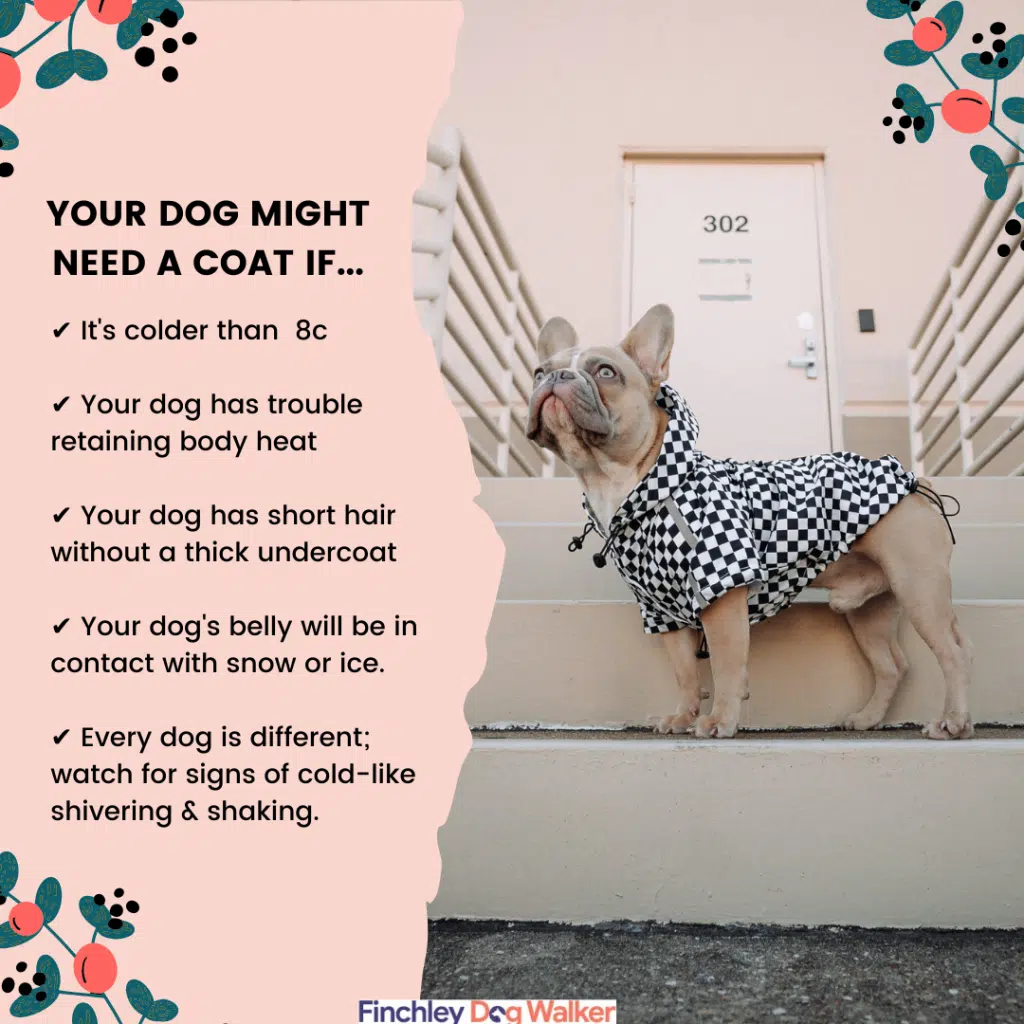
Your dog may benefit from a winter coat if they are:
- short or fine-coated
- very small
- lean with relatively little body fat
- a puppy
- elderly
- underweight
- unwell
- particularly sensitive to cold
- getting wet and cold during walks
- reluctant or uncomfortable outside in cold weather
A healthy, active dog with a thick insulating coat may not need an additional layer.
PDSA advises that dogs with fine or thin fur, as well as dogs who are very young, underweight, old or unwell, can feel the cold more quickly and may benefit from a warm coat.
Read PDSA’s advice on whether dogs need coats on winter walks.
The important thing is to watch your dog rather than assume.
Which dogs are more likely to need a winter coat?
There is no perfect breed list because individuals vary.
However, some dogs are more likely to benefit.
Short-haired and fine-coated dogs
Dogs with very short or fine coats have less natural insulation than dogs with dense double coats.
Examples can include:
- Greyhounds
- Whippets
- Lurchers
- Dobermans
- some Staffordshire Bull Terriers
- Chihuahuas
That doesn’t mean every member of those breeds needs the same coat at the same temperature.
Use the breed as a clue.
Then watch the individual dog.
Blue Cross also identifies short-coated breeds such as Greyhounds, Dobermans and Staffordshire Bull Terriers as dogs that may struggle more in cold weather.
Small dogs
Some smaller dogs can lose body heat more quickly and may benefit from an extra layer.
They are also physically closer to cold and wet ground.
Again, size alone isn’t enough to decide.
A small active dog with a substantial natural coat may cope very differently from a fine-coated dog of a similar weight.
Lean dogs
Body condition matters.
A lean Greyhound differs greatly from a large dog with a thick double coat, even if the Greyhound is tall.
Look beyond height.
Puppies
Puppies can be more vulnerable to cold conditions.
Their winter outings also need to take account of their age, physical development and experience of the outside world.
A coat may help some puppies stay comfortable, but don’t use one as a reason to keep a young puppy outside longer than is appropriate.
Older dogs
Senior dogs may benefit from extra warmth.
Some become less active on walks, may have reduced muscle mass or have health and mobility problems that change how well they cope with cold and wet conditions.
A coat can help keep an older dog warm and dry.
But a coat is not a treatment for arthritis or another medical condition.
If your older dog is becoming noticeably stiff, slowing down, reluctant to walk or showing signs of pain, speak to your vet rather than simply adding another layer.
Dogs who are unwell or underweight
Underweight dogs or those with health problems may struggle more with temperature regulation.
If your dog has an ongoing medical condition, ask your vet whether extra protection from cold weather is appropriate.
Which dogs may not need a winter coat?
Many healthy dogs already have excellent natural insulation.
Dogs with dense or double coats may be perfectly comfortable without an additional layer.
Examples include many:
- Huskies
- Malamutes
- German Shepherds
- Labradors
Dogs Trust advises that some dogs naturally grow thick coats that provide additional winter protection, while shorter-haired dogs and puppies may need more help staying warm.
Putting a thick winter coat on a dog who does not need one can make them too warm.
More clothing is not automatically better.
Watch the dog, not just the thermometer
I don’t use a single temperature and say:
“Below this, every dog needs a coat.”
That is too simplistic.
Consider:
- temperature
- wind
- rain
- dampness
- whether there is snow
- how long you will be outside
- whether your dog is moving continuously
- your dog’s age
- health
- natural coat
- body condition
- how your dog normally responds to cold
Five degrees, dry and still, can feel very different from five degrees with driving rain and wind.
Wet cold is particularly important.
PDSA notes that getting wet and then remaining cold can increase the risk of hypothermia.
How can I tell if my dog is cold?
Watch their behaviour.
Possible signs that your dog is becoming uncomfortable include:
- shivering
- slowing down
- repeatedly stopping
- lifting paws
- appearing hunched
- seeking shelter
- reluctance to continue
- trying to turn towards home
- becoming unusually quiet
- seeming uncomfortable or distressed
Dogs Trust identifies cold temperatures as a common cause of shivering and recommends reducing exposure to cold and providing warmth.
Do not wait for dramatic symptoms before changing the walk.
If your dog is clearly telling you they have had enough, listen.
My Winter Dog Walking: When to Shorten, Change or Skip a Walk explains how I adapt the walk itself.
A winter coat does not mean your dog can stay outside indefinitely
This is an important distinction.
A coat can help a dog stay comfortable.
It does not make them immune to:
- cold
- wind
- rain
- snow
- ice
- hypothermia
- sore paws
If conditions are unsuitable, shorten or change the walk.
Do not think:
“They’re wearing their coat, so they’re fine.”
Keep watching the dog.
Waterproof coat, warm coat or both?
Different coats solve different problems.
Waterproof dog coat
A waterproof outer layer can help keep a dog dry.
This may be particularly useful for dogs who become uncomfortable once wet.
A waterproof coat does not necessarily provide much insulation, so check what you are actually buying.
Insulated winter coat
An insulated or fleece-lined coat provides additional warmth.
This may help dogs who genuinely struggle in cold temperatures.
Waterproof and insulated coat
For a dog who feels the cold and regularly walks in British winter rain, a coat offering both warmth and weather protection can be practical.
Lightweight raincoat
Some dogs do not particularly need extra warmth but dislike getting soaked or become chilled once wet.
A lightweight raincoat may suit them better than a heavily insulated winter coat.
Buy for the problem your dog actually has.
Not for the product description.
What should I look for in a dog winter coat?
A useful winter coat should be:
- comfortable
- well fitting
- non-restrictive
- appropriate for the weather
- easy to put on and remove
- compatible with your normal walking equipment
- easy to keep reasonably clean
- suitable for your dog’s shape
Depending on your dog and conditions, useful features may include:
- waterproof outer material
- insulation
- adjustable fit
- reflective details
- coverage across the back and chest
- suitable openings for a harness or lead
- secure fastenings
I would prioritise fit and function over appearance.
Your dog does not care whether their coat matches your boots.
How should a dog coat fit?
A coat needs to provide protection without interfering with normal movement.
Your dog should still be able to:
- walk normally
- run where appropriate
- turn
- sit
- sniff
- toilet normally
- move their shoulders
- move their legs freely
Check areas where rubbing is most likely, particularly:
- behind the front legs
- around the neck
- across the chest
- around straps and fastenings
PDSA recommends measuring the dog’s length, chest and neck and making sure they can perform normal activities freely while wearing the coat.
If your dog constantly scratches at the coat, bites it, freezes or moves unnaturally, don’t assume they will simply “get used to it”.
Check the fit and how your dog feels wearing it.
Measure your dog before buying
Dog coat sizing is not particularly consistent between manufacturers.
Do not assume that because your dog is a “medium” in one brand they will be a medium in another.
Measure according to the manufacturer’s instructions.
Typically, that may include:
- back length
- chest/girth
- neck
Keep the measurements written down.
Check the individual product’s size chart before ordering.
For dogs with unusual proportions, such as Greyhounds, Whippets, Lurchers and Dachshunds, breed-specific shapes may fit much better than generic coats.
Can a dog wear a coat over a harness?
Sometimes.
It depends on the design of both.
Some coats:
- go over a harness and have a lead opening
- fit underneath a harness
- incorporate their own attachment arrangement
Do not improvise in a way that compromises the fit or security of your normal walking equipment.
After putting everything on, check:
- the harness still fits correctly
- straps are not twisted
- the coat is not interfering with clips
- the lead attaches properly
- your dog can move freely
For nervous or reactive dogs where secure walking equipment is particularly important, see my Walking Kit for Nervous or Reactive Dogs.
How do I get my dog used to wearing a coat?
Don’t wait for a freezing morning, pull a strange coat over your dog’s head, and immediately drag them outside.
Some dogs barely notice clothing.
Others find it extremely strange.
Introduce the coat gradually.
Step 1: let your dog investigate it
Put the coat down and allow your dog to approach it.
Reward calm curiosity.
Step 2: introduce handling gradually
Depending on the coat design, gradually build towards touching it to your dog’s body or putting their head through an opening.
Do not rush.
Step 3: fasten it briefly
Once your dog is comfortable, fasten it for a short period.
Reward calm behaviour.
Then remove it.
Step 4: encourage normal movement
Let your dog move around indoors briefly while wearing it.
Check that their movement looks natural.
Step 5: try a short outing
Once they are comfortable, use it on a short walk.
Dogs Trust recommends introducing coats gradually and positively rather than simply putting unfamiliar clothing onto a dog. Their guide provides a useful step-by-step process.
Dogs Trust: How to Get Your Dog Used to Wearing a Coat.
This approach fits how I work generally.
Give the dog time to understand something new rather than forcing them through it.
What if my dog hates wearing a coat?
First check why.
Is it:
- too tight?
- rubbing?
- restricting their shoulders?
- noisy?
- going over their head in a way they dislike?
- interfering with their harness?
- too warm?
- simply completely unfamiliar?
Changing the design may solve the problem.
For example, a dog uncomfortable putting their head through clothing may prefer a coat that fastens around them.
If your dog genuinely needs additional warmth, work gradually on helping them become comfortable with an appropriate coat.
If they do not medically need one and are clearly distressed by wearing it, I would not force clothing onto them simply because it looks nice.
My rescue dog and winter coats
This is where watching the individual dog matters.
I have lived with dogs who barely seemed bothered by cold weather and others who made their opinion about it very clear.
My rescue dog Roxy was much more inclined to seek warmth and comfort when it was cold.
That sort of everyday observation matters.
If a dog consistently seeks warmth, becomes reluctant in cold conditions or appears uncomfortable outside, I take that information seriously.
A breed description can give you a starting point.
The dog living in front of you gives you the useful answer.
Should senior dogs wear coats?
Some senior dogs benefit greatly from them.
I would consider:
- natural coat
- body condition
- mobility
- activity level
- medical conditions
- whether the dog gets wet
- how long they are outside
- how they behave in cold conditions
An older dog who walks slowly may not generate the same body heat as a younger dog running around.
But don’t use a coat to disguise a change in mobility.
If your senior dog suddenly slows down, becomes stiff or reluctant to walk, have that change assessed.
Should puppies wear coats?
Some puppies may benefit from additional warmth, particularly small or fine-coated puppies in cold conditions.
But the same principle applies.
A coat is an aid.
It is not permission for an unnecessarily long outing in unsuitable weather.
Puppies are also learning about the world.
Introduce clothing positively so getting ready for a winter walk doesn’t become a wrestling match.
Does a dog need a coat indoors?
Usually not in a normally heated home.
PDSA advises that most dogs do not need a coat indoors because they can overheat in centrally heated homes, although some may appreciate a breathable layer in a particularly chilly environment.
Give your dog a comfortable, draught-free place to rest.
If you are concerned that an elderly, unwell or underweight dog is struggling to stay warm indoors, speak to your vet.
Remove wet coats when you get home
Don’t leave your dog sitting around in a wet outdoor coat.
Once home:
- Remove the coat.
- Dry your dog where necessary.
- Check their paws.
- Hang the coat somewhere it can dry properly.
- Check for rubbing or damp areas on your dog’s skin.
If the coat becomes muddy or salty, clean it according to the manufacturer’s instructions.
A dirty, permanently damp winter coat isn’t particularly appealing for the next walk.
Don’t forget the paws
A warm body does not mean comfortable feet.
Winter walks can expose paws to:
- road salt
- grit
- snow
- ice
- dirty slush
- hidden debris
Check your dog’s feet after winter walks.
My Winter Paw Care for Dogs: Snow, Ice, Grit and Salt guide covers this in detail.
Visibility matters too
Winter coats can sometimes do two jobs.
Reflective details or a visible colour can make your dog easier to see during dark mornings and evenings.
Dogs Trust recommends making dogs visible on dark walks and suggests reflective features or suitable light attachments that the dog is comfortable wearing.
Visibility is useful.
But don’t choose an uncomfortable or poorly fitting coat simply because it glows like a Christmas tree.
Fit and comfort still come first.
For the full subject, see my Walking Your Dog at Night: Safer Dark-Evening and Morning Walks.
What winter dog coat do I recommend?
I would rather recommend one or two genuinely good options than fill the page with coats simply because they are available through an affiliate programme.
What I want from a winter dog coat is:
- appropriate warmth for the individual dog
- useful weather protection
- unrestricted movement
- good adjustability
- compatibility with the dog’s harness
- durable construction
- straightforward fitting
- sensible care instructions
My recommended all-round winter dog coat
Roxy loved her 2-in-1 waterpoo coats. So when it was wet but not that cold, we just used the outer, and on a cold, wet, windy day we used the fleece inner.
Don’t buy a coat just because it is fashionable
There is nothing wrong with a dog looking good.
But clothing should not compromise their comfort for our entertainment.
PDSA’s position is sensible: clothing designed to keep a pet warm, comfortable or safe can be useful, but unnecessary dressing up may not be in the animal’s interests.
My priority is:
Does the dog need it?
Does it fit?
Can they move?
Are they comfortable?
Does it solve the problem we bought it for?
Everything else is secondary.
When a coat is not enough
If your dog is struggling with the conditions despite wearing an appropriate coat, change the walk.
That might mean:
- shortening it
- choosing a more sheltered route
- walking later
- avoiding exposed areas
- staying closer to home
- returning home
Don’t keep going just because you have bought expensive winter equipment.
My Winter Dog Walking guide covers when I shorten, change or skip a walk.
My winter-coat decision checklist
Ask:
Does my dog have a thin or short natural coat?
They may benefit from additional warmth.
Are they very young, old, underweight or unwell?
They may be more vulnerable to cold.
Is it wet as well as cold?
Staying dry may become particularly important.
How active will they be?
A slow-moving senior dog is different from a young dog running continuously.
How does my dog behave?
Watch for shivering, slowing, reluctance or attempts to return home.
Does the coat fit?
Your dog should move and toilet normally.
Is my dog comfortable wearing it?
Introduce clothing gradually where necessary.
Am I using the coat instead of changing an unsuitable walk?
If so, change the walk.
Frequently asked questions
At what temperature does a dog need a coat?
No single temperature applies to every dog. Natural coat, age, size, body condition, health, wind, rain, activity and length of exposure all affect how a dog copes with cold.
Do all short-haired dogs need winter coats?
Not necessarily, but short or fine-coated dogs are more likely to benefit from additional protection in cold weather. Watch the individual dog.
Does a Labrador need a winter coat?
A healthy Labrador has a substantial natural coat and may not need an additional winter coat for ordinary walks. Individual health, age and conditions still matter.
Does a Greyhound need a winter coat?
Greyhounds have fine coats and relatively little body fat, so many benefit from an appropriate coat in cold weather.
Do small dogs need coats?
Some do. Small dogs can feel cold quickly, particularly if they also have fine coats or are very young, old or underweight.
Do senior dogs need winter coats?
Some older dogs benefit from additional warmth, particularly if they are less active, lean or have health problems. Ask your vet if you are unsure about your individual dog.
Should a dog coat be waterproof?
For wet British winter conditions, waterproofing can be very useful. A dog who needs warmth may benefit from a coat providing both insulation and weather protection.
Can my dog wear a coat over a harness?
It depends on the coat and harness designs. Make sure neither interferes with the fit or security of the other and that your dog can move normally.
Should dogs wear coats indoors?
Most dogs do not need coats in a normally heated home and could become too warm. Individual elderly, unwell or very lean dogs may have different needs.
How do I know if my dog’s coat fits?
Your dog should be able to walk, run, sit, sniff and toilet normally. Check for tightness, rubbing and restricted shoulder or leg movement.
What if my dog refuses to wear a coat?
Check the fit and design first. If the coat is appropriate and genuinely needed, introduce it gradually using positive associations rather than forcing it onto your dog.
So, does your dog need a winter coat?
Maybe.
And that is a much more useful answer than either “all dogs need coats” or “dogs already have fur”.
Some dogs genuinely benefit from extra protection.
Others already have everything they need.
Look at:
- your dog’s natural coat
- age
- health
- body condition
- activity
- the actual weather
- whether they are wet
- how long they are outside
- what your dog is telling you
After more than a decade of walking dogs professionally, I would rather put an appropriate coat on a dog who clearly benefits from one than insist that “dogs don’t need clothes”.
Equally, I would not wrap a thick-coated dog in unnecessary clothing because winter dog coats happen to look nice.
Watch the dog in front of you.
They are usually the best starting point.
Related winter guides
Winter Dog Care: Cold Weather, Snow, Ice and Paw Safety
Winter Dog Walking: When to Shorten, Change or Skip a Walk
Winter Paw Care for Dogs: Snow, Ice, Grit and Salt
Seasonal Pet Safety in Finchley
Dog and Pet Products I Recommend
About my dog walks
I provide calm, one-to-one dog walks around Finchley and surrounding areas.
My walks start and finish at the dog’s home, and I walk locally on foot rather than transporting groups of dogs around in vans or crates.
That means I can adapt winter walks to the individual.
A senior dog may need a shorter outing.
A nervous dog may need a quieter route.
A dog who feels the cold may need their coat.
And sometimes the conditions mean the sensible decision is to change the walk altogether.
Find out more about my Solo Dog Walks in Finchley and Muswell Hill.
Veterinary disclaimer
This article provides general information and does not replace veterinary advice.
If your dog has a medical condition, is underweight, is struggling to regulate their temperature or has developed a significant change in their ability to cope with cold weather, speak to your vet.