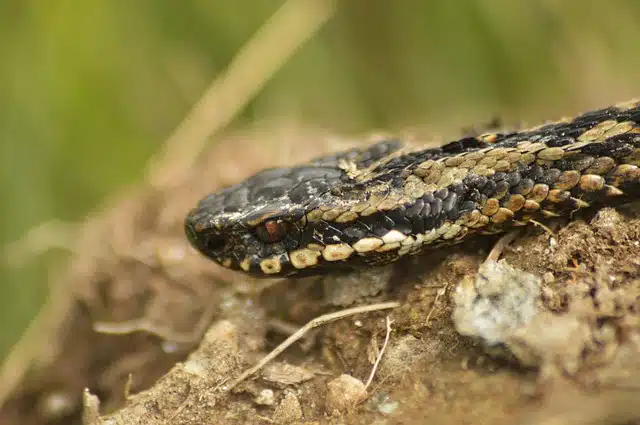
Adder Bites in Dogs: What to Do if Your Dog Is Bitten by a Snake in the UK
Updated September 2026
[If you think your dog may have been bitten by an adder, contact a vet immediately and keep your dog as still and calm as possible.
Carry your dog if it is safe and practical to do so. Leave the bite alone, do not apply a tourniquet or tight bandage, and do not cut, squeeze or suck the wound.
Do not delay veterinary treatment while trying to identify, photograph or find the snake.
In the UK, the adder is our only native venomous snake. Most dogs recover with appropriate treatment, but some bites can cause severe illness and occasionally be fatal, particularly if venom affects the wider body or swelling develops around the face or neck. Current PDSA guidance treats a suspected snake bite as a veterinary emergency. (PDSA)
[VETERINARY DISCLAIMER: This guide provides general first-aid information and does not replace veterinary assessment. If you suspect your dog has been bitten by a snake, contact your veterinary practice or emergency veterinary provider immediately.]
Summary
- A suspected adder bite is a veterinary emergency.
- Contact your vet immediately, even if your dog currently seems well.
- Keep your dog as calm and still as possible.
- Carry your dog where practical rather than allowing them to walk.
- Leave the bite alone.
- Do not apply a tourniquet or tight bandage.
- Do not cut, squeeze or suck the bite.
- Do not try to catch or kill the snake.
- Adders are the UK’s only native venomous snakes.
- Pain and swelling are common signs, but more serious symptoms can include vomiting, weakness, pale gums, breathing difficulty, tremors or collapse.
- Most dogs recover with treatment, but prompt veterinary care matters. (PDSA)
Table of contents
- Adder Bites in Dogs: What to Do if Your Dog Is Bitten by a Snake in the UK
- Summary
- What should I do if my dog is bitten by an adder?
- What should I not do after a suspected snake bite?
- Should I try to identify the snake?
- What does a UK adder look like?
- Are adders the only venomous snakes in the UK?
- When are dogs most likely to encounter adders?
- Where might my dog encounter an adder?
- What are the signs of an adder bite in a dog?
- Where are dogs usually bitten?
- Is an adder bite on the face more dangerous?
- What if my dog seems perfectly well afterwards?
- Can a dog survive an adder bite?
- What happens if the venom spreads through the body?
- How will a vet treat an adder bite?
- How quickly should I get my dog to a vet?
- Should my dog walk back to the car?
- What if I am walking alone?
- Should I give my dog an antihistamine or painkiller?
- Should I put ice or cold water on an adder bite?
- What is a dry bite?
- Can a grass snake hurt my dog?
- What about smooth snakes?
- Can I prevent my dog being bitten by an adder?
- Should I stop letting my dog explore long grass?
- What if I see an adder while walking my dog?
- Adder bites and summer dog safety
- First aid is partly knowing what not to do
- Frequently asked questions about adder bites in dogs
- Is an adder bite an emergency for a dog?
- Will I see fang marks?
- How quickly will my dog show symptoms?
- Can an adder bite kill a dog?
- Does every dog bitten by an adder need antivenom?
- Should I put a tourniquet around the bitten leg?
- Should I suck the venom out?
- Should I carry my dog?
- Do I need to catch the snake for the vet?
- Are grass snakes poisonous to dogs?
- Are adders protected?
- The important thing to remember
- Related Guides
What should I do if my dog is bitten by an adder?
Treat a suspected adder bite as an emergency and phone your vet straight away.
You do not need to prove that an adder bit your dog before asking for help.
If you witnessed an encounter with a snake, or your dog suddenly develops painful swelling after investigating long grass, heathland or similar habitat, tell the veterinary practice what happened.
While arranging veterinary care:
- keep your dog calm
- keep movement to a minimum
- carry them if this can be done safely
- leave the bite itself alone
- phone the veterinary practice before travelling
- follow any additional instructions your vet gives you.
PDSA advises against applying a bandage or tourniquet and recommends keeping the dog as still as possible while getting them to a vet.
This is not a situation where I would spend time trying home treatments first.
Get veterinary advice.
What should I not do after a suspected snake bite?
Do not try to treat an adder bite yourself.
In particular:
- do not cut the wound
- do not suck out the venom
- do not squeeze the bite
- do not apply a tight bandage or tourniquet
- do not give human painkillers
- do not make your dog walk unnecessarily
- do not delay leaving while searching for the snake.
You may come across different suggestions online about cooling or washing a snake bite. Veterinary sources aren’t completely consistent on this point, which is another reason I keep owner first aid simple.
Keep your dog still, leave the bite alone, call your vet, and follow their instructions for your dog.
That avoids unnecessary home treatment that delays what matters most: veterinary assessment. PDSA’s snake-specific guidance likewise advises leaving the bite alone.
Should I try to identify the snake?
Only if you can do so without getting closer to it or delaying your dog’s treatment.
If you already saw the snake, try to remember:
- its colour
- whether you noticed a zigzag marking
- approximately how large it was
- where the encounter happened.
A photograph taken safely from a distance may be useful.
Do not approach the snake to get a better picture ir try andcatch it
Adders are protected in the UK under the Wildlife and Countryside Act 1981, and disturbing a frightened snake also creates an unnecessary risk of another bite.
The priority is your dog, not identifying the snake with absolute certainty.
What does a UK adder look like?
The adder, Vipera berus, is a relatively small, stocky snake.
A typical adder has a distinctive dark zigzag marking running along its back. Males are often more silvery-grey, while females can be more brown or reddish-brown.
Some adders are much darker, which can make the usual markings harder to see.
The Wildlife Trusts says adults are generally around 60 to 80cm long and are associated particularly with heathland, moorland, woodland, grassland and coastal habitats.
For photographs and identification information, see The Wildlife Trusts guide to UK adders and other native snakes.
But remember that you do not need a confirmed identification before calling your vet.
Are adders the only venomous snakes in the UK?
The adder is the only venomous snake native to the UK.
Our three native snake species are:
- adder
- grass snake
- smooth snake.
Grass snakes and smooth snakes are not venomous. Smooth snakes are also rare and restricted to a small number of heathland areas.
That does not mean you should dismiss an unexplained bite or painful swelling because you did not clearly see an adder.
If your dog has suddenly become unwell or has a painful swelling after an encounter with a snake, contact your vet.
When are dogs most likely to encounter adders?
Adders are generally active from spring into autumn and may be seen basking when conditions allow.
The Wildlife Trusts describes them as most readily seen from around March to October. PDSA notes that dog bites are especially common during the warmer months.
Dogs can be particularly vulnerable because they investigate with their noses.
A snake that would normally prefer to move away may defend itself if a curious dog:
- sniffs at it
- steps on it
- corners it
- puts their face into vegetation where it is resting.
An adder is not looking for a fight with your dog.
The bite is generally defensive.
Where might my dog encounter an adder?
Adders can be found in habitats including:
- heathland
- moorland
- woodland and woodland edges
- long vegetation
- grassland
- sand dunes
- coastal areas.
The Wildlife Trusts records adders across much of Britain, although distribution varies considerably.
For someone living in Finchley, this may become particularly relevant when taking your dog further afield on countryside walks or UK holidays.
It is worth knowing the emergency steps even if you have never seen an adder before.
What are the signs of an adder bite in a dog?
Pain and swelling around the bite are among the most common signs.
You may occasionally see small puncture marks, although I would not rely on finding them.
Depending on where your dog has been bitten and how their body responds, possible signs include:
- sudden pain
- swelling
- limping
- small puncture marks
- bruising
- panting
- drooling
- vomiting
- diarrhoea
- pale gums
- weakness
- wobbliness
- unusual tiredness
- tremors
- seizures
- difficulty breathing
- collapse.
Symptoms can develop quickly, sometimes within minutes, although they can also take longer to become obvious.
This is why I would not wait for symptoms before contacting a vet if you know or strongly suspect that your dog has been bitten.
Where are dogs usually bitten?
Dogs are commonly bitten around the:
- face
- muzzle
- neck
- lower legs or paws.
That makes sense when you think about how dogs investigate the environment.
A dog may put their nose into vegetation before the rest of their body gets anywhere near the snake.
PDSA identifies the face, neck and lower leg as common bite locations.
Is an adder bite on the face more dangerous?
A bite around the face or neck can be particularly concerning because significant swelling may interfere with breathing.
That does not mean a bite elsewhere should be treated casually.
Venom can cause effects beyond the immediate bite area, and the severity cannot reliably be judged at home.
If your dog’s face or neck is swelling or they are having difficulty breathing, treat this as an immediate veterinary emergency.
What if my dog seems perfectly well afterwards?
Still call your vet.
Do not use the absence of immediate symptoms as reassurance that nothing happened.
There can be a delay between the bite and obvious signs developing, and you cannot tell at home how much venom was injected or how your dog will respond.
The sooner your vet knows what has happened, the sooner they can advise you about what to do next.
Current veterinary guidance recommends prompt assessment for suspected adder bites rather than waiting to see whether the dog becomes ill.
Can a dog survive an adder bite?
Yes. Most dogs recover with appropriate veterinary treatment.
However, some dogs can become seriously ill, and deaths can occur.
I would therefore avoid both extremes.
There is no need to tell owners that an adder bite is usually fatal because that is not accurate.
But it is equally unhelpful to describe an adder bite as mild simply because most dogs recover.
PDSA states that most dogs make a full recovery with treatment, while recognising that severe illness and death can occur.
The sensible response is prompt veterinary treatment without panic.
What happens if the venom spreads through the body?
Adder venom can cause more than local swelling.
PDSA warns that if venom spreads beyond the tissues around the bite, serious complications can potentially involve the kidneys, liver, heart, nervous system and normal blood clotting.
That is one reason keeping the dog calm and reducing unnecessary movement is recommended while arranging veterinary care.
You do not need to diagnose whether venom has spread.
That assessment belongs with your vet.
How will a vet treat an adder bite?
Treatment depends on how severely your dog is affected.
Veterinary treatment may include:
- pain relief
- close monitoring
- blood tests or other investigations
- intravenous fluids
- treatment for shock
- monitoring of the heart and other organs
- treatment for complications
- antivenom in some more serious cases.
Some dogs may need to remain at the veterinary practice for monitoring.
Antivenom is not something every bitten dog automatically receives. Whether it is appropriate depends on the dog’s condition, the severity of the bite, clinical judgement and availability.
That is why the old advice on this page telling owners to call ahead so a vet can simply “have the antidote ready” has been removed.
Treatment is a veterinary decision.
How quickly should I get my dog to a vet?
As quickly as reasonably possible.
Call first so the practice knows what has happened and can give you instructions.
If your normal practice is closed, use its out-of-hours service or an emergency veterinary provider.
Do not spend extra time trying to identify the snake or treating the bite yourself.
If you are some distance from the car, tell the vet that as well. They can advise you while you arrange transport.
Should my dog walk back to the car?
Ideally, minimise unnecessary exercise.
PDSA recommends keeping a bitten dog as still as possible and carrying them where this is practical.
Clearly, carrying a small spaniel is rather different from carrying a large Labrador several miles across rough ground.
Do what is safe and practical.
If you cannot carry your dog, keep them as calm as possible, avoid rushing them and follow your vet’s advice.
This is also one reason I think having an emergency plan before heading somewhere remote is worthwhile.
What if I am walking alone?
Phone your vet as soon as you can safely do so.
Tell them:
- your dog’s approximate size
- where the bite appears to be
- what symptoms you can see
- when you think the encounter happened
- how far you are from transport
- whether you actually saw a snake.
If another person is nearby, ask for help rather than struggling to carry a large or distressed dog by yourself.
A dog who is frightened or in pain may also behave very differently from normal, so protect yourself from an accidental bite while helping them.
For wider preparation before something goes wrong, see my Dog Health and First Aid Hub.
Should I give my dog an antihistamine or painkiller?
Not unless a vet specifically tells you to give a particular medicine and dose to your dog.
Do not give human painkillers.
Some human medicines are dangerous to dogs, and medication given at home can complicate veterinary treatment.
Phone your vet and follow their advice instead.
Should I put ice or cold water on an adder bite?
This is an area where published veterinary advice is not completely consistent.
Some veterinary sources have recommended cold water or cooling to help with swelling, while PDSA’s dedicated current snake-bite guidance says to leave the bite alone and concentrate on keeping the dog still and getting veterinary treatment.
For that reason, my advice to owners is not to spend time treating the bite yourself.
Phone your vet.
If they want you to cool the area while travelling, follow their instructions.
The important thing is not delaying professional care.
What is a dry bite?
A snake can sometimes bite without injecting venom. This is commonly referred to as a dry bite.
The problem for an owner is that you cannot reliably tell whether this has happened.
A bite may initially appear relatively minor and still need veterinary assessment.
Vets Now advises that even suspected dry bites should be checked because owners cannot determine how much, if any, venom was injected.
So “perhaps no venom went in” is not a reason to stay at home.
Can a grass snake hurt my dog?
Grass snakes are not venomous and generally avoid confrontation.
They are usually greenish or brownish and often have distinctive pale yellow and black markings behind the head. They can grow considerably longer than adders.
If you clearly see a grass snake and your dog has not been bitten or injured, give the snake space and move away calmly.
If your dog has actually been bitten, has swelling, is painful or is unwell, contact your vet regardless of which species you think you saw.
What about smooth snakes?
Smooth snakes are also non-venomous and are much rarer.
They occur in only a limited number of heathland sites and can look superficially similar to an adder.
They have a more slender body and lack the adder’s strong zigzag pattern.
Again, you do not need to become an expert in snake identification before seeking veterinary help.
It is worth readin the wildlife gui
Can I prevent my dog being bitten by an adder?
You cannot remove every risk from a countryside walk.
You can reduce the likelihood of an encounter becoming a problem.
If you know you are walking through an area where adders occur:
- keep to established paths where appropriate
- be particularly aware around heathland, long vegetation and sunny sheltered areas
- consider keeping your dog on a lead
- do not allow them to investigate a snake
- give any snake plenty of space
- research unfamiliar walking areas before travelling
- know where the nearest veterinary practice is if you are going somewhere remote.
PDSA similarly recommends staying on paths and considering keeping dogs on leads in known adder areas.
My wider Dog Walking Safety Tips guide covers the other simple checks I use before, during and after a walk.
Should I stop letting my dog explore long grass?
Not because you have read one article about adders.
Dogs benefit from sniffing and exploring.
The aim is sensible risk management rather than trying to make every walk completely risk-free.
Consider where you are walking, the time of year, local information and whether the habitat is known for adders.
If you actually see an adder, call your dog away and give it room.
A snake would generally rather avoid you and your dog than interact with either of you.
What if I see an adder while walking my dog?
Stop your dog approaching it.
Create distance and allow the snake an escape route.
Do not poke it with a stick, move it, pick it up or allow your dog to investigate.
Adders are naturally secretive and usually try to avoid confrontation. They generally bite defensively when threatened or disturbed.
If you can simply change direction and carry on with your walk, do that.
Adder bites and summer dog safety
Snake encounters are one of several things worth being aware of when dogs spend more time outdoors in warmer weather.
That does not mean summer walks should become a checklist of everything that might go wrong.
I prefer simple preparation.
Know the conditions.
Know your dog.
Have water.
Carry your phone.
Know how to reach your vet.
Pay attention to what your dog is investigating.
And change the plan when necessary.
For the wider seasonal picture, see Summer Dog Safety: Hot Weather, Walks and Heatstroke.
First aid is partly knowing what not to do
One of the most useful things canine first-aid training has taught me is that helping does not always mean performing a treatment.
Sometimes good first aid means recognising an emergency, stopping unnecessary activity and getting the dog to the right professional.
I have worked professionally with dogs since 2011 and hold an Ofqual Level 3 qualification in Canine First Aid.
That does not make me a vet.
If I suspected an adder bite while caring for a dog, my job would not be to diagnose the amount of venom or start experimenting with treatment.
It would be to keep the dog safe and calm, contact the appropriate people and get veterinary help.
That is the same principle I recommend to owners.
For more on recognising problems while you are out, read Signs Your Dog May Need First Aid and What to Watch for on Walks.
Frequently asked questions about adder bites in dogs
Is an adder bite an emergency for a dog?
Yes. Contact your vet straight away if you know or suspect that your dog has been bitten by an adder. Do not wait for serious symptoms to appear.
Will I see fang marks?
Possibly, but not always. Small puncture wounds can be difficult to find beneath fur or swelling. Do not rely on finding fang marks before contacting your vet.
How quickly will my dog show symptoms?
Signs can begin within minutes but may take longer to become obvious. Pain and swelling around the bite are common early signs.
Can an adder bite kill a dog?
It can, although most dogs recover with appropriate veterinary treatment. Serious cases can cause widespread illness, and bites involving the face or neck are particularly concerning because swelling may affect breathing.
Does every dog bitten by an adder need antivenom?
No. Antivenom may be considered in more severe cases, but treatment depends on the individual dog’s clinical condition and veterinary judgement.
Should I put a tourniquet around the bitten leg?
No. Current PDSA advice specifically says not to apply a tourniquet or bandage to an adder bite.
Should I suck the venom out?
No. Do not cut, squeeze or suck a snake bite.
Should I carry my dog?
Keep movement to a minimum. If your dog can safely and practically be carried to transport, current veterinary guidance recommends doing so.
Do I need to catch the snake for the vet?
No. Never put yourself at risk trying to catch a snake. Remember what it looked like or take a photograph from a safe distance only if this is easy to do. Do not delay veterinary treatment.
Are grass snakes poisonous to dogs?
Grass snakes are non-venomous. However, if your dog has been bitten or is showing pain, swelling or illness, contact your vet rather than relying on your own identification.
Are adders protected?
Yes. Adders are protected in Britain under the Wildlife and Countryside Act 1981. Do not injure or kill one.
The important thing to remember
Seeing a snake on a dog walk does not automatically mean there is an emergency.
Most snakes want to get away from you.
But if your dog is bitten or you have good reason to suspect an adder bite, that changes things.
Keep your dog calm.
Reduce movement.
Leave the bite alone.
Phone your vet.
Get veterinary treatment promptly.
You do not need to diagnose the snake, decide how much venom was injected or work out whether your dog looks ill enough yet.
That is what the vet is there for.
For more practical emergency guidance, start with my Dog Health and First Aid Hub.
Related Guides
- Dog Health and First Aid Hub
- Dog Walking Safety Tips
- Summer Dog Safety Guide
- Signs Your Dog May Need First Aid and What to Watch for on Walks
- When Should I Call the Vet?
- Dog First Aid Kit for Home and Walks
- Cuts and Grazes in Dogs
I am a professional dog walker and hold an Ofqual Level 3 qualification in Canine First Aid. I am not a veterinary surgeon. This article is for general first-aid awareness and does not diagnose or treat snake bites. If your dog has been bitten by a snake, or you suspect they may have been bitten, contact a veterinary professional immediately.]