FACT! – DOGS DIE IN HOT CARS!!
Updated July 2026
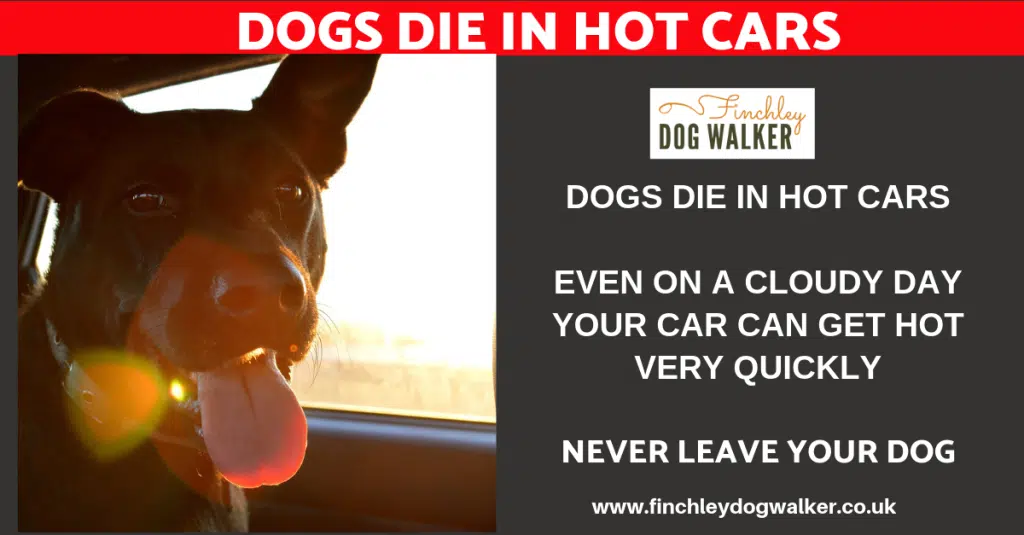
Leaving a dog in a parked car can become dangerous much more quickly than many people expect.
It does not need to feel extremely hot outside.
A vehicle can trap heat even on a mild or cloudy day. Opening a window slightly, parking in shade or leaving a bowl of water does not make it safe.
Dogs cannot regulate their body temperature as efficiently as people. They mainly rely on panting, which becomes much less effective in a hot, poorly ventilated vehicle.
Once a dog begins overheating, their condition can deteriorate rapidly.
This guide explains why parked cars are dangerous, the signs of heat-related illness, what to do if your own dog overheats and how to respond when you see a distressed dog inside someone else’s vehicle.
For the wider summer picture, including walks, pavements, hydration and indoor care, read my Summer Dog Safety Guide.
The quick answer
Never leave your dog unattended in a parked car during warm weather.
Do not rely on:
- an open window
- shade
- a sunshade
- a water bowl
- a cooling mat
- a fan
- leaving the engine running
- expecting to be away for only a minute
When planning a journey:
- travel during a cooler part of the day
- carry water and a bowl
- keep the vehicle well ventilated while moving
- plan safe rest stops
- make sure another adult can remain with your dog
- avoid destinations where your dog would need to wait in the car
- have an alternative plan in case you are delayed
If you see a distressed dog inside a hot vehicle, call 999 and ask for the police.
If you suspect heatstroke in your own dog, begin cooling immediately and contact your vet urgently.
Why do cars become so hot?
Sunlight enters a vehicle through its windows and warms the seats, dashboard and other surfaces.
The heat then becomes trapped inside.
This greenhouse effect can cause the internal temperature to rise well above the temperature outside.
Blue Cross warns that when it is 22°C outside, the temperature inside a vehicle can reach 47°C. The charity advises never leaving a dog in a car, even for a short time.
The exact speed at which a car heats will vary according to:
- direct sunlight
- cloud cover
- outside temperature
- humidity
- the colour and design of the vehicle
- window size
- ventilation
- how long the vehicle has been parked
You cannot safely calculate how long your particular dog can remain inside.
The only dependable prevention is not leaving them unattended.
It does not need to be a heatwave
Dogs can overheat in conditions that do not feel extreme to us.
Heat-related illness may develop after:
- being left inside a warm vehicle
- waiting inside a poorly ventilated van
- travelling in a hot boot area
- sitting inside a conservatory
- being confined in a warm room
- strenuous exercise
- becoming trapped somewhere without ventilation
- exposure to warm and humid conditions
The Royal Veterinary College advises that heatstroke does not always require obviously hot weather. Exercise and warm, humid or poorly ventilated environments can all cause dogs to overheat.
A cloudy sky does not make a parked vehicle safe.
The Met Office also warns that parked cars and conservatories can become life-threatening even when it is cloudy or the windows are partly open.
Is parking in the shade safe?
No.
Shade can move as the sun changes position.
The vehicle may also already be warm before you park.
Even permanent shade does not provide sufficient ventilation to ensure the internal temperature remains comfortable.
The RSPCA, Blue Cross, BSAVA and the Met Office all advise that leaving a dog in a parked car is not safe, even with the windows partly open or in shade. (Blue Cross)
Is an open window enough?
No.
Opening one or more windows slightly does not prevent dangerous heat building inside the vehicle.
It may allow limited air movement, but it does not control the internal temperature.
Opening a window widely can create additional risks, including:
- the dog escaping
- someone reaching into the vehicle
- the dog becoming caught
- the dog reacting to people or animals outside
- theft
- restricted airflow despite the opening
An open window is not a substitute for supervision and active climate control while the vehicle is moving.
What about leaving the air conditioning on?
Air conditioning can help keep a vehicle comfortable during a supervised journey.
It should not be relied upon while you leave the dog unattended.
Engines and air-conditioning systems can stop. Vehicles may switch themselves off. A delay that should take one minute may become much longer.
You may also be unable to see that:
- the dog is becoming distressed
- the temperature is rising
- the water has spilled
- the dog has become tangled
- the ventilation has failed
The safest option is to keep someone with the dog or leave the dog comfortably at home.
Which dogs are most vulnerable?
Any dog can develop heat-related illness.
Some have a higher risk, including:
- flat-faced dogs
- puppies
- older dogs
- overweight dogs
- dogs with thick coats
- very large dogs
- dogs with heart problems
- dogs with breathing or airway conditions
- dogs with lung disease
- dogs with mobility difficulties
- dogs who have previously suffered heatstroke
- dogs who are already unwell
- dogs who have recently exercised
Flat-faced dogs may find it particularly difficult to cool themselves because their shortened airways can make panting less effective.
BSAVA identifies flat-faced dogs, overweight animals, thick-coated breeds and dogs with underlying lung problems as being at greater risk of heatstroke.
However, a young, fit dog can still die in a hot vehicle.
Fitness does not make a parked car safe.
Early signs that a dog is overheating
Possible early signs include:
- heavy or excessive panting
- noisy or distressed breathing
- restlessness
- pacing
- trying to reach shade or water
- excessive drooling
- red gums or tongue
- repeatedly changing position
- refusing to move
- appearing unusually anxious
- vomiting
- diarrhoea
Do not wait for your dog to collapse.
Early action gives the dog a better chance of recovery.
The Royal Veterinary College lists panting, restlessness, drooling, red gums, vomiting and diarrhoea among the early signs of heat-related illness.
Severe signs of heatstroke
As the condition progresses, you may notice:
- weakness
- poor coordination
- confusion
- extreme tiredness
- collapse
- seizures
- reduced awareness
- difficulty breathing
- unconsciousness
Heatstroke can lead to organ damage and death.
A dog who appears to recover after cooling may still have internal complications that are not immediately visible.
Contact a vet even when the dog seems better, unless the veterinary team specifically advises otherwise.
What should you do if your dog is overheating?
Act immediately.
Current veterinary guidance is to cool first and transport second.
That does not mean delaying veterinary help. It means starting effective cooling straight away, contacting your vet, and preparing to travel.
Move your dog somewhere cooler.
Remove them from the vehicle or hot environment.
Move them into:
- shade
- an air-conditioned building
- a cool, well-ventilated room
- somewhere with a fan or breeze
Keep the dog calm and reduce movement.
Begin cooling with water.
Pour water that is cooler than the dog’s body temperature directly over their body.
For many dogs, cold tap water is appropriate.
Concentrate on wetting the:
- neck
- chest
- belly
- body
- inner thighs
Keep water away from the nose and mouth.
For a young, healthy and fully conscious dog, cold-water immersion can be an effective option when it can be done safely.
For an older, unwell, unconscious, or flat-faced dog, pouring water over the body while creating airflow is generally more manageable.
The Royal Veterinary College recommends cold-water immersion for young, healthy dogs or pouring cooler water over the dog while using a fan, breeze or air conditioning. (Royal Veterinary College)
Create air movement
Use:
- a fan
- air conditioning
- a natural breeze
- open vehicle windows during transport
Continue pouring or applying water while air moves across the wet body.
This helps heat leave through evaporation.
Offer small amounts of water.
Offer small sips if the dog is conscious and able to swallow normally.
Do not force them to drink.
Do not pour water into their mouth.
Contact your vet urgently.
Call your veterinary practice while cooling begins.
Tell them:
- your dog may have heatstroke
- what signs you have seen
- when they began
- whether the dog was inside a vehicle
- what cooling you have started
- how far away you are
Follow the veterinary team’s instructions.
Do not wrap an overheating dog in wet towels
Older advice sometimes recommended wrapping dogs in wet towels.
This can trap heat against the body once the towel warms up.
Pour water directly over the dog instead and combine it with air movement.
The Royal Veterinary College found that wet towels were less effective than immersion or soaking combined with moving air. Its current message is to use water, cool quickly and avoid delaying treatment.
You can place a wet towel beneath the dog during transport if necessary, but do not wrap the body in layers of damp material.
Should you use ice?
Do not cover the dog with ice or place ice packs directly against large areas of skin.
Do not waste time searching for ice when water is immediately available.
Cold tap water is usually much more practical.
The Royal Veterinary College advises against ice-cold water because it may reduce blood flow to the skin or trigger shivering. Use water cooler than the dog, without delaying cooling.
An ice cube in a drinking bowl is not the same as using ice as heatstroke treatment.
Read Can Dogs Have Ice Cubes? for a fuller explanation.
Continue cooling during the journey
Before placing the dog in the vehicle:
- begin cooling
- cool the vehicle itself
- switch on air conditioning
- make sure air can move around the dog
- avoid placing them in an enclosed boot
- keep wetting them as advised
- travel directly to the vet
The RVC found that placing an overheated dog in a vehicle without effective cooling could slow the dog’s body temperature reduction. Cooling should begin before transport and, where practical, continue during the journey.
What should you do if you see a dog in a hot car?
First, assess what you can see.
Signs of distress may include:
- heavy or frantic panting
- excessive drooling
- vomiting
- poor coordination
- confusion
- weakness
- collapse
- difficulty breathing
- being unresponsive
If the dog is distressed, call 999
Tell the operator:
- there is a dog inside a hot vehicle
- the dog appears distressed
- your exact location
- the vehicle registration
- the make and colour of the vehicle
- the signs you can see
- how long you have been present
A distressed dog inside a hot vehicle is an emergency.
Police guidance and major animal-welfare organisations advise calling 999 in this situation. (Ask the Police)
If the dog is not yet showing obvious distress
You can:
- note the registration
- note the time and location
- check for a pay-and-display ticket
- ask a shop, venue or event organiser to make an announcement
- ask someone to remain with the vehicle
- call 101 for police advice
- continue monitoring the dog
Do not assume a quiet dog is automatically safe.
They may be asleep, lethargic or beginning to become unwell.
Should you break the car window?
Do not force entry immediately without contacting the police.
Breaking a vehicle window may amount to criminal damage. Whether you have a legal defence will depend on the exact circumstances, what you reasonably believed and whether your actions were necessary.
Call 999 when the dog is in immediate danger and explain what you are considering.
Where possible:
- follow police instructions
- take photographs or video
- record the vehicle registration
- note the time
- obtain witness names and contact details
- remain at the scene
Police guidance warns that anyone forcing entry may later need to justify their actions.
Read Can I Legally Break a Car Window If a Dog Is Inside? for the separate legal and emergency guide.
That article provides general information rather than legal advice.
What should happen once the dog is removed?
Move the dog to a cooler, well-ventilated area.
Begin cooling with water and airflow.
Call a vet urgently.
Do not:
- encourage the dog to walk around
- wrap them in wet towels
- force them to drink
- give human medication
- assume that panting stopping means recovery
- allow them to run or become excited
- send them home without veterinary advice
Continue following instructions from the police and veterinary team.
Planning car journeys with a dog
Good planning prevents situations where the dog has nowhere safe to go.
Before travelling, ask:
- Does my dog need to make this journey?
- What will the temperature be?
- Can I travel earlier?
- Where will we stop?
- Is shade available?
- Can another adult stay with the dog?
- Are dogs allowed at the destination?
- What happens if I am delayed?
- Where is the nearest veterinary practice?
- Does my dog cope well with travel?
Carry:
- fresh water
- a suitable bowl
- a secure restraint or travel crate
- towels
- veterinary contact details
- medication
- familiar bedding
- poo bags
- a charged phone
Keep the vehicle cool and ventilated before your dog enters.
Read my main Travelling With a Dog Guide for restraint, breaks, travel sickness and holiday planning.
For warm-weather journeys, read Travelling With Your Dog During Summer.
Plan service-station stops before travelling
Service stations and motorway stops create a common problem.
You may need:
- the toilet
- food
- fuel
- a drink
- help with another passenger
Do not leave your dog inside the car while everyone goes inside.
Travel with another adult who can remain with the dog, or take turns leaving the vehicle.
Choose a safe, shaded place for a toilet and water break, but keep your dog securely attached. Service stations are busy, unfamiliar environments close to moving traffic.
Do not leave dogs in dog-walking vans
Professional care does not make an unattended vehicle safer.
Dogs transported in vans may be affected by:
- heat
- poor ventilation
- delays
- traffic
- vehicle failure
- being unable to move away from the hottest area
- stress caused by unfamiliar dogs
- water bowls being knocked over
A fan cannot guarantee that the vehicle will remain safe.
My walks start and finish at the client’s home.
I work locally and on foot, without vans, cars or group collection rounds. This removes the need for dogs to spend part of their booked walk waiting inside a vehicle.
You can read more about my one-to-one solo dog walks.
Hot cars are not only a summer problem.
A vehicle can become warm during spring, early autumn or an unexpectedly sunny winter day.
The risk depends on the conditions inside the vehicle, not the month displayed on the calendar.
Direct sunlight through glass can heat the interior even when the air outside feels mild.
Treat every parked vehicle as a potentially changing environment.
Conservatories and hot rooms can be dangerous too
Cars receive the most attention, but dogs can also overheat inside:
- conservatories
- sunrooms
- poorly ventilated kitchens
- garden buildings
- tents
- caravans
- motorhomes
- enclosed balconies
- rooms with large south-facing windows
Make sure your dog can move into a cooler area.
Provide:
- ventilation
- shade
- fresh water
- access to more than one resting place
- supervision during very warm weather
A cooling mat or fan may help keep a dog comfortable, but it cannot make a dangerously hot room safe.
Common hot-car myths
“I will only be gone for a minute”
Queues, conversations and payment problems can all create delays.
The dog cannot leave the vehicle when conditions worsen.
Take them with you where permitted, leave another adult with them or change the plan.
“The windows are open”
Partly open windows do not prevent dangerous heat building inside.
“The car is in the shade”
Shade moves, and the vehicle may already be warm.
“There is water in the car”
Water may spill, become warm or remain untouched by a distressed dog.
Water does not lower the vehicle’s temperature.
“My dog is used to hot weather”
Previous exposure does not protect a dog from heatstroke.
“My dog is young and fit”
Young and fit dogs can still overheat.
Some active dogs may continue to become excited even as their body temperature rises.
“The air conditioning is running”
Mechanical systems can fail or switch off.
A dog should not be left without someone able to respond immediately.
“A cooling mat makes the car safe”
Cooling products are optional aids for suitable environments.
They do not make an unattended parked car safe.
My Hot Weather Dog Kit explains the limited role of cooling products and why timing, shade and sensible decisions matter more.
How I adapt dog care during hot weather
I do not use vehicles to transport dogs.
Because each walk is one-to-one and begins at the dog’s home, I can adapt the service around the dog and conditions.
A booked walk may become:
- an earlier walk where agreed and practical
- a shorter local outing
- a slow toilet and sniff break
- a shaded route
- calm indoor care
- a hot-weather comfort visit
- a cancellation when no safe option is available
My Extreme Weather Policy explains how I make these decisions.
You can also read about Hot-Weather Dog Comfort Visits in Finchley.
Frequently asked questions
Can I leave my dog in the car for five minutes?
No dependable safe period exists.
Vehicles can heat rapidly, and delays happen. Keep someone with your dog or leave them safely at home.
Is a car safe when it is only 18°C outside?
Do not assume that a mild outdoor temperature makes the vehicle safe.
Sunlight, ventilation, humidity and the individual dog all affect the risk.
Is parking in shade with the windows open safe?
No.
Shade and open windows do not reliably prevent the internal temperature from rising. (Blue Cross)
What should I do when I see a distressed dog in a car?
Call 999 and ask for the police.
Give the exact location, registration number and signs you can see. Follow police instructions and continue monitoring the dog. (Ask the Police)
Should I call the RSPCA or the police?
Call 999 first when the dog is in immediate danger.
The police can respond to an emergency and advise you about entry to the vehicle. The RSPCA may provide additional animal-welfare advice but does not have the same emergency entry powers as the police.
Can I smash the window?
Do not force entry straight away.
Call the police and explain the emergency. Breaking a window may be treated as criminal damage, and you may need to justify your actions.
What are the first signs of heatstroke?
Early signs can include excessive panting, restlessness, drooling, red gums, vomiting, diarrhoea and seeking shade or water.
How should I cool an overheated dog?
Move them somewhere cool, pour cool water over their body, create air movement and contact a vet immediately. Current veterinary guidance is to cool first and transport second.
Should I use wet towels?
Do not wrap the dog in wet towels.
Pour water directly over the body and combine it with air movement. Wet towels can warm up and become less effective.
Does the dog still need a vet if they appear better?
Yes, unless your veterinary team specifically advises otherwise.
Heatstroke can cause internal complications that are not immediately visible.
No errand is worth risking your dog’s life
The safest hot-car rule is simple.
Do not leave your dog inside a parked vehicle.
Not for a quick shop.
Not while collecting something.
Not while calling into a café.
Not because the windows are open.
Not because the car is in the shade.
Plan the complete journey before leaving home.
When your destination cannot safely accommodate your dog, leave them somewhere cool and familiar with suitable care.
For the complete summer picture, read my Summer Dog Safety Guide.
Related Finchley Dog Walker guides
- Summer Dog Safety Guide
- Heatstroke in Dogs: Signs and First Aid
- Can I Legally Break a Car Window?
- Travelling With a Dog
- Travelling With Your Dog During Summer
- Hot Weather Dog Kit
- Extreme Weather Policy
- Can Dogs Have Ice Cubes?
- Solo Dog Walks
Veterinary and legal disclaimer
This article provides general information on dog welfare, first aid, and emergencies.
It does not diagnose heatstroke, prescribe veterinary treatment or replace an examination by a veterinary surgeon. Under the Veterinary Surgeons Act 1966, diagnosis and veterinary treatment are matters for an appropriately qualified veterinary surgeon.
Heatstroke is an emergency. Begin suitable cooling and contact your vet immediately if you think your dog is affected.
The information about vehicle entry is general guidance rather than legal advice. Call the police before considering damage to another person’s vehicle and follow their instructions.