
Updated June 2026
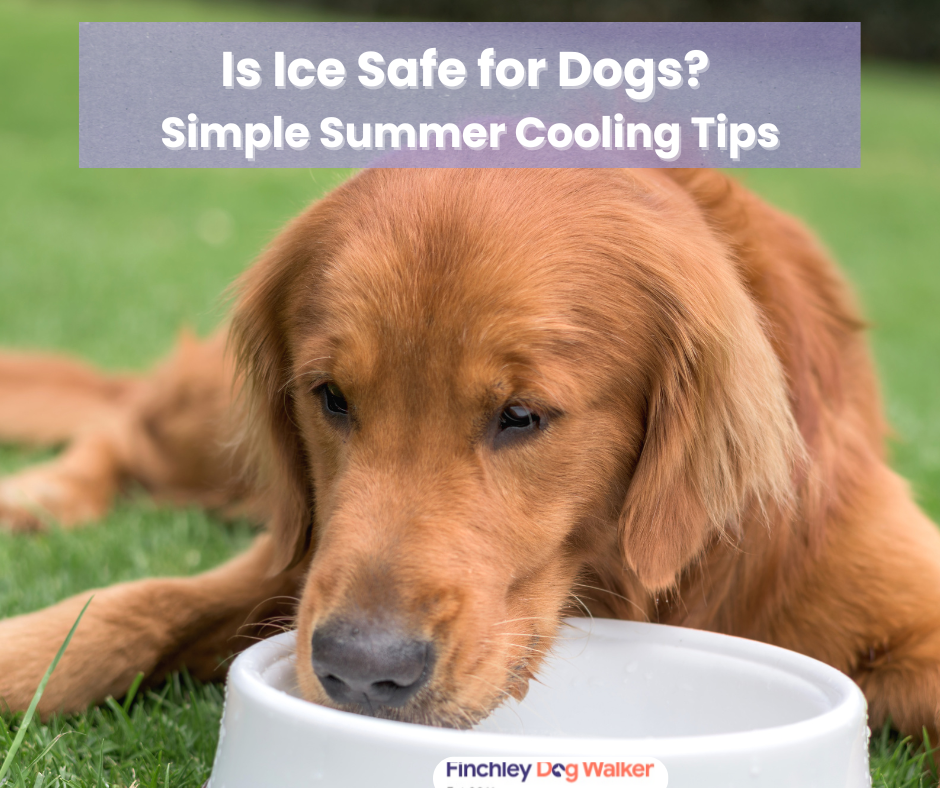
Can dogs have ice cubes?
For most healthy dogs, the answer is yes.
A small amount of ice, crushed ice or a few cubes in a water bowl can help keep water cool. It does not trick your dog’s body into becoming hotter.
There are still a few risks to consider.
Hard ice can damage teeth. Large pieces may be difficult to swallow. Ice is also not a treatment for heatstroke.
This guide explains when ice is safe, when I would avoid it and what to do if your dog is overheating.
You can find broader warm-weather advice in my Summer Dog Safety Guide
Can dogs eat ice safely?
Most healthy dogs can lick or eat a small amount of ice.
You can also put a few cubes in their water bowl if they like their water cooler.
The idea that ice automatically raises a dog’s temperature is a social media myth. Both PDSA and the Royal Kennel Club say that ice can be used safely to help pets feel cooler in ordinary hot-weather conditions.
The way your dog interacts with the ice matters.
A dog that quietly licks a melting cube is at much less risk than a strong chewer trying to crush a large, solid block.
Is crushed ice safer than ice cubes?
Crushed ice or ice shavings are often the safer choice.
They are:
- easier to lick
- less likely to damage teeth
- less likely to become stuck
- suitable for scattering over food
- easy to add to a water bowl
You can also let an ordinary cube soften for several minutes before offering it.
PDSA recommends avoiding solid ice cubes for enthusiastic chewers, as very hard ice can fracture teeth.
Can ice damage a dog’s teeth?
Yes.
Solid ice is hard enough to chip or fracture a tooth, particularly when a dog bites down forcefully.
I would take extra care with:
- older dogs
- dogs with existing dental disease
- dogs that have previously fractured a tooth
- dogs that bite and crush objects
- puppies losing their baby teeth
- dogs recovering from dental treatment
Safer options include:
- crushed ice
- ice shavings
- partly melted cubes
- a large frozen bowl of water that the dog can lick
- frozen wet food that has been allowed to soften slightly
Do not use large, rock-hard frozen treats as a test of your dog’s chewing strength.
Could a dog choke on an ice cube?
The risk is low, but anything firm that goes into a dog’s mouth can become a choking risk.
Large cubes are more of a concern for:
- small dogs
- dogs that gulp food
- dogs with swallowing difficulties
- dogs with dental or jaw problems
- dogs that become overexcited around food
Choose pieces suited to your dog’s size and supervise them.
A slushy mixture or crushed ice is usually a better choice for a dog that tends to swallow without chewing.
Do ice cubes cause bloat?
Ice itself is not known to cause bloat.
The Royal Kennel Club states that occasional ice cubes or frozen treats are unlikely to have a meaningful effect on a dog’s risk of developing bloat.
The greater concern is a dog eating or drinking very quickly, particularly around strenuous exercise.
If your dog is one of the larger, deep-chested breeds associated with bloat, follow any individual advice given by your vet.
Do not withhold normal access to fresh water because of a fear of ice.
Watch how your dog drinks and avoid encouraging frantic gulping after intense activity.
Signs of bloat can include:
- a swollen or tight-looking abdomen
- restlessness
- repeated attempts to vomit without producing anything
- distress
- excessive drooling
- weakness or collapse
Bloat is an emergency. Contact a vet immediately if you suspect it.
Can dogs have ice cubes in their water?
Yes.
You can add a few ice cubes to your dog’s water bowl during warm weather.
This can:
- Help keep the water cool
- interested dogs that enjoy moving objects
- Encourage some dogs to investigate the bowl
- make water more pleasant on a warm day
Your dog should still have normal access to clean, fresh drinking water.
Ice should not be their only source of water.
Keep the bowl in the shade and refresh it regularly. Dogs Trust recommends giving dogs access to shade and plenty of fresh water throughout the day.
Can puppies have ice cubes?
A puppy can lick a small, softened cube or crushed ice under supervision.
However, I would not use hard ice cubes as a regular teething product.
Puppies can be enthusiastic chewers, and their mouths are still developing. A damp cloth chilled in the fridge or an age-appropriate puppy toy may be a more suitable option.
Speak to your vet if your puppy is in pain, has damaged a tooth or is refusing food.
What about frozen treats?
Frozen treats can provide calm enrichment when it is too warm for a full walk.
Simple options include:
- some of your dog’s usual wet food frozen in a suitable toy
- soaked kibble frozen in a shallow dish
- crushed ice added to their normal food
- small pieces of dog-safe fruit frozen in water
- a partly frozen lick mat
Allow very hard treats to soften before giving them to your dog.
Introduce new foods slowly. A frozen treat can still upset your dog’s stomach if it contains rich ingredients or if they eat too much.
For recipes and safer filling ideas, read my Healthy Summer Treats Guide
You can also find practical cooling equipment in my Hot Weather Dog Kit and recommended products
Can you give ice to a dog with heatstroke?
Do not rely on ice cubes or frozen treats to treat heatstroke.
The priority is to cool your dog’s body immediately and contact a vet.
Current guidance from the Royal Veterinary College supports cooling first rather than delaying while you travel to the veterinary practice.
If you think your dog has heatstroke:
- Stop all exercise.
- Move them into shade or a cooler place.
- Call your vet.
- Pour water that is cooler than the dog’s body over their body.
- Use a fan, breeze or air conditioning while they are wet.
- Offer water if they are conscious, but do not force them to drink.
- Continue cooling during the journey to the vet where possible.
Water from a cold tap is suitable. Avoid getting water into the dog’s nose or mouth.
Do not wrap your dog in a wet towel. A covering can trap heat. Your dog may lie on a cold wet towel, but it should not be wrapped around them.
You can also review my First Aid for Dogs Hub
Signs of heatstroke
Warning signs can include:
- heavy or continuous panting
- excessive drooling
- breathing difficulties
- confusion
- poor coordination
- vomiting
- diarrhoea
- weakness
- collapse
- seizures
Heatstroke can become serious very quickly. Begin cooling and contact your vet immediately.
When should a dog avoid ice?
I would avoid solid ice cubes if your dog:
- has damaged or painful teeth
- has recently undergone dental treatment
- has difficulty chewing
- has difficulty swallowing
- has a history of choking
- tries to swallow cubes whole
- has a medical condition affected by fluid intake
- has been advised by a vet not to have frozen food
You do not necessarily need to avoid all frozen items.
Crushed ice, a slushy mixture or softened frozen food may still be suitable. Ask your vet if you are unsure.
How I manage dogs during hot weather
Ice cubes are a small part of summer care.
The basics matter far more:
- avoid unnecessary activity during the hottest part of the day
- provide shade and fresh water
- Use cooler routes
- shorten walks
- avoid high-energy games
- Give dogs time to rest
- Use calm indoor enrichment where needed
During very warm weather in Finchley, I may move, shorten or replace a full walk with a toilet break and enrichment visit.
My Extreme Weather Policy covers that.
This is particularly important for:
- older dogs
- puppies
- flat-faced breeds
- overweight dogs
- dogs with heart or breathing conditions
- dogs with thick coats
- nervous dogs that become more stressed when uncomfortable
My calm one-to-one dog walks in Finchley allow the route, pace, and timing to be adjusted to suit the individual dog.
Quick ice safety checklist
Before giving your dog ice, ask:
- Is my dog healthy and behaving normally?
- Are their teeth in good condition?
- Is the ice small, crushed or partly melted?
- Am I there to supervise?
- Does my dog lick rather than gulp?
- Is fresh drinking water also available?
- Am I using ice as a small extra rather than a heatstroke treatment?
For most dogs, ice can be offered safely when those points are covered.
Final thoughts
Most healthy dogs can have ice cubes.
The safest approach is to use crushed, shaved or partly melted ice and supervise your dog.
Ice does not cause a dog’s body to overheat. It is also not known to cause bloat on its own.
The main risks are damaged teeth, choking and allowing a frozen treat to distract from more important hot-weather care.
If your dog is showing signs of heatstroke, do not spend time preparing ice treats. Start cooling their body and contact a vet immediately.
Veterinary disclaimer
This article is for general information only and does not replace veterinary advice. If your dog is overheating, unwell or showing possible signs of heatstroke, begin cooling them and contact your vet immediately.
Related guides
- Summer Dog Safety Guide
- Healthy Summer Treats
- Hot Weather Dog Kit
- Extreme Weather Policy
- First Aid for Dogs Hub
- More dog and cat care guides
Frequently asked questions
Are ice cubes safe for dogs?
Most healthy dogs can safely have a small amount of ice. Crushed, shaved or partly melted ice is usually safer than a large solid cube.
Can dogs have ice cubes in their water bowl?
Yes. A few ice cubes can help keep water cool. Your dog should still have constant access to clean, fresh water.
Can ice cubes break a dog’s teeth?
Yes. Hard ice can chip or fracture teeth, particularly in strong chewers or dogs with dental disease. Crushed ice is a safer option.
Can ice cubes cause bloat in dogs?
Ice cubes are not known to cause bloat. Eating or drinking very quickly and exercising close to meals are more relevant concerns.
Can I give ice to an overheating dog?
Do not use ice cubes to treat heatstroke. Begin cooling the dog’s body with water, create airflow and contact a vet immediately.
Can puppies have ice cubes?
Puppies can lick a small amount of crushed or softened ice under supervision. Hard cubes should not be used as a regular teething product.
How many ice cubes can a dog have?
No fixed number suits every dog. Start with a small amount suited to your dog’s size. Ice should remain an occasional extra and should not replace drinking water.
Can dogs have homemade ice lollies?
They can have frozen treats made from dog-safe ingredients. Avoid human ice lollies unless every ingredient has been checked carefully. Allow very hard treats to soften before giving them to your dog.
Below are some other posts you may be interested in


