Updated August 2026
A nervous dog does not need to be pushed into being braver.
They need opportunities to feel safe, make manageable choices, rest without disturbance and learn that the people around them will listen when they need space.
This is particularly important for newly adopted rescue dogs, dogs adjusting after a move, dogs frightened by visitors and dogs who find ordinary household activity overwhelming.
Helping a dog settle is rarely about one product, training trick or fixed timetable. It is about creating an environment where they can begin to relax at their own pace.
Summary
- Give your dog a quiet, comfortable resting area where children, visitors and other pets leave them alone.
- Keep feeding, toilet breaks, walks and household routines reasonably predictable.
- Allow your dog to approach people when they are ready. Do not force touching, greetings or exploration.
- Use gates, separate rooms and sensible management to reduce pressure without isolating or punishing your dog.
- Keep early walks quiet and manageable. Distance covered is less important than whether your dog can cope and recover.
- Sudden or worsening anxiety can be connected to pain or illness and should be discussed with your vet.
- Severe fear, aggression, self-injury or an inability to settle may require an accredited behaviour professional working with your vet.
Affiliate disclaimer: This page contains affiliate links. If you buy through one of these links, I may receive a small commission at no additional cost to you. As an Amazon Associate, I earn from qualifying purchases. Products may help you create a comfortable environment, but they cannot diagnose or cure fear, anxiety or behavioural problems.
Important: This guide provides general educational information. It is not a veterinary diagnosis, an individual behaviour assessment, or a clinical behaviour programme. Contact your vet about sudden, severe or worsening behavioural changes.
Table of contents
- Summary
- What does feeling safe mean to a dog?
- Signs that your dog may not feel safe
- Create a safe resting space.
- Safe-space rules for the household
- Should you use a crate?
- Use gates and barriers thoughtfully.
- Keep routines predictable without becoming rigid
- Allow your dog to settle at their own pace.
- Is the rescue-dog 3-3-3 rule accurate?
- Do not force affection
- Should you comfort a frightened dog?
- Visitors and nervous dogs
- Nervous dogs and children
- Help your dog cope with household noise
- Sleep and rest are part of emotional wellbeing
- Keep early walks calm and manageable
- Low-pressure enrichment at home
- Choice can help build confidence.
- Confidence-building through movement
- Avoid too much too soon
- Keep a simple settling diary
- When your dog struggles to settle at night
- Could pain or illness be affecting behaviour?
- When to seek accredited behavioural support
- How calm one-to-one care may help
- Staying at home while you are away
- My professional boundaries
- Related guides
- Frequently Asked Questions
- How long does it take a nervous dog to settle?
- Is the rescue-dog 3-3-3 rule accurate?
- Should I leave a nervous dog alone?
- Should I comfort my frightened dog?
- Should I force my nervous dog to meet visitors?
- Should a nervous dog use a crate?
- Why will my nervous dog not eat?
- Why does my dog follow me everywhere?
- Do nervous dogs need more exercise?
- Can enrichment help a nervous dog?
- When should I contact my vet?
- Can house sitting help a nervous dog?
- Calm, predictable and low pressure
What does feeling safe mean to a dog?
Physical safety matters, but emotional safety is more than preventing physical harm.
A dog may have food, water, shelter, and regular walks yet still feel unable to relax.
A dog is more likely to feel emotionally safe when they:
- Can move away from unwanted interaction
- Have somewhere comfortable to rest
- Are not repeatedly surprised or disturbed
- Can predict important parts of their routine
- Are not forced towards frightening things
- Have their quieter communication noticed
- Can choose whether to approach
- Receive calm, consistent handling
- Are protected from overwhelming situations
- Are not punished for fear-related behaviour
When a dog feels safe, they are generally better able to sleep, eat, explore, play, and learn.
This does not mean that every nervous dog will become confident in every situation. The goal is to improve their everyday welfare and help them cope without unnecessary pressure.
For more about canine communication, visit my Dog Behaviour, Body Language and Emotional Wellbeing Hub.
Signs that your dog may not feel safe
Nervousness does not always look dramatic.
Possible signs include:
- Hiding
- Freezing
- Moving away
- Crouching
- Pacing
- Panting when not hot
- Trembling
- Following you constantly
- Refusing food
- Eating only when the house is quiet
- Avoiding particular rooms
- Startling at small noises
- Barking at windows or doors
- Reacting to visitors
- Struggling to sleep
- Remaining watchful while lying down
- Toileting indoors
- Becoming unusually quiet
- Growling when approached or touched
- Trying to escape
- Becoming unable to settle
One signal does not prove that your dog is frightened. Look at the whole dog, the situation and changes from their normal behaviour.
Read Dog Stress and Threshold Signs for a fuller explanation of subtle stress signals.
Create a safe resting space.
Every dog needs somewhere they can rest without being repeatedly disturbed.
A suitable resting area should be:
- Quiet
- Comfortable
- Away from busy walkways
- Protected from draughts
- At a safe temperature
- Away from loud appliances
- Easy for the dog to enter and leave
- Somewhere children and visitors do not enter
- Large enough for the dog to change position comfortably
Your dog may prefer:
- A bed in a quiet corner
- A covered area beneath a table
- An open crate they already enjoy using
- Part of a familiar room
- An area behind a stair gate
- A separate quiet room
- Somewhere close to you but away from direct activity
Observe where your dog naturally chooses to rest. A beautiful new bed in the middle of a busy room may be less useful than an ordinary blanket in a quiet corner.
The Dogs Trust guide to creating a safe space explains that a dog’s safe space should feel comfortable and should never be used as punishment.
Safe-space rules for the household
A safe space only works if everyone respects it.
Agree that:
- Children do not enter
- Visitors leave the dog alone
- Other pets are prevented from disturbing them
- Nobody drags the dog out
- Nobody reaches in to stroke them
- Food and toys are not repeatedly removed
- The area is not used for punishment
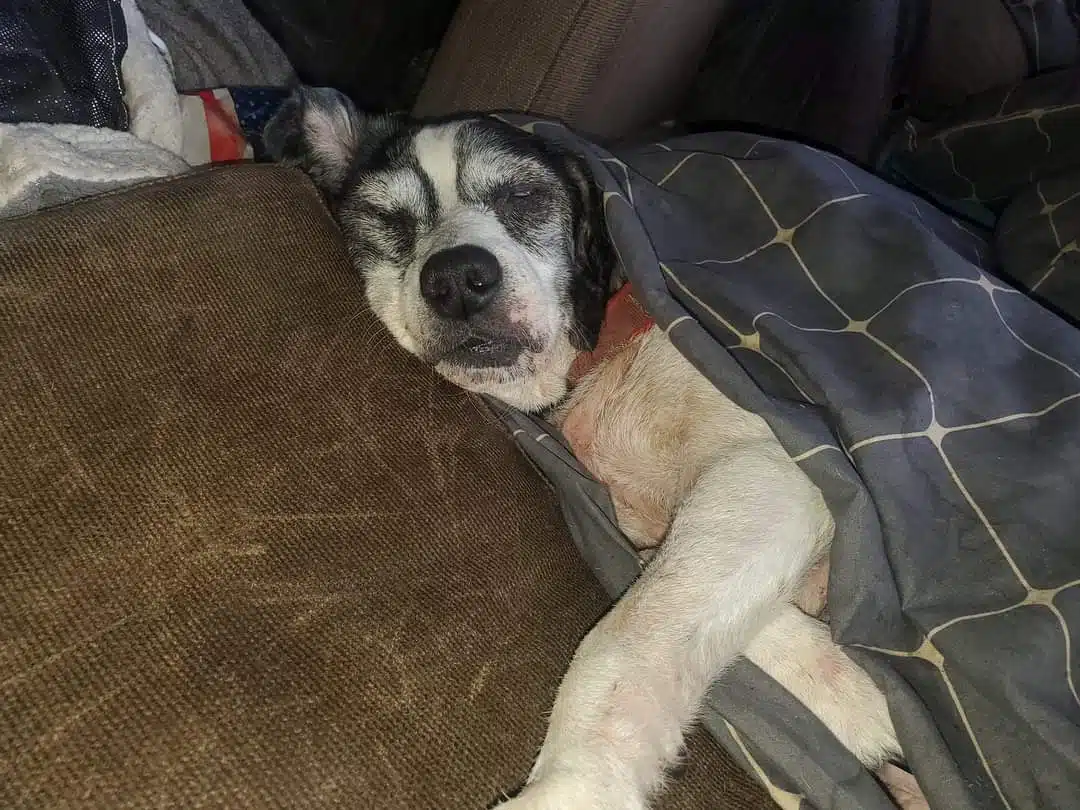
- The dog is allowed to sleep
- The dog can leave when they choose
Do not send your dog to their bed as a punishment and then expect the same place to feel safe.
If you need your dog to leave the area, encourage them to move voluntarily to a safe area. Do not corner, grab or pull out a nervous dog.
Should you use a crate?
A crate can provide a comfortable resting area for a dog who has already learned to enjoy using it.
It should not be used to:
- Trap a frightened dog
- Punish unwanted behaviour
- Prevent normal movement for excessive periods
- Force separation before the dog is ready
- Contain a dog who panics when enclosed
- Replace appropriate supervision and care
Do not suddenly shut a nervous dog in an unfamiliar crate, as it may be described as a den.
Leave the door open initially and allow the dog to investigate on its own. Some dogs prefer an open bed, a covered table, or a gated section of a room.
The right choice depends on the individual dog.
Use gates and barriers thoughtfully.
A suitable gate can reduce pressure while allowing your dog to observe household activity.
It may help:
- Manage visitors
- Separate children and dogs
- Prevent crowding at the front door
- Give household dogs separate areas
- Protect the dog while they eat
- Create a quieter resting zone
- Allow gradual introductions
A barrier should not leave the dog trapped next to something they fear.
Check that:
- The dog cannot jump over or crawl underneath
- There are no dangerous gaps
- The dog cannot become caught
- The barrier is securely fitted
- Children cannot open it
- The dog has water and somewhere comfortable to rest
- The dog is not panicking behind it
View a wide mesh dog gate on Amazon UK
A gate is a management tool. It does not resolve fear by itself.
Keep routines predictable without becoming rigid
Predictability can help a nervous dog understand what happens next.
Try to keep the general pattern of the day consistent:
- Morning toilet opportunity
- Mealtimes
- Walks
- Rest periods
- Medication
- Evening routine
- Bedtime
This does not need to happen at the same minute every day.
A routine should reassure your dog without making small, unavoidable changes impossible for them to manage.
If you need to make a change, do so gradually where practical.
For a newly adopted dog, ask the rescue organisation about:
- Previous feeding times
- The food they have been eating
- Toilet habits
- Sleeping arrangements
- Known fears
- Medication
- Handling preferences
- Equipment
- Behaviour around children and other animals
Familiarity can make the transition easier.
Allow your dog to settle at their own pace.
Some dogs explore a new home immediately. Others remain in one area, avoid interaction or appear unusually quiet.
Do not measure progress against another dog.
During the first few days:
- Keep the home calm
- Limit visitors
- Avoid unnecessary trips
- Allow plenty of sleep
- Keep interactions brief
- Let the dog approach
- Provide regular toilet opportunities
- Keep walks simple
- Prevent children from crowding
- Avoid introducing several animals at once
- Do not test every known fear
The Dogs Trust guide to helping a rescue dog settle recommends allowing dogs to adjust at their own pace and avoiding forced interaction.
Is the rescue-dog 3-3-3 rule accurate?
You may have heard that a rescue dog needs:
- Three days to decompress
- Three weeks to learn the routine
- Three months to feel at home
This can be a helpful reminder that settling takes time, but it is not a scientific timetable or promise.
Some dogs begin to relax quickly. Others need much longer.
A dog may also appear quiet during the first few weeks and display more behaviour later as they become confident enough to express themselves.
Judge progress by the dog in front of you, not a date on the calendar.
Useful progress might include:
- Eating more consistently
- Sleeping more deeply
- Exploring another room
- Approaching voluntarily
- Recovering more quickly after a noise
- Playing briefly
- Resting while you move around
- Showing normal curiosity
- Going outside more comfortably
Progress can fluctuate. A difficult day does not necessarily mean that everything has gone backwards.
Do not force affection
It is natural to want to reassure a frightened dog with touch.
However, physical contact is not comforting if the dog does not want it.
Allow your dog to approach.
If they choose contact:
- Stroke the chest or shoulder briefly.
- Stop after a few seconds.
- Allow the dog to choose whether to remain or move away.
- Do not follow them if they leave.
Stop if the dog:
- Turns away
- Moves away
- Freezes
- Closes their mouth
- Licks their lips
- Lowers their body
- Shows the whites of their eyes
- Growls
- Tries to hide
Read “Does My Dog Want to Be Petted?” for more on choice and consent.
Visitors should also read How to Greet a Dog Properly.
Should you comfort a frightened dog?
You do not need to ignore a frightened dog because you are worried about rewarding fear.
You can provide calm support.
That might mean:
- Remaining nearby
- Speaking gently
- Allowing the dog to move closer
- Giving them access to their safe space
- Creating distance from the trigger
- Reducing noise
- Closing curtains
- Moving visitors away
- Providing touch if the dog actively seeks and enjoys it
Avoid frantic reassurance, restraining the dog or forcing physical contact.
Your response should help make the situation safer rather than add more stimulation.
Visitors and nervous dogs
Visitors can be difficult because they bring unfamiliar smells, voices, movement and expectations.
Before the visitor arrives:
- Exercise or toilet your dog appropriately
- Set up their resting area
- Prepare a secure barrier
- Close curtains if arrivals at the window cause barking
- Ask the visitor to contact you rather than knock loudly
- Put food, chews and toys away if guarding is a concern
- Decide whether complete separation is safer
Ask visitors to:
- Ignore the dog initially
- Avoid direct eye contact
- Keep their hands to themselves
- Avoid leaning over the dog
- Remain seated where appropriate
- Let the dog approach
- Stop if the dog moves away
- Leave the safe space alone
- Follow your instructions
A visitor should not lure a nervous dog closer with food and then attempt to touch them.
Food can be placed away from the visitor to give the dog more distance and choice, but only where food is safe and appropriate for that dog.
Nervous dogs and children
Children should never enter a dog’s resting area.
Teach children to:
- Leave sleeping dogs alone
- Avoid hugs
- Keep their face away from the dog’s face
- Never take food or toys
- Avoid chasing
- Stop when the dog moves away
- Use quiet voices around a resting dog
- Ask an adult before interacting
Dogs and children require active adult supervision.
If you cannot supervise closely, use secure separation.
Read Dogs and Children: Keeping Children Safe Around Dogs.
If a dog has growled at, snapped at or bitten a child, separate them safely and seek veterinary and accredited behavioural help.
Help your dog cope with household noise
Some nervous dogs remain alert to:
- Doorbells
- Letterboxes
- People in communal hallways
- Traffic
- Neighbours
- Deliveries
- Washing machines
- Vacuum cleaners
- Building work
- Children playing
- Dogs barking outside
You may be able to reduce the impact by:
- Moving the bed away from windows and doors
- Closing curtains
- Using a quieter room
- Asking delivery drivers not to knock
- Using a secure letterbox guard
- Running household appliances when the dog is elsewhere
- Providing steady background sound
- Giving the dog access to a quieter area
- Planning around known building work
Do not repeatedly expose your dog to frightening noise to make them get used to it.
Noise sensitivity can also be influenced by pain. Contact your vet if it appears suddenly or worsens significantly.
Sleep and rest are part of emotional wellbeing
A nervous dog may appear tired while remaining unable to sleep properly.
They may:
- Lie down and immediately get up
- Follow you between rooms
- React to small sounds
- Sleep lightly
- Patrol windows and doors
- Become restless in the evening
- Growl when disturbed
- Appear increasingly irritable
Allow uninterrupted rest.
The dog should not be repeatedly:
- Stroked
- Moved
- Photographed
- Called out of bed
- Disturbed by children
- Approached by other pets
Puppies, senior dogs and dogs adapting to a new home may need more rest than owners expect.
A comfortable bed can support rest, but it is the location, routine and freedom from disturbance that make the greatest difference.
View a comfortable dog bed on Amazon .UK
Choose a bed that suits your dog’s size, mobility, temperature needs and sleeping style.
Keep early walks calm and manageable
The outside world may be much harder than the home.
A newly adopted or nervous dog may struggle with:
- Traffic
- Unfamiliar people
- Other dogs
- Narrow pavements
- Bicycles
- Children
- Sudden sounds
- Leaving the house
- Wearing unfamiliar equipment
Early walks should focus on safe, manageable experiences rather than distance.
That may mean:
- Staying close to home
- Walking at quieter times
- Choosing wider pavements
- Avoiding busy parks
- Allowing time to sniff
- Turning back early
- Crossing the road
- Using familiar routes
- Giving the dog space
- Returning home before they become overwhelmed
Do not drag a dog who freezes or refuses to continue.
Read What to Do When Your Dog Refuses to Walk and Why Dogs React on the Lead.
Low-pressure enrichment at home
Enrichment can provide safe opportunities to sniff, search, lick, chew and investigate.
Suitable activities may include:
- Scattering part of a meal
- Placing food in an open cardboard box
- A simple scent search
- An easy food-dispensing toy
- Gentle play
- A familiar chew
- Exploring a safe garden
- Choosing between two toys
Keep activities easy.
Stop or simplify the activity if your dog:
- Freezes
- Moves away
- Refuses food
- Barks at the object
- Bites it frantically
- Becomes tense
- Guards it
- Cannot settle afterwards
Read Low-Pressure Enrichment Games for Nervous and Rescue Dogs.
A familiar lick mat or KONG may help some dogs, but it should not be introduced as a cure for anxiety.
View the KONG Classic on Amazon UK
Always supervise first use, select an appropriate size and include food within your dog’s normal dietary allowance.
Choice can help build confidence.
Dogs have limited control over much of their daily lives. People decide when they eat, where they walk, who enters the home and when interaction begins.
Appropriate choices may include:
- Whether to approach someone
- Where to rest
- Whether to engage with a toy
- Which direction to sniff
- Whether to move away
- Whether to continue an interaction
- Which of two suitable resting places to use
- Whether to observe from a distance
Choice does not mean allowing dangerous behaviour or removing all boundaries.
It means providing safe options and listening when the dog communicates that something is too difficult.
Confidence is more likely to grow through manageable successes than forced exposure.
Confidence-building through movement
Slow, thoughtful movement can help some dogs become more aware of their body and investigate safe challenges.
A simple confidence course might use:
- Mats with different safe textures
- Low objects to step over
- Wide spaces to walk around
- Cones or plant pots to weave around
- A stable board placed flat on the ground
- Safe objects to investigate voluntarily
Keep everything low, stable and non-slip.
Allow your dog to move at their own pace and in both directions. Do not pull them over a surface or lure them onto something from which they feel unable to retreat.
Avoid raised, narrow or unstable equipment unless you have appropriate professional guidance. Puppies, seniors and dogs with pain or mobility concerns need particular care.
Movement exercises should support confidence, not test courage.
Avoid too much too soon
Common sources of unnecessary pressure include:
- Several visitors
- Busy dog parks
- Daycare
- Long journeys
- Crowded shopping areas
- Repeated greetings
- Constant training
- Difficult food puzzles
- Being taken to several new places
- Long, stimulating walks
- Rough play
- Insufficient sleep
A dog may appear to cope at first and react more strongly later.
This accumulation is sometimes called trigger stacking.
After a demanding event, make the rest of the day easier.
Read Is Your Dog Overstimulated, Bored or Overtired?.
Keep a simple settling diary
A short diary can help you recognise patterns.
Record:
- Meals
- Sleep
- Toileting
- Walks
- Visitors
- Unusual noises
- Medication
- Appetite
- Hiding
- Barking
- Growling
- Interactions the dog enjoyed
- Situations they avoided
- How long recovery took
Do not turn the diary into a daily score of whether your dog has succeeded or failed.
Use it to identify:
- Times the dog is more settled
- Triggers you had not noticed
- Possible health changes
- Activities that help
- Situations that regularly make things worse
- Information to share with your vet or behaviour professional
When your dog struggles to settle at night
Night-time can be difficult in an unfamiliar home.
Your dog may:
- Pace
- Whine
- Bark
- Follow you
- React to outside noises
- Refuse to remain in another room
- Wake frequently
- Need additional toilet opportunities
Before bedtime:
- Provide an appropriate toilet opportunity
- Keep the final part of the evening calm
- Make water available
- Check the room temperature
- Close curtains
- Use familiar bedding
- Avoid frantic play
- Ensure the sleeping area is accessible
A newly adopted dog may initially settle better with a trusted person nearby.
Do not abruptly isolate a dog who is showing significant distress. If difficulties continue, speak to the rescue organisation, your vet or an accredited behaviour professional.
Persistent night-time restlessness can also be associated with pain, digestive discomfort, urinary problems or cognitive changes.
Could pain or illness be affecting behaviour?
Pain does not always cause obvious limping or crying.
An uncomfortable dog may:
- Avoid touch
- Become restless
- Struggle to sleep
- Growl when moved
- Stop using stairs
- Walk more slowly
- Avoid lying on one side
- Become unusually clingy
- Withdraw
- React more strongly to noise
- Lose interest in food
- Become suddenly irritable
Contact your vet when behaviour is new, severe, worsening or accompanied by physical changes.
Do not assume that a dog needs more training.
For wider health guidance, visit my Dog Health and First Aid Guide.
When to seek accredited behavioural support
Professional help may be needed where your dog:
- Cannot settle despite sensible environmental changes
- Experiences severe panic
- Regularly tries to escape
- Injures themselves
- Shows escalating aggression
- Has bitten
- Guards food, toys or resting places
- Cannot cope with ordinary handling
- Is severely distressed when left
- Remains extremely shut down
- Presents a risk to people or animals
Start with your veterinary surgeon. They can investigate medical factors and advise about referral.
The RSPCA recommends asking your vet first when a pet develops behavioural problems.
You can also use the Animal Behaviour and Training Council practitioner directory to find professionals who have been assessed for relevant roles.
Choose someone who uses reward-based, welfare-led methods and works within their professional competence.
How calm one-to-one care may help
I have worked professionally with dogs since 2011. Many of the dogs I care for are rescue dogs, nervous around unfamiliar people or easily overwhelmed by ordinary walks.
When meeting a nervous dog, I may:
- Sit quietly
- Avoid direct eye contact
- Keep my hands to myself
- Allow the dog to observe
- Use food only where agreed and appropriate
- Avoid blocking exits
- Give the dog time
- Arrange more than one introduction
- Accept that the dog may not be ready to leave home
A successful first meeting does not require the dog to greet me enthusiastically.
It might mean they remain in the room, settle behind a barrier or approach briefly before moving away.
During suitable one-to-one care, I can:
- Follow familiar routines
- Use quieter local routes
- Avoid forced greetings
- Provide space from triggers
- Give the dog time to sniff
- Return home early where needed
- Follow an appropriate existing professional plan
- Report changes in behaviour
- Recommend additional help when the situation falls outside my role
Read about Rescue Dog Support in Finchley, Solo Dog Walks and the wider Rescue Dog Help Hub.
Staying at home while you are away
Some nervous dogs find kennels, boarding or unfamiliar homes difficult.
House sitting may allow a suitable dog to:
- Remain in familiar surroundings
- Sleep in their usual place
- Follow their normal feeding routine
- Walk familiar routes
- Avoid transport
- Avoid unfamiliar dogs
- Receive care from one consistent person
House sitting is not treatment for separation anxiety or a serious behavioural condition.
The dog must still be assessed for safe handling, home entry and suitability.
Read about my house sitting and in-home pet care service.
My professional boundaries
I provide calm, practical one-to-one dog walking and pet care.
I can:
- Reduce avoidable pressure
- Follow suitable routines
- Adapt a walk or visit
- Observe and report behaviour
- Support an existing veterinary or behavioural plan where appropriate
- Recommend additional professional help
I do not:
- Diagnose anxiety
- Provide clinical behaviour consultations
- Guarantee that a dog will become confident
- Replace your veterinary surgeon
- Force frightened dogs into interactions
- Use punishment, intimidation or flooding
- Accept arrangements that cannot be managed safely
Some nervous dogs are suitable for calm one-to-one care. Others need veterinary or specialist behavioural support before a pet-care arrangement can begin.
Related guides
- Dog Behaviour, Body Language and Emotional Wellbeing
- Dog Stress and Threshold Signs
- Rescue Dog Help in Finchley
- Rescue Dog Support in Finchley
- What to Do When Your Dog Refuses to Walk
- Why Dogs React on the Lead
- Low-Pressure Enrichment for Nervous and Rescue Dogs
- Is Your Dog Overstimulated, Bored or Overtired?
- Does My Dog Want to Be Petted?
- Dogs and Children
- House Sitting and In-Home Pet Care
Frequently Asked Questions
How long does it take a nervous dog to settle?
There is no fixed period. Some dogs begin relaxing within days, while others need weeks or months. Health, previous experience, household activity and the dog’s individual temperament all matter.
Is the rescue-dog 3-3-3 rule accurate?
It is a general reminder that settling takes time, not a scientific timetable. Do not expect your dog to reach particular stages after exactly three days, three weeks or three months.
Read my article on the 3-3-3 rule
Should I leave a nervous dog alone?
Give your dog space and uninterrupted rest, but do not suddenly isolate them if separation causes distress. Allow them to choose whether to rest near you or in a quieter area.
Should I comfort my frightened dog?
You can provide calm support. Stay nearby, reduce the trigger and allow contact if your dog actively seeks it. Do not restrain or force physical affection.
Should I force my nervous dog to meet visitors?
No. Use barriers or complete separation where necessary. Allow the dog to observe or approach voluntarily, and ask visitors not to reach towards them.
Should a nervous dog use a crate?
Only if the crate has been introduced positively and the dog feels comfortable using it. Do not shut a frightened dog in an unfamiliar crate.
Why will my nervous dog not eat?
Stress may reduce appetite, particularly in a new environment. However, appetite loss can also be caused by illness or pain. Contact your vet if your dog misses meals, appears unwell or you are concerned.
Why does my dog follow me everywhere?
They may be seeking reassurance, monitoring the environment, anticipating your movement or struggling to rest independently. Consider whether they have a comfortable resting area and whether separation causes distress.
Do nervous dogs need more exercise?
Not necessarily. A nervous dog may need shorter, quieter walks and more recovery rather than additional physical activity. Excessive or highly stimulating exercise can make some dogs less able to settle.
Can enrichment help a nervous dog?
Simple, low-pressure enrichment can provide opportunities to sniff, investigate and make choices. It cannot replace veterinary or specialist behavioural support where a dog has serious anxiety, fear or aggression.
When should I contact my vet?
Contact your vet if nervousness appears suddenly, worsens, affects eating or sleep, occurs alongside pain or changes in movement, or prevents your dog from coping with everyday life.
Can house sitting help a nervous dog?
Some nervous dogs cope better when they remain at home with a suitable sitter. It preserves familiar routines and surroundings, but it is not treatment for separation anxiety or unsafe behaviour.
Calm, predictable and low pressure
Helping a nervous dog feel safe is not about forcing confidence.
Start with the environment.
Provide somewhere comfortable to rest. Reduce avoidable pressure. Keep routines predictable and allow the dog to approach new people and experiences at a pace they can manage.
Progress may look small from the outside. Sleeping more deeply, choosing to go to another room, or recovering faster after a noise can all matter.
If behaviour changes suddenly, contact your vet. If your dog remains severely frightened, shows aggression or cannot cope safely with ordinary life, seek an accredited behaviour professional.
If your dog is suitable for calm one-to-one care in Finchley, North Finchley, Finchley Central, East Finchley, Muswell Hill or selected nearby areas, I am happy to discuss their needs and whether I am the right person to help.
Veterinary and behavioural disclaimer: This guide provides general educational information and is not a veterinary diagnosis, an individual behaviour assessment, or a substitute for professional advice. Pain, illness, medication and sensory changes can influence fear, restlessness and aggressive behaviour. Contact your veterinary surgeon about sudden, severe or worsening changes. If a dog has bitten, shows escalating aggression, experiences severe distress, or poses an immediate safety risk, use secure separation where safe to do so and seek appropriate professional help.