
This article offers tips for drying out walking boots. As you can imagine, I wear hiking boots a lot, both as a dog walker and as a scout leader. This is a follow-up to our article on cat litter.
Key Takeaways
- Damp walking boots can lead to blisters and fungal issues, making proper drying essential for dog walkers.
- Use air circulation and absorbent materials like newspaper or cat litter for effective drying without damaging your boots.
- Avoid direct heat sources and tumble dryers, as they can harm waterproofing and materials.
- To prevent odors, thoroughly dry boots and sprinkle baking soda to absorb remaining smells.
- For really soaked boots, follow a step-by-step drying process that includes removing laces and insoles.
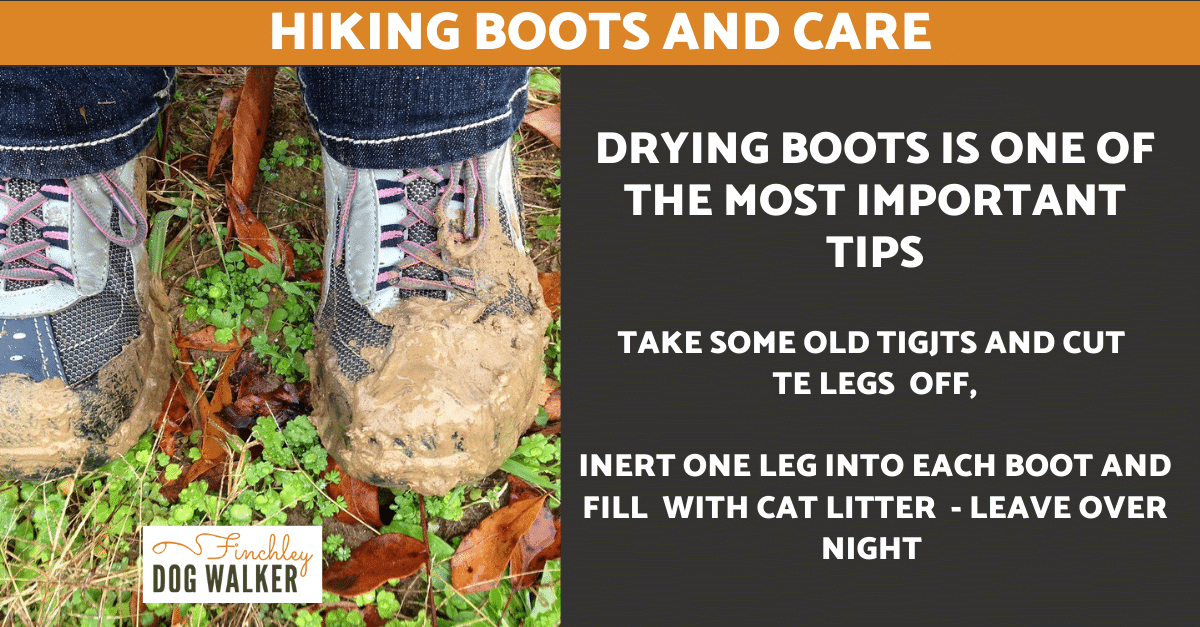
Nothing bogs down a good dog walk like soggy boots. You’ve been out on a muddy path, perhaps in Finchley’s parks or local woods, and by the end of it your walking boots or trainers are soaked through. The cold, the smell, the damp weight on your feet it’s unpleasant.
If you walk dogs regularly, drying wet walking boots isn’t just about comfort. It’s health and safety. Damp footwear can lead to blisters, cold feet and even fungal issues if not dealt with properly. That’s why it makes sense to know the best ways to dry wet footwear, and how to do so without damaging your boots.
I’m writing this from experience. Years of daily walks in all seasons have taught me a few reliable drying methods for wet boots. Some are simple and familiar. Others might surprise you. All of them focus on getting your boots dry while protecting the materials and preventing smells.
In the sections that follow you’ll find clear steps, real examples and sensible guidance for everything from lightly damp shoes to boots soaked through after heavy rain. There’s also practical advice on stopping footwear from smelling after getting wet, something many people overlook until it’s too late.
Why Wet Boots Matter for Dog Walkers
Good walking boots are an investment. They protect your feet and keep you comfortable on long outings.
But wet boots can quickly become a problem:
- Damp insoles harbour bacteria
- Wet leather can stiffen or crack if dried incorrectly
- Moisture leads to cold feet and discomfort
- Lingering damp smells make boots unpleasant to wear
Dog walkers, especially in autumn and winter, face wet conditions regularly. If you don’t remove moisture from wet boots promptly, the problems multiply. It’s not just footwear. Your mood and willingness to head out the door tomorrow can be affected.
That’s why learning drying wet walking boots without damaging them matters.
Safe Shoe Drying Tips You Can Start Today
Here are practical, safe shoe drying tips that work for wet walking boots and trainers alike.
Use Air Circulation
Air is your friend. Sit your boots upright in a well‑ventilated room. Open a window if possible. Circulating air will wick moisture away.
Replace the Insoles
Take out removable insoles. They soak up water and slow drying. Set them on a towel or rack to dry separately.
Stuff with Dry Material
Fill wet boots with:
- Newspaper
- Paper towels
- Kitchen paper
These absorb water from inside. Replace them every hour until the boot feels nearly dry.
Elevate the Heels
Place boots on a shelf or stool so air can move underneath. A gentle breeze around the sole helps.
Use a Fan
Point a small fan toward the boots. This speeds drying without heat, protecting leather and glued seams.
By using these drying methods for wet boots you can reduce drying time while protecting the structure and materials of your footwear.
Best Ways to Dry Wet Footwear Without Damaging Them
Some approaches promise a fast fix. But many can harm your boots.
What to Avoid
- Direct heat sources
Don’t put leather or fabric boots next to radiators or heaters. High heat causes shrinking, cracking and glue failure. - Tumble dryers
These spin and heat boots in ways that distort shape and ruin waterproofing. - Microwave ovens
You might see this suggestion online. It’s unsafe and can damage your boots and the microwave.
Better Alternatives
- Boot dryers
If you use them correctly, boot dryers circulate warm air gently. They’re designed to protect footwear. - Drying racks
Elevate boots on racks to boost airflow. - Natural warmth
On a dry, breezy day, leaving boots by an open window helps.
These are safer ways to dry wet footwear without stress on stitching or materials.
How to Stop Footwear from Smelling After Getting Wet
Wet boots often smell musty. That’s because moisture creates a breeding ground for bacteria.
Here’s what I do:
Sprinkle Baking Soda
Once boots are nearly dry, sprinkle some bicarbonate of soda inside. Leave overnight then shake out. It absorbs odours.
Use Tea Towels or Cotton Cloths
Wrap the insoles in dry cloths overnight. This draws out remaining dampness.
Dry Soles and Uppers
Make sure every part of the boot dries. Bacteria can hide in folds and eyelets.
Protect with Boot Spray
A water‑repellent and anti‑bacterial boot spray helps. Use it after the boots are fully dry.
Smell is often a sign of lingering moisture. Deal with the damp first, then the odour.
What to Do When Boots Are Really Soaked
If your boots are soaked through after a flood, river crossing or long heavy rain you need a more structured approach.
Step‑By‑Step
- Remove laces and insoles
They slow drying and trap water. - Blot excess water
Use towels to absorb surface moisture. - Stuff boots with paper
Replace every hour. - Elevate and air dry
Place near ventilation. - Use a fan or boot dryer
This speeds the process without heat damage. - Check after 4–6 hours
If still damp, repeat paper replacement and airflow.
Patience pays. Wet boots will dry. Rushing them with heat damages materials and shortens boot life.
If you walk dogs regularly and struggle with wet footwear or sore feet after long wet walks, I can help. My one‑to‑one support is guided by real conditions and real gear, not quick fixes.
FAQ
How long does it take to dry wet walking boots?
Drying time depends on conditions and how wet the boots are. Light dampness might dry in 8 to 12 hours with good airflow. Heavily soaked boots may take longer. Use paper replacement and airflow to speed this safely.
Can I put newspaper inside to dry boots?
Yes. Newspaper or kitchen paper absorbs moisture from inside. Change it frequently while drying. It’s one of the best ways to remove moisture from wet boots without heat.
Is it okay to use a heater to dry boots?
Avoid direct heat sources like radiators or heaters. They can warp leather, damage adhesives and crack seams. Gentle air circulation is safer.
What stops wet boots from smelling?
Make sure they dry thoroughly, then use baking soda inside once dry. Shake it out in the morning. Proper drying and airflow are the primary odour controls.
Can silicone sprays help drying?
Silicone and water‑repellent sprays help after boots are dry, protecting them from future wet conditions. They do not speed up drying and should be applied only to dry boots.
Conclusion
Dry wet walking boots in a way that protects both your feet and your footwear. It doesn’t have to be complicated, but it does require patience and the right steps. Start with airflow, remove insoles, use absorbent paper and avoid direct heat. These are sensible, safe methods that keep your boots comfortable, dry and odour‑free.
If you find that wet boots and damp feet are affecting your dog walks or your confidence outdoors, talking it through can help. I offer tailored one‑to‑one support based on your routine, the weather you face and the gear you use.


