
This article on dog walking tips is brought to you by Finchley Dog Walker
Updated May 2026
Walking your dog is about far more than exercise.
A calm, structured walk can help with:
- confidence
- behaviour
- enrichment
- anxiety
- sleep
- routine
- mental stimulation
Over the years, working with dogs across Finchley, Muswell Hill and Highgate, I have found that many dogs do not actually need longer walks.
They need calmer and more meaningful ones.
That is especially true for:
- rescue dogs
- nervous dogs
- adolescent dogs
- reactive dogs
- overexcited dogs
- puppies
This guide covers practical dog walking tips I use every day during one-to-one walks.
This post may contain Amazon affiliate links. As an Amazon Associate, I earn from qualifying purchases at no extra cost to you. I only recommend products I genuinely use, trust, or believe may be useful for dog owners
Quick Dog Walking Tips At A Glance
- Let your dog sniff
- Avoid rushing walks
- Use comfortable walking equipment
- Keep walks age and weather appropriate
- Focus on calm behaviour
- Carry water in warmer weather
- Avoid overcrowded areas if your dog struggles socially
- Reward check-ins and loose lead walking
- Use enrichment during walks
- Choose quieter local routes when possible
Why Calm Walks Matter More Than Long Walks
One of the biggest myths in dog ownership is that every dog simply needs “more exercise”.
Many dogs I meet are actually overstimulated.
Fast-paced group walks, busy parks, constant ball throwing and crowded environments can leave some dogs more stressed, not calmer.
A slower enrichment-led walk often works better.
That might include:
- sniffing
- gentle exploration
- confidence-building
- training games
- decompression time
This is one reason I focus on calm one-to-one walks rather than large group walks.
The Sniff and Decompress Guide
Let Your Dog Sniff
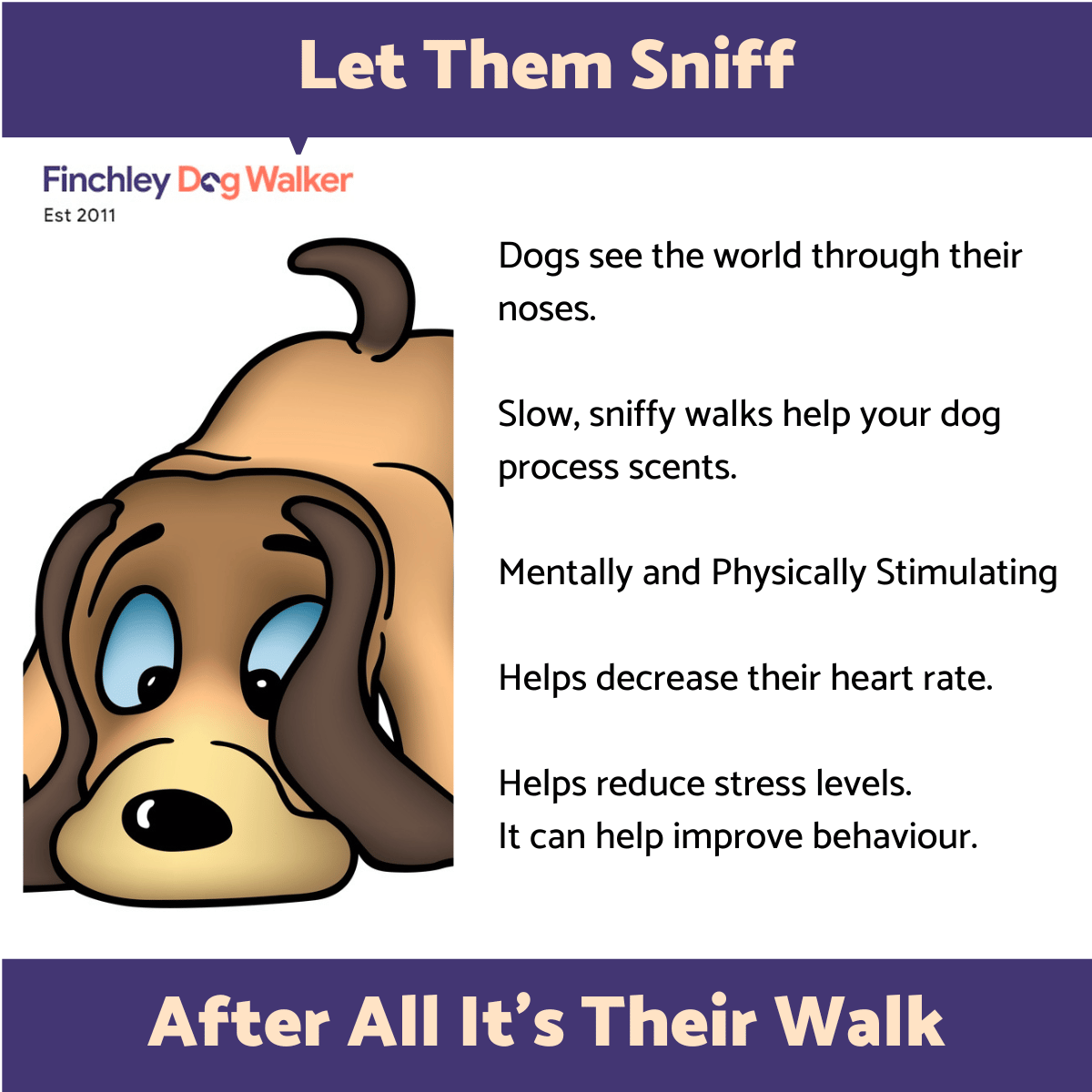
Sniffing is not a distraction from the walk.
It is part of the walk.
Dogs experience the world through scent.
Allowing natural sniffing can:
- lower stress
- reduce frustration
- provide mental stimulation
- help nervous dogs feel safer
Even ten minutes of calm sniffing can tire a dog mentally far more effectively than constant pulling and rushing.
Sniff walks are especially useful for:
- rescue dogs
- anxious dogs
- puppies
- older dogs
- dogs recovering from injury
Use Comfortable Walking Equipment
I strongly recommend comfortable, force-free equipment.
That usually means:
- a well-fitted harness
- a standard lead
- a long line for training or decompression
- ID tag and secure attachment points
I avoid:
- prong collars
- choke chains
- Slip leads used harshly
- shock collars
Good walking equipment should help your dog feel safe and comfortable.
Recommended items:
- Perfit fit harness – direct link
- long training line – Amazon link
- treat pouch – Amazon link
- portable dog water bottle
[Internal link – Complete Guide To Dog Harnesses] coming soon
[Internal link – Long Line Training Guide] coming soon
Keep Puppy Walks Short And Positive
Young puppies do not need long, exhausting walks.
Short positive experiences are far more important.
Focus on:
- confidence
- socialisation
- gentle exposure
- calm routines
- training
- sniffing
Avoid:
- over-walking
- overheating
- busy dog parks
- forcing interactions
A calm ten-minute walk followed by enrichment at home is often plenty for a young puppy.
Puppy Care Guide
Puppy Visits Service
Avoid Overcrowded Walks If Your Dog Struggles
Not every dog enjoys busy parks.
Many dogs cope better with:
- quieter streets
- woodland routes
- quieter times of day
- solo walks
- predictable routines
This is particularly important for:
- rescue dogs
- reactive dogs
- nervous dogs
- dogs recovering from bad experiences
In Finchley, I often adjust walking routes depending on:
- weather
- traffic
- school run times
- park busyness
- local events
Sometimes, a quiet side road is far more beneficial than a packed park.
Take Water And Watch The Weather
Warm pavements and humid weather can become dangerous quickly.
In summer:
- walk earlier or later
- avoid hot pavements
- carry water
- shorten walks
- use shaded routes
Flat-faced breeds, puppies and older dogs may struggle even sooner.
I often replace walks with:
- home visits
- garden enrichment
- sniff games
- short toilet breaks
during hotter weather.
Summer Dog Safety Guide – coming soon
Summer dangers for dogs
Extreme Weather Policy
Helpful products:
- cooling mat – Amazon link
- collapsible water bowl
- cooling bandana
External link – Dogs Trust hot weather advice
Reward Calm Behaviour
Many owners accidentally reward excitement without realising it.
I prefer to reward:
- calm check-ins
- loose lead walking
- engagement
- relaxed behaviour
- focus around distractions
Tiny moments matter.
A calm pause before crossing the road or checking in during a walk helps build better habits over time.
You do not need complicated training.
Consistency matters more.
Enrichment Makes Walks Better
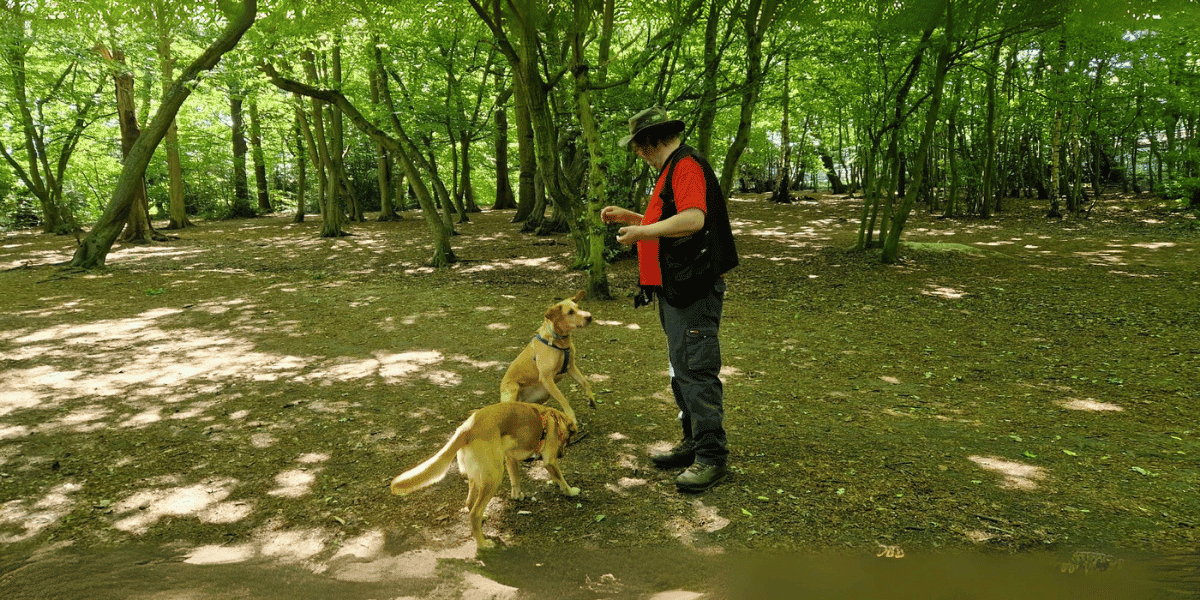
Walks do not need to be constant movement.
Adding simple enrichment can improve behaviour and confidence.
Examples:
- scatter feeding
- sniffing games
- searching for treats
- climbing safely on logs
- slow exploration
- confidence games
I often combine enrichment with walks for nervous or adolescent dogs.
This helps tire the brain, not just the legs.
Enrichment Walks Guide – coming soon
Kong Guide
Recommended enrichment:
- Classic Kong toy – Amazon link
- puzzle feeder – Amazon link
- lick mat
What About Dogs That Pull?
Pulling is usually:
- excitement
- frustration
- stress
- lack of loose lead training
- overstimulation
It is rarely stubbornness.
Helpful steps:
- slow down
- reduce pressure
- reward calmness
- practise in quieter areas
- use suitable equipment
- avoid punishment
Some dogs simply cope better with calmer solo walks than busy group environments.
Local Dog Walking In Finchley
North London walking varies hugely.
Some dogs love:
- Coldfall Woods
- Cherry Tree Wood
- Highgate Woods
- Parkland Walk
Others find these areas overwhelming at busy times.
Part of professional dog walking is learning:
- timing
- quiet routes
- weather patterns
- seasonal changes
- safe spaces
A good walk should suit the individual dog.
Not the other way around.
FAQs
How long should I walk my dog each day?
It depends on the breed, age, health and temperament. Many dogs benefit more from calm enrichment-based walks than simply longer walks.
Are group walks suitable for every dog?
No. Some dogs become stressed, overwhelmed or overexcited in group environments. Nervous or reactive dogs often cope better with solo walks.
Is sniffing good for dogs?
Yes. Sniffing provides mental stimulation and can help reduce stress and frustration.
What should I take on a dog walk?
Water, treats, poo bags, a secure lead and weather-appropriate equipment are all useful.
Should puppies go on long walks?
No. Puppies need shorter, positive walks with plenty of rest and gentle exposure.
What is the safest equipment for dog walking?
A comfortable, well-fitted harness and standard lead are usually the safest and most comfortable option.
Related Guides
- Guide Hub
- Separation Anxiety In Dogs **
- Summer Dog Safety Guide
- Puppy Care Guide
- Rescue Dog Support
- Reactive Dog Support
- House Sitting Service
- Cat Sitting Visits
- Kong Guide
If your dog struggles with busy group walks, pulls constantly, or simply needs calmer support, I offer one-to-one enrichment-led dog walks across Finchley and surrounding North London areas.
That includes:
- nervous dogs
- rescue dogs
- puppies
- older dogs
- routine-based support
You can learn more here:
