Simple ways to keep summer garden time safer
Updated April 2026
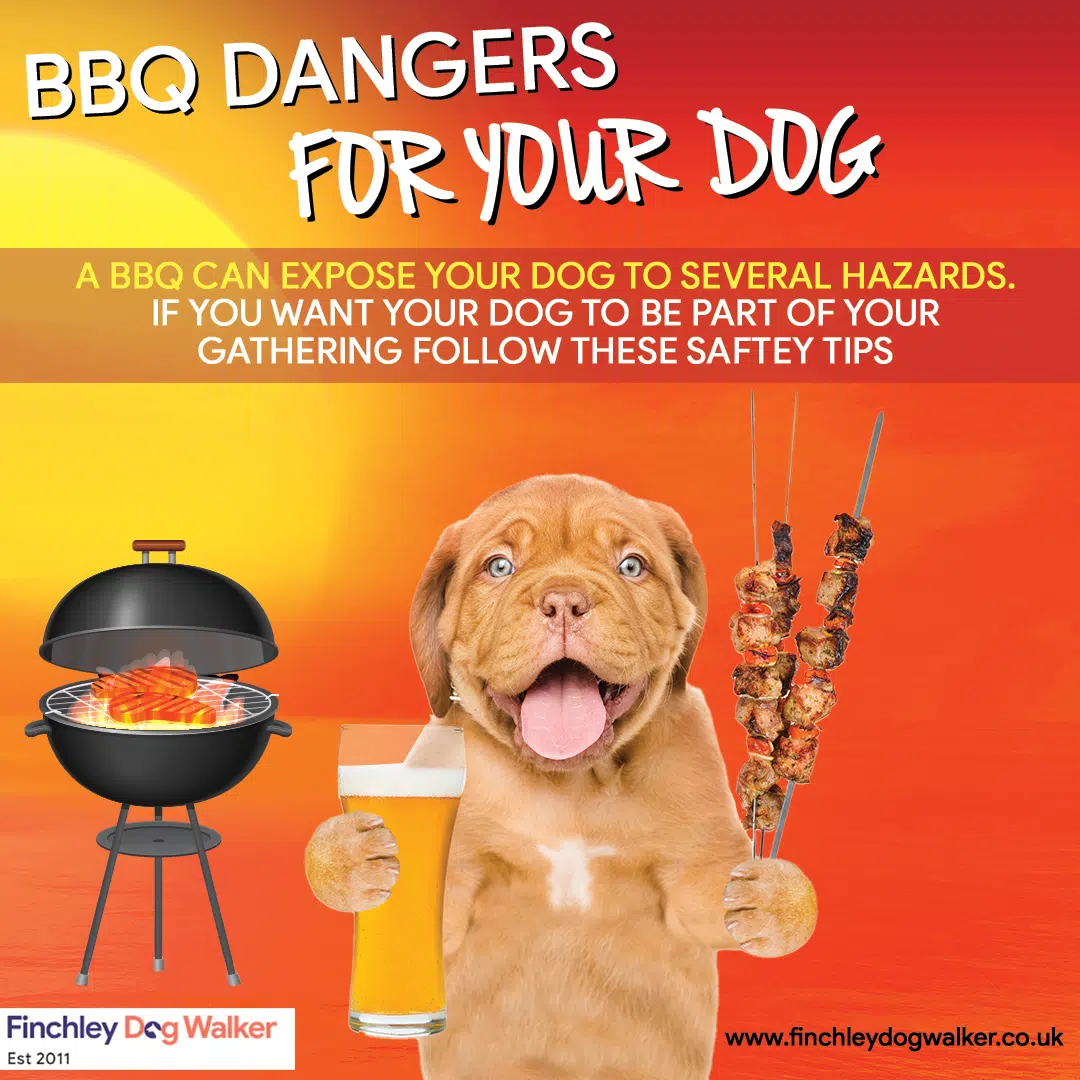
Summer BBQs can be lovely.
But from a dog’s point of view, they can also be chaotic.
There is hot equipment, dropped food, sharp leftovers, busy gardens, open drinks, extra people and often a lot more noise and movement than usual.
For some dogs, that is just exciting.
For others, especially rescue dogs, puppies and dogs who are easily overwhelmed, it can be a lot to cope with.
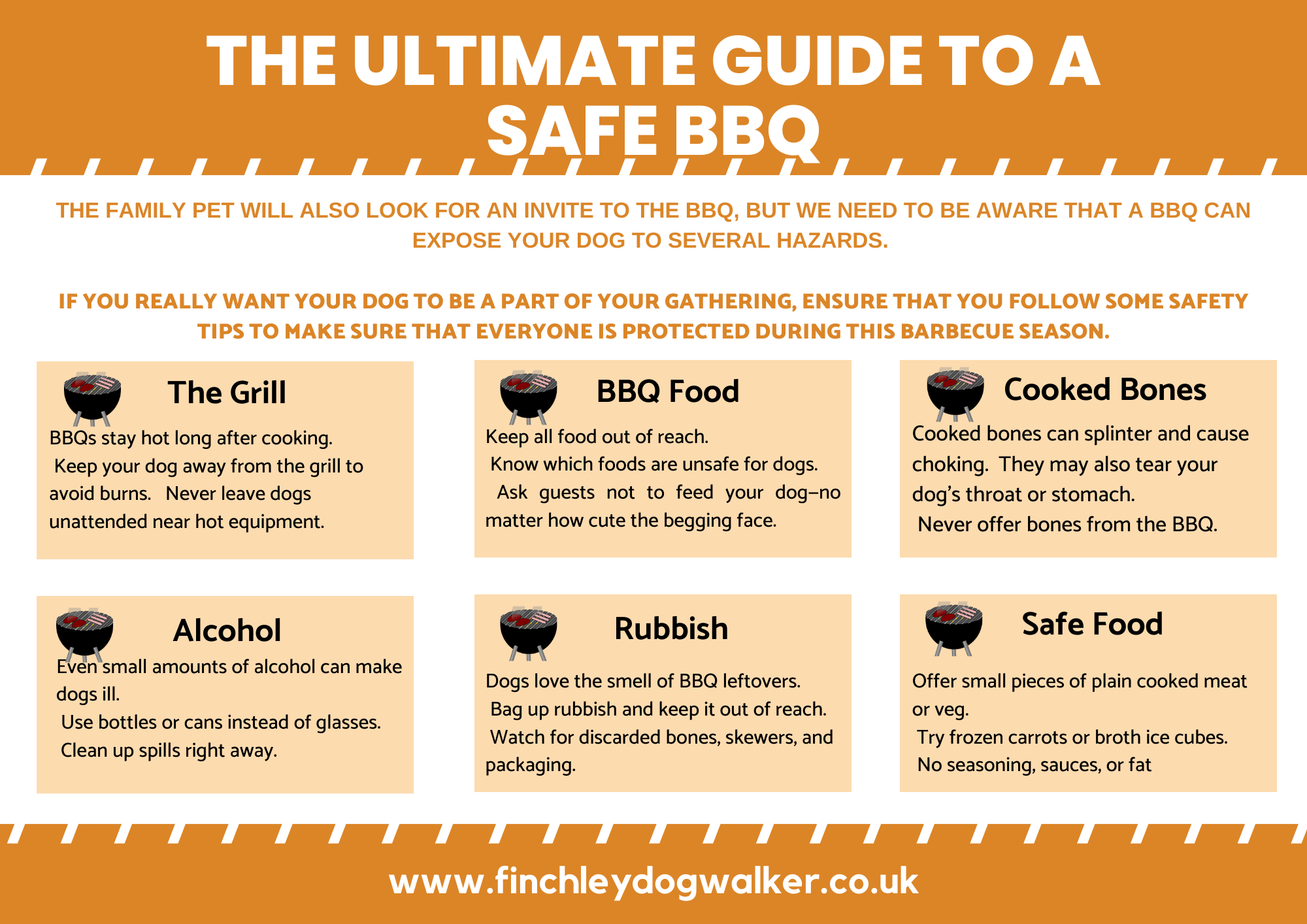
The main risks are not always the obvious ones either. PDSA highlights hot barbecues and smoke, fatty or undercooked food, cooked bones, alcohol, sugar-free products, rubbish, kebab skewers and corn-on-the-cob as common BBQ dangers for pets. (PDSA)
Why BBQs can be difficult for dogs
A BBQ combines several things dogs often struggle with:
- tempting smells
- lots of dropped food
- guests who may feed them
- garden gates opening and closing
- children running about
- hot weather
- less routine than usual
That means the risk is not just poisoning or injury.
It can also be:
- over-arousal
- scavenging
- stress
- escaping through an open gate
- guarding food
- getting under people’s feet near the grill
For some dogs, especially nervous or rescue dogs, a busy garden party can feel much harder than owners expect. PDSA advises keeping pets well away from the barbecue and even away from the smoke, especially for smaller pets and birds, because the whole setup can be unsafe and overstimulating. (PDSA)
Hot BBQs and burns
The barbecue itself is the most obvious danger.
Dogs do not always understand heat, and a curious dog needs only a moment near the grill to burn their nose, mouth, or paws.
This is even more likely if:
- food is cooking at dog height
- children are moving around the grill
- the dog is excited
- people are distracted
I would not rely on training alone here.
It is usually much safer to:
- keep your dog indoors for part of the cooking
- use a gate or barrier if you have one
- keep the BBQ area as a dog-free zone
- avoid letting your dog wander under people carrying hot trays or utensils
PDSA specifically advises keeping pets far away from the barbecue and not downwind of fumes. (PDSA)
Fatty and rich BBQ food
A lot of BBQ food is simply too rich for dogs.
Even if something is not technically poisonous, it can still upset their stomach badly.
That includes:
- burgers
- sausages
- fatty meat trimmings
- heavily seasoned foods
- rich leftovers
- greasy scraps from plates
PDSA warns that BBQ scraps can upset your pet’s stomach and that undercooked or fatty foods can make them very poorly. It also notes that high-fat foods can cause stomach upset and, in some cases, pancreatitis.
So even if your dog looks desperate for a bit of sausage, it is usually not worth it.
Cooked bones
This is one of the bigger risks.
Cooked bones can splinter and cause serious internal damage. They can also get stuck or cause blockages.
Chicken bones are especially risky because people are more likely to drop them or leave them on plates that dogs can reach.
PDSA warns that bones can damage the mouth, throat, stomach, and intestines, and that cooked bones are more likely to splinter. RSPCA also notes that cooked bones are likely to fragment, causing internal damage.
If your dog gets hold of a cooked bone, do not brush it off as a minor issue.
Skewers and corn-on-the-cob
These are classic BBQ hazards because they are easy for dogs to grab and very dangerous if swallowed.
Kebab skewers can puncture the gut. Corn-on-the-cob can cause a blockage that often needs emergency surgery.
PDSA specifically warns about kebab skewers and corn cobs as life-threatening blockage risks and has even published a real case involving a dog needing surgery after swallowing corn-on-the-cob.
This is one of the reasons rubbish matters so much at BBQs. It is not just scraps. It is what the scraps are attached to.
Alcohol, desserts and sugar-free foods
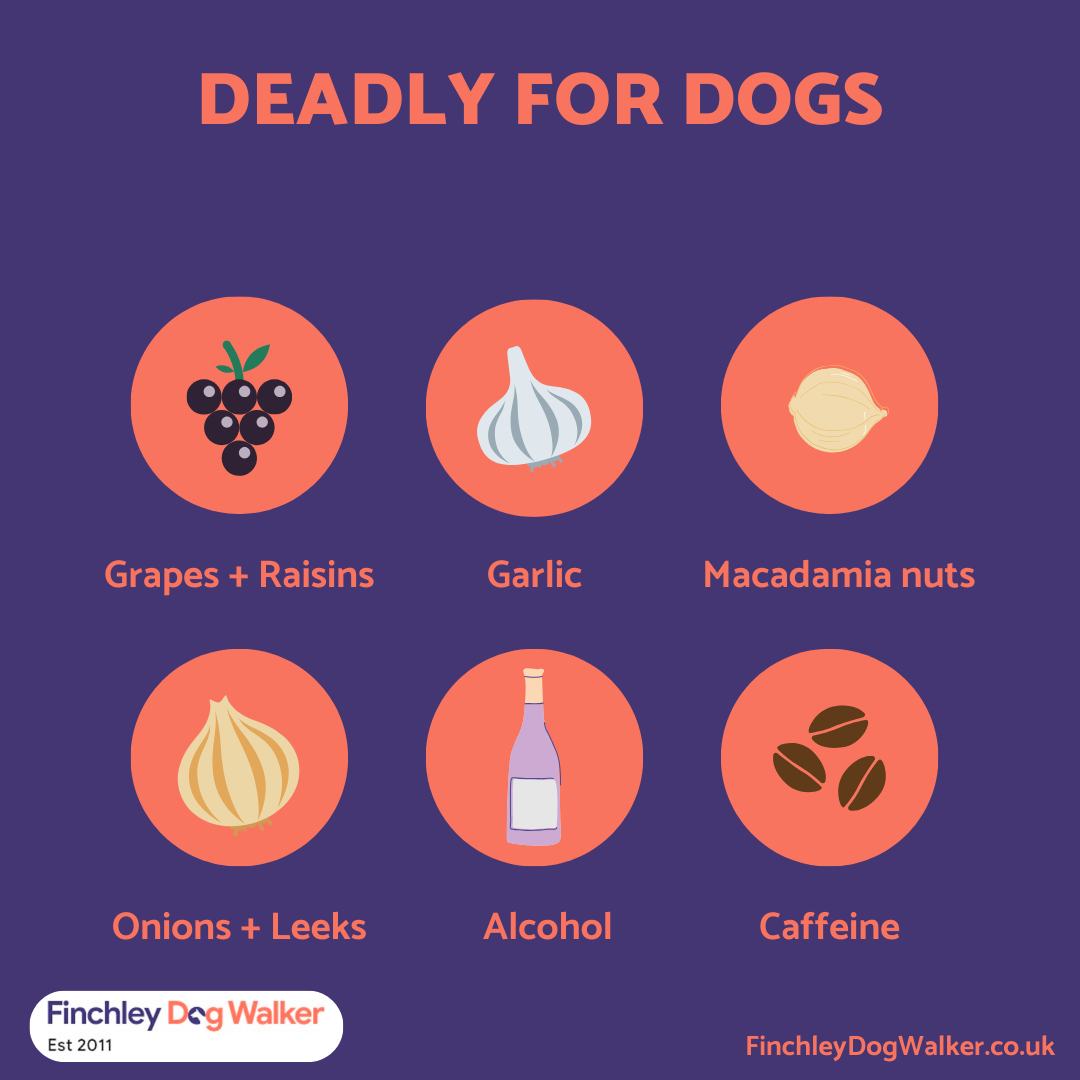
Alcohol is toxic to dogs, even in relatively small amounts.
At BBQs, drinks are often left on low tables, on the grass or within easy reach.
Desserts can also be a problem. Chocolate, grapes in fruit desserts, and anything sugar-free containing xylitol can all be dangerous.
Dogs Trust warns that ethanol poisoning in dogs can happen after accidental drinking, and PDSA warns that alcohol is toxic to pets and that xylitol is extremely harmful to dogs and can be fatal. (Dogs Trust)
This means:
- do not leave glasses where your dog can reach them
- clear plates promptly
- keep dessert and sweets out of reach
- tell guests not to “treat” the dog with bits from the table
Rubbish and leftovers
Once the food is over, the danger is not over.
The rubbish from a BBQ is often the biggest problem because it smells strong and is full of tempting things.
That may include:
- bones
- skewers
- foil
- corn cobs
- greasy paper
- mouldy leftovers
- packaging
PDSA advises throwing away leftovers straight away in a lidded bin your pet cannot raid. It also warns that mouldy foods can contain dangerous toxins and that rubbish and food waste can be fatal if raided. (PDSA)
So if your dog is a scavenger, BBQ rubbish needs to be managed like a real safety issue, not an afterthought.
Heat and overstimulation
Hot weather adds another layer.
A BBQ often means your dog is outdoors for longer, in warmer conditions, with more stimulation and fewer chances to settle properly.
PDSA warns that pets can quickly overheat in the sun and advises making sure they have access to shade or being indoors whenever they need to cool down.
This is one of the reasons some dogs do better with:
- part of the day indoors
- a cool quiet room
- a lick mat or chew away from the crowd
- shorter garden time
- a calmer routine around the event
If warm weather is part of the issue, this may help too:
Hot Weather Dog Kit
Rescue dogs, puppies and sensitive dogs
Some dogs will find a BBQ much harder than others.
That often includes:
- rescue dogs
- puppies
- dogs who guard food
- dogs who are worried by visitors
- dogs who get overexcited easily
- dogs who struggle to switch off
For these dogs, the problem is not just what they might eat.
It is possible that the whole setup may be too much.
In those cases, I would usually think about:
- giving the dog a quiet room for part of the event
- using a baby gate if helpful
- keeping routine as normal as possible
- avoiding the idea that the dog “has to join in”
If your dog tends to struggle with busy situations, these pages may help too:
→ Rescue Dog Help in Finchley
→ Holiday Care for Dogs and Cats
What I would focus on first
If I wanted to make a BBQ safer for a dog, I would focus on:
- keeping the dog away from the grill
- clearing away bones and skewers immediately
- stopping guests from feeding scraps
- using a secure bin
- giving the dog shade and water
- giving the dog somewhere calm to settle away from the crowd
That is usually more useful than trying to manage every risk once the party has already started.
What I would avoid
I would avoid:
- assuming “a little bit won’t hurt”
- leaving plates and rubbish out
- letting children hand out treats to the dog
- keeping the dog in the middle of the cooking area
- assuming a dog who is calm indoors will also be calm in a busy garden
- waiting to see if symptoms develop after your dog has eaten something dangerous
PDSA is clear that if you think your dog has eaten something harmful, you should contact your vet immediately rather than wait and see.
Quick checklist
Before the BBQ starts:
- make the grill area dog-free
- move rubbish bins out of reach
- keep skewers and bones away from the dog
- put drinks and desserts up high
- set up shade and fresh water
- give your dog a quiet place to settle
- tell guests not to feed scraps
What to do if your dog eats something dangerous
Contact your vet immediately if your dog has eaten:
- a cooked bone
- a skewer
- corn-on-the-cob
- alcohol
- sugar-free food containing xylitol
- a lot of rich leftovers
- anything you think could block or poison them
PDSA says acting fast could save your dog’s life and warns owners never to wait and see if a problem develops.
Do not try to make your dog sick unless a vet tells you to.
Related guides
- → Seasonal Pet Safety in Finchley
- → Hot Weather Dog Kit
- → Holiday Care for Dogs and Cats
- → Rescue Dog Help in Finchley
- → Dog & Cat Care Guides
Final thoughts
BBQs are meant to be relaxed.
But for dogs, they can bring a lot of avoidable risks.
Usually, the safest approach is simple:
Keep the grill separate, keep rubbish secure, keep food away from the dog, and give your dog a calm place to be.
If your dog finds busy summer gatherings hard, a steadier routine and a calmer setup usually help far more than trying to include them in everything.
FAQ
Yes. Cooked bones can splinter, cause blockages and damage the gut. They are one of the main BBQ risks for dogs.
No. Corn itself may be tolerated by some dogs, but the cob can cause a serious and potentially fatal blockage.
Yes. Alcohol is toxic to dogs and should be kept well out of reach. (Dogs Trust)
Contact your vet immediately. Skewers can damage the digestive tract and may require urgent treatment.
That depends on the dog, but many do better with some time indoors or away from the cooking area, especially if they are scavengers, puppies or easily overwhelmed.
You can read about my other article on dogs and BBQ