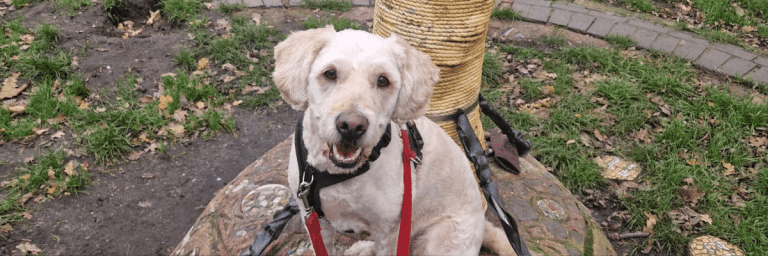
Practical buying advice to help older dogs move more comfortably, rest safely and enjoy everyday life.
If you’ve shared your life with a dog for many years, you’ll probably recognise the little changes that come with getting older.
Perhaps they take longer to get out of bed.
The sofa that was once conquered in a single leap now requires a bit of thought.
Or that lovely wooden floor suddenly becomes something of an ice rink.
I’ve been providing professional dog walking and pet care around Finchley and North London since 2011, and I’ve cared for many older dogs who still enjoy their walks, sniffing and familiar routines but need a little more consideration.
The right equipment can make everyday life easier.
But I also firmly believe you don’t need to buy every product advertised for senior dogs.
Sometimes a secure rug across a slippery hallway is more useful than an expensive gadget.
In this guide, I’ll compare practical equipment for older dogs, explain what to look for before buying, and share products and retailers worth considering.
Where I haven’t personally used an exact model, I’ll treat it as a buying option rather than claim it’s been tested by me.
My starting recommendation: Before spending money on specialist mobility equipment, check whether your dog has secure footing, a comfortable resting place, easy access to water and a suitable walking routine. If your dog is struggling with movement, arrange a veterinary assessment.
You can also explore my Complete Senior Dog Care Guide for wider advice on ageing, health, exercise and everyday routines.
Affiliate disclosure
This guide contains affiliate links and advertising recommendations.
If you buy through a qualifying link, I may receive a small commission at no additional cost to you.
As an Amazon Associate, I earn from qualifying purchases.
I also participate in the Zooplus affiliate programme and may recommend suitable products from other approved partners.
Any commission helps support the free pet-care guides on Finchley Dog Walker.
My recommendations are guided by animal welfare, practicality and suitability, not the commission offered. I will distinguish personal experience from products suggested for consideration.
Prices, stock, sizes and product specifications may change. Always check the exact item before ordering.
Veterinary and professional advice disclaimer
I am a professional dog walker and pet sitter with canine first-aid training. I am not a veterinary surgeon, veterinary nurse or veterinary physiotherapist.
This guide provides general information and is not a veterinary diagnosis, treatment plan or prescription for mobility equipment.
Limping, stiffness, difficulty rising, falling, reluctance to walk or changes in behaviour should not automatically be dismissed as old age.
If your dog has arthritis, a spinal problem, neurological disease, weakness or another medical condition, ask your veterinary team whether a particular ramp, harness or mobility aid is appropriate.
Never delay veterinary assessment while waiting for a product to arrive.
Senior dog equipment at a glance: What is worth buying?
| Equipment | Who it may help | Main thing to check | My buying priority |
|---|---|---|---|
| Non-slip rugs and runners | Dogs losing grip on tiles or laminate | Secure backing, flat edges, washable surface | High |
| Supportive dog bed | Dogs needing comfortable, easy-to-access rest | Support, firmness, height, removable cover | High |
| Car or furniture ramp | Dogs struggling with a jump or step | Length, gradient, traction, stability, capacity | High when needed |
| Mobility support harness | Dogs requiring assistance with standing or moving | Veterinary suitability and correct fitting | Specialist |
| Stable water bowl and feeding mat | Dogs knocking bowls or slipping while drinking | Stability and easy access | High |
| Gentle enrichment equipment | Dogs needing accessible indoor activities | Physical comfort and simplicity | Optional |
| Washable blankets and waterproof covers | Dogs who need extra warmth or easier cleaning | Washability, warmth, skin comfort | Useful |
| Night lights and stair gates | Dogs with sensory changes or difficulty on stairs | Safe positioning and predictable access | Situational |
The best purchases depend on what your dog is finding difficult.
You may not need to buy anything at all.
1. Non-slip rugs and runners: My first recommendation for many older dogs
Why flooring matters
Many homes have laminate, polished wood, vinyl or tiles.
They may look lovely and be easy to clean, but they can be difficult for dogs who are less steady on their feet.
An older dog may hesitate before crossing a floor, spread their legs for balance or struggle to stand up after resting.
Before buying specialist equipment, I would look carefully at the routes the dog uses every day.
Can they get from their bed to the water bowl without slipping?
Can they reach the garden door comfortably?
Do they lose their footing when turning around?
What I recommend looking for
A good non-slip runner or rug should:
- Have a backing suitable for your flooring.
- Stay flat without curling at the edges.
- Provide useful traction without being excessively thick.
- Be easy to clean.
- Be wide enough for your dog to turn and walk comfortably.
- Stay securely in place when your dog gets up or changes direction.
I would start with the hallway, beside the bed, near food and water, and along the route to the garden.
Which type should you buy?
Rubber-backed washable runners
A practical choice for corridors and frequently used walking routes. Check that the backing grips your particular flooring without damaging it.
Non-slip kitchen or utility mats
Potentially useful near food bowls and doors, as long as they lie flat and don’t move.
Existing rugs with suitable non-slip underlay
Sometimes the cheapest option is to secure what you already own rather than buying a new pet-specific product.
Suitable non-slip underlay on Amazon
What I would avoid
Loose rugs that bunch up, mats that slide when a dog pushes against them, thick edges that cause trips and products with exposed backing that can be chewed.
I would also be cautious about relying on adhesive paw grips or traction socks without veterinary or rehabilitation advice, especially where they could irritate the skin or change how the dog moves.
My verdict: For many older dogs struggling on hard floors, secure non-slip flooring is one of the most useful and cost-effective changes an owner can make.
2. Orthopaedic dog beds: Are they worth the extra money?
A comfortable bed matters more than the label
Older dogs may spend more time resting, and some find it harder to settle comfortably.
A supportive resting place can make everyday life more pleasant.
But the word ‘orthopaedic’ on a product listing doesn’t guarantee a bed is suitable for your dog.
I would look at how the bed is constructed, whether it offers useful support and, importantly, whether the dog can get in and out easily.
A very soft bed may look luxurious while providing inadequate support for a heavier dog.
An extremely tall mattress might also be awkward for a dog who struggles to lift their legs.
What should I look for?
Supportive foam
The bed should provide enough support without letting your dog sink uncomfortably toward the floor.
An accessible entrance
Some older dogs may prefer a flat mattress or a bed with a lower front edge rather than climbing over a high bolster.
A suitable size
Your dog should have enough room to change position and stretch out comfortably.
Washable covers
Removable, machine-washable covers are particularly practical for dogs who need more frequent cleaning.
A non-slip base
The bed should remain stable when your dog stands up.
Three orthopaedic bed designs worth comparing
Option A: Low-profile supportive mattress
This is the design I would consider first for an older dog who has difficulty stepping over raised bed edges.
A flat mattress provides a resting surface without the added complexity of a surrounding bolster.
One example available from Zooplus is the Pawz & Pepper Denver Ortho Dog Cushion.
It uses gel-foam flake filling, has a removable, washable cover, and comes in several sizes.
View Pawz & Pepper Denver Ortho Dog Cushion at Zooplus
Check its actual thickness before choosing. A flat cushion can still be quite deep, and the right choice depends on the dog.
Option B: Orthopaedic bed with supportive edges
Some dogs enjoy resting their head on a raised edge or curling up against a bolster.
For comparison, the Zooplus Orthopaedic Square Dog Bed includes a memory-foam sleeping surface and a lower entrance.
View Orthopaedic Square Dog Bed at Zooplus
This style might suit an older dog who still steps into a bed comfortably and enjoys a supported edge.
However, if your dog struggles to lift their paws, a simpler mattress may be easier.
Option C: Washable supportive bedding
Not every older dog needs a thick memory-foam bed.
Good-quality washable bedding may suit a dog who already has a supportive mattress, needs an extra resting place or requires easy-clean bedding.
Look for secure placement, warmth, breathability and a surface that isn’t slippery.
You can browse the Zooplus range of orthopaedic dog beds to compare the different designs.
My verdict on orthopaedic beds
If I were buying for an older dog, I would prioritise accessibility, support and hygiene over appearance.
A lower, practical bed that the dog happily uses is better value than an expensive bed they cannot comfortably enter.
If your dog has diagnosed arthritis or pain, ask your vet about appropriate bedding alongside treatment.
3. Dog ramps vs dog steps: Which should you buy?
A ramp can help when a dog struggles to jump into the car, negotiate a small change in height, or reach somewhere they normally rest.
However, a poorly chosen ramp can create another obstacle.
Some are too steep.
Some are narrow.
Others aren’t stable enough for the surface where they’re used.
Dog ramp vs steps comparison
| Question | Dog ramp | Dog steps |
|---|---|---|
| Main movement | Continuous incline | Several individual steps |
| May suit | Dogs who need to avoid repeated jumping and can comfortably walk up a slope | Dogs who can still comfortably lift their legs and manage steps |
| Main consideration | Gradient, length and traction | Step height, depth and grip |
| Space needed | Often more floor space | Usually less floor space |
| Training | Introduce on a shallow, secure setup | Introduce gradually and safely |
| Best choice | Depends on the dog and location | Depends on the dog and location |
I wouldn’t automatically choose steps for a dog simply because they’re smaller and cheaper.
If a dog has painful joints or significant weakness, repetitive stepping may be difficult.
Ask your veterinary team which movement is suitable.
How to choose the right dog ramp
Before purchasing, measure:
- The height your dog needs to reach.
- The available floor space.
- The ramp’s full usable length.
- The width needed for your dog to turn and walk confidently.
- The stated maximum weight capacity.
- Whether the surface provides adequate grip.
- Whether the ramp can be secured.
- Whether the ramp will fit your vehicle or furniture.
A ramp that’s too short for the height you need may be excessively steep.
The manufacturer’s weight limit is important, but it is not the only safety requirement.
Product comparison: Backstage Folding Dog Ramp
Zooplus offers the Backstage Dog Ramp.
It is a folding wooden design intended for uses including vehicle access. The listed model measures 160 × 40 cm and has a stated maximum load of 50 kg.
Its textured surface includes raised features to help provide footing.
Before purchasing, check that the folded dimensions, full length, slope and weight rating suit your intended location.
View Backstage Folding Dog Ramp at Zooplus
Product comparison: TRIXIE Folding Aluminium Ramp
Another option is the TRIXIE folding aluminium and rubber ramp.
The manufacturer lists model 3938 as approximately 155 × 38 cm, with a profiled rubber-coated surface and a stated capacity of up to 75 kg.
This is a manufacturer specification, not a product I’ve independently load-tested.
View TRIXIE Folding Ramp Specifications
Official manufacturer link, not an affiliate link.
Product comparison: Adjustable indoor furniture ramp
If you’re looking for a ramp to reach a sofa, an indoor model designed for furniture may be a better choice than a full-sized car ramp.
TRIXIE’s adjustable-height indoor ramp is one example, offering several height settings.
View TRIXIE Adjustable Indoor Dog Ramp
Official manufacturer link, not an affiliate link.
How I would introduce a ramp
I would never expect a worried older dog to immediately climb a steep, unfamiliar ramp.
Start with the equipment stable and as low as safely possible.
Let the dog investigate without pressure.
Reward voluntary interest and comfortable movement if appropriate.
Only increase the challenge if the dog is relaxed and physically capable.
Don’t pull them up by their collar or lead.
If they refuse the ramp, consider whether the surface, movement or slope is uncomfortable.
My verdict: A good ramp can be a worthwhile purchase, particularly for car access, but only when the dimensions and design suit the dog and the task. This is an area where measuring before buying matters enormously.
4. Mobility support harnesses: When ordinary walking equipment isn’t enough
A normal walking harness and a mobility-support harness do different jobs.
An ordinary harness helps manage a dog safely during walks.
A mobility-support harness may be designed to assist with balance, standing or controlled movement under professional guidance.
I wouldn’t treat them as interchangeable.
Everyday walking harness
For an older dog who can still walk comfortably, a well-fitting everyday harness may be perfectly adequate.
I like the modular design of the PerfectFit harness because its separate pieces allow more individual fitting options.
Explore the PerfectFit Dog Harness
Direct manufacturer link, not an affiliate link.
However, a PerfectFit walking harness should not automatically be used as a lifting device.
Help ‘Em Up support harness
The Help ‘Em Up system is a specialist body-support harness with front and rear components designed to assist dogs with mobility difficulties.
It has different sizes and adjustments, so fitting correctly is essential.
This is equipment I would want an owner to discuss with their vet or veterinary physiotherapist before buying.
View Help ‘Em Up Harness Sizing and Design
UK specialist product information. Not an affiliate link.
Important handling considerations
Never pull a dog around by a support strap.
Avoid improvised lifting methods that put pressure on the abdomen, spine or painful joints.
A dog with reduced mobility may also be at greater risk of falling, so owners should ask for guidance about their own safety when assisting a heavier animal.
My verdict: Mobility harnesses are potentially valuable specialist products, but I would not recommend a specific size or lifting technique without veterinary guidance.
5. Dog beds, blankets and waterproof covers: Practical everyday extras
Not every useful senior-dog purchase needs to be expensive.
Washable bedding can be particularly helpful where an older dog needs extra comfort or more frequent cleaning.
Washable fleece and throws
A soft washable layer may help keep a familiar resting place comfortable and hygienic.
Check for loose threads, overheating and whether the material stays securely positioned.
Waterproof mattress protectors
A suitable waterproof inner layer can help protect an expensive mattress from accidents.
However, avoid plastic or poorly breathable materials being used directly against your dog’s skin.
Use an appropriate comfortable cover and keep the bedding dry and clean.
Quick-dry towels
An absorbent towel is useful after wet walks, particularly when your dog needs help drying without lots of vigorous rubbing or standing.
Washable quick-drying blanket idea for bed and sofas on Amazon
My verdict: Easy-clean bedding is often more valuable day-to-day than another specialist gadget.
6. Feeding and drinking equipment: What actually helps?
Older dogs should have easy access to fresh water and food.
I would start by looking at the location and stability of the bowls.
Can the dog reach their water without using stairs?
Does the bowl slide when they drink?
Is there a secure mat beneath it?
Sometimes a stable, ordinary bowl in the right location is sufficient.
Non-slip feeding mats
A washable, non-slip feeding mat can help keep bowls in place and reduce slipping around feeding areas.
Choose a mat that stays flat and is easy to clean.
I recommend a silicone non-slip mat that you can find on Amazon
Should older dogs have raised food bowls?
Not automatically.
Raised bowls are sometimes suggested for dogs who find lowering their head uncomfortable, but they aren’t suitable for every dog.
Importantly, research has linked raised feeding bowls with increased risk of gastric dilatation-volvulus, or GDV, in some large and deep-chested dogs.
GDV is a life-threatening emergency.
If your dog struggles to reach a normal bowl because of pain, neck stiffness or another condition, discuss the feeding position with your vet before buying an elevated feeder.
I would not recommend raised bowls as a standard senior-dog upgrade.
For further information, see the PDSA’s veterinary advice on GDV.
My verdict: Secure, accessible bowls are important. Specialist raised feeding equipment requires an individual decision, not a blanket recommendation.
7. Gentle enrichment equipment for older dogs
Older dogs can still enjoy games, sniffing and food enrichment.
But they don’t need every activity to be physically demanding.
I would consider simple, comfortable activities that can be used without unnecessary stretching, jumping or repeated changes of position.
Lick mats
Some dogs enjoy gently licking suitable soft food from a textured surface.
My existing recommendation is the LickiMat Tuff Soother Pro.
View LickiMat Tuff Soother Pro on Amazon UK
Supervise use, and avoid it if the dog chews or swallows the mat material.
Food-stuffable toys
Some older dogs still enjoy familiar KONG toys, but the right rubber type, size, and activity matter.
A soft, easy filling can be more useful than a difficult frozen challenge.
View my Complete KONG Buying Guide
Gentle scent-search games
You don’t need specialist equipment for this.
A few pieces of suitable food placed close together on a secure surface can provide an easy searching activity.
Avoid asking a stiff dog to crawl, climb or stretch into awkward positions.
For more ideas, visit my Senior Dog Exercise and Enrichment Guide and Dog Enrichment Toy Comparisons.
My verdict: Gentle enrichment matters, but a simple free activity may be better than buying a complicated new puzzle.
8. Senior dog equipment by problem: What would I buy first?
Rather than shopping by product category, I would start with the difficulty the dog is experiencing.
| What you’ve noticed | What I would consider | Before buying |
|---|---|---|
| Slipping on hard floors | Secure rugs or runners | Check traction, layout and veterinary concerns |
| Struggling to rise from bed | Accessible supportive mattress | Ask your vet about pain and mobility |
| Difficulty getting into a car | Properly measured ramp | Check slope, weight rating and training |
| Difficulty climbing stairs | Stair management, barriers or veterinary-approved access aids | Don’t simply encourage more climbing |
| Difficulty walking steadily | Veterinary assessment, possibly support equipment | Professional fitting is important |
| Food bowl sliding around | Stable bowl and non-slip mat | Make sure the mat doesn’t create a trip hazard |
| Sleeping in uncomfortable positions | Appropriate bedding and vet assessment | Don’t assume a new bed treats the cause |
| Bored during restricted exercise | Gentle, approved enrichment | Follow veterinary activity restrictions |
| Becoming confused at night | Consistent layout and suitable lighting | Discuss cognitive or sensory changes with vet |
This is not a replacement for professional advice. It is a way of identifying the practical problem before buying something.
9. My senior dog starter kit: What I’d buy on a budget
If I were helping somebody make an older dog’s home more comfortable without spending unnecessarily, this is the order I would consider.
First: Make the flooring safe
Start with existing rugs if you can secure them properly.
Check doorways, the area around the bed and the route to water.
Second: Make the resting area comfortable
Your dog doesn’t necessarily need an expensive new bed if their current one is supportive, clean and easy to access.
If it’s no longer suitable, consider a practical replacement.
Third: Review access
If your dog regularly jumps into a car or negotiates awkward steps, discuss a suitable ramp or alternative arrangement.
Fourth: Check walking equipment
Make sure any existing harness fits well and doesn’t rub or restrict movement.
Assess specialist support equipment separately.
Fifth: Keep enrichment simple
Use familiar food, a comfortable surface and gentle activities rather than purchasing a cupboard full of puzzles.
The guiding principle is straightforward:
Buy what solves a genuine everyday problem, not what simply carries a ‘senior dog’ label.
10. Products and equipment I would avoid
I would be cautious about:
- Slippery rugs or runners that move underfoot.
- Ramps that are too steep, too narrow or insecure.
- Dog steps with difficult heights for an arthritic animal.
- Soft beds that collapse without providing support.
- High-sided beds that the dog cannot enter comfortably.
- Mobility harnesses used without appropriate fitting and handling guidance.
- Raised food bowls routinely recommended to every senior dog.
- Electrical heating products used without appropriate safety precautions.
- Hard chews that could damage vulnerable teeth.
- ‘Miracle’ supplements or equipment claiming to cure arthritis.
- Retractable leads and aversive collars.
No product can replace appropriate veterinary treatment, pain management, sensible exercise and familiar routines.
11. Frequently asked questions about senior dog equipment
What is the best thing to buy for an older dog?
It depends on what the dog needs.
For many dogs struggling on slippery floors, secure runners or rugs may be an excellent first purchase.
Others may benefit more from a supportive bed, a correctly fitted harness or improved access around the home.
Are orthopaedic dog beds worth buying?
They can be worth considering, especially for dogs who need additional comfort and support.
Choose the bed based on its construction, accessibility, size and ease of cleaning rather than relying on the word ‘orthopaedic’.
A bed does not treat arthritis or replace veterinary care.
Are dog ramps better than stairs?
A ramp may be preferable where repeated stepping or jumping is uncomfortable, but a steep or unstable ramp can also be unsuitable.
The dog’s mobility, the height to be reached and the available space should guide the decision, ideally with veterinary input.
Should I buy a dog ramp before my dog gets old?
Some owners choose to introduce ramps while their dogs are still comfortable learning new skills.
That can make future adjustments easier.
However, you still need to choose suitable equipment and introduce it gradually.
Can a dog with arthritis use a ramp?
Potentially, but it depends on the individual dog’s condition, strength, balance and veterinary advice.
Never force a painful or unstable dog to climb a ramp.
Are raised food bowls better for senior dogs?
Not as a general rule.
Some dogs with particular physical difficulties may need a different feeding arrangement, but raised feeders can increase GDV risk in some dogs.
Speak with your vet before making the change.
Can senior dogs still use KONGs and lick mats?
Many can, provided the toy, filling and activity are appropriate for their health and preferences.
Keep the activity comfortable and supervise it.
Avoid hard, physically difficult or frustrating tasks.
How do I know whether my older dog is in pain?
Possible signs include stiffness, limping, reluctance to move, difficulty rising, changes in posture, altered behaviour or problems settling.
These signs are not diagnostic.
Arrange a veterinary examination rather than relying on equipment to solve the problem.
Is expensive senior-dog equipment always better?
No.
An affordable non-slip runner that genuinely stays in place may be more useful than an expensive, unsuitable mobility device.
Good equipment should fit the dog, the home and the actual problem.
12. More senior dog care guides
If you’re caring for an older dog, you may also find these guides useful:
- Senior Dog Care: A Complete Guide
- Senior Dog Exercise and Enrichment
- Signs Your Senior Dog May Be Slowing Down
- Holiday Care for Senior Dogs
- Dog Food and Nutrition
- Recommended Dog and Pet Products
For independent advice, I also recommend:
- RSPCA: Caring for Older Dogs
- PDSA: Exercising Your Senior Dog
- Blue Cross: Arthritis in Dogs
- Canine Arthritis Management
13. Need calm, familiar care for your older dog?
Alongside my free guides, I provide one-to-one dog walking and in-home pet care around Finchley and Muswell Hill.
I particularly value working with older dogs who benefit from patience, familiar routines and individual attention.
I don’t use vans or group walking collections.
Walks begin at your dog’s own front door and are adapted to their agreed care routine.
You can explore:
If your dog has medication, mobility limitations or a veterinary exercise plan, please tell me before arranging care.
I will always be honest about whether I can safely meet their needs.
Final thoughts: Make life easier, not more complicated
One of the lovely things about working with older dogs is that they often remind us that life doesn’t need to be rushed.
They may take longer to explore a familiar path.
They may prefer a quiet nap to chasing after every passing ball.
And sometimes, just being able to stand up comfortably, reach the garden and settle on a favourite bed makes an enormous difference to their day.
If you’re shopping for senior-dog equipment, start with what your dog finds difficult.
Then look for the simplest, safest way of helping.
Sometimes that means a good bed or a carefully chosen ramp.
Sometimes it means a few rugs across the hallway.
And sometimes the most useful thing you can do is arrange a veterinary appointment before reaching for your wallet.
First published: [Enter actual date when new page is published]
Substantially updated: [Enter actual date when this version is published]