
Updated July 2026
Gardens provide dogs with places to sniff, explore, rest and spend time with their family.
They can also contain plants, bulbs, berries, compost and garden products that may cause illness or injury.
Most dogs do not deliberately eat large quantities of garden plants. Puppies, scavengers and dogs who enjoy digging may be more likely to chew leaves, uncover bulbs or investigate cuttings.
Some plants mainly cause an upset stomach. Others can affect the heart, nervous system, liver or kidneys. A plant may also create a physical hazard through thorns, sharp leaves, seed heads or an obstruction.
The correct response depends on:
- the exact plant
- which part was eaten
- how much may be missing
- when the exposure happened
- the dog’s size and health
- whether symptoms have started
Do not wait for symptoms when you know or suspect that your dog has eaten a harmful plant.
Contact your veterinary practice or Animal PoisonLine promptly for advice. Animal PoisonLine is operated by the Veterinary Poisons Information Service and provides 24-hour specialist help for owners concerned about possible poisoning. Charges apply. (Animal PoisonLine)
For wider outdoor hazards, read Hidden Dangers on Dog Walks.
The quick answer
If your dog eats or chews an unknown plant:
- Move them away from the plant.
- Prevent further eating.
- Check whether they are breathing normally and able to stand.
- Contact your vet promptly.
- Photograph the plant safely.
- Keep the plant label or packaging where available.
- Estimate how much may have been eaten.
- Tell the vet when the exposure occurred.
- Follow the veterinary team’s instructions.
Do not:
- make your dog vomit
- give salt water
- give milk
- give oil
- offer a large meal
- use activated charcoal yourself
- give human medication
- rely on an identification app alone
- wait for symptoms after a known harmful exposure
Animal PoisonLine and PDSA advise removing the animal from the source, keeping a sample or photograph and never attempting to make a pet vomit unless a veterinary professional specifically instructs you to do so.
Toxic, irritating and hazardous are not the same
Plant-safety lists can make every plant appear equally dangerous.
They are not.
A plant may be:
Toxic if eaten
It contains compounds capable of causing poisoning after ingestion.
The seriousness may depend on the amount and plant part.
Irritating
Sap, hairs or crystals may irritate:
- the mouth
- skin
- eyes
- digestive system
Phototoxic
Sap may make exposed skin unusually sensitive to sunlight.
Giant hogweed is the clearest UK example.
Mechanically hazardous
A plant may cause injury without poisoning.
Examples include:
- thorns
- spines
- grass seeds
- sharp leaves
- hard nuts
- large bulbs
- pieces capable of causing a blockage
Low toxicity but still unsuitable to eat
A plant not associated with severe poisoning may still cause:
- vomiting
- diarrhoea
- drooling
- choking
- an obstruction
- an individual allergic reaction
The RHS notes that severe plant poisoning is uncommon in the UK, but potentially harmful plants should still be treated respectfully and cuttings should not be left where pets can reach them. (RHS)
How dogs are exposed to garden plants
A dog may be exposed by:
- chewing leaves or flowers
- digging up and eating bulbs
- eating berries or fallen fruit
- drinking vase water
- licking sap from their coat
- chewing cut branches
- eating garden prunings
- investigating compost
- walking through damaged plants
- eating soil containing bulbs or fertiliser
- carrying sticks from toxic trees
- swallowing nuts, seeds or conkers
- eating plants treated with chemicals
Think beyond the living plant.
A cut, wilted or fallen plant may remain harmful.
Why plant identification matters
Common plant names can be misleading.
The word “lily”, for example, is used for several unrelated plants. Species may differ greatly in the risk they present to dogs, cats or other animals.
Correct identification may require:
- flowers
- leaves
- stems
- berries
- bulbs
- the plant label
- several photographs
- professional advice
Do not handle a suspected hazardous plant merely to identify it.
Take clear photographs from a safe distance.
Where possible, photograph:
- the whole plant
- leaves
- stem
- flowers
- berries or seed heads
- the label
Do not delay contacting a vet while waiting for someone online to identify it.
Common poisonous garden plants for dogs
This is not a complete list.
Blue Cross and PDSA both warn that many plants can cause problems and that not every potentially harmful species can be included in a single guide.
Daffodils
All parts of a daffodil should be kept away from dogs, but the bulb contains a higher concentration of the plant’s irritant compounds.
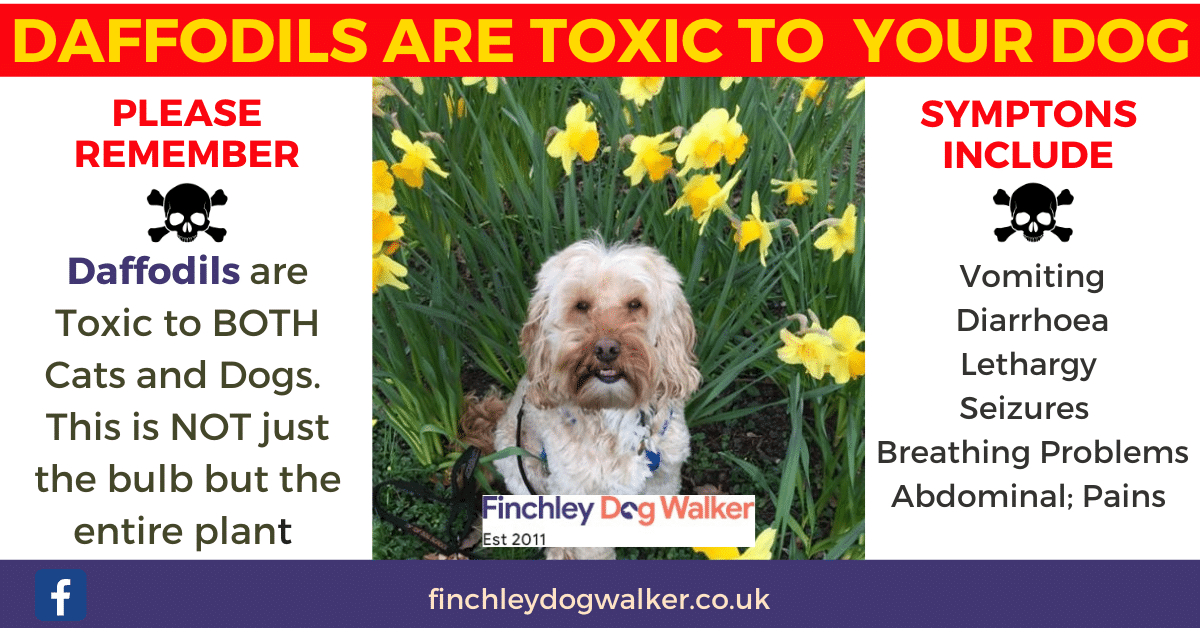
Exposure may occur when a dog:
- digs up planted bulbs
- finds loose bulbs
- eats flowers or leaves
- drinks water from a vase containing daffodils
Possible signs include:
- drooling
- vomiting
- diarrhoea
- abdominal discomfort
- lethargy
More significant effects can occur after larger exposures.
Read Are Daffodils Poisonous to Dogs and Cats?.
Tulips and hyacinths
Tulips and hyacinths can irritate a dog’s mouth and digestive system.
The bulbs present a particular risk because dogs may uncover and chew them.
Signs may include:
- drooling
- mouth discomfort
- vomiting
- diarrhoea
- reduced appetite
Keep unplanted bulbs inside a closed container and prevent access to newly planted areas. Blue Cross and PDSA include tulips and hyacinths among potentially harmful garden plants
Autumn crocus
Autumn crocus, Colchicum autumnale, is not the same plant as an ordinary spring crocus.
It can cause serious poisoning after ingestion.
Keep dogs away from the complete plant, including:
- flowers
- leaves
- bulbs
- seeds
Contact your vet immediately after known or suspected ingestion.
Do not wait for digestive symptoms to develop.
Bluebells
Bluebells contain compounds that can cause illness when eaten.
The bulbs may contain a greater concentration than the flowers or leaves.
Possible signs include:
- drooling
- vomiting
- diarrhoea
- abdominal discomfort
- weakness
Dogs are more likely to encounter bluebells during woodland walks or by digging bulbs from gardens.
Read Dogs and Bluebells for the fuller seasonal guide.
Foxgloves
Foxgloves contain cardiac glycosides that can affect the heart.
Keep dogs away from:
- leaves
- flowers
- seeds
- cuttings
- dried plant material
Contact your vet immediately after suspected ingestion, even when your dog currently appears normal.
Do not place foxglove cuttings on the lawn while gardening. PDSA and Blue Cross both include foxglove among plants that should be kept away from pets. (PDSA)
Lily of the valley
Lily of the valley also contains compounds that can affect the heart.
It should not be confused with true lilies, although both require care.
Possible signs after ingestion may include:
- vomiting
- weakness
- abnormal heart rhythm
- collapse
Contact your vet immediately after suspected ingestion.
Yew
Yew is one of the more serious garden and countryside hazards.
The plant may be found in:
- gardens
- hedges
- churchyards
- parks
- formal grounds
Keep dogs away from:
- needles
- bark
- branches
- seeds
- cuttings
Do not allow a dog to carry or chew yew sticks.
Contact your vet immediately after suspected ingestion because serious signs can develop quickly. Blue Cross and PDSA both list yew among hazardous plants for dogs.
Oleander
Oleander is an ornamental shrub containing cardiac glycosides.
Every part should be treated as potentially dangerous, including dried leaves and garden cuttings.
Possible effects can include:
- vomiting
- weakness
- changes in heart rhythm
- collapse
Oleander is less commonly grown outdoors in colder parts of the UK than in warmer regions, but it may appear in conservatories, containers and sheltered gardens.
Azaleas and rhododendrons
Azaleas and rhododendrons contain substances that can cause digestive, neurological and cardiovascular problems.
Dogs may chew fallen leaves or investigate prunings.
Possible signs include:
- drooling
- vomiting
- diarrhoea
- weakness
- poor coordination
Keep all cut material away from pets and contact your vet after suspected ingestion. (PDSA)
Laburnum
Laburnum produces hanging yellow flowers followed by seed pods.
The seeds and other plant material can cause poisoning when eaten.
Possible signs include:
- vomiting
- weakness
- agitation
- changes in heart rate
- tremors
Remove fallen pods from areas your dog can reach and keep cuttings securely contained. (Veterinary Poisons Information Service)
Pieris
Pieris, sometimes known as lily-of-the-valley bush, is a common evergreen garden shrub.
It should be kept away from dogs who chew plants.
Contact your vet after suspected ingestion rather than waiting for symptoms. Blue Cross includes Pieris among plants capable of causing problems in dogs. (Blue Cross)
Ivy
Ivy may irritate the digestive system and skin.
Dogs may encounter it:
- growing along the ground
- on walls
- in hedges
- in garden cuttings
- in decorative arrangements
Do not allow chewing, and remove prunings promptly.
Ivy is generally described as lower toxicity than some plants in this guide, but “lower toxicity” does not mean suitable to eat.
Holly, mistletoe and cotoneaster
These plants produce berries that may attract curious dogs.
Ingestion can lead to digestive upset, while eating large numbers or swallowing woody plant material can create additional risks.
Keep berries and festive arrangements out of reach.
Contact your vet when your dog eats an unknown quantity or develops symptoms.
Rhubarb
Rhubarb stalks are eaten by people, but the leaves contain compounds that are harmful to dogs and cats.
Keep pets away from:
- leaves
- cuttings
- discarded plants
- compost containing rhubarb leaves
PDSA advises that rhubarb leaves remain poisonous whether raw or cooked. (PDSA)
Onion, garlic, leek, chive and shallot plants
Members of the Allium family can damage a dog’s red blood cells when enough is eaten.
This includes plants grown in a vegetable patch as well as food stored indoors.
Keep dogs away from:
- bulbs
- leaves
- stems
- kitchen scraps
- compost containing allium waste
The risk is not removed through cooking or drying.
Contact your vet after suspected ingestion.
Potato plants
Potato leaves, stems, sprouts and green potatoes contain compounds that can make dogs unwell.
Do not allow dogs access to:
- potato plants
- discarded green potatoes
- sprouting potatoes
- peelings from green areas
- plants on the compost heap
Ordinary cooked potato without unsafe ingredients is a different question from eating the plant or green tuber.
PDSA advises that potato leaves and raw, green or sprouting potatoes may be harmful.
Tomato plants
Ripe tomato flesh is different from the green parts of the plant.
Keep dogs away from:
- leaves
- stems
- unripe green tomatoes
- discarded plants
- garden cuttings
PDSA lists tomato leaves and unripe fruit among garden hazards for dogs and cats. (PDSA)
Grape vines
Grapes and dried vine fruits can cause serious kidney injury in dogs.
The amount capable of causing poisoning is unpredictable.
Do not allow dogs to eat:
- grapes
- fallen grapes
- raisins
- currants
- sultanas
- fruit from garden vines
Contact your vet immediately after any known or suspected ingestion. Blue Cross includes grape-vine fruit among harmful garden plants. (
Oak trees and acorns
Acorns and oak material contain tannins that may cause digestive illness.
Acorns can also create:
- choking risk
- dental damage
- intestinal blockage
Dogs may repeatedly collect them during autumn walks.
Prevent chewing and contact your vet when:
- several acorns were eaten
- a whole acorn was swallowed
- your dog is vomiting
- they appear painful
- they cannot pass faeces
- they become unusually tired
Animal PoisonLine notes that acorns may cause vomiting and diarrhoea and can obstruct the digestive system when swallowed.
Horse chestnuts and conkers
Conkers contain aesculin and may make dogs unwell.
Their size and hard shape also create a risk of blockage.
Do not encourage dogs to play with conkers.
Contact your vet when your dog swallows one or chews several.
Animal PoisonLine and Blue Cross both warn about gastrointestinal signs and the risk of intestinal obstruction.
Sago palm and cycads
Sago palm is more commonly kept as a houseplant or conservatory plant in the UK.
Even a small ingestion can cause severe liver damage.
Keep the complete plant away from dogs and contact your vet immediately after suspected exposure. Animal PoisonLine describes cycads as capable of causing serious liver injury and death.
Giant hogweed
Giant hogweed is different from most plants on this list because the main danger is contact with phototoxic sap rather than simply eating it.
Sap followed by sunlight can cause:
- skin inflammation
- burns
- blistering
- eye injury
Keep dogs away from suspected plants and avoid touching them.
Read Giant Hogweed and Dogs: Identification, Exposure and What to Do.
Mushrooms and fungi
Mushrooms are not garden plants, but they are a common garden and walking concern.
Some cause only digestive upset. Others may lead to:
- abnormal heart rhythms
- seizures
- organ failure
- death
Mushroom identification is difficult and should not be attempted from one poor photograph.
Prevent your dog from eating any unidentified fungus and contact your vet immediately after suspected ingestion.
Cut flowers and vase water
Indoor bouquets may contain plants that are also harmful in gardens.
Keep dogs away from:
- flowers
- leaves
- stems
- berries
- flower-food sachets
- vase water
- ribbons and wire
Do not assume water from a vase is safe simply because the main flower is not highly toxic.
The water may contain:
- plant material
- bacteria
- preservatives
- fertiliser
- pollen
Stable vases and closed rooms may be safer than placing arrangements on a surface your dog can reach.
Are lilies poisonous to dogs?
True lilies are particularly dangerous to cats because they can cause severe kidney injury.
Dogs are more likely to develop digestive upset after eating lily material, but they should still be kept away.
Do not use the lower risk to dogs as a reason to keep true lilies in a home containing cats. Animal PoisonLine advises that true lilies and day lilies can cause kidney failure in cats, while dogs are more commonly affected by gastrointestinal signs.
There is no completely reliable “dog-safe plant” list
The old page included a list of plants described as safe for dogs.
That section should be removed.
Blue Cross advises that it is not possible to guarantee a plant will cause no problem if chewed or eaten because:
- species identification is difficult
- individual reactions occur
- pesticides may be present
- soil or compost may be contaminated
- large quantities of ordinary plant matter can cause digestive upset
- stems, thorns and seeds can cause physical injury
The safest rule is:
A plant that is not food should not become a dog treat.
“Low toxicity” does not mean edible
Some plants are regarded as unlikely to cause severe poisoning.
They may still cause:
- vomiting
- diarrhoea
- mouth irritation
- choking
- allergic reactions
- obstruction
Do not deliberately allow your dog to eat roses, fuchsias, sunflowers or other plants simply because they appear on a low-toxicity list.
Thorns, seeds, chemicals and added decorative foliage may present separate risks.
Other garden poisoning hazards
The plant itself may not be the only problem.
Compost
Compost can contain:
- mould
- bacteria
- food scraps
- onions or garlic
- grapes or raisins
- coffee grounds
- garden chemicals
- sharp materials
Mouldy food and plant matter can produce toxins capable of causing serious neurological illness.
Use a secure compost bin and prevent your dog from digging into piles of grass or decaying vegetation. Blue Cross and PDSA both warn that compost and grass cuttings can contain harmful moulds or bacteria.
Cocoa-shell mulch
Cocoa-shell mulch contains theobromine, the same toxic compound associated with chocolate poisoning.
It may also smell attractive to dogs.
Avoid using it in gardens accessed by dogs.
Contact your vet or Animal PoisonLine immediately if your dog eats cocoa mulch.
Fertilisers
Fertilisers vary widely.
Some may irritate:
- skin
- paws
- eyes
- mouth
- digestive system
Others may contain additional ingredients that increase the risk.
Store fertiliser in its original packaging and follow the manufacturer’s instructions about pets entering a treated area.
When your dog eats fertiliser, drinks a spill or walks through a concentrated product, contact your vet and retain the packaging.
Weed killers and pesticides
Do not assume that a product is safe because it is described as natural or organic.
Prevent access:
- during application
- while the product remains wet
- for the period stated on the label
- whenever granules or bait remain visible
Store products securely and never place them inside unlabelled containers.
Blue Cross advises avoiding fertilisers, pesticides and weed killers where possible and keeping dogs away from treated areas.
Slug and snail products
Slug-control products can present poisoning risks depending on their ingredients.
Do not scatter pellets where dogs can reach them.
Keep the original packaging so the exact ingredient can be identified.
Contact your vet immediately after suspected ingestion.
PDSA advises avoiding slug and snail pellets and notes that older metaldehyde products may still remain in sheds despite being banned from sale in the UK. (PDSA)
Bone meal, blood and fish fertilisers
Animal-derived fertilisers may smell particularly attractive to dogs.
Problems can arise through:
- eating a large quantity
- swallowing packaging
- digestive irritation
- obstruction
- added chemicals
Keep bags securely closed and prevent access to newly treated beds.
Contact your vet or Animal PoisonLine when your dog eats the product.
Prunings and garden waste
Do not leave cut plants on the lawn while you continue gardening.
A dog who ignores a living shrub may investigate a pile of branches, leaves or bulbs.
Place waste directly into a secure container.
Do not allow your dog to chew sticks cut from an unidentified tree.
The RHS specifically advises keeping prunings and uprooted plants away from pets.
Signs of possible plant poisoning
Signs vary according to the plant and exposure.
Possible symptoms include:
- drooling
- pawing at the mouth
- vomiting
- diarrhoea
- blood in faeces
- reduced appetite
- weakness
- unusual tiredness
- poor coordination
- twitching
- tremors
- seizures
- pale gums
- changes in drinking or urination
- breathing difficulty
- abnormal heart rate
- collapse
- skin irritation
- eye irritation
Do not use the absence of symptoms as proof that your dog is safe.
PDSA advises contacting a vet immediately after known or suspected ingestion rather than waiting for illness to develop.
When to seek emergency help
Contact your vet immediately after known exposure to a high-risk plant.
Seek urgent help when your dog shows:
- breathing difficulty
- collapse
- severe weakness
- seizures
- repeated vomiting
- marked drooling
- abnormal heart rhythm
- pale gums
- serious eye exposure
- significant skin burns
- loss of coordination
When your pet is already collapsed, having convulsions or struggling to breathe, go directly to a veterinary practice rather than relying on a telephone poison-assessment service.
What information should you give the vet?
Tell the veterinary team:
- your dog’s breed
- age
- weight
- health conditions
- medication
- plant name where known
- part eaten
- estimated quantity
- time of exposure
- current symptoms
- whether the dog has vomited
- what you have already done
Take:
- photographs
- the plant label
- packaging
- a safe sample when advised
- a photograph of vomit or chewed material where useful
Do not handle giant hogweed or another contact-hazardous plant to obtain a sample.
Do not make your dog vomit
Never give salt water or another home remedy to make your dog sick.
Inducing vomiting may be unsafe when:
- the plant is irritating
- a sharp object was swallowed
- the dog is drowsy
- seizures are occurring
- breathing is affected
- too much time has passed
A vet will decide whether vomiting is suitable based on the substance and dog.
Do not give activated charcoal yourself
Activated charcoal may be used in some poisoning cases under veterinary direction.
It is not appropriate for every toxin or animal.
Giving it without advice can:
- delay treatment
- be ineffective
- create an inhalation risk
- interfere with other treatment
Contact your veterinary practice and follow its instructions.
Preventing plant poisoning at home
Practical prevention includes:
- identifying existing plants
- keeping labels
- removing high-risk plants from accessible areas
- fencing vegetable beds
- storing bulbs securely
- removing fallen fruit and berries
- securing compost
- clearing prunings immediately
- avoiding cocoa mulch
- storing chemicals in locked cupboards
- supervising puppies
- teaching a reward-based leave cue
- preventing garden scavenging
- checking new bouquets
- asking visitors not to feed or leave garden products accessible
A secure boundary and safe garden layout also help reduce other risks. Read How to Create a Dog-Friendly Garden.
Do you need to remove every potentially harmful plant?
Not necessarily.
Risk depends on:
- the plant
- garden layout
- whether the dog chews vegetation
- whether bulbs or berries are accessible
- whether children or other pets use the garden
- how gardening waste is managed
The RHS notes that many potentially harmful ornamental plants can be grown safely when they are handled with care and not eaten.
However, removal or secure exclusion is sensible when:
- your dog persistently eats plants
- the plant presents a serious risk
- fallen material is difficult to control
- bulbs are repeatedly dug up
- you cannot supervise access
- a puppy is arriving
- the garden is used for pet sitting
Ask a competent gardener or plant specialist to remove hazardous plants safely where necessary.
Puppies and plant chewing
Puppies explore through their mouths and may:
- dig up bulbs
- chew leaves
- carry sticks
- eat soil
- investigate compost
- swallow plant labels or pots
Supervise garden time and use physical barriers around beds.
Provide suitable alternatives for chewing and digging.
Do not punish a puppy after the item has already been eaten. Move them away, secure the hazard and contact your vet when ingestion is possible.
Rescue and nervous dogs
A newly adopted dog may have unknown scavenging habits.
Introduce the garden gradually and watch whether they:
- eat grass or plants
- dig
- investigate compost
- chew fencing
- collect berries or sticks
- react to garden machinery
- try to escape
A calm, secure garden can be especially valuable to a rescue dog, but it still needs to be assessed from that individual dog’s point of view.
My Rescue Dog Support in Finchley focuses on low-pressure routines and gradual confidence building.
Plants encountered during dog walks
The same plant risks can occur in:
- parks
- woodland
- communal gardens
- roadside verges
- churchyards
- allotments
- countryside paths
Keep your dog closer around:
- bulbs
- unknown berries
- mushrooms
- fallen acorns
- conkers
- yew
- cut vegetation
- council-treated areas
- large unidentified plants
My walks are one-to-one and begin at the client’s home. This allows me to change route when I notice a plant, chemical treatment or garden-waste hazard rather than taking a group through the same area.
Read about Solo Dog Walks in Finchley and Muswell Hill.
Frequently asked questions
What garden plants are poisonous to dogs?
Common examples include daffodils, tulips, autumn crocus, bluebells, foxgloves, yew, laburnum, oleander, azaleas, rhododendrons, lily of the valley and several vegetable plants.
This is not a complete list. Contact your vet after suspected ingestion of an unknown plant. (PDSA)
What should I do when my dog eats a plant?
Move them away, prevent further eating, photograph the plant and contact your vet.
Do not wait for symptoms or attempt to make your dog vomit.
Should I take the plant to the vet?
Take the label or clear photographs.
Take a plant sample only when it can be collected safely and your vet advises it.
Do not handle suspected giant hogweed.
How quickly do plant-poisoning symptoms appear?
It depends on the plant and amount eaten.
Some effects begin quickly, while others may be delayed.
Contact your vet immediately rather than using the absence of symptoms as reassurance.
Are roses safe for dogs?
Roses are generally regarded as low toxicity, but thorns, pesticides, flower food and added foliage may still cause harm.
Do not encourage dogs to chew rose plants or bouquets.
Are sunflowers safe for dogs?
Sunflowers are not generally considered among the highest-risk poisonous plants, but chewing stems, seeds, chemicals or large quantities of plant material may still cause problems.
“Low risk” does not mean suitable food.
Is grass safe for dogs to eat?
Many dogs occasionally eat grass.
Persistent grass eating, vomiting or digestive changes should be discussed with your vet.
Avoid grass treated with chemicals, containing mouldy cuttings or growing beside hazardous plants.
Are mushrooms in the garden safe?
Do not allow your dog to eat unidentified mushrooms.
Some fungi cause mild digestive upset, while others can cause severe or fatal poisoning. Identification is difficult.
Are daffodil bulbs more dangerous than the flowers?
The bulb contains a higher concentration of the plant’s harmful compounds, but the complete plant and vase water should remain inaccessible.
Are conkers poisonous to dogs?
Conkers contain a harmful compound and can also obstruct the digestive system.
Contact your vet when your dog swallows one or eats part of several.
Can dogs eat acorns?
No.
Acorns may cause digestive illness and can create a blockage, particularly when swallowed whole.
Is compost dangerous to dogs?
It can be.
Compost may contain mould, toxic food, chemicals and material capable of causing an obstruction. Keep it inside a secure container
Is cocoa mulch safe for dogs?
No.
Cocoa-shell mulch can contain theobromine and may attract dogs through its smell. Avoid using it where dogs have access.
Can I use weed killer in a dog’s garden?
Avoid it where practical.
When a product is necessary, follow the label exactly and prevent access for the complete stated period. Store the packaging securely.
Should I make my dog vomit after eating a plant?
No.
Only a veterinary professional should decide whether inducing vomiting is safe. Never give salt water.
A safer garden begins with knowing what is already there
You do not need to remove every flower or prevent your dog from enjoying the garden.
Start by identifying the plants you already have.
Store bulbs and chemicals safely.
Secure compost.
Remove fallen berries and garden cuttings.
Prevent access to cocoa mulch, poisonous vegetable plants and unknown fungi.
Most importantly, contact your vet promptly after suspected poisoning instead of waiting for symptoms or trying a home remedy.
For a wider garden plan, read How to Create a Dog-Friendly Garden.
For seasonal risks throughout the year, visit Seasonal Pet Safety in Finchley.
Related Finchley Dog Walker guides
- Dog Health and First Aid Guide
- Seasonal Pet Safety in Finchley
- Creating a Dog-Friendly Garden
- Hidden Dangers on Dog Walks
- Dogs and Bluebells
- Are Daffodils Poisonous to Dogs and Cats?
- Giant Hogweed and Dogs
- Dog Walking Safety Tips
- Dog First Aid on Walks
- Solo Dog Walks
Veterinary disclaimer
This guide provides general information about potentially harmful plants and garden products.
It does not identify an unknown plant, diagnose poisoning, calculate toxicity, prescribe treatment or replace advice and examination from a veterinary surgeon.
The Veterinary Surgeons Act 1966 includes diagnosis and the medical or surgical treatment of animals within veterinary surgery.
Contact your veterinary practice promptly whenever your dog has eaten an unknown or potentially poisonous plant. Seek emergency help for collapse, seizures, breathing difficulty, severe weakness or another serious change.


