What I Watch for on Walks (and the Gear That Actually Helps)
When I’m out walking dogs around Finchley, I’m not just thinking about enrichment and exercise.
I’m scanning constantly.
Grass edges. Puddles. Bins. Footpaths. Other dogs. What’s been left behind.
Because a lot of the real risks for dogs aren’t obvious, they’re everyday things that can quietly cause problems.
This guide breaks down the main environmental risks I see on walks and what actually helps in real life.
It also includes the gear I use or recommend. Not everything. Just what’s genuinely useful.
Quick note before we start
Some links on this page are affiliate links, which means they may direct you to Amazon or similar websites. If you make a purchase through these links, I may earn a small commission at no additional cost to you. This helps support the running of this site and allows me to continue creating helpful guides.
Contaminated Water and Puddles
This is one of the most common issues I deal with.
Dogs love puddles. Especially in places like Cherry Tree woods, where water sits for days.
But that water can contain:
• bacteria
• parasites
• rat urine (risk of leptospirosis)
• algae
I’ve had dogs try to drink from puddles that look harmless, but the question is, are they?
What I do on walks
I redirect early.
If a dog is a serial puddle drinker, I don’t wait for them to decide. I guide them away and offer clean water instead.
What helps
• Dog travel water bottle amazon
• Collapsible bowl amazon
• Spats are a really good high-value treat for redirection – amazon
Grass Seeds and Hidden Plant Risks
Spring and summer are the big seasons for this.
Grass seeds get everywhere. Paws. Ears. Eyes. Armpits.
I check the dogs constantly, especially after walks in longer-grass areas
Read my article on grass seeds and dogs
Other plants can also cause problems:
• stinging nettles
• toxic garden plants
• sharp seed heads
What I do on walks
I avoid long grass where possible during peak season.
I also built in quick checks during and after the walk. Not just at the end.
What helps
• Fine-tooth grooming comb – amazon
• Portable paw clean – much less messy than a water bottle and more efficient as it helps get in between the toes
Food Waste and Scavenging
This is a big one in urban areas.
Chicken bones. Bread. Leftovers and many other toxic foods that get left behind from picnics or spill out of bins
I’ve seen dogs grab things in seconds.
And once it’s in their mouth, you’re already behind, especially if it’s something high-value like chicken bones.
What I do on walks
I watch body language closely.
Head drop. Sudden interest. Slowing pace.
That’s usually the moment before a grab.
I interrupt early. Not after.
What helps
• Long line for better control and distance. The one I use is waterproof and easy to clean – amazon
• Treat pouch for fast rewards – amazon
• Basket muzzle (for dogs with a strong scavenging history) – amazon
A properly fitted basket muzzle still allows panting, sniffing and drinking. It just prevents grabbing unsafe items.
Chemical Exposure
This often gets missed.
Things like:
• weed killers
• slug pellets
• cleaning chemicals
• antifreeze (very dangerous)
You won’t always see them.
Sometimes it’s just a treated patch of grass or residue on a pavement.
What I do on walks
I avoid freshly treated areas where possible.
If something smells off or looks like it was recently sprayed, I steer clear.
What helps
- • Wiping paws after walks with a damp cloth
- Towels kept by the door
Heat and Surfaces
Even in the UK, heat catches people out.
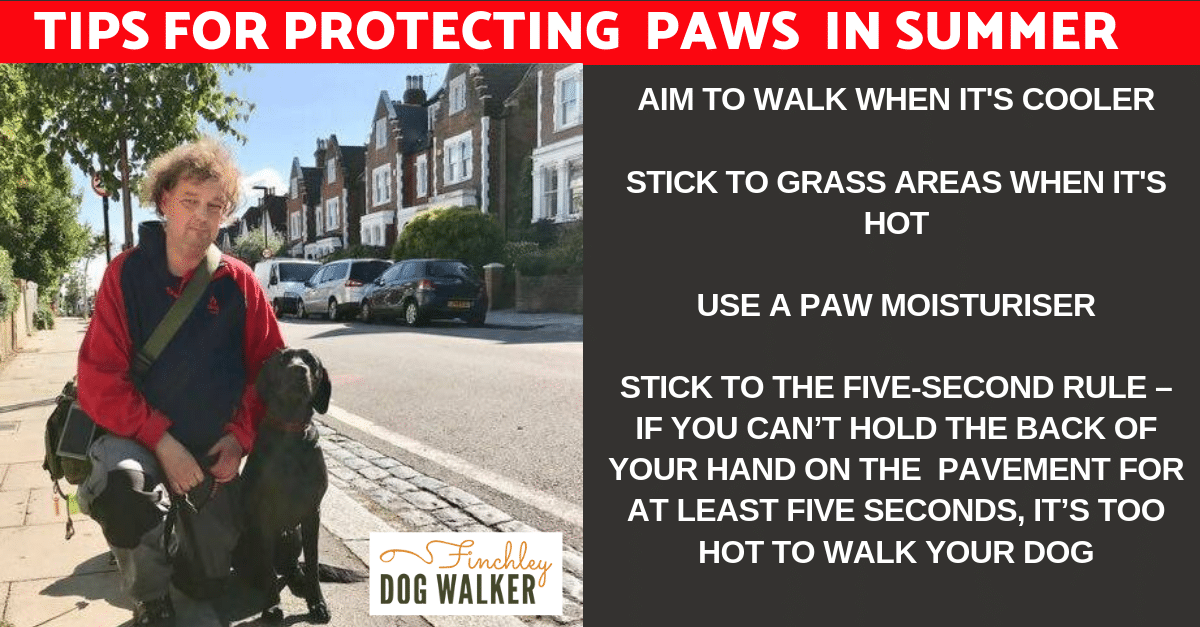
Pavements heat up quickly. Dogs don’t wear shoes. See my article on pavements and paws
I’ve checked surfaces that felt fine to me but were already too warm for paws.
What I do on walks
I check surfaces with my hand.
If it’s too hot for me, it’s too hot for the dog.
I also adjust routes. More shade. More grass. Shorter walks.
Check out my essential summer tips
What helps
• Cooling mat amazon
• Travel water bottle amazon
• Frozen kongs are really good to help keep dogs entertained and cool them down. Find out more about kongs and everything you need to know by reading my complete guide to kongs
. Naturally, summer brings its own danger, and so you may want to read my summer dangers guide
Other Dogs and Unpredictable Situations
Not every risk is environmental.
Sometimes it’s another dog, an off-lead situation, or a crowded path.
This is where many incidents actually happen.
What I do on walks
I create space early.
I don’t wait for a situation to escalate.
This is especially important for rescue or reactive dogs.
What helps
• Well-fitted harness such as the Perfit Fit harness (direct link(
• Long line for controlled freedom – The obe i recommend is waterproof and easy to clean
• Yellow bandana (Amazon) with ignore me anxious, whilst not everyone takes notice, some will. I also try to educate people on respecting thr lead
What I Actually Carry on Most Walks
This isn’t a full kit list. Just what I realistically use day to day.
• Treat pouch
• Long line
• Water bottle
• Wipes
• Spare lead
• High value treats
Simple. Practical. It covers most situations.
Local Walk Insight
In areas like Cherry Tree Wood or Parkland Walk, the risks change week to week.
One week, it’s mud and standing water.
Next week it’s grass seeds.
Then it’s food waste after a busy weekend.
That’s why I don’t rely on routine. I adjust constantly.
If Your Dog Is High Risk
Some dogs need a bit more management.
Especially:
• rescue dogs
• strong scavengers
• reactive dogs
• dogs with poor recall
In those cases, equipment isn’t a shortcut.
It’s support.
Used properly, it keeps your dog safe while you build better habits.
If you are struggling and want help with one-to-one walks or training walks, then please get in touch to see if I can help
Support the Site
If you found this guide helpful, you can support the site via Buy Me a Coffee:
FAQs
Can my dog get sick from puddle water?
Yes. Puddles can carry bacteria like leptospirosis. I always try to prevent drinking and offer clean water instead.
Are grass seeds really dangerous?
They can be. They can lodge in the paws, ears or eyes and cause infection. I check the dogs after every walk in long grass.
Should I use a muzzle for scavenging?
For some dogs, yes. A properly fitted basket muzzle can prevent dangerous food being picked up while still allowing normal behaviour.
How do I know if the ground is too hot?
Place your hand on the pavement for a few seconds. If it feels too hot for you, it’s too hot for your dog.
What’s the most important item to carry?
For me, it’s a treat pouch. It allows quick redirection and prevents many problems before they occur.
Disclaimer
This guide is based on real-world dog walking experience and general safety advice.
It is not a substitute for veterinary guidance.
If your dog is unwell or you are concerned about exposure to toxins, contact your vet.
Under the Veterinary Surgeons Act 1966, only qualified professionals can diagnose or prescribe treatment.
About the author
II’m Del, the person behind Finchley Dog Walker. I work across Finchley, Muswell Hill and the surrounding North London areas, supporting dogs who need a calmer, more thoughtful approach. Many of the dogs I walk are rescues, nervous or easily overwhelmed, so I focus on one-to-one walks, enrichment and building confidence at their pace. My aim is always simple. Keep dogs safe, reduce stress and help them enjoy their walks again.