

What to Check Before You Book
Updated July 2026
Choosing care for your dog while you are away can feel difficult.
You may be comparing a dog sitter, a house sitter, home boarding, kennels or help from a friend. Each option can work well for the right dog, but the right choice depends on your dog’s temperament, routine, health and confidence.
This page is a short guide to help you compare a dog sitter and a dog boarder before you book.
For the full pet-care checklist covering dogs, cats and small animals, read my main guide:
How to Choose a Pet Sitter: A UK Checklist for Dogs, Cats and Small Pets
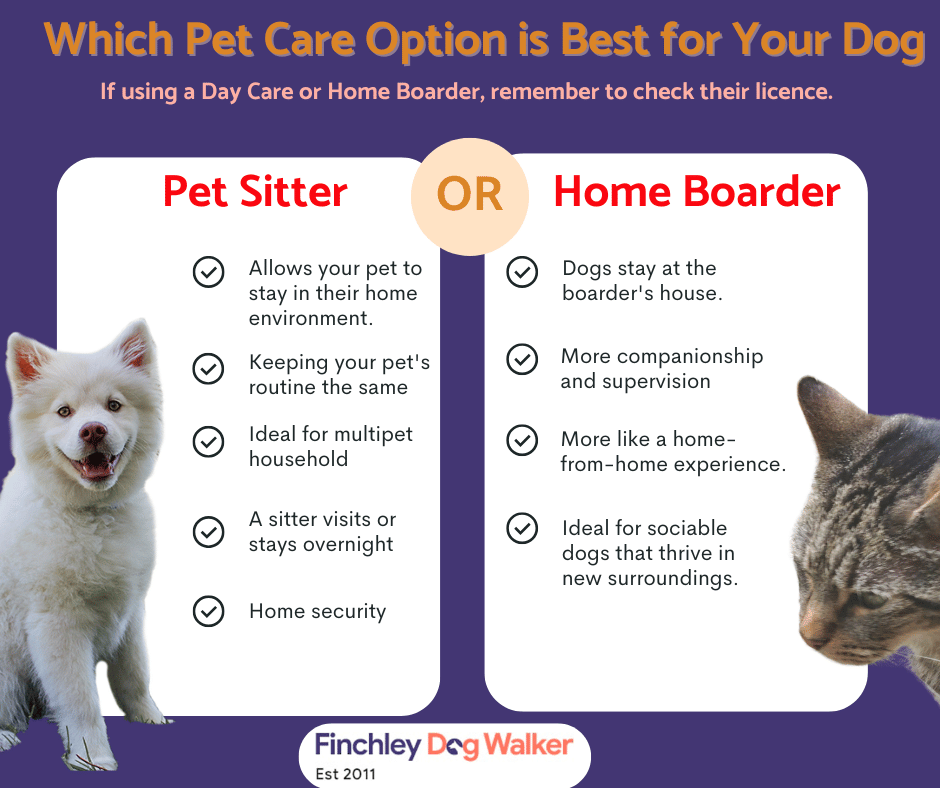
Dog Sitter or Dog Boarder: What Is the Difference?
A dog sitter usually cares for your dog in your own home.
This may involve:
- feeding visits
- toilet breaks
- walks
- medication where agreed
- calm company
- overnight house sitting
- keeping your dog’s usual routine
A dog boarder cares for your dog in the boarder’s own home.
This may suit some confident dogs, especially if they enjoy staying elsewhere and cope well with new people, new smells and different routines.
Both options can be good.
Both options can also be wrong for the individual dog.
The important question is not, “Which is best?”
The better question is:
“Which option is safest, calmest and most suitable for my dog?”
When a Dog Sitter May Be the Better Choice
A dog sitter or house sitter may be better if your dog is:
- nervous
- newly rescued
- elderly
- reactive around other dogs
- unsettled by travel
- worried in new places
- sensitive to routine changes
- on medication
- used to sleeping at home
- part of a multi-pet household
- uncomfortable in busy environments
Some dogs cope better when they can stay in familiar surroundings.
They know the smells, rooms, garden, bedtime routine and safe spaces.
This can be especially helpful for rescue dogs and dogs who need a slow, patient approach.
You can read more about my local approach here:
When a Dog Boarder May Be Suitable
Home boarding may suit some dogs well.
It may be suitable if your dog:
- is confident in new places
- is comfortable staying away from home
- is friendly and relaxed around people
- can sleep in an unfamiliar house
- copes with a different routine
- is used to other dogs, if other dogs are present
- has no serious separation or reactivity concerns
If you choose home boarding, ask whether the boarder is licensed where required.
In England, businesses offering dog home boarding usually need a licence from the local authority.
You can check the official guidance here:
GOV.UK: Boarding for cats or dogs licence in England
A good boarder should be clear about:
- their licence
- insurance
- how many dogs they take
- whether dogs from different homes mix
- sleeping arrangements
- walks
- feeding routines
- emergency procedures
- how they manage nervous dogs
- what happens if dogs do not get along
Do not assume that “home from home” automatically means calm or suitable.
Ask what actually happens during the stay.
Kennels, Catteries and Daycare Are Different Again
Kennels, catteries, and dog daycares are not the same as a sitter visiting your home.
They may be the right choice for some dogs and cats, but they are usually more structured environments.
Ask about:
- licensing
- staff numbers
- routines
- exercise areas
- rest areas
- cleaning
- vaccination requirements
- emergency procedures
- how they handle nervous animals
- whether dogs are mixed
- how much individual attention your dog receives
For some dogs, a well-run licensed kennel may be suitable.
For others, especially nervous, elderly or rescue dogs, staying at home with a sitter may be calmer.
The Main Checks Before You Book
Before choosing a dog sitter or boarder, check the basics.
Insurance
Ask whether they have suitable insurance for the service they provide.
A professional should not mind being asked.
Licence, where relevant
If your dog is staying in someone else’s home as part of a business, ask about licensing.
Licensing is especially relevant for home boarding, kennels and daycare.
Experience
Ask what dogs they regularly care for.
Experience with easy dogs is not the same as experience with:
- rescue dogs
- reactive dogs
- senior dogs
- dogs on medication
- dogs who guard food or toys
- dogs who are worried by strangers
- dogs who do not cope with other dogs
First aid training
Pet first aid training is useful, especially if your dog is elderly, young, active or has medical needs.
It does not replace a vet, but it can help someone respond calmly in an emergency.
Reviews or references
Look for real reviews that mention the type of care you need.
For example:
- house sitting
- nervous dogs
- older dogs
- rescue dogs
- medication
- good communication
- reliability
- calm handling
You can see some of my reviews here:
Finchley Dog Walker Testimonials
Meet-and-greet
Always arrange a meet-and-greet before booking where possible.
This gives you a chance to see:
- whether they listen
- how they approach your dog
- whether they rush contact
- whether they notice body language
- whether they ask useful questions
- whether your dog seems comfortable
For nervous dogs, the sitter or boarder should not force interaction.
A calm person will give your dog space and time.
Questions to Ask a Dog Sitter
If someone is visiting or staying in your home, ask:
- Are you insured?
- Do you offer house sitting or visits?
- How long is each visit?
- Will you walk my dog?
- Do you walk dogs one-to-one or in groups?
- Will my dog be transported by car or van?
- How long will my dog be left alone?
- Can you follow my dog’s normal routine?
- Can you give medication if agreed?
- What updates will you send?
- What happens if my dog refuses a walk?
- What happens in hot weather?
- What happens if you become ill?
- How do you handle keys?
- What emergency information do you need?
For more detail, read:
How to Prepare Your Home for a Pet Sitter
Questions to Ask a Dog Boarder
If your dog is staying in someone else’s home, ask:
- Are you licensed for home boarding?
- Are you insured?
- How many dogs do you take at once?
- Are dogs from different homes mixed?
- Where will my dog sleep?
- Will my dog be left alone?
- Will my dog be walked alone or with other dogs?
- What garden access is there?
- Is the garden secure?
- Do you use crates?
- Do you allow visiting children or other pets?
- What happens if dogs do not get along?
- What happens if my dog becomes anxious?
- What vet do you use in an emergency?
- Can I visit before booking?
A trustworthy boarder should answer clearly.
If the answers are vague, pause before booking.
Red Flags to Watch For
Be cautious if a sitter or boarder:
- avoids basic questions
- will not discuss insurance
- will not discuss licensing where relevant
- seems offended by sensible checks
- gives vague answers about how many dogs they take
- cannot explain emergency procedures
- rushes the meet-and-greet
- ignores your dog’s body language
- says all dogs are fine with them
- promises too much
- takes too many dogs at once
- gives no written confirmation
- has poor communication before you book
- pushes group care when your dog needs one-to-one support
Trust is important, but trust should be supported by clear information.
Special Care for Rescue, Nervous and Reactive Dogs
Rescue dogs and nervous dogs often need more thought.
Some may find boarding too much.
Others may cope if the boarder is experienced, calm and does not mix with unfamiliar dogs.
Before choosing care, think about whether your dog struggles with:
- new people
- new places
- other dogs
- being handled
- being left
- travelling
- busy roads
- children
- changes to routine
- sleeping away from home
For these dogs, a sitter who can keep things familiar may be the better option.
That might mean:
- care in your own home
- short familiar walks
- no group walks
- no vans
- quiet handling
- calm updates
- predictable routines
- time to decompress
My care is built around this slower approach.
Read more here:
What to Leave in Writing
Whether you choose a sitter or boarder, leave clear written information.
Include:
- your dog’s normal routine
- feeding instructions
- medication instructions
- vet details
- emergency contact
- walking routine
- lead and harness information
- what your dog is frightened of
- what your dog enjoys
- where your dog sleeps
- how long your dog can be left
- recall and lead rules
- food allergies
- behaviour notes
- what is normal for your dog
- what would worry you
Do not rely on a quick chat at handover.
Written instructions protect your dog and help the person caring for them.
The RSPCA also advises leaving clear care instructions, your vet’s details and an emergency contact when someone looks after your pet.
RSPCA: Exploring Pet Sitting Options
What I Offer Instead of Boarding
I do not offer home boarding.
My focus is calm, local care in the pet’s own home.
This may include:
- overnight house sitting
- cat sitting
- small animal care
- solo dog walks
- puppy visits
- calm enrichment visits
- support for rescue and nervous dogs
This suits owners who want their pets to stay in familiar surroundings.
It can be especially helpful for dogs who would not cope well with kennels, daycare or being moved into another home.
You can find the relevant services here:
- House Sitting in Finchley
- Cat Sitting in Finchley
- Holiday Care for Dogs and Cats
- Small Animal Care in Finchley
- Pet Care Prices
Final Thought
The right care is not the same for every dog.
Some dogs are happy with a licensed home boarder.
Some do well in kennels.
Some are far better staying at home with a trusted sitter.
What matters is choosing the option that fits your dog, not the one that sounds easiest on paper.
Ask calm questions.
Look for clear answers.
Watch how the person interacts with your dog.
Check insurance, licensing (where relevant), experience, and emergency plans.
If your dog is nervous, elderly, newly rescued or easily unsettled, take extra care before choosing.
A good sitter or boarder will understand why you are asking.
If you would like calm, one-to-one care in your own home, you can contact Del to discuss your dog’s routine, area and needs.
Related Guides
How to Choose a Pet Sitter: A UK Checklist for Dogs, Cats and Small Pets
House Sitting in Finchley
House Sitter vs Dog Boarder
Holiday Care for Dogs and Cats
Getting Your Dog Used to a Sitter
First 24 Hours With a Pet Sitter
How to Prepare Your Home for a Pet Sitter
Rescue Dog Support in Finchley
Contact Del


