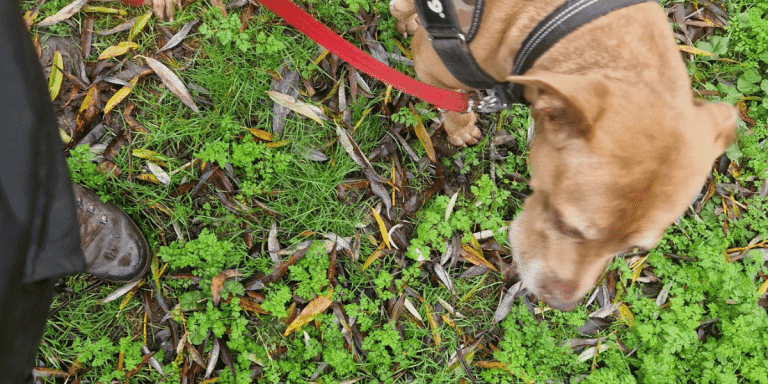
Bringing a rescue dog home means learning about the individual dog in front of you.
You may know quite a lot about their previous life. You may know almost nothing.
That uncertainty becomes particularly important during fireworks season.
A rescue dog who seems confident with traffic, household noises and everyday walks may never have experienced fireworks. Another may have a history of being frightened by them that you simply do not know about.
Some dogs make that fear extremely obvious. Others become quiet, freeze, hide or shut down.
If this is your rescue dog’s first fireworks season with you, I would prepare on the assumption that they might find fireworks difficult, rather than waiting for the first loud bang to discover how they cope.
You do not need to expose them to fireworks to find out.
You can prepare their environment, make walks safer, learn the early signs of stress, and give them somewhere to retreat if they need it.
For my complete seasonal advice, start with Dogs and Fireworks: The Complete UK Safety Guide.
If fireworks are happening now and your dog is already frightened, go straight to What to Do If Your Dog Is Scared of Fireworks Tonight.
This guide provides general information and does not replace veterinary or individual behavioural advice. If your rescue dog shows significant, sudden or worsening fear, speak to your vet.
Table of contents
- Why Can Fireworks Be Particularly Difficult for Rescue Dogs?
- Your Rescue Dog’s First Fireworks Season With You
- Start Preparing Before the Fireworks Begin
- Learn What Your Rescue Dog Looks Like When They Are Worried
- Shutdown Can Be Easy to Miss
- Give Your Rescue Dog Somewhere Safe to Retreat
- Do Not Force Your Rescue Dog Into a Crate
- Should I Comfort My Rescue Dog?
- Don’t Force Affection Because Your Dog Is Frightened
- Keep the House Secure
- Check Identification and Microchip Details
- Walking a Rescue Dog During Fireworks Season
- What If a Firework Goes Off During the Walk?
- Be Particularly Careful With Escape-Prone Rescue Dogs
- Do Not Take Your Rescue Dog to a Fireworks Display
- Do Not Try to Make Them Get Used to It
- Fireworks Can Affect More Than Fireworks
- Give Your Dog Time to Recover
- Enrichment Can Help, but Rest Matters Too
- What If My Rescue Dog Won’t Eat?
- What If My Rescue Dog Won’t Go Outside?
- The Morning After Fireworks
- Keep a Record of Your Dog’s First Fireworks Season
- When Should I Speak to My Vet?
- Preparing for Next Year’s Fireworks
- My Approach to Rescue Dogs
- Rescue Dog Fireworks Checklist
- Frequently Asked Questions
- Are rescue dogs more frightened of fireworks?
- How do I know whether my new rescue dog is scared of fireworks?
- My rescue dog is very quiet during fireworks. Does that mean they are coping?
- Should I comfort my rescue dog during fireworks?
- Should I shut my rescue dog in a crate?
- Should I walk my rescue dog on Bonfire Night?
- Should I let my rescue dog off lead during fireworks season?
- What if my rescue dog pulls towards home?
- My rescue dog has suddenly become reactive after fireworks. Have we gone backwards?
- Should I play fireworks recordings?
- What if my rescue dog refuses to go outside?
- What if my dog will not eat during fireworks?
- When should I contact my vet?
- Can my rescue dog learn to cope better with fireworks?
- Related Fireworks and Rescue Dog Guides
- Your Rescue Dog Does Not Need to Prove They Can Cope
Why Can Fireworks Be Particularly Difficult for Rescue Dogs?
Being a rescue dog does not automatically mean being frightened of fireworks.
Plenty of rescue dogs cope perfectly well.
The difficulty is that you may have an incomplete history.
You might not know:
- whether your dog has experienced fireworks before
- whether they previously lived somewhere very quiet
- whether they have experienced a frightening fireworks incident
- whether they have previously escaped when frightened
- how previous owners responded to their fear
- whether they have ever received veterinary or behavioural support
- whether their response has changed over time
That is why I would not make assumptions in either direction.
Do not assume your rescue dog will be frightened simply because they are a rescue.
But equally, do not assume that because they appear confident in September they will be comfortable when fireworks begin.
Prepare first and let your dog show you how they feel.
Your Rescue Dog’s First Fireworks Season With You
If you have adopted your dog during the spring or summer, autumn may be the first time you encounter this together.
You are still learning about one another.
By now, you may know:
- their favourite walking routes
- where they like to sleep
- which foods they enjoy
- how they respond to other dogs
- whether they like visitors
- what helps them settle
Fireworks introduce something new.
The first time a firework goes off is not the time I want to discover that a dog’s harness is loose, their microchip details are out of date or there is nowhere in the house where they feel safe.
Those are things we can deal with beforehand.
Start Preparing Before the Fireworks Begin
Do not wait until Bonfire Night.
Fireworks can begin weeks beforehand and continue through Christmas and New Year’s Eve.
Before the main fireworks period:
- check your dog’s harness and lead
- check their ID tag
- make sure their microchip details are current
- identify quieter walking routes
- plan earlier walks
- prepare somewhere safe indoors
- find out about organised displays nearby
- learn your dog’s normal stress signals
- consider who will be home on particularly busy evenings
- speak to your vet early if you already know your dog has significant noise fear
The Dogs Trust fireworks advice recommends preparing in advance, including creating a safe space and adjusting walks before fireworks are expected.
Learn What Your Rescue Dog Looks Like When They Are Worried
Fear does not always look dramatic.
A dog who barks, shakes or tries to escape is relatively easy to recognise as frightened.
A dog who becomes very still can be much harder to read.
Your rescue dog might:
- freeze
- lower their body
- tuck their tail
- hold their ears back
- pant
- pace
- hide
- refuse food
- repeatedly lick their lips
- scan the environment
- become unusually clingy
- move away from you
- refuse to go outside
- pull towards home
- stop responding normally
- struggle to settle
Some dogs simply become very quiet.
Quiet does not necessarily mean calm.
My Signs Your Dog Is Frightened of Fireworks and When to Get Help guide looks at the subtle, moderate and more severe signs in greater detail.
Shutdown Can Be Easy to Miss
This deserves particular attention with rescue dogs.
A dog who stops moving, becomes very quiet or appears to “do nothing” can sometimes be mistaken for a dog who is coping well.
Look at the whole dog.
Are they relaxed and sleeping normally?
Or are they:
- rigid
- staring
- holding their breath
- refusing food
- avoiding movement
- unable to settle
- remaining hidden for unusually long periods?
Do not judge how well a dog is coping simply by how little noise they are making.
If you are learning to recognise those earlier changes, my guide to understanding your dog’s threshold signs is a useful companion to this article.
Give Your Rescue Dog Somewhere Safe to Retreat
Your dog should have access to a place where they feel secure.
The important word is choose.
Their safe place might be:
- their normal bed
- an open crate they already enjoy
- underneath a table
- behind the sofa
- a quiet bedroom
- somewhere else they have chosen themselves
Do not decide that because you have created a beautiful den, your dog must use it.
If they choose somewhere else that is safe, listen to them.
Ideally, establish the safe space well before fireworks begin so it is already familiar.
My How to Make a Safe Fireworks Den for Your Dog guide takes you through the process.
The RSPCA’s advice on pets and fireworks also recommends providing dogs with somewhere safe to hide and closing windows and curtains to reduce noise and flashes.
Do Not Force Your Rescue Dog Into a Crate
A crate can make a good safe space if your dog already likes using it.
It is not automatically a safe place simply because it has a door.
Do not introduce confinement on fireworks night to a dog who is uncomfortable in a crate.
And do not shut a panicking dog inside one because you think it will stop them moving around.
A frightened dog who feels trapped may become more distressed and could injure themselves trying to escape.
If your dog chooses an open crate, leave it available.
If they choose the space behind the sofa instead, that may be where they feel safer.
Should I Comfort My Rescue Dog?
If your dog seeks reassurance from you, you can provide it.
You do not need to ignore a frightened dog because you are worried that comforting them will “reward” fear.
If they come to you, you might:
- sit nearby
- speak gently
- allow them to lean against you
- stroke them if that is something they normally enjoy
Do not restrain them.
If they move away, let them.
Some rescue dogs actively seek their person when frightened. Others need more space.
Neither response is wrong.
Don’t Force Affection Because Your Dog Is Frightened
This is the other side of the same issue.
Wanting to reassure your dog does not mean they want to be cuddled.
A frightened dog may have less tolerance for handling than usual.
If they hide, do not crawl into their hiding place and repeatedly touch them.
If they move away, allow them to.
Be available without becoming another source of pressure.
Keep the House Secure
Escape prevention becomes particularly important when you do not know how your dog responds to extreme fear.
Before fireworks begin, check:
- external doors
- windows
- garden gates
- fencing
- dog flaps
- side access
Make sure everybody in the household understands that the dog may behave differently when frightened.
Be particularly careful when visitors arrive or leave.
A normally sensible dog can move incredibly quickly if a door opens while they are panicking.
Check Identification and Microchip Details
Your dog’s ID tag should be present and readable.
Also check that their microchip registration contains your current contact information.
This is particularly worth doing if you adopted your dog relatively recently.
GOV.UK explains the current legal requirements in Get your dog microchipped.
Microchipping does not prevent a dog escaping, so secure management still comes first.
But accurate registration is extremely important if a dog becomes lost.
My guide to reducing the risk of your dog becoming lost covers the wider precautions.
Walking a Rescue Dog During Fireworks Season
I take a more cautious approach to walks when fireworks are likely.
Where possible:
- complete the main walk during daylight
- choose familiar routes
- avoid known display sites
- keep your dog securely attached
- check their harness fit
- remain relatively close to home
- pay attention to changes in body language
- be prepared to shorten the walk
Do not rely on excellent recall as your main safety measure.
Fear can change behaviour very quickly.
My full Walking Your Dog Safely During Fireworks Season guide covers what to do before leaving home and what I do if a firework goes off while I am already walking a dog.
What If a Firework Goes Off During the Walk?
Keep hold of your dog and watch what they do.
They may:
- freeze
- pull towards home
- try to run
- start scanning
- tuck their tail
- stop taking treats
- become unable to respond to familiar cues
If your dog wants to go home and it is safe to do so, go home.
Do not insist on completing the route.
Do not drag a frozen dog forwards because you know the noise has finished.
Create distance and get them somewhere they feel safer.
Be Particularly Careful With Escape-Prone Rescue Dogs
Some rescue dogs have a known history of escaping.
With others, you may not know until something frightens them.
Before fireworks season, make sure your dog’s equipment is suitable and correctly fitted.
Pay particular attention to whether they can reverse out of their harness.
I use fixed leads rather than retractable leads, and I would be especially cautious about giving a worried dog too much distance during fireworks season.
If your dog has a history of escaping from equipment, seek individual advice about an appropriate secure setup.
Do Not Take Your Rescue Dog to a Fireworks Display
Taking your dog close to fireworks to “see how they react” is not something I recommend.
A display combines:
- sudden explosions
- flashes
- vibration
- crowds
- unusual smells
- people moving unpredictably
- unfamiliar surroundings
A dog who tolerates distant fireworks from inside the house may respond very differently at close range.
Leave your dog somewhere safe with suitable care.
Do Not Try to Make Them Get Used to It
Forced exposure is not the same as helping a dog feel safe around something.
If your dog is already frightened, repeatedly exposing them to louder fireworks is not something I recommend.
Likewise, fireworks night is not the time to begin playing loud recordings to desensitise your dog.
If sound work is appropriate, it should be carefully planned when your dog is relaxed and at a level they can comfortably cope with.
For a dog with significant noise fear, speak to your vet about appropriate support.
Fireworks Can Affect More Than Fireworks
This is where things can become particularly relevant for nervous rescue dogs.
Stress from fireworks can reduce a dog’s ability to cope with other challenges.
A dog who normally manages another dog across the road may react at a greater distance.
A dog who normally copes with traffic may suddenly find it difficult.
You might see:
- more barking
- more lunging
- increased scanning
- greater sensitivity to noises
- difficulty settling
- stronger reactions
- reluctance to leave home
This does not necessarily mean all your previous progress has disappeared.
Your dog may simply have less capacity to cope.
Read Reactive Dogs and Fireworks: Helping Your Dog Cope for more on trigger stacking and why dogs may temporarily become more reactive during fireworks season.
Give Your Dog Time to Recover
Do not assume everything returns to normal the moment the fireworks stop.
Your rescue dog may have:
- slept badly
- spent hours scanning
- refused food
- repeatedly startled
- struggled with toilet trips
- been unable to settle
The following day, lower your expectations if necessary.
They may benefit from:
- a shorter walk
- a quieter route
- more sniffing
- fewer interactions
- more sleep
- familiar routines
- time at home
Recovery is part of coping.
Enrichment Can Help, but Rest Matters Too
If your dog’s walks need to be shorter, familiar enrichment can provide another outlet.
Depending on the individual dog, you could use:
- simple food searches
- stuffed food toys
- licking activities
- sniffing games
- gentle training games
- familiar toys
My Dog Enrichment Ideas That Actually Help Calm and Tire Your Dog guide has more suggestions.
But do not feel that every minute of a shorter walk needs to be replaced with an activity.
A dog recovering from stress may need sleep more than another game.
What If My Rescue Dog Won’t Eat?
Some frightened dogs stop eating.
If your dog normally loves food but refuses their favourite treats when fireworks begin, take that seriously as a possible sign that they are struggling.
Do not repeatedly push food towards them.
Make water available and allow them to settle.
If your dog continues to refuse food, appears unwell, or you have other concerns, speak to your vet.
What If My Rescue Dog Won’t Go Outside?
Do not drag them into the garden or onto the pavement.
Wait for a quieter period and try again.
Keep necessary toilet trips:
- brief
- securely on lead
- close to home
- low pressure
If they cannot manage it, return indoors and try later.
And if a normally house-trained dog has an accident because they were too frightened to go outside, do not punish them.
The Morning After Fireworks
Before opening the back door the following morning, check the garden.
Firework debris can land some distance from where it was launched.
Look for:
- rocket sticks
- cardboard
- plastic
- wires
- spent fireworks
- sparklers
- broken glass
If a large display were held along your normal route, I would choose a different route until the area has been properly cleared.
Read Firework Debris and Dogs: Morning-After Walk Safety for the full checklist.
Keep a Record of Your Dog’s First Fireworks Season
This can be surprisingly useful.
After each difficult evening, make a few notes.
Record:
- what time fireworks began
- what your dog did first
- where they chose to go
- whether they could eat
- whether they wanted contact
- whether they would toilet outside
- what appeared to help
- how long they took to recover
- what they were like the following day
Next autumn you will not be starting from scratch.
You will have information about your dog.
Those notes may also be useful when speaking to your vet.
When Should I Speak to My Vet?
You do not need to wait until your dog reaches crisis point.
Speak to your vet if your rescue dog:
- panics
- attempts to escape
- cannot settle
- remains frightened for long periods
- stops eating
- becomes increasingly noise-sensitive
- struggles significantly for several days afterwards
- suddenly develops a new fear
- shows a major behavioural change
A sudden change in behaviour or noise sensitivity can sometimes have a medical component.
That is particularly important for older dogs or those with incomplete medical histories.
The PDSA’s dogs and fireworks guidance recommends discussing significant fear of fireworks with your vet.
Do not give human medication or another animal’s medication to your dog.
Preparing for Next Year’s Fireworks
If this year was difficult, do not wait until next October to act.
Once fireworks season has finished and your dog has recovered:
- Speak to your vet if the fear was significant.
- Review what happened.
- Improve their safe space.
- Review walking equipment.
- Work on useful skills without pressure.
- Seek appropriate behavioural support if needed.
- Start any planned sound work well away from fireworks season.
- Prepare much earlier next year.
A difficult first fireworks season does not mean every future year has to be approached in exactly the same way.
You now know more about your dog.
Use that information.
My Approach to Rescue Dogs
Rescue dogs are one of the reasons I believe so strongly in working with the individual dog rather than expecting every dog to fit the same routine.
My own journey with Finchley Dog Walker began with a rescue dog, and I have worked with nervous, uncertain and spirited dogs throughout my years as a professional dog walker.
I provide Rescue Dog Support in Finchley alongside my one-to-one dog walking service.
I walk one household at a time.
There are no group walks, vans or collection rounds. Walks start and finish at your dog’s own home.
That allows me to adjust things for the dog in front of me.
For a rescue dog during fireworks season, that might mean:
- walking earlier
- using a quieter route
- staying closer to home
- increasing distance from triggers
- allowing more sniffing
- reducing demands
- cutting the walk short
I am not a veterinary behaviourist, and dog walking is not a treatment for serious noise fear.
But I can provide calm, individual support that respects what your dog can cope with that day.
Rescue Dog Fireworks Checklist
Before fireworks season
- Check the harness.
- Check the lead.
- Check the ID tag.
- Check microchip details.
- Identify quieter walking routes.
- Prepare a safe space.
- Learn your dog’s early stress signs.
- Find out about local displays.
- Speak to your vet if you already know your dog struggles.
On fireworks days
- Complete the main walk earlier.
- Keep your dog securely attached.
- Stay relatively close to home.
- Avoid display sites.
- Close windows and curtains before fireworks begin.
- Make their safe space accessible.
- Keep doors and gates secure.
While fireworks are happening
- Let your dog choose where they settle.
- Comfort them if they seek you out.
- Do not force interaction.
- Do not force them outside.
- Keep necessary toilet trips short.
- Do not begin fireworks sound training.
- Monitor how well they are coping.
The following morning
- Check the garden for debris.
- Consider a shorter, quieter walk.
- Avoid display sites.
- Allow more rest.
- Watch for increased reactivity.
- Make notes about what happened.
Frequently Asked Questions
Are rescue dogs more frightened of fireworks?
Not necessarily. Being a rescue dog does not automatically mean a dog will be frightened of fireworks. The difficulty is that you may not know their previous experiences or how they have reacted in the past.
How do I know whether my new rescue dog is scared of fireworks?
Watch for both obvious and subtle changes, including shaking, panting, hiding, freezing, refusing food, scanning, following you unusually closely or refusing to go outside.
My rescue dog is very quiet during fireworks. Does that mean they are coping?
Not necessarily. Some frightened dogs freeze or shut down rather than bark or pace. Look at their whole body and normal behaviour.
Should I comfort my rescue dog during fireworks?
Yes, if they seek reassurance. Calmly provide the contact they normally enjoy. If they prefer to hide, respect their choice.
Should I shut my rescue dog in a crate?
Not unless they already enjoy using the crate, and even then I would leave it accessible rather than trapping a frightened dog inside.
Should I walk my rescue dog on Bonfire Night?
Complete their main walk earlier in daylight where possible. Keep later toilet trips short, secure and close to home.
Should I let my rescue dog off lead during fireworks season?
I would not when unexpected fireworks are reasonably likely. Fear can cause even normally reliable dogs to run.
What if my rescue dog pulls towards home?
If home is in a safe direction, take them home. Do not insist on completing the planned route.
My rescue dog has suddenly become reactive after fireworks. Have we gone backwards?
Not necessarily. Stress and poor sleep can temporarily reduce a dog’s ability to cope with other triggers.
Should I play fireworks recordings?
Not while your dog is already frightened by real fireworks. Planned sound work should begin at a level your relaxed dog can comfortably cope with and may require professional guidance.
What if my rescue dog refuses to go outside?
Do not force them. Wait for a quieter period and try a brief, securely on-lead toilet trip.
What if my dog will not eat during fireworks?
Fear can reduce appetite. Do not force food. Seek veterinary advice if refusal continues or your dog appears unwell.
When should I contact my vet?
Speak to your vet if fear is severe, worsening, causes escape attempts, prevents your dog settling or eating, appears suddenly or is having a significant impact on their welfare.
Can my rescue dog learn to cope better with fireworks?
Some dogs can improve with appropriate preparation, environmental management, carefully planned behaviour work and veterinary support where needed. The plan should be based on the individual dog.
Related Fireworks and Rescue Dog Guides
Continue with:
- Dogs and Fireworks: Complete UK Safety Guide
- What to Do If Your Dog Is Scared of Fireworks Tonight
- Signs Your Dog Is Frightened of Fireworks
- How to Make a Safe Fireworks Den for Your Dog
- Walking Your Dog Safely During Fireworks Season
- Reactive Dogs and Fireworks: Helping Your Dog Cope
- Firework Debris and Dogs: Morning-After Walk Safety
- Recognising Your Dog’s Threshold Signs
- Dog Enrichment Ideas That Actually Help Calm and Tire Your Dog
- Rescue Dog Support in Finchley
Your Rescue Dog Does Not Need to Prove They Can Cope
If this is your first fireworks season together, you may learn something new about your rescue dog.
Perhaps they barely notice the fireworks.
Perhaps they want to sleep beside you.
Perhaps they disappear behind the sofa.
Perhaps they find the whole experience extremely difficult.
Whatever happens, they do not need to prove that they can cope.
You do not need to take them closer to the noise.
You do not need to make them stay outside.
You do not need to complete the walk.
You do not need to force them out of hiding.
Give them choices where it is safe to do so.
Keep their world predictable.
Listen when their behaviour tells you something is difficult.
And if their fear is significant, involve your vet.
The first fireworks season you experience together gives you information that can help you prepare much better for the next one.
For the complete seasonal plan, return to my Dogs and Fireworks: Complete UK Safety Guide.
If you are looking for calm, individual help with a rescue dog in Finchley, you can also read about my Rescue Dog Support and one-to-one dog walking.
This guide provides general information and does not replace veterinary diagnosis, treatment or individual behavioural advice. If your dog’s fear or behaviour changes suddenly, becomes severe, or significantly affects their welfare, contact your vet.