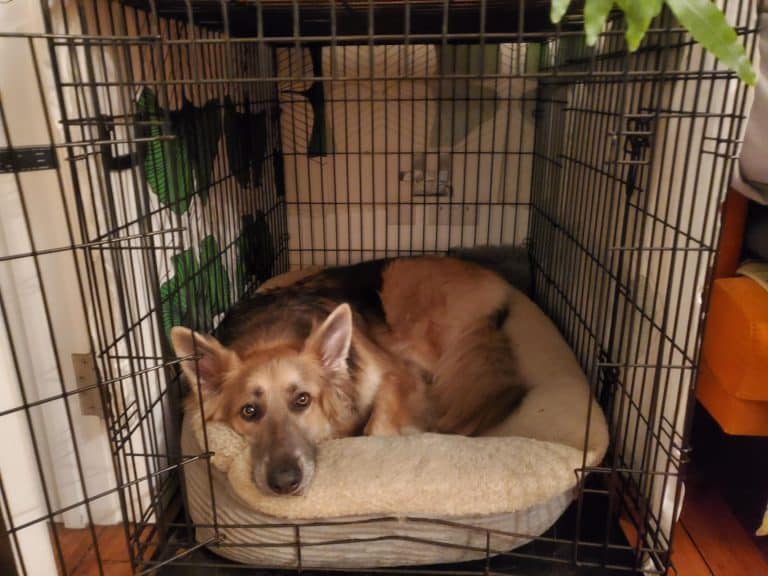
Your puppy’s first fireworks season is one of those experiences you cannot predict completely.
Some puppies hear a distant bang, briefly look up and carry on with what they were doing.
Others find the sudden noise, flashes and vibrations much more difficult.
The important thing is not to wait until Bonfire Night to find out.
If you have brought a puppy home during the spring or summer, autumn may be their first experience of Halloween fireworks, Bonfire Night, Diwali, Christmas and New Year celebrations.
There are plenty of useful things you can do beforehand.
You can make sure their walking equipment is secure, create somewhere comfortable for them to retreat, adjust walk times and learn the subtle signs that your puppy is beginning to struggle.
What I would not do is deliberately take a puppy near fireworks because someone has told you they need to “get used to them”.
Your puppy does not need to prove that they are brave.
If you have recently welcomed a puppy, my Bringing a Puppy Home guide covers the wider first weeks, routines, settling in, safety and puppy care.
For my complete seasonal advice, start with Dogs and Fireworks: Complete UK Safety Guide.
If fireworks are already happening and your puppy is frightened, go to What to Do If Your Dog Is Scared of Fireworks Tonight.
This article provides general information and does not replace veterinary or individual behavioural advice. If your puppy shows significant, persistent or worsening fear, speak to your vet.
Table of contents
- Quick Answer: How Do I Prepare My Puppy for Their First Fireworks?
- When Does Fireworks Season Start?
- Your Puppy May Never Have Heard a Firework Before
- Your Puppy Does Not Need to Visit a Fireworks Display
- Socialisation Does Not Mean Forced Exposure
- What About Fireworks Sound Recordings?
- Start Before Fireworks Season
- Create a Safe Place Before It Is Needed
- A Crate Is Only Safe If Your Puppy Feels Safe There
- Close Curtains Before Fireworks Begin
- Walk Your Puppy Earlier
- Keep Your Puppy Securely Attached
- Check Your Puppy’s Microchip Details
- Learn Your Puppy’s Early Signs of Worry
- Watch Your Puppy’s Threshold
- What Should I Do If a Firework Goes Off During the Walk?
- Don’t Drag a Frightened Puppy Forwards
- Can I Give My Puppy Treats When Fireworks Go Off?
- Can I Comfort My Puppy?
- Keep Doors and Gates Secure
- Accompany Your Puppy Into the Garden
- What If My Puppy Is Too Frightened to Toilet Outside?
- Don’t Try to Exhaust Your Puppy Before Fireworks
- Sleep Is Important
- Fireworks Can Affect Behaviour the Following Day
- Keep the Following Day Easier
- Check for Firework Debris the Following Morning
- Enrichment on Quieter Fireworks Days
- Don’t Punish Fear
- What If My Puppy Seems Completely Unbothered?
- What If My Puppy Is Already Noise-Sensitive?
- When Should I Speak to My Vet?
- Preparing for Your Puppy’s Second Fireworks Season
- Puppies, Fireworks and One-to-One Support
- Puppy’s First Fireworks Checklist
- Frequently Asked Questions
- What should I do for my puppy’s first Bonfire Night?
- Should I take my puppy to see fireworks?
- Should puppies hear fireworks recordings?
- Can I comfort my puppy during fireworks?
- Should I ignore my puppy when they are scared?
- Should I put my puppy in their crate?
- What time should I walk my puppy on Bonfire Night?
- Should I let my puppy off lead during fireworks season?
- What if a firework goes off during our walk?
- What if my puppy will not go outside?
- What if my puppy has an accident indoors?
- Should I tire my puppy out before fireworks?
- Why is my puppy more reactive the following day?
- When should I contact my vet?
- Related Puppy and Fireworks Guides
- Your Puppy’s First Fireworks Season Is About Safety, Not Testing Them
Quick Answer: How Do I Prepare My Puppy for Their First Fireworks?
Before fireworks season:
- make sure your puppy’s harness fits correctly
- check their collar and ID tag
- check their microchip registration
- plan to walk earlier on fireworks days
- prepare a familiar safe space
- close curtains before displays begin
- use familiar background sound if appropriate
- keep doors, windows and garden gates secure
- learn your puppy’s early signs of stress
- avoid deliberately exposing them to loud fireworks
- speak to your vet early if they are already sensitive to noise
Most importantly, watch your puppy.
You are not trying to manufacture a particular response. You are helping them feel as safe as possible while discovering how they cope.
When Does Fireworks Season Start?
Many people think primarily about 5 November.
For dog owners, the season can be considerably longer.
Depending on where you live, fireworks may be heard around:
- Halloween
- Diwali
- Bonfire Night
- private parties
- Christmas
- New Year’s Eve
There can also be unexpected fireworks between these dates.
That is why I prefer to prepare before the first bangs start rather than wait until Bonfire Night itself.
Your Puppy May Never Have Heard a Firework Before
It is easy to forget how much of the world is completely new to a puppy.
Cars, buses, doorbells, household appliances, children, other dogs and busy streets can all be new experiences.
Fireworks add something particularly difficult to predict.
They can be:
- sudden
- extremely loud
- accompanied by flashes
- repeated unpredictably
- close or distant
- separated by long periods of silence
Your puppy cannot understand that it is Bonfire Night and the strange noises will eventually stop.
Their behaviour tells you how they feel about what is happening.
Your Puppy Does Not Need to Visit a Fireworks Display
I would not take a puppy to a fireworks display as a socialisation exercise.
Socialisation is not simply about exposing a puppy to as many things as possible.
Good experiences matter.
A busy fireworks display may combine:
- explosions
- flashes
- crowds
- children
- unusual smells
- traffic
- people behaving differently
- an unfamiliar environment
That is a lot for a young dog to process.
A puppy who becomes overwhelmed is not necessarily learning that fireworks are safe simply by remaining in that environment.
Socialisation Does Not Mean Forced Exposure
This is an important distinction.
There is a big difference between your puppy calmly noticing something new at a level they can cope with and being unable to escape something frightening.
If your puppy hears a distant firework and remains relaxed, you do not necessarily need to do anything dramatic.
You might simply continue calmly with whatever you were already doing.
If your puppy becomes worried, however, listen to that response.
Do not move closer to the noise to prove that there is nothing to fear.
What About Fireworks Sound Recordings?
Carefully controlled sound recordings are sometimes used as part of noise preparation.
The principle is not to play fireworks loudly and wait for your puppy to stop reacting.
Any sound work should begin at a sufficiently low level that your puppy remains comfortable.
If they show signs of fear, the intensity is too high.
The Dogs Trust fireworks advice includes guidance on preparing dogs for fireworks.
If your puppy is already significantly worried by noises, I would speak to your vet rather than experimenting with increasingly loud recordings yourself.
Start Before Fireworks Season
Preparation is much easier while the house is quiet.
Before fireworks become frequent, think about:
- where your puppy normally sleeps
- where they choose to go when tired
- which rooms are quietest
- how securely external doors close
- whether the garden is secure
- whether their walking equipment still fits
- what normally helps them settle
Puppies grow quickly.
A harness that fitted perfectly a few weeks ago may need adjusting.
Create a Safe Place Before It Is Needed
Your puppy should have a familiar place to rest.
That might be:
- their normal bed
- an open crate they already enjoy
- a covered den
- a quiet corner
- underneath suitable furniture
- another place they have chosen
Introduce it before fireworks begin.
Add familiar bedding and allow your puppy to investigate it on their own.
Do not force them inside.
My How to Make a Safe Fireworks Den for Your Dog explains how to prepare one.
The RSPCA’s fireworks advice for pets also recommends creating a safe place where your dog can retreat.
A Crate Is Only Safe If Your Puppy Feels Safe There
Many puppies are introduced to crates as part of settling into their new home.
If your puppy already chooses to sleep comfortably in their crate, it may become one of the places they prefer during fireworks.
That does not mean every frightened puppy should be shut inside a crate.
If your puppy is panicking and attempting to escape, confinement could make things worse.
Make familiar safe spaces available and watch where your puppy chooses to settle.
Close Curtains Before Fireworks Begin
Fireworks are not only noisy.
The sudden flashes can also be startling.
Before displays are likely to start:
- close curtains or blinds
- close windows
- secure external doors
- make the safe space available
If you normally use the television, radio or another familiar background sound, keeping that normal household sound may help reduce the contrast between silence and distant fireworks.
The aim is not necessarily to drown out every explosion.
It is to make the indoor environment as predictable and comfortable as reasonably possible.
Walk Your Puppy Earlier
On days when fireworks are likely, I would complete the main walk earlier.
Daylight walks have several advantages.
You are more likely to avoid:
- the main fireworks period
- crowds heading to displays
- increased traffic
- people setting off fireworks
- unfamiliar activity around parks
You can also see more clearly what is happening around you.
My article, “Walking Your Dog Safely During Fireworks Season,“ covers walking precautions in greater detail.
Keep Your Puppy Securely Attached
I would be particularly cautious about letting a puppy off lead when unexpected fireworks are reasonably likely.
Young dogs are still developing their recall and experience of the world.
Add a sudden explosion and their behaviour can become extremely unpredictable.
Before leaving home, check:
- harness fit
- clips
- lead
- collar
- ID tag
Pay particular attention to whether your puppy could reverse out of their harness.
Do not wait until something frightens them to discover it is too loose.
Check Your Puppy’s Microchip Details
In the UK, dogs must be microchipped, subject to limited exemptions, and the registered keeper’s details need to be kept up to date.
You can check the current requirements through GOV.UK’s dog microchipping guidance.
A microchip does not stop a frightened puppy escaping, which is why secure equipment and doors matter first.
But accurate registration is extremely important if a dog becomes lost.
You can also read my guide to reducing the risk of your dog becoming lost.
Learn Your Puppy’s Early Signs of Worry
Do not wait for your puppy to shake or try to run away.
Early signs may be much subtler.
Your puppy might:
- suddenly stop playing
- stop eating
- freeze
- lower their body
- tuck their tail
- hold their ears back
- stare towards the sound
- repeatedly look around
- become clingy
- move away
- pant
- pace
- hide
- refuse to go outside
- struggle to settle
Every puppy is different.
Learning what your puppy looks like when slightly uncomfortable gives you a chance to respond before they become overwhelmed.
Read Signs Your Dog Is Frightened of Fireworks and When to Get Help for more detail.
Watch Your Puppy’s Threshold
A puppy can notice something without being overwhelmed by it.
That distinction matters.
If your puppy hears a distant bang, looks towards it and then returns to sniffing or playing, they may still be coping comfortably.
If they become increasingly vigilant, stop eating or cannot disengage from the sound, that tells you something different.
My guide to recognising your dog’s threshold signs explains this in more detail.
The goal is not to see how close you can get to your puppy’s limit.
It is to help them remain comfortably below it.
What Should I Do If a Firework Goes Off During the Walk?
Keep hold of your puppy.
Do not panic and immediately start repeating cues.
Look at what your puppy is doing.
If they briefly notice the sound and recover, calmly continue or move towards home.
If they:
- freeze
- try to run
- pull towards home
- refuse food
- become frantic
- repeatedly scan
create distance and return home.
There is no prize for completing the planned route.
Don’t Drag a Frightened Puppy Forwards
A puppy who freezes after a loud bang is not necessarily being stubborn.
They may be frightened.
Do not drag them towards whatever is worrying them.
Give them a moment and, where safe, allow them to move away.
If they want to return home, go home.
Your puppy learning that you listen when they are struggling is more valuable than finishing another ten minutes of walking.
Can I Give My Puppy Treats When Fireworks Go Off?
If your puppy is relaxed enough to eat, food can certainly be useful.
But food should not become a test they must pass.
A puppy who normally loves treats and suddenly refuses them may be telling you they are struggling.
If that happens, think about:
- distance
- environment
- noise
- whether you should go home
Do not simply keep producing higher-value food while leaving the puppy in a situation they cannot cope with.
Can I Comfort My Puppy?
Yes.
If your puppy seeks you out when frightened, you can calmly provide reassurance.
If they want to sit beside you or have the familiar physical contact they normally enjoy, that is fine.
You do not need to ignore them.
Equally, do not force affection on a puppy who wants to hide or move away.
Let their behaviour guide you.
Keep Doors and Gates Secure
Puppies can be quick.
A frightened puppy can be even quicker.
Before fireworks begin, make sure:
- garden gates are closed
- external doors are secure
- windows are safe
- everyone in the household knows to be careful at the door
Pay particular attention when visitors arrive.
A puppy who has never previously attempted to run through the front door may behave differently when frightened.
Accompany Your Puppy Into the Garden
Late-night toilet trips need extra care.
I would not simply open the back door and leave a puppy outside alone when fireworks may begin unexpectedly.
Go with them.
Depending on your garden and puppy, keeping them on lead may be sensible.
Keep the trip short and low pressure.
If a firework goes off and your puppy becomes frightened, return indoors.
What If My Puppy Is Too Frightened to Toilet Outside?
Do not force them to remain outdoors.
Wait for a quieter period and try again.
If your puppy has an accident indoors because they were frightened, do not punish them.
Your puppy is not deliberately abandoning their toilet training.
Fear can temporarily change what they are able to cope with.
Don’t Try to Exhaust Your Puppy Before Fireworks
You may see advice suggesting that you should give your dog an enormous walk so they are too tired to worry about fireworks.
I would not do that with a puppy.
Puppies need appropriate exercise, mental stimulation and plenty of sleep.
Excessive exercise is not a treatment for fear.
An appropriate early walk, followed by opportunities to settle, is very different from deliberately exhausting a young dog.
Sleep Is Important
Puppies need a lot of sleep.
Fireworks can disrupt that.
A puppy who repeatedly wakes or remains vigilant for several hours may be tired and less able to cope the following day.
Allow them opportunities to rest.
That may mean making the next day quieter rather than filling it with extra activities to compensate for a shorter walk.
Fireworks Can Affect Behaviour the Following Day
Do not be surprised if your puppy seems slightly different after a difficult night.
You might notice:
- more sensitivity to noises
- increased scanning
- reluctance to go outside
- clinginess
- greater reactions to other dogs
- difficulty concentrating
- more sleeping
- difficulty settling
Stress can accumulate.
The Reactive Dogs and Fireworks: Helping Your Dog Cope guide explains trigger stacking and why ordinary situations may become harder after repeated fireworks.
Keep the Following Day Easier
If your puppy had a difficult night, I would not automatically plan an extremely busy day.
Consider:
- a familiar walking route
- a shorter walk
- more sniffing
- fewer difficult interactions
- opportunities to sleep
- familiar enrichment
- a predictable routine
Work with the puppy you have that day.
Check for Firework Debris the Following Morning
The noise may have stopped, but another risk remains.
Spent fireworks and associated rubbish can be left in parks, streets and gardens.
Before letting your puppy investigate the garden, check for:
- rocket sticks
- cardboard
- plastic
- wires
- sparklers
- spent fireworks
- broken glass
Puppies explore with their mouths, making this particularly important.
If a large fireworks display is taking place along your normal route, consider walking somewhere else until it has cleared.
Read Firework Debris and Dogs: Morning-After Walk Safety for the full guide.
Enrichment on Quieter Fireworks Days
If you shorten your puppy’s walk, you can provide suitable enrichment at home.
Depending on your puppy, that might include:
- food searches
- stuffed food toys
- gentle sniffing games
- short training games
- suitable chewing
- age-appropriate play
You can find more ideas in Dog Enrichment Ideas That Actually Help Calm and Tire Your Dog.
Remember that enrichment is not about keeping a puppy occupied every waking minute.
Rest matters too.
Don’t Punish Fear
I do not recommend punishing a puppy for barking, hiding, pulling or struggling during fireworks.
That includes using:
- shouting
- lead jerks
- choke or check chains
- prong collars
- electric collars
- spray collars
- rattle bottles
Fear is not disobedience.
Adding another unpleasant experience does not make the original noise feel safer.
My approach is force-free and reward-based.
Sometimes that means training.
Sometimes it means management.
And sometimes it simply means taking the puppy home.
What If My Puppy Seems Completely Unbothered?
Great.
You still do not need to test them.
If your puppy hears fireworks at a distance and remains genuinely relaxed, carry on calmly.
Do not decide that because they coped with one distant bang they should now experience something louder.
Fireworks vary enormously in intensity.
Your aim is not to discover your puppy’s maximum tolerance.
What If My Puppy Is Already Noise-Sensitive?
If your puppy is already frightened by:
- traffic
- thunder
- household noises
- doors slamming
- construction noise
- other sudden sounds
I would speak to your vet before the busiest fireworks period.
Early support is preferable to waiting until the problem becomes severe.
The PDSA’s advice about dogs and fireworks recommends speaking to your vet if your dog struggles with fireworks.
When Should I Speak to My Vet?
Seek veterinary advice if your puppy:
- panics
- tries to escape
- cannot settle
- refuses food for a concerning period
- becomes extremely distressed
- injures themselves
- shows worsening noise fear
- remains significantly affected afterwards
Also speak to your vet if you are simply unsure about the severity of what you are seeing.
You do not have to wait until the next fireworks night to ask for help.
Preparing for Your Puppy’s Second Fireworks Season
Once the fireworks period has passed, think about what you learnt.
Did your puppy:
- ignore most fireworks?
- seek you out?
- prefer their den?
- become worried outside?
- struggle with particularly loud bangs?
- find New Year’s Eve harder than Bonfire Night?
- take a long time to recover?
Make a few notes.
Next year your dog will be older, but you will also know much more about them.
If their first fireworks season was difficult, use the quieter months to speak to your vet and, where appropriate, an appropriately qualified behaviour professional.
Do not wait until the fireworks start again.
Puppies, Fireworks and One-to-One Support
Every puppy develops at their own pace.
That is one reason I prefer individual support rather than trying to make every dog fit the same timetable.
My walks are one household at a time, starting and finishing at the dog’s own front door.
During fireworks season, I have the flexibility to adjust the walk based on the dog in front of me.
That might mean:
- walking earlier
- choosing a quieter street
- staying closer to home
- allowing more sniffing
- avoiding a busy park
- shortening the walk
- turning around
You can find out more about my one-to-one dog walking in Finchley and selected nearby areas.
I also offer one-to-one dog training support in Finchley for owners who want calm, practical support practising skills with their dog.
I am not a veterinary behaviourist, and significant fireworks fear needs appropriate professional support.
My role is to help owners and dogs practise useful everyday skills without force or unnecessary pressure.
Puppy’s First Fireworks Checklist
Before fireworks season
- Check your puppy’s harness fit.
- Check their lead and clips.
- Check their ID tag.
- Check their microchip details.
- Find out about local displays.
- Prepare a familiar safe space.
- Learn your puppy’s early stress signals.
- Plan quieter walking routes.
- Speak to your vet if your puppy already has noise fears.
On fireworks days
- Complete the main walk earlier.
- Keep your puppy securely attached.
- Avoid display locations.
- Close windows and curtains before fireworks begin.
- Make their safe space available.
- Secure doors and gates.
- Keep the evening predictable.
During fireworks
- Watch your puppy rather than the clock.
- Let them choose where to settle.
- Comfort them if they seek reassurance.
- Do not force them out of hiding.
- Do not deliberately expose them to louder fireworks.
- Keep toilet trips brief.
- Do not punish fearful behaviour.
The following morning
- Check the garden for debris.
- Avoid known display sites.
- Consider a shorter walk.
- Allow plenty of sniffing.
- Give your puppy opportunities to sleep.
- Watch for increased sensitivity or reactivity.
Frequently Asked Questions
What should I do for my puppy’s first Bonfire Night?
Prepare before the evening. Walk earlier, secure doors and gates, close curtains, make a familiar safe space available and stay home with your puppy where possible.
Should I take my puppy to see fireworks?
No. I would not take a puppy to a fireworks display as a socialisation exercise.
Should puppies hear fireworks recordings?
Carefully controlled recordings can be part of planned sound preparation, but they should begin quietly enough to keep the puppy comfortable. Do not use loud recordings to force a frightened puppy to “get used to” fireworks.
Can I comfort my puppy during fireworks?
Yes. If your puppy seeks reassurance, calmly provide it. If they prefer to hide or have space, respect that too.
Should I ignore my puppy when they are scared?
No. You do not need to deliberately ignore a frightened puppy.
Should I put my puppy in their crate?
Only if the crate is already somewhere they feel comfortable. Make it available rather than forcing a panicking puppy inside.
What time should I walk my puppy on Bonfire Night?
Complete the main walk during daylight and before fireworks are likely to begin where possible. Keep later toilet trips short and close to home.
Should I let my puppy off lead during fireworks season?
I would not when unexpected fireworks are reasonably likely. Puppies are still developing their recall, and fear can cause unpredictable flight behaviour.
What if a firework goes off during our walk?
Keep your puppy secure, create distance and return home if they are frightened. Do not insist on completing the walk.
What if my puppy will not go outside?
Do not force them. Wait for a quieter period and try a short toilet trip later.
What if my puppy has an accident indoors?
Do not punish them. If fear prevented them from toileting outside, simply clean up and try again when it is quieter.
Should I tire my puppy out before fireworks?
No. Appropriate earlier exercise is sensible, but deliberately exhausting a puppy is not a treatment for fear.
Why is my puppy more reactive the following day?
Poor sleep and accumulated stress can temporarily reduce their ability to cope with other triggers.
When should I contact my vet?
Speak to your vet if your puppy’s fear is severe, worsening, causing escape attempts, preventing them from settling or significantly affecting their welfare.
Related Puppy and Fireworks Guides
Continue with:
- Dogs and Fireworks: Complete UK Safety Guide
- What to Do If Your Dog Is Scared of Fireworks Tonight
- Signs Your Dog Is Frightened of Fireworks
- How to Make a Safe Fireworks Den for Your Dog
- Walking Your Dog Safely During Fireworks Season
- Reactive Dogs and Fireworks: Helping Your Dog Cope
- Rescue Dogs and Fireworks: Helping a Rescue Dog Feel Safe
- Firework Debris and Dogs: Morning-After Walk Safety
- Dog Enrichment Ideas That Actually Help Calm and Tire Your Dog
- The Puppy Hub
Your Puppy’s First Fireworks Season Is About Safety, Not Testing Them
Your puppy does not need to finish their first fireworks season completely indifferent to every bang.
They do not need to visit a display.
They do not need to prove that they can walk while fireworks are going off.
And they do not need to be deliberately frightened to learn to “get over it”.
Prepare early.
Keep them secure.
Watch their body language.
Give them choices where you safely can.
Let them sleep.
Make walks easier when necessary.
And remember that going home early is sometimes exactly the right decision.
If your puppy finds their first fireworks season difficult, you have not failed. You have learnt something important about what they need.
Use that information to make the rest of this fireworks season easier and to prepare well before next year’s begins.
For the complete plan, return to Dogs and Fireworks: Complete UK Safety Guide.
If you would like calm, individual support with your puppy in Finchley, you can also read about my one-to-one dog walking and one-to-one dog training support.
This article provides general information and does not replace veterinary diagnosis, treatment or individual behavioural advice. Contact your vet if your puppy’s fear is severe, worsening or significantly affecting their welfare.
S