

Updated August 2026
A dog who is relaxed at home, comfortable with familiar dogs or friendly when free to move may bark, freeze, pull or lunge when attached to a lead.
This does not necessarily mean the lead has made your dog aggressive.
A lead restricts movement and choice. Your dog cannot easily move away, approach in a curve, pause or create the distance they need. Fear, frustration, pain and overexcitement can then become much harder for them to manage.
This guide explains why lead reactivity occurs, how to recognise the early signs, and what you can do to make walks safer and more manageable.
Summary
- Lead reactivity refers to barking, lunging, freezing, pulling, or other intense responses when a dog is attached to a lead. It is not a diagnosis.
- Fear, frustration, overexcitement, pain and feeling trapped can produce similar-looking behaviour.
- A lead limits a dog’s ability to move away, approach gradually or avoid an interaction.
- Watch for early signs such as staring, slowing down, body tension, lip-licking, food refusal, and difficulty disengaging.
- Create distance before your dog becomes overwhelmed. Do not force greetings or punish barking and growling.
- Comfortable equipment can improve safety and handling, but it cannot cure fear, frustration or reactivity.
- Sudden, severe or escalating behaviour should be discussed with your vet and, where appropriate, an accredited behaviour professional.
Affiliate disclaimer: This article contains affiliate links. If you buy through one of these links, I may receive a small commission at no additional cost to you. As an Amazon Associate, I earn from qualifying purchases. Equipment may support safe handling, but no harness, lead or treat pouch can diagnose or cure reactivity. Choose equipment that fits your dog correctly and seek professional help where necessary.
Important: This article provides general educational information. It is not an individual behaviour assessment, a veterinary diagnosis, or a replacement for qualified professional advice. If your dog has bitten, shows escalating aggression, experiences severe distress or has changed behaviour suddenly, contact your vet and an appropriately qualified behaviour professional.
Table of contents
- Summary
- What does lead reactivity mean?
- Why do dogs behave differently on a lead?
- Is my dog frightened, frustrated or overexcited?
- Could pain or illness be contributing?
- Early signs your dog is becoming uncomfortable
- What should I do when another dog approaches?
- What if an off-lead dog runs towards us?
- Why forced greetings can make reactivity worse
- Common mistakes that can make walks harder
- Trigger stacking and difficult days
- Helping your dog recover after a reactive walk
- Training that may help lead-reactive dogs
- Equipment that may make walks safer
- When should I contact my vet?
- When should I seek professional behavioural help?
- Calm one-to-one walks for reactive dogs
- A quick checklist for your next walk
- Frequently asked questions
- Why is my dog friendly off lead but reactive on the lead?
- Does barking and lunging mean my dog is aggressive?
- How can I tell whether my dog is frightened or frustrated?
- Should I punish my dog for barking at other dogs?
- Should I let my dog greet other dogs on the lead?
- Why does my dog react at some dogs but not others?
- Why is my dog worse on some walks?
- Will my dog grow out of lead reactivity?
- Should I make my dog sit while another dog passes?
- Why will my dog not take treats around other dogs?
- Can equipment stop lead reactivity?
- Can a dog walker help a lead-reactive dog?
- Give your dog space before they need to shout
What does lead reactivity mean?
Lead reactivity refers to an intense response to something when a dog is attached to a lead.
The trigger might be:
- Another dog
- A particular type or size of dog
- An unfamiliar person
- Children
- Runners
- Cyclists
- Motorbikes
- Traffic
- Wildlife
- Sudden noises
- People approaching directly
- Someone attempting to touch the dog
Your dog’s response might include:
- Staring
- Becoming still
- Freezing
- Leaning forwards
- Trying to retreat
- Whining
- Barking
- Growling
- Spinning
- Jumping
- Pulling
- Lunging
- Grabbing the lead
- Redirecting onto clothing
Reactivity describes what happens. It does not tell us why it happens.
A reactive dog may be frightened, frustrated, overexcited, physically uncomfortable, or unable to cope with its surroundings.
Barking and lunging do not automatically mean that a dog wants to fight. However, the behaviour can still create a genuine safety risk and should not be minimised.
For more help understanding the emotions behind behaviour, visit my Dog Behaviour, Body Language and Emotional Wellbeing Hub.
Why do dogs behave differently on a lead?
The lead restricts movement and choice
Dogs communicate partly through movement.
When free to move safely, a dog may:
- Slow down
- Stop
- Approach in a curve
- Turn away
- Sniff the ground
- Increase distance
- Move behind their handler
- Decide not to interact
A short or tight lead can remove some of these options.
Your dog may become trapped between you, a wall, a parked car, a road or an approaching dog. Barking or lunging may then become a more obvious way to obtain space.
This does not mean that a reactive dog should simply be let off the lead. That could put your dog, other dogs and members of the public at risk.
The answer is to use appropriate management, create distance early and work at a level your dog can manage.
The trigger may be too close
Every dog has a distance at which they can notice a trigger and remain able to cope.
At a suitable distance, your dog may still be able to:
- Look away
- Sniff normally
- Take food comfortably
- Respond to their name
- Move with you
- Make choices
- Recover reasonably quickly
As the trigger moves closer, your dog may become increasingly tense or focused.
Once the situation exceeds their ability to cope, they may bark, lunge, freeze, flee, or shut down. This is often described as going over threshold.
Read Dog Stress and Threshold Signs: How to Tell If Your Dog Is Coping for a fuller explanation.
Head-on approaches can feel intense
Dogs do not always choose to meet one another by walking directly forwards.
A head-on approach can feel particularly difficult when:
- The pavement is narrow
- Both dogs are staring
- One or both leads are tight
- There is nowhere to move aside
- The dogs are moving quickly
- The owners continue approaching despite signs of tension
Where it is safe, I prefer to create more space, cross the road or move in a gentle curve rather than force a close pass.
A tight lead can add pressure
It is natural to shorten the lead when you see something that concerns you.
Sometimes this is necessary for immediate safety. However, constant tension can restrict your dog’s movement and make the situation feel more uncomfortable.
The aim is not to drop the lead or allow your dog unrestricted access to a trigger. It is to maintain safe control while creating enough distance to avoid a prolonged physical struggle.
Previous experiences matter
A dog who has previously been rushed, attacked, frightened or repeatedly forced into greetings may learn that approaching dogs are unsafe.
Rescue dogs may have experiences you know little or nothing about.
Other dogs may have had limited opportunities to experience calm, appropriate encounters during early life.
Repeatedly practising barking or lunging can also strengthen the response. If the other dog eventually moves away, your dog may learn that reacting successfully creates distance.
That does not make your dog bad or manipulative. It means the behaviour has served a purpose.
Is my dog frightened, frustrated or overexcited?
Fear, frustration and overexcitement can look surprisingly similar.
All three may produce:
- Pulling
- Barking
- Whining
- Lunging
- Jumping
- Grabbing the lead
- Difficulty responding
- An inability to settle afterwards
You cannot diagnose the emotion from one action alone.
Look at:
- The dog’s whole body
- Their direction of movement
- Whether they are trying to approach or retreat
- What happens at a greater distance
- Their behaviour before the reaction
- How they recover afterwards
- Whether the behaviour is new
- Their physical health
- Their previous experiences
Fear-related lead reactivity
A frightened dog may be trying to make a person, dog or object move away.
Possible signs include:
- Leaning or pulling backwards
- A lowered body
- Ears held back
- A lowered or tucked tail
- Avoiding eye contact
- Lip licking
- Yawning
- Trembling
- Trying to hide
- Freezing
- Barking while attempting to retreat
- Looking repeatedly towards an escape route
- Recovering once sufficient distance is created
Some frightened dogs move forwards rather than backwards. Lunging can be an attempt to drive the threat away.
Frustration-related lead reactivity
A frustrated dog may want to approach but be prevented by the lead.
You may see:
- Leaning forwards
- Pulling towards the trigger
- Whining
- Repeated attention barking
- Jumping
- Spinning
- Grabbing the lead
- Pawing
- Increasing agitation as access is prevented
Frustration does not necessarily mean that a greeting would be safe or enjoyable.
A dog can be frustrated because they want access and then become overwhelmed when they get close. Allowing every greeting can also create an expectation that other dogs are always available.
Overexcitement and high arousal
A highly excited dog may become unable to regulate their behaviour.
They may:
- Bounce repeatedly
- Vocalise
- Pull hard
- Grab clothing
- Bite or rag the lead
- Race around
- Stop responding to familiar cues
- Take food roughly
- Remain restless after the walk
Excitement is not automatically a positive emotional state. It can tip into frustration, overstimulation or conflict.
Read Is Your Dog Overstimulated, Bored or Overtired? if your dog also struggles to settle at home.
Dogs can experience mixed emotions
Your dog may want to approach another dog while also feeling uncertain.
They might:
- Pull forwards and then retreat
- Wag quickly while keeping the body tense
- Approach and then bark
- Take food but remain unable to look away
- Show excitement alongside signs of anxiety
A wagging tail or forward movement does not prove that a dog wants a close greeting.
The Dogs Trust guide to stress and canine emotions explains how fear, anxiety, excitement and frustration can influence behaviour and sometimes occur together.
Could pain or illness be contributing?
Pain can lower a dog’s tolerance and make everyday situations more difficult.
A dog who previously coped around other dogs may become reactive because:
- Their neck or back hurts
- Their joints are uncomfortable
- The harness is rubbing
- They have dental pain
- Their hearing or vision has changed
- They are experiencing digestive discomfort
- They feel unwell
- Another dog approaching could lead to painful physical contact
Possible accompanying signs include:
- Reluctance to walk
- Slower movement
- Stiffness
- Difficulty getting up
- Avoiding stairs or jumping
- Reacting when touched
- Changes in sleep
- Changes in appetite
- Irritability
- Withdrawal
- Unusual clinginess
- Increased sensitivity around equipment
Speak to your vet if the reactivity appeared suddenly, has become significantly worse or is accompanied by physical or behavioural changes.
Do not assume every behavioural change is a training problem.
For broader health information, visit my Dog Health and First Aid Guide.
Early signs your dog is becoming uncomfortable
Barking and lunging are often the most noticeable signs, but they may not be the first.
Earlier changes can include:
- Slowing down
- Stopping
- Turning the head away
- Lip licking
- Yawning when not tired
- Closing the mouth
- Lifting one paw
- Lowering the body
- Holding the ears back
- Lowering or stiffening the tail
- Staring
- Refusing food
- Taking food roughly
- Sudden or frantic sniffing
- Moving behind you
- Pulling towards home
- Becoming unable to look away
- Repeatedly checking behind
One signal does not prove your dog is distressed. Look for several signs, the timing of the behaviour and changes from what is normal for your dog.
The Dogs Trust dog body-language guide explains why dogs should be assessed using their whole bodies, circumstances, and individual communication g styles.
What should I do when another dog approaches?
Notice the other dog early
The earlier you notice a possible trigger, the more choices you have.
Look ahead for:
- Narrow sections of pavement
- Blind corners
- Park entrances
- Off-lead dogs
- Busy crossings
- School-run activity
- Cyclists
- Places where there is no safe exit
You do not need to scan anxiously throughout the entire walk. Simply develop the habit of looking ahead and noticing where you could move if necessary.
Create distance before the reaction
Depending on the location, you may be able to:
- Cross the road
- Turn down another street
- Move behind a parked vehicle
- Step into a wide driveway
- Use a hedge or wall as a visual barrier
- Wait in a wider space
- Turn around before reaching a narrow section
- Leave the park
Do not step into the road or put anyone in danger to create distance.
Move calmly
Avoid waiting until your dog is barking and then pulling them away in a physical struggle.
Use a familiar direction-change cue if your dog knows one. Otherwise, move away calmly and steadily.
Your dog does not need to sit and stare at the trigger.
For some dogs, continuing to move towards a quieter place is easier than remaining stationary.
Use food appropriately
Food may help if your dog can eat comfortably.
You might:
- Reward your dog for turning away
- Feed while moving towards safety
- Scatter a few treats away from the trigger
- Reinforce a calm glance followed by disengagement
Do not use food to lure a frightened dog closer to something they are avoiding.
If your dog cannot eat, stop repeatedly presenting treats and concentrate on creating distance.
Ask other people for space
It is acceptable to say:
- “Please give us some space.”
- “My dog cannot greet.”
- “Could you call your dog back?”
- “We are moving away.”
You do not owe strangers a detailed explanation.
Read “Respect My Dog When They Are on the Lead” for more guidance on avoiding forced interactions.
What if an off-lead dog runs towards us?
An off-lead dog approaching can be particularly difficult because their movement is unpredictable.
If possible:
- Move away early
- Place yourself between the dogs without putting yourself at risk
- Use a hedge, gate, parked vehicle or other visual barrier
- Ask the owner to call their dog
- Keep your lead secure
- Avoid wrapping the lead around your hand
- Do not allow the dogs to become tangled
- Leave the area once there is a safe route
Throwing a small handful of treats towards the approaching dog may occasionally deter them, but it is not suitable in every situation. It may create conflict where food guarding is involved or encourage the dog to come closer.
Do not rely on this as your main safety plan.
If loose dogs repeatedly appear in the same area, change the route or walking time where practical.
Why forced greetings can make reactivity worse
Dogs do not need to greet every dog they see.
Forced greetings can be difficult because:
- The dogs cannot move naturally
- Leads become tight or tangled
- Owners stand too close
- The dogs meet face-to-face
- One dog may want to leave
- Small signs of discomfort are ignored
- The interaction lasts too long
- Excitement increases quickly
A dog who is quiet during an on-lead greeting is not necessarily enjoying it. They may be frozen or waiting for an opportunity to move away.
It is usually better to prioritise neutral, manageable experiences rather than trying to make a reactive dog highly sociable.
Some dogs will become more comfortable around others. Some will always prefer more distance.
Both can be valid outcomes.
Common mistakes that can make walks harder
Telling your dog off
Shouting, lead corrections and punishment may suppress the visible behaviour without changing the underlying emotion.
They may also cause your dog to associate the trigger with further discomfort or conflict.
Do not punish barking or growling. Treat these as information that the situation has become too difficult.
Walking directly towards the trigger
Continuing forwards to prove that your dog can cope often increases pressure.
Create distance before the reaction rather than forcing your dog into a close pass.
Allowing every greeting
Repeated greetings can increase anticipation and frustration.
Your dog can learn to pass other dogs without interacting with them.
Holding the lead tightly throughout the walk
Constant tension restricts movement and can make the walk uncomfortable.
Maintain safe control while allowing the lead to remain as relaxed as the surroundings permit.
Waiting until your dog reacts
Learn the earlier warning signs. Crossing the road while your dog can still think is easier than trying to leave after barking and lunging begin.
Expecting treats to fix everything
Food can support training and management, but it does not remove fear, pain or frustration by itself.
Distance and an appropriate environment matter.
Skipping meals to increase motivation
Do not leave your dog excessively hungry to make them accept treats outside.
Refusing food can provide useful information about stress or health. It should not be overcome by deliberately increasing hunger.
Repeatedly exposing the dog to triggers
Flooding means exposing a dog to something frightening at an intensity they cannot escape or manage.
It can increase fear and create a safety risk.
Trigger stacking and difficult days
Your dog’s ability to cope can change from one day to another.
Several stressful or highly exciting events can accumulate without enough recovery between them. This is called trigger stacking.
A difficult day might include:
- Poor sleep
- Building work
- A visitor
- A delivery at the door
- An uncomfortable journey
- A close encounter with another dog
- Children running towards the dog
- A motorbike passing suddenly
- A busy park
The final dog encountered may appear to cause the reaction, but the whole sequence has contributed.
The Battersea guide to trigger stacking explains how distance, duration, intensity and repeated triggers can affect a dog’s behaviour.
After a difficult day, your dog may benefit from:
- A quieter route
- A shorter walk
- Fewer social encounters
- More distance
- Calm sniffing
- Reduced household activity
- Uninterrupted rest
- An easier following day
Helping your dog recover after a reactive walk
Reaching home does not always mean that your dog has recovered.
Signs they may remain highly aroused include:
- Pacing
- Panting when not hot
- Barking at small sounds
- Watching doors or windows
- Jumping or mouthing
- Grabbing toys
- Following you constantly
- Lying down and immediately getting up
- Being unable to sleep
- Reacting more strongly on the next walk
Help your dog by reducing activity rather than immediately adding more.
You might:
- Offer fresh water
- Close curtains
- Lower household noise
- Provide an undisturbed resting area
- Avoid rough play
- Allow calm licking or chewing if this genuinely helps
- Keep the next toilet outing simple
- Make the next proper walk easier
Read How to Help an Excited Dog Settle After a Walk for a complete post-walk routine.
Training that may help lead-reactive dogs
Training should begin at a distance where your dog can still engage.
Useful skills may include:
- Responding to their name
- Following a direction-change cue
- Moving away with you
- Briefly checking in
- Walking behind a visual barrier
- Finding food on the ground
- Settling after a walk
- Wearing a harness or muzzle comfortably
The aim is not to keep your dog staring at a trigger while performing obedience exercises.
Training works better when your dog feels safe enough to process information.
For everyday reward-based skills, visit my Dog Training Hub.
Equipment that may make walks safer
Equipment cannot change how your dog feels about a trigger on its own.
A suitable setup may nevertheless:
- Improve security
- Reduce pressure on the neck
- Make handling easier
- Provide an additional attachment point
- Allow more natural movement in suitable locations
A secure, well-fitted harness
A comfortable harness can reduce pressure on the neck and provide a secure attachment point.
I like the modular design of the PerfectFit Harness because its separate sections make it easier to obtain an individual fit.
This is a direct product link rather than an Amazon affiliate link.
Check the fit regularly, particularly after weight changes, coat changes or growth. No harness is completely escape-proof for every dog.
A double-ended training lead
A double-ended lead can be attached to two suitable harness points where the manufacturer allows this.
It can provide flexible handling without relying on a tightening collar.
View the Halti Double-Ended Training Lead on Amazon UK
Never use two attachment points to pull the dog in opposite directions or force their body into position.
A fixed-length backup lead
A separate fixed lead or secure safety connector may provide an additional precaution for a known escape-risk dog.
The setup should not create tangles or place uncomfortable pressure on the dog.
Ask an appropriately experienced professional for help if you are unsure how to set up a two-point system.
A long line for suitable open spaces
A long line can provide more freedom in a safe, open location.
View a Biothane Long Line on Amazon UK]
A long line should:
- Be attached to a suitable harness, not a collar
- Be kept away from roads
- Be managed with both hands
- Not be wrapped around your hand
- Be kept clear of people and dogs
- Not be allowed to build up enough speed for a sudden stop
- Be introduced gradually
A long line is not suitable for narrow pavements, crowded areas or uncontrolled close encounters.
Read Retractable Leads Versus Long Lines before choosing one.
A practical treat pouch
A treat pouch makes it easier to reward your dog without searching through pockets while managing the lead.
[View a Silicone Treat Pouch on Amazon UK]
[ADD YOUR EXISTING AMAZON ASSOCIATES LINK FOR THE SILICONE TREAT POUCH]
Choose one that closes securely and is easy to clean.
Food is a training aid, not a substitute for distance, veterinary care or an appropriate behaviour plan.
High-value treats
Small, easy-to-swallow rewards are usually more practical than large biscuits during a walk.
The right reward depends on:
- Your dog’s preferences
- Allergies
- Dietary restrictions
- Calorie allowance
- Veterinary advice
- How easily the food can be swallowed
Do not use food your dog cannot tolerate simply because it is described as high value.
I have always found sprats to be a good high-value treat, and being fish, most dogs aren’t allergic
A basket muzzle where appropriate
A properly fitted basket muzzle can be a valuable safety tool.
A dog should be able to:
- Pant
- Drink
- Take suitable food
- Move their jaw
- Wear it without rubbing
A muzzle should be introduced gradually using reward-based training. Do not force an unfamiliar muzzle onto a frightened dog immediately before a difficult walk.
A muzzle does not replace distance, safe management or specialist help.
Equipment I do not use
I do not use or recommend:
- Prong collars
- Choke or check chains
- Slip leads as a training correction
- Electronic or shock collars
- Rattle bottles
- Lead jerks
- Retractable leads for reactive-dog walking
- Equipment intended to frighten, hurt or intimidate
For a complete equipment guide, visit Walking Kit for Nervous or Reactive Dogs.
You can also see the broader dog and pet products I recommend.
When should I contact my vet?
Contact your vet if:
- The reactivity began suddenly
- The behaviour has become noticeably worse
- Your dog reacts when touched
- They appear stiff or sore
- They are reluctant to move
- Their appetite or sleep has changed
- They avoid stairs or jumping
- They become restless at night
- They show unusual irritability
- They have started reacting in several new situations
- You suspect pain, illness or a sensory change
Behaviour and physical health are closely connected.
The RSPCA advises contacting your vet first about behavioural concerns, so possible illness or injury can be investigated before referral to a behaviour professional.
When should I seek professional behavioural help?
Seek specialist help where your dog shows:
- Repeated snapping or biting
- Escalating aggression
- Serious redirected behaviour
- Severe panic
- Extreme shutdown
- Significant resource guarding
- Self-injury
- Behaviour that cannot be managed safely
- A risk to children, adults or other animals
- Reactivity connected with several complex triggers
Your vet may recommend referral to an accredited clinical animal behaviourist.
You can search the Animal Behaviour and Training Council practitioner directory for professionals who have been assessed for relevant roles.
Choose someone who:
- Uses reward-based, welfare-led methods
- Takes a detailed history
- Considers pain and health
- Does not guarantee a quick cure
- Does not deliberately provoke reactions
- Works within their professional competence
- Is willing to collaborate with your vet
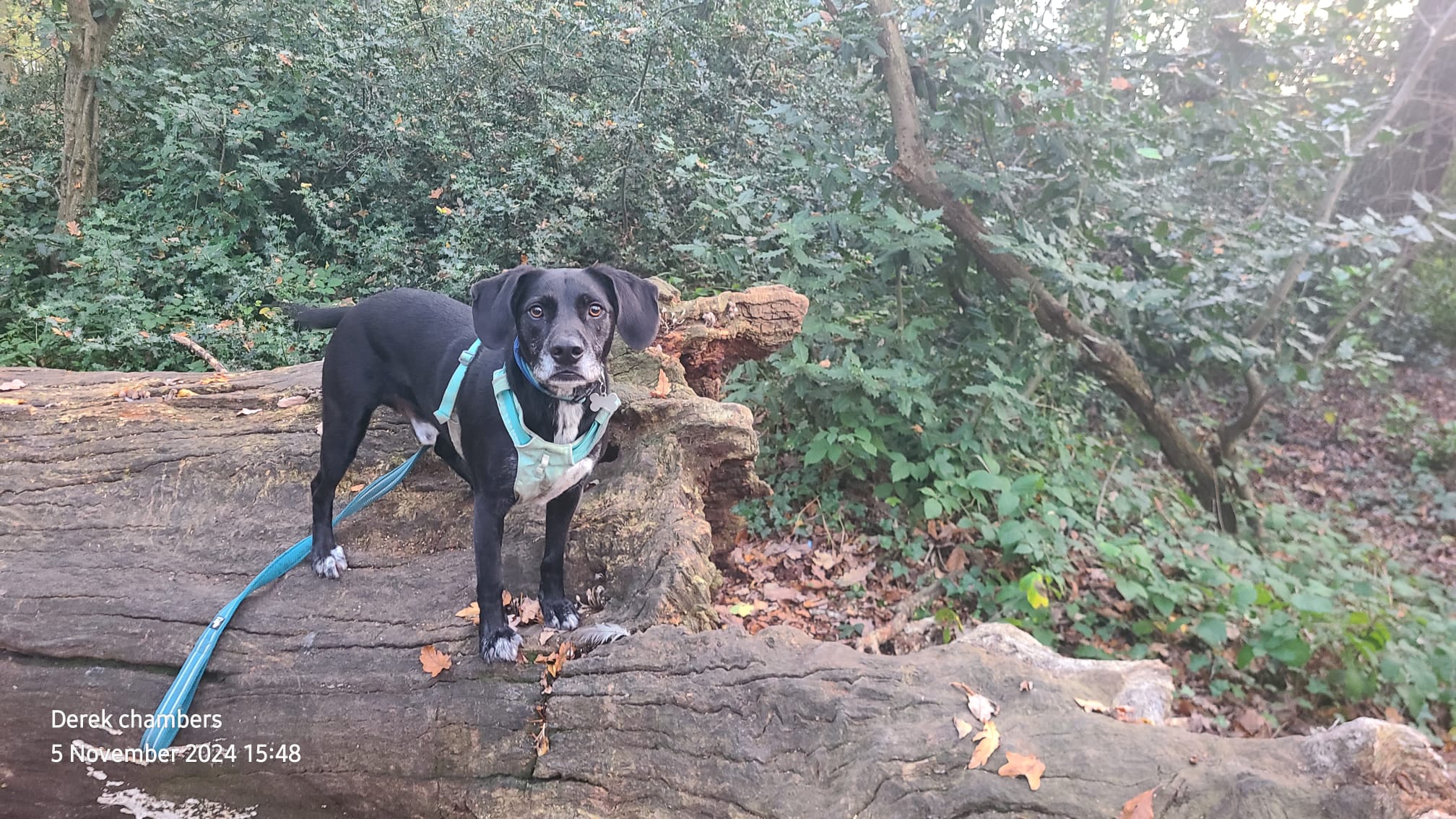
Calm one-to-one walks for reactive dogs
Group walking is not right for every dog.
Some dogs cope better with:
- One consistent walker
- No unfamiliar dogs added to the walk
- No collection rounds
- No car or van journey
- Walks beginning at home
- Quieter routes
- Flexible pacing
- Time to sniff
- Space from triggers
- Honest feedback
I have worked professionally with dogs since 2011. I regularly care for dogs who are nervous, sensitive, reactive or easily overwhelmed.
Some are what I affectionately call awkward but awesome. That does not mean ignoring fear, aggression or safety. It recognises that a dog can be wonderful, yet still require careful handling and more space.
During a walk, I may:
- Cross the road
- Change direction
- Avoid narrow paths
- Use a visual barrier
- Choose a familiar route
- Allow calm sniffing
- Return home early
- Follow a suitable plan provided by your trainer or behaviourist
- Report changes that may need veterinary attention
The aim is not to force your dog around a predetermined route. It is to provide a safe, manageable experience suited to what they can cope with that day.
Read about my Reactive and Nervous Dog Walking in Finchley, Rescue Dog Support in Finchley and one-to-one solo dog walks.
My walking service provides practical day-to-day support. It is not a veterinary assessment, a formal training programme, or a clinical behaviour consultation.
A quick checklist for your next walk
Before leaving:
- Check your dog’s harness, collar and lead
- Carry suitable rewards
- Consider how your dog has coped that day
- Choose a manageable route
- Avoid the busiest time where possible
- Know where you can create distance
During the walk:
- Look ahead
- Watch for early body-language changes
- Avoid forced greetings
- Create distance early
- Keep the lead secure
- Do not punish reactions
- Leave if your dog cannot cope
After the walk:
- Offer water
- Reduce unnecessary stimulation
- Allow undisturbed rest
- Note difficult locations or triggers
- Make the next walk easier if recovery is slow
- Contact your vet about sudden or unexplained changes
Frequently asked questions
Why is my dog friendly off lead but reactive on the lead?
The lead removes some of your dog’s ability to create distance, change direction or approach gradually. Fear, frustration or excitement may then become more intense. Letting a reactive dog off lead is not automatically safe or appropriate.
Does barking and lunging mean my dog is aggressive?
Not necessarily. Barking and lunging can be driven by fear, frustration, overexcitement, pain or an attempt to obtain distance. However, the behaviour can still present a safety risk and should be managed responsibly.
How can I tell whether my dog is frightened or frustrated?
A frightened dog may try to retreat, lower their body, avoid contact or bark to create space. A frustrated dog may pull forward, whine or become agitated because they cannot reach something. Some dogs experience both emotions, so an individual assessment may be needed.
Should I punish my dog for barking at other dogs?
No. Punishment can increase fear or frustration and suppress warnings without improving the underlying emotion. Create distance and use reward-based support.
Should I let my dog greet other dogs on the lead?
Your dog does not need to greet every dog. Forced or tense greetings can increase fear, anticipation or frustration. Prioritise safe, neutral passes and allow interactions only where both dogs appear comfortable and the situation is appropriate.
Why does my dog react at some dogs but not others?
Dogs may respond differently according to distance, movement, size, appearance, familiarity, previous experiences and the other dog’s behaviour. Your dog’s pain, tiredness and accumulated stress can also affect how they cope.
Why is my dog worse on some walks?
Poor sleep, pain, building noise, visitors, previous dog encounters and other stressful events can lower your dog’s coping threshold. Trigger stacking can make an otherwise manageable encounter much harder.
Will my dog grow out of lead reactivity?
Some young dogs become calmer as they mature, but repeated barking and lunging can become an established response. Early management, veterinary checks where indicated and reward-based professional guidance are preferable to waiting.
Should I make my dog sit while another dog passes?
Only if your dog can remain comfortable and disengage. Sitting close to a trigger can make some dogs feel trapped. Moving away or using a visual barrier may be more helpful.
Why will my dog not take treats around other dogs?
Stress or high arousal can reduce interest in food, although food refusal is not a definitive test. Your dog may also be full, unwell, too hot or uninterested in the reward. Increase distance and consider the wider context.
Can equipment stop lead reactivity?
No. Suitable equipment can improve security, comfort and handling, but it cannot resolve fear, pain, frustration or overexcitement by itself.
Can a dog walker help a lead-reactive dog?
An experienced one-to-one walker may support a suitable dog with quieter routes, distance from triggers, consistent handling, and an agreed-upon professional plan. Dog walking does not replace veterinary or clinical behavioural care.
Give your dog space before they need to shout
Lead reactivity is not a single condition with one solution.
Your dog may be frightened, frustrated, overexcited, uncomfortable or dealing with several emotions at once.
Understanding the likely cause does not remove the need for safe handling. It helps you make better decisions.
Notice the quieter signs. Create distance early. Avoid forced greetings. Use comfortable, secure equipment and seek appropriate help when behaviour is severe, sudden or unsafe.
A successful walk is not measured only by distance.
For some dogs, success means noticing another dog, calmly moving away, and returning home without becoming overwhelmed.
Veterinary and behavioural disclaimer: This article provides general educational information and is not a veterinary diagnosis, an individual risk assessment, or a clinical behaviour programme. Pain, illness, medication and sensory changes can affect behaviour. Contact your veterinary surgeon about sudden, severe or worsening reactivity. If your dog has bitten, shows escalating aggression, experiences severe distress, or poses an immediate risk, prevent further access to the situation where this can be done safely, and seek appropriate professional help. Do not deliberately provoke or recreate dangerous behaviour.


