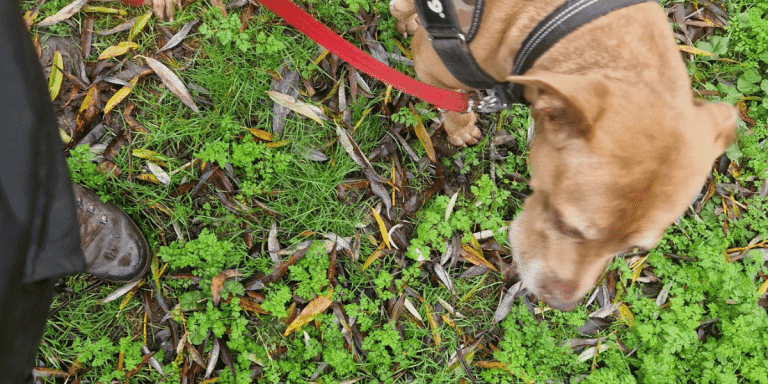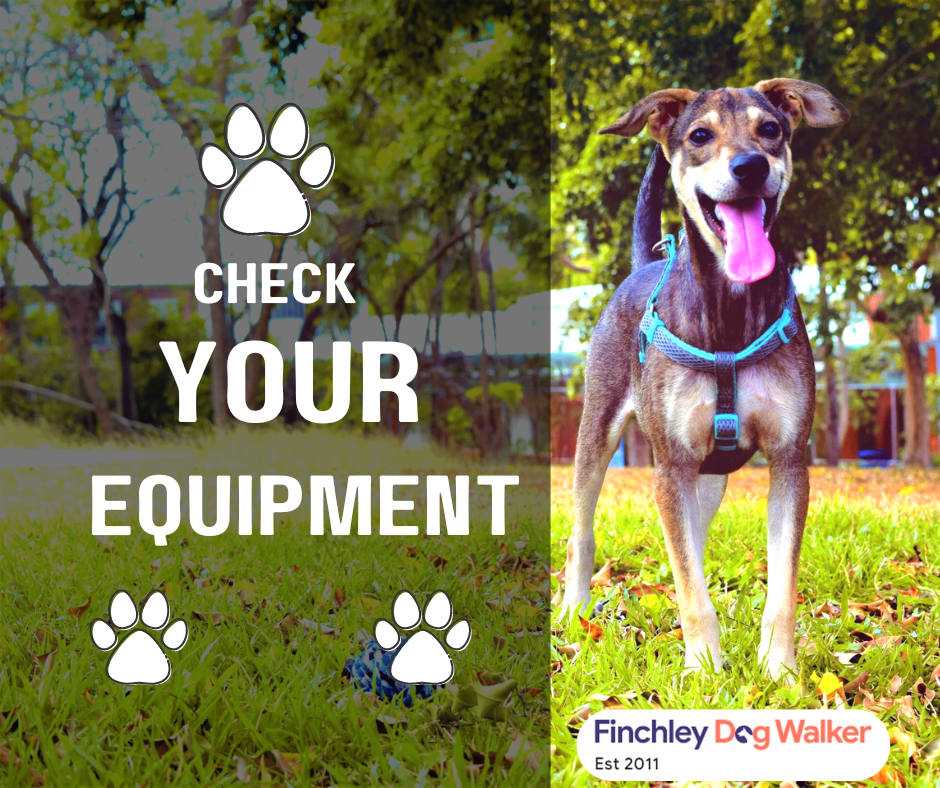
Before you walk your dog, take a moment to check their collar, harness, lead, clips, buckles and ID tag.
It only takes a minute, but it can prevent a frightening situation.
As a dog walker, I never see equipment checks as an optional extra. They are part of a safe walk. This is especially important for nervous dogs, rescue dogs, older dogs, puppies and dogs who may panic if something startles them.
A good walk starts before the front door opens.
Want to read more? Visit Dog and Cat care guides
Quick answer: What should you check before walking your dog?
Before walking your dog, check that:
- The collar fits securely.
- The harness is not loose, twisted or rubbing.
- The lead is not frayed, chewed or damaged.
- All clips and buckles close properly.
- The ID tag is attached and readable.
- Any safety clip or second point of contact is in place.
- Your dog is calm enough to leave the house safely.
For nervous or rescue dogs, I like to do these checks before opening the front door. A startled dog can move very quickly, and loose equipment can become a real risk.
Why equipment checks matter
Most walks start with familiar habits.
You pick up the lead, grab poo bags, open the door and head out. It is easy to assume everything is fine because the equipment looked fine yesterday.
But dog walking equipment gets daily wear.
Leads drag on pavements. Clips get wet and muddy. Harness straps loosen. Collars stretch. Buckles weaken. Dogs chew things when we are not looking. Puppies grow. Older dogs change shape.
A harness that fitted well a few months ago may not sit safely now.
For some dogs, this might only cause discomfort. For others, it can become dangerous.
A nervous dog who hears a loud van, a barking dog behind a gate, roadworks, fireworks or a scooter may suddenly reverse, spin or try to get away. If their collar or harness is loose, they may slip out before you have time to react.
This is one reason I take equipment checks seriously on every solo dog walk.
My 30-second pre-walk safety check
Before leaving the house, I check:
- The collar is secure and not loose enough to slip over the head.
- The harness sits correctly on the dog’s body.
- The lead is not frayed, split or chewed.
- The clip closes fully and does not stick.
- Buckles are fastened properly.
- The ID tag is attached.
- A safety clip or second lead point is fitted if needed.
- The dog is settled enough to leave safely.
I prefer to find a problem at the front door, not halfway down the road.
Check the collar fit
A collar should be secure, but not tight.
A common guide is that you should be able to fit two fingers between the collar and your dog’s neck. It should not slide over your dog’s head if they reverse suddenly.
Check for:
- loose fit
- worn holes
- stretched material
- cracked leather
- broken stitching
- weak D-rings
- missing ID tag
- unreadable tag details
Dogs in public places in the UK should wear a collar with the owner’s name and address on it, or attached to it.
Read the government’s Control of Dogs Order 1992 and the RSPCA dog walking safety advice
An ID tag should be easy to read and securely attached. It is also sensible to check that your dog’s microchip details are up to date.
Check the lead
A lead can look fine at a glance but still be weak.
Run your hand along the full length of it. Pay close attention to the handle and the area near the clip, as these parts take a lot of strain.
Look for:
- fraying
- thinning fabric
- chew marks
- loose stitching
- rust on metal parts
- a clip that does not spring back
- knots that may hide damage
If a lead is damaged, I would replace it rather than risk it failing on a walk.
This matters even more for strong dogs, nervous dogs or dogs who lunge when startled.
Amazon – Strong Double-Ended Dog Lead
Check clips, buckles and trigger hooks
Small parts do a big job.
Clips, buckles and trigger hooks need to close fully and stay closed under gentle pressure.
Before each walk, check that:
- The clip shuts properly
- the spring is not sticking
- there is no rust or grit inside the mechanism
- buckles are fully fastened
- plastic parts are not cracked
- metal rings are not bent or weakened
Rain, mud, sand and grit can all affect clips over time.
If a clip feels loose, sticky or unreliable, do not wait for it to fail.
Check the harness fit
Harnesses can be very useful, but only when they fit well.
A loose harness can allow a dog to back out. A tight harness can rub, restrict movement or make a dog uncomfortable.
Check that:
- The harness is not twisted
- All straps are lying flat
- The chest strap is secure
- The dog can move their shoulders freely
- There is no rubbing behind the front legs
- The D-ring is secure
- The harness has not loosened since the last walk
Some dogs do not escape by pulling forward. They reverse.
This is common with nervous dogs, rescue dogs and dogs who panic when something unexpected happens. If the harness is loose around the chest or shoulders, they may be able to slip out.
[Amazon Affiliate Placeholder – Adjustable Dog Harness with Secure Fit]
Extra safety checks for nervous, rescue or reactive dogs
Nervous dogs need extra thought before a walk starts.
A dog who is frightened may freeze, spin, bolt, reverse or try to get away from whatever has startled them.
That might be:
- a loud van
- a barking dog
- roadworks
- a child on a scooter
- a football
- a busy pavement
- sudden traffic noise
- fireworks
For some nervous or rescue dogs, a second point of contact can be helpful. This might mean a lead attached to both the harness and collar, or a safety clip linking the two.
The aim is not to restrict the dog. The aim is to create a backup if one piece of equipment fails or slips.
This should always be fitted calmly and comfortably.
- Reactive and nervous dog support
- The sniff and decompress
- /what-are-one-2-one-enriched-walks.html
[Amazon Affiliate Placeholder – Harness to Collar Safety Clip]
Check ID tags and microchip details
Even careful owners and walkers can face unexpected moments.
A correct ID tag gives a lost dog a better chance of getting home quickly.
Check that:
- the tag has not fallen off
- the ring is not stretched open
- the writing is still clear
- the phone number is current
- the address details are correct
- microchip details are up to date
It is easy to forget this after moving house or changing your phone number.
Seasonal equipment checks
Dog walking equipment wears differently through the year.
In winter, check for:
- stiff clips
- wet fabric
- rust
- weak stitching
- poor visibility
- mud inside buckles
- road salt on paws or equipment
In summer, check for:
- rubbing from harnesses
- overheating risk
- water availability
- hot pavement
- whether the walk should be shorter
- whether the walk should happen earlier or later in the day
On hot days, equipment checks are only one part of safe walking. Dogs may also need shorter walks, shaded routes, fresh water and walks moved to cooler times.
EXTERNAL LINK PLACEHOLDER:
Dogs Trust seasonal safety advice
[Amazon Affiliate Placeholder – Collapsible Water Bowl]
What I carry on dog walks
What you carry depends on the dog, the route and the weather.
Useful items can include:
- poo bags
- water in warm weather
- treats if suitable for that dog
- spare lead or safety clip
- phone
- basic first aid items
- towel after wet or muddy walks
- visibility light in darker months
The point is not to carry lots of kit for its own sake.
The point is to know the dog in front of you and plan for their needs.
Why I check equipment before every solo dog walk
I offer calm, one-to-one walks because many dogs do better with individual care.
No group walks.
No vans full of dogs.
No rushing from one dog to the next.
A proper equipment check fits that approach.
It gives me a moment to see how the dog is before we leave. Are they relaxed? Are they worried? Are they stiff? Are they excited? Has anything changed since the last walk?
For nervous dogs and rescue dogs, this quiet pause can make a real difference.
Safe equipment helps dogs settle into the walk. It gives them the chance to sniff, decompress and move at a pace that suits them.
Why not check out my solo dog walks
When should you replace dog walking equipment?
Replace dog walking equipment if you notice:
- fraying
- chew damage
- cracked leather
- weak stitching
- rust
- stretched collar holes
- bent metal rings
- loose buckles
- clips that do not close properly
- harness straps that keep slipping
Do not wait until equipment breaks.
If something looks unreliable, it is better to replace it before the next walk.
Recommended guides
You may also find these helpful:
Solo Dog Walks in Finchley
Calm, one-to-one walks for dogs who need individual care, steady handling and a quieter walking routine.
Reactive and Nervous Dog Walker in Finchley
Support for dogs who need careful introductions, calm handling and extra thought around safety.
Reactive dogs
What Are One-to-One Enriched Walks?
An explanation of how enriched walks can support your dog’s confidence, welfare and daily routine.
Dog Care Tips for Calmer Walks and Happier Pets in Finchley
My main hub for practical dog care advice, walking tips and calm pet care support.
Dog and pet care guides
FAQs
How often should I check my dog’s walking equipment?
You should do a quick check before every walk. It is also worth doing a more detailed check once a week, especially if your dog walks daily or uses the same lead and harness often.
How tight should a dog collar be?
A collar should be secure but comfortable. A common guide is that you should be able to fit two fingers between the collar and your dog’s neck. It should not be loose enough to slip over the head.
Can a dog slip out of a harness?
Yes. Some dogs can reverse out of a loose or poorly fitted harness, especially if they are frightened. Nervous dogs, rescue dogs and dogs who startle easily may need extra safety planning.
Should nervous dogs have two points of contact?
Some nervous dogs benefit from two points of contact. This may mean a lead attached to a harness and collar, or a safety clip between the harness and collar. It gives an extra layer of safety if one piece of equipment fails or slips.
When should I replace a dog lead?
Replace a dog lead if it is frayed, chewed, cracked, stretched, rusty or if the clip does not close properly. A damaged lead is not worth the risk.
Should my dog wear an ID tag on walks?
Yes. Dogs in public places in the UK should wear a collar with the owner’s name and address on it, or attached to it. It is also sensible to include a phone number and ensure microchip details are up to date.
Is a harness safer than a collar?
It depends on the dog and the fit. A well-fitted harness can be helpful for many dogs, but a loose harness can be unsafe. Some dogs need both a collar and a harness, especially if they are nervous or at risk of slipping out of their equipment.
Why does my dog’s harness keep moving?
A harness may move if it is too loose, the wrong shape for your dog, badly adjusted or not suited to your dog’s body. Check the fit regularly, especially if your dog has gained weight, lost weight or is still growing.
Need calm, careful dog walking in Finchley?
If your dog needs calm, one-to-one walks in Finchley or nearby North London areas, I am happy to talk through their needs.
This is especially important for rescue dogs, nervous dogs, older dogs and dogs who do not enjoy busy group walks.
I take time to understand your dog, their routine, their equipment and how they cope outside before starting walks.