Halloween can be great fun for families. Costumes, pumpkins, decorations and children knocking on doors are all part of the celebrations.
But have you ever stopped to think about how Halloween looks from your dog’s point of view?
One minute, everything is normal. The next, the doorbell keeps ringing, unfamiliar people are standing outside, children are wearing masks and there may even be fireworks going off nearby.
For some dogs, none of this is particularly worrying. For others, especially nervous, rescue or noise-sensitive dogs, it can be overwhelming.
I’ve been walking and caring for dogs professionally around Finchley and North London since 2011. One thing I’ve learnt is that dogs don’t all respond to unusual situations in the same way.
The aim isn’t to make every dog enjoy Halloween. It’s to help them feel safe and comfortable while the rest of us enjoy the evening.
Here are my 12 practical Halloween safety tips for dog owners.
Updated October 2026.
Affiliate disclosure: This article includes some product recommendations that may use affiliate links. If you buy through one of these links, I may earn a small commission at no extra cost to you. As an Amazon Associate, I earn from qualifying purchases. You don’t need to buy anything to help your dog feel safer at Halloween.
Table of contents
- Halloween dog safety: the quick answer
- 1. Walk your dog before the Halloween activities begin
- 2. Create a safe, quiet place at home
- 3. Keep your dog away from the front door
- 4. Keep Halloween chocolate and sweets out of reach
- 5. Think twice before dressing your dog in a Halloween costume
- 6. Watch your dog’s body language
- 7. Don’t force your dog to meet trick-or-treaters
- 8. Be careful with pumpkins, candles and decorations
- 9. Give your dog something familiar to do
- 10. Prepare for unexpected fireworks
- 11. Check your dog’s identification and garden security
- 12. Remember that your dog doesn’t have to join in
- A simple Halloween preparation checklist
- Frequently asked questions about dogs and Halloween
- How I can help dog owners in Finchley
- Final thoughts: Halloween should be fun, not frightening
Halloween dog safety: the quick answer
If you’re preparing for Halloween, these are the things I would prioritise:
- Walk your dog before the streets become busy with trick-or-treaters.
- Keep chocolate, sweets and wrappers safely out of reach.
- Set up a quiet, familiar resting area.
- Prevent access to the front door when visitors arrive.
- Avoid dressing your dog in unnecessary costumes.
- Watch for signs of fear or discomfort.
- Use suitable enrichment if your dog enjoys it.
- Prepare for unexpected fireworks.
- Check that identification and microchip details are correct.
- Never force your dog to interact with unfamiliar children.
You don’t have to make Halloween a special event for your dog. Sometimes the kindest option is simply to let them have a normal, quiet evening.
1. Walk your dog before the Halloween activities begin
On Halloween evening, familiar streets can suddenly become quite different.
You may see groups of excited children, people wearing masks, decorations hanging from garden gates, and unexpected noises.
If your dog is easily worried, try to arrange their main walk earlier in the day.
Here in Finchley, Muswell Hill and the surrounding areas, I would generally favour a familiar, quieter route rather than heading somewhere busy just because it’s Halloween.
Let your dog sniff and explore at their own pace.
A calm walk doesn’t have to cover a great distance to be worthwhile.
If you cannot walk before dark, choose the quietest practical time and route, use a secure harness and suitable fixed-length lead, and be prepared to change direction.
You can find more advice in my Night-Time Dog Walking Safety Guide.
2. Create a safe, quiet place at home
Every dog should have somewhere they can retreat without being disturbed.
This might be their usual bed in a quiet bedroom, a comfortable corner of the living room or another familiar resting place.
Make sure they have access to fresh water and their usual bedding.
Closing the curtains can reduce the visual activity outside. Familiar background music or television may help some dogs, provided it isn’t too loud.
If your dog chooses to hide under a table or settle beside you, that may be exactly what they need.
Don’t force them into a den or close them inside an unfamiliar crate.
And if they want your company, there’s nothing wrong with offering calm reassurance.
For dogs who are also worried by loud bangs, my Dogs and Fireworks Safety Guide explains how to prepare for noisy evenings.
3. Keep your dog away from the front door
This is one of the biggest practical Halloween risks.
Imagine opening your front door to a group of excited children while your dog is standing beside you.
Even a normally friendly dog might become startled, rush outside or jump towards a visitor.
Before the evening begins, decide how you will manage the door.
A closed internal door or a familiar stair gate can create a useful separation between your dog and the entrance.
Make sure your dog is comfortable with the arrangement beforehand.
Don’t rely solely on telling them to stay or wait, especially when the doorbell is ringing repeatedly.
For dogs who find visitors particularly difficult, you could leave a small sign asking trick-or-treaters not to knock.
If you leave sweets outside, use a secure container inaccessible to neighbourhood pets and wildlife.
4. Keep Halloween chocolate and sweets out of reach
Halloween treats are for humans, not dogs.
Chocolate contains theobromine, which is toxic to dogs. The risk depends on the type of chocolate, the amount eaten and the dog’s size.
Dark chocolate and baking chocolate are particularly dangerous.
Some sugar-free sweets and chewing gums contain xylitol, sometimes labelled birch sugar. This sweetener can cause life-threatening poisoning in dogs.
Sweet wrappers and packaging can also cause choking or intestinal obstruction if swallowed.
Keep treats in closed cupboards or containers, and make sure children know not to share their Halloween haul with the dog.
What if your dog eats chocolate or Halloween sweets?
Contact your vet immediately.
Don’t wait for symptoms to appear, and don’t try to make your dog vomit unless a veterinary professional specifically instructs you to do so.
If possible, keep the packaging and tell your vet:
- What your dog ate.
- Approximately how much.
- When it happened.
- Your dog’s approximate weight.
My Dog First Aid Hub provides further practical advice on recognising emergencies.
For veterinary information, see PDSA’s Chocolate Poisoning Guide.
5. Think twice before dressing your dog in a Halloween costume
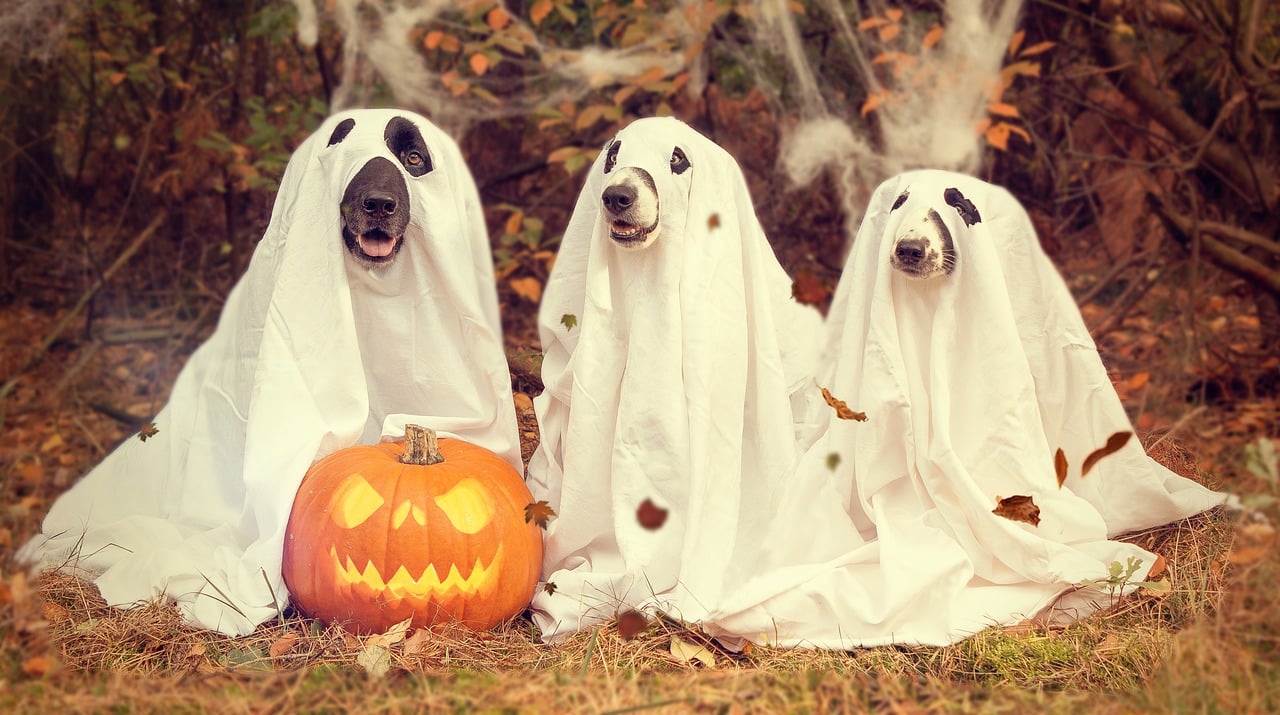
I know that some Halloween dog costumes look amusing in photographs.
But I would much rather see a dog looking comfortable and relaxed than wearing something simply because we think it’s funny.
Costumes can restrict movement, interfere with body language, cause overheating or make a dog feel uncomfortable.
Masks, hats and outfits that cover the face are particularly unsuitable.
I prefer to leave the dressing up to the humans.
If you want a Halloween-themed photograph, you could take a picture of your dog sitting comfortably near decorations that are safely out of reach.
A familiar, comfortable accessory may suit some dogs, but never force it.
If your dog walks away, freezes, scratches at an item or looks uncomfortable, respect that.
6. Watch your dog’s body language
Dogs don’t always show fear by barking or trying to run away.
Some become unusually quiet.
Others may show more obvious signs, including:
- Trembling or shaking.
- Pacing or restlessness.
- Panting when they aren’t hot.
- Repeated lip licking or yawning.
- Ears held back and a lowered body posture.
- Hiding or trying to move away.
- Refusing familiar treats.
- Becoming unusually clingy.
- Freezing or appearing unable to respond.
One signal alone doesn’t tell the whole story. Look at the situation and your dog’s usual behaviour.
A dog who is frightened needs space and support, not correction or punishment.
For more information, visit my Dog Behaviour and Body Language Hub.
If your dog regularly experiences intense fear, speak to your vet about appropriate support rather than waiting until the next noisy celebration.
7. Don’t force your dog to meet trick-or-treaters
Children may be excited, wearing masks and carrying unusual objects.
To a dog, a familiar child dressed as a ghost or monster may look very different.
It’s also worth remembering that some children aren’t used to dogs and may approach suddenly or reach towards them.
Your dog doesn’t need to greet everyone.
Even if they are normally friendly, Halloween isn’t the best time to test how they cope with unfamiliar people.
Keep greetings optional, maintain comfortable distances and let your dog move away.
If children live in your household, explain that the dog’s resting place is off-limits during the celebrations.
The Kids Around Dogs website offers additional information about helping children and dogs interact safely.
8. Be careful with pumpkins, candles and decorations
A carved pumpkin might look harmless, but Halloween decorations can create several hazards.
Real candles can cause burns or fires if knocked over.
Battery-operated LED candles are generally a safer alternative, but keep batteries and electrical components out of reach.
Be careful with:
- Plastic decorations that can be chewed or swallowed.
- Dangling strings and ribbons.
- Artificial cobwebs.
- Electrical cables and flashing decorations.
- Small objects that could become choking hazards.
- Glow sticks and their contents.
- Pumpkins that have started to rot or develop mould.
Plain pumpkin flesh can be suitable for some dogs in small quantities, but that doesn’t mean they should eat old carved pumpkins.
Dispose of Halloween decorations and food waste promptly.
Also avoid artificial cobwebs outdoors because birds and other wildlife can get tangled in them.
9. Give your dog something familiar to do
Some dogs benefit from a gentle activity while the household is busy.
This might include a simple scent game, a familiar food toy or a little of their usual dinner offered through enrichment.
The important word is familiar.
Halloween night isn’t the ideal time to introduce a complicated puzzle or a new toy that might cause frustration.
A few ideas include:
- Scatter a small amount of their normal food on a clean floor.
- Offer a loosely filled KONG if they already enjoy using one.
- Use a familiar lick mat with an appropriate filling.
- Hide a favourite toy somewhere easy to find.
- Let them settle and sleep without interruption.
Always supervise food toys where appropriate and consider allergies, resource guarding and individual dietary needs.
You can explore more ideas in my Dog Enrichment Guide.
Remember, a dog who is frightened may not want food or games.
Don’t try to distract them at all costs. Sometimes they need a quieter environment and the freedom to rest.
10. Prepare for unexpected fireworks
Halloween and Bonfire Night are only a few days apart, and fireworks may begin well before 5 November.
For noise-sensitive dogs, this can make late October particularly difficult.
I would prepare for fireworks before Halloween rather than waiting for the first unexpected bang.
Close windows and curtains, secure doors and garden access, and make sure your dog can reach their preferred resting place.
If your dog seeks reassurance, offer it.
If they want to hide, let them.
Never deliberately expose a frightened dog to loud fireworks to try to make them get used to the noise.
Dogs with severe noise fears may need a veterinary assessment and an individual management plan.
Read my Complete UK Fireworks Guide for Dogs for more detailed preparation advice.
11. Check your dog’s identification and garden security
Halloween can mean more people moving around outside, gates opening and unexpected noises.
Make sure your dog’s microchip registration details are up to date and that they wear a suitable collar with the legally required identification when out in public.
Check gates, fences and doors before the evening starts.
I wouldn’t leave a dog unattended in the garden during busy Halloween celebrations, particularly if they are easily startled.
If your dog needs a late toilet break, supervise them and check that the garden is secure.
If fireworks are already going off, consider how to provide the safest possible toilet opportunity without forcing a frightened dog outside.
12. Remember that your dog doesn’t have to join in
This is probably my most important Halloween tip.
Your dog doesn’t need to attend a party, accompany the children trick-or-treating, pose in a costume or greet every visitor.
Some dogs are perfectly comfortable with Halloween activity.
Others would much rather spend the evening curled up somewhere familiar.
Both are fine.
For nervous or rescue dogs, maintaining their usual routine may be more valuable than trying to make Halloween an exciting experience.
As someone who works with dogs one-to-one, I’ve always believed that care should fit the individual dog rather than expecting every dog to cope with the same situations.
If your dog would prefer a quiet night in, let them have one.
A simple Halloween preparation checklist
Before Halloween
- Check your dog’s identification and microchip details.
- Plan a quieter walking route.
- Prepare a familiar resting area.
- Decide how you will manage visitors at the front door.
- Check your veterinary emergency contact details.
- Put sweets, decorations and cables out of reach.
- Prepare familiar enrichment if your dog enjoys it.
On Halloween evening
- Walk and feed your dog before the busiest period where practical.
- Keep your dog away from repeated door openings.
- Close curtains if outside activity is unsettling.
- Allow your dog to rest or hide.
- Supervise garden access.
- Watch for changes in body language.
- Avoid unnecessary costumes and greetings.
After Halloween
- Collect discarded sweet wrappers.
- Remove damaged decorations.
- Dispose of pumpkins before they become mouldy.
- Check your garden and usual walking areas for litter.
- Continue your fireworks preparations for Bonfire Night.
Frequently asked questions about dogs and Halloween
Is Halloween stressful for dogs?
Halloween can be stressful for some dogs because of unfamiliar costumes, repeated doorbell ringing, loud noises and changes to their normal routine. Other dogs may remain comfortable. Watch your dog’s individual response and adjust the environment accordingly.
Should I take my dog trick-or-treating?
For most dogs, I would recommend leaving them safely at home with a suitable adult rather than taking them into busy streets filled with costumes, excited children and unfamiliar noises. A confident dog may cope, but there is usually little benefit in making them join in.
Can dogs eat Halloween chocolate?
No. Chocolate contains theobromine, which is toxic to dogs. If your dog eats chocolate, contact your vet immediately with details of the type, amount and approximate time of ingestion.
Are Halloween costumes safe for dogs?
Unnecessary costumes are best avoided. They can restrict movement, cause discomfort, interfere with temperature regulation and obscure important body language. Never force a dog to wear an outfit.
How can I stop my dog barking at trick-or-treaters?
Start by reducing their exposure to repeated knocks and visitors. Use a familiar resting area away from the front door, and consider a sign asking visitors not to knock. Reward-based training can help with doorbell responses over time, but Halloween night is better treated as a management situation than an intensive training session.
Can dogs eat pumpkin?
Plain, fresh, unseasoned pumpkin flesh can be suitable for many dogs in small amounts. Avoid mouldy pumpkins, candles, decorations and pumpkin dishes containing unsuitable ingredients. Introduce new foods cautiously, particularly if your dog has digestive problems.
What if my dog is frightened by Halloween fireworks?
Bring them into a secure, familiar environment, reduce noise and visual disturbances where possible, and let them choose whether to hide or seek reassurance. Speak to your vet if their fear is severe or recurring.
Glow sticks and dogs
These are often a hazard people forget about, but you may find them abandoned on the ground this time of year, especially after big firework displays. Read my report on glowsticks and fireworks
How I can help dog owners in Finchley
Halloween is a useful reminder that not every dog is comfortable with busy environments, unexpected visitors or unfamiliar dogs and people.
My approach at Finchley Dog Walker is based on calm, individual care.
I offer solo one-to-one dog walks in Finchley, Muswell Hill and surrounding areas, starting and finishing at your dog’s own home.
There are no group collections or van journeys. Walks are adapted to the individual dog’s needs, confidence and usual routine.
I also provide rescue dog support and house sitting for pets who are happier remaining in familiar surroundings when their owners are away.
Final thoughts: Halloween should be fun, not frightening
Halloween doesn’t have to be a difficult evening for dogs.
A little preparation can make a real difference.
Walk earlier, keep dangerous treats out of reach, manage visitors carefully and make sure your dog has somewhere comfortable to retreat.
Most importantly, pay attention to the dog in front of you.
Some will happily snooze through the celebrations. Others will need more reassurance, distance and quiet.
Neither is doing anything wrong.
And if your dog decides that the best Halloween celebration is sleeping through the whole thing, I’d say that’s a perfectly sensible plan.
Halloween isn’t the only seasonal risk. My Autumn Dangers for Dogs guide covers hazards such as conkers, fungi and fallen fruit.
This article provides general dog-care and safety information. It does not replace veterinary advice or individual behavioural assessment. If your dog eats a potentially toxic substance, swallows a dangerous object or becomes seriously distressed, contact your veterinary practice promptly.