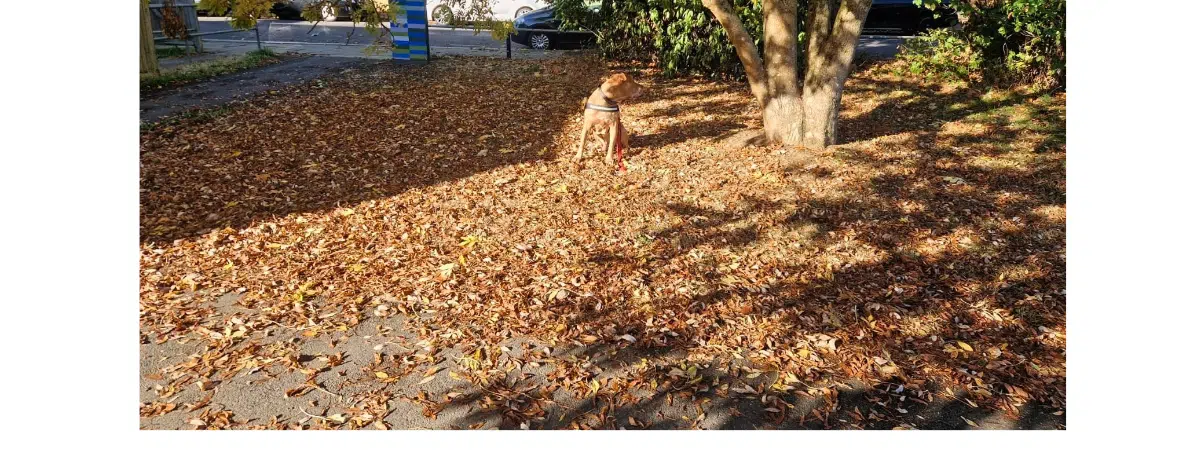
Autumn is one of my favourite times of year for dog walking. The changing colours, cooler mornings and fallen leaves make familiar places such as Coldfall Wood, Highgate Wood and the parks around Finchley feel completely different.
For dogs, new smells are everywhere. A pile of leaves can provide plenty of opportunities for sniffing and exploring.
But autumn also brings hazards that are easy to overlook.
Conkers, acorns, wild mushrooms, fallen fruit and slippery paths can all cause problems. Shorter days also mean that more of us are walking our dogs in the dark, while Halloween and fireworks introduce additional challenges for some dogs.
I’ve been walking dogs professionally in Finchley and the surrounding areas since 2011. My approach is to let dogs enjoy their walks, including plenty of opportunities to sniff and explore, while remaining aware of what is happening around them.
Here are 12 autumn dangers to know about and practical ways to reduce the risks.
Updated October 2026.
Affiliate disclosure: This article may contain affiliate links to products I genuinely recommend. If you purchase through these links, I may receive a small commission at no additional cost to you. As an Amazon Associate, I earn from qualifying purchases. My recommendations are based on suitability and animal welfare, not commission.
Table of contents
- Quick guide: What are the biggest autumn dangers for dogs?
- 1. Conkers can be poisonous to dogs
- 2. Acorns and oak leaves can cause problems
- 3. Wild mushrooms and fungi
- 4. Fallen fruit, mouldy food and compost
- 5. Poisonous autumn plants and berries
- 6. Hidden rubbish, broken glass and sharp objects
- 7. Muddy puddles, stagnant water and blue-green algae
- 8. Ticks and seasonal parasites
- 9. Slippery paths, wet leaves and changing temperatures
- 10. Darker evenings and reduced visibility
- 11. Halloween brings different challenges
- 12. Fireworks can begin before Bonfire Night
- What should I do if my dog eats something dangerous during an autumn walk?
- My autumn dog walking checklist
- Frequently asked questions about autumn dog safety
- Enjoying autumn walks in Finchley
- Final thoughts
Quick guide: What are the biggest autumn dangers for dogs?
The main hazards to watch for during autumn are:
- Conkers and horse chestnuts.
- Acorns and oak leaves.
- Wild mushrooms and fungi.
- Fallen fruit and mouldy food.
- Poisonous autumn plants and berries.
- Hidden rubbish, broken glass and sharp objects.
- Muddy water and potentially contaminated ponds.
- Ticks and other seasonal parasites.
- Slippery paths, wet leaves and changing temperatures.
- Darker evenings and reduced visibility.
- Halloween activities and unfamiliar visitors.
- Fireworks and unexpected loud noises.
Most autumn walks are perfectly enjoyable. You don’t need to worry about every leaf or puddle, but knowing which hazards matter helps you make sensible decisions.
1. Conkers can be poisonous to dogs
Conkers are one of the most recognisable signs of autumn.
They fall from horse chestnut trees and can be found across parks, gardens and woodland paths.
Unfortunately, conkers are not suitable toys for dogs.
They contain a toxic substance called aesculin, and swallowing a whole conker can also cause a dangerous blockage in the digestive system.
Symptoms may include vomiting, diarrhoea, abdominal pain, restlessness, trembling or unusual tiredness.
Serious poisoning is uncommon, but that doesn’t mean conkers are safe.
How to keep your dog safe around conkers
Avoid encouraging your dog to chase, catch or carry conkers.
If your dog enjoys picking things up, take a familiar toy or some suitable rewards on walks and practise a reward-based ‘leave it’ or ‘drop’ cue.
I prefer teaching dogs that giving something up leads to something positive, rather than chasing them or forcibly taking things from their mouths.
If your dog swallows a conker, contact your vet immediately, even if they initially appear well.
For further veterinary guidance, see Blue Cross: Are Conkers Poisonous to Dogs?.
2. Acorns and oak leaves can cause problems
Acorns are another common autumn hazard, particularly in wooded areas.
They contain tannins, which can be toxic to dogs if eaten. Acorns can also cause choking or digestive blockages, particularly in smaller dogs.
Dogs who have eaten acorns may develop vomiting, diarrhoea, abdominal discomfort or loss of appetite.
Oak leaves and other parts of the tree also contain tannins.
That doesn’t mean your dog needs to avoid every oak tree. The important thing is to prevent them from chewing or swallowing acorns and other plant material.
If your dog is particularly interested in eating things from the ground, keep a closer eye on what they’re investigating.
A suitable fixed-length lead or long line, used in an appropriate environment, can help you manage their access to hazards while still allowing them to explore.
If you suspect your dog has eaten acorns, contact your vet promptly.
You can read more in Blue Cross: Are Acorns Poisonous to Dogs?.
3. Wild mushrooms and fungi
Autumn’s damp conditions encourage mushrooms and other fungi to appear in gardens, parks and woodland.
Some are harmless, but others can be extremely poisonous to dogs.
The difficulty is that poisonous and non-poisonous fungi can look very similar.
Even experienced people can struggle to identify certain species.
My advice is simple: don’t let your dog eat wild mushrooms.
If your dog picks one up, use a familiar cue or offer a reward to encourage it to leave it, as long as you can do so safely.
If you suspect your dog has eaten a mushroom, contact your vet immediately.
If possible, photograph the mushroom and its surroundings, but don’t delay veterinary advice while trying to identify it.
For more information, see Blue Cross: Plants Poisonous to Dogs.
4. Fallen fruit, mouldy food and compost
Autumn brings windfall apples, pears and other fruit into gardens and public spaces.
Some fresh fruits are suitable for dogs in appropriate amounts, but fallen fruit presents different risks.
Fruit lying on the ground may be fermenting, mouldy, or contaminated.
Fermenting fruit can contain alcohol, while mouldy food can contain toxins that can cause serious illness.
Fruit stones, pips and other hard parts may also present choking or digestive risks.
Keep dogs away from rotting fruit, compost heaps and discarded food.
This is particularly important for dogs who enjoy scavenging.
If your dog regularly picks up food on walks, reward-based training and careful route management can help. For persistent scavenging, a properly introduced, well-fitting basket muzzle may also be worth discussing with a qualified reward-based trainer.
A basket muzzle should allow comfortable panting, drinking and taking treats. Never use it as punishment.
5. Poisonous autumn plants and berries
Conkers and acorns aren’t the only plants to watch out for.
Some garden plants and berries can be harmful if eaten.
Examples include:
- Yew.
- Autumn crocus.
- Holly.
- Ivy.
- Laurel.
- Certain ornamental berries and shrubs.
The risk depends on the plant, the part eaten and the amount involved.
It’s worth checking what grows in your garden, especially if you have a puppy or a dog who likes chewing plants.
Don’t assume that something is safe simply because birds or other wildlife eat it.
If your dog eats an unknown plant or berry, take a photograph or keep a sample (if safe), and contact your vet for advice.
The PDSA Guide to Poisonous Plants is a useful UK reference.
6. Hidden rubbish, broken glass and sharp objects
Fallen leaves are wonderful for sniffing, but they can also hide things we would rather our dogs didn’t find.
Broken glass, sharp metal, discarded food packaging and other litter may be difficult to spot.
This is especially true along busy paths, around benches, and in areas where people gather.
I don’t discourage dogs from sniffing leaves. Sniffing is a normal and valuable part of a walk.
Instead, I watch my surroundings and avoid areas where hidden rubbish may be.
After muddy or heavily wooded walks, it’s worth checking your dog’s paws for cuts, trapped debris or signs of irritation.
If you discover a wound, assess its severity and seek veterinary advice where needed.
You can find more guidance in my Dog First Aid Hub.
7. Muddy puddles, stagnant water and blue-green algae
Autumn often brings plenty of rain, puddles and muddy paths.
Most dogs are quite happy about that.
However, not every puddle or pond is safe to drink from.
Stagnant water can contain harmful organisms, while blue-green algae, which can occur in early autumn as well as summer, can be extremely dangerous.
Blue-green algae is not always obvious. You cannot reliably judge whether water is safe simply by looking at it.
Avoid allowing dogs to swim in or drink from water where blue-green algae is suspected or warning notices are displayed.
If you think your dog has swallowed contaminated water, contact your vet immediately.
Other water-related risks include leptospirosis, a bacterial infection associated with contaminated water and environments.
Ask your vet about appropriate vaccination and preventive care for your dog.
I recommend carrying clean drinking water, particularly on longer walks.
A lightweight dog water bottle or collapsible bowl can be useful, even in cooler weather.
8. Ticks and seasonal parasites
Ticks aren’t just a summer problem.
They can remain active during milder autumn weather, particularly in grassy, wooded and overgrown areas.
Ticks can attach to dogs and transmit infections, including Lyme disease.
After walks through vegetation, check areas such as:
- Around the ears.
- Under the collar or harness.
- Between the toes.
- Around the armpits.
- The groin and underside of the body.
If you find a tick, remove it promptly using an appropriate tick-removal tool and technique.
Avoid squeezing, burning or covering ticks with substances intended to make them detach.
Ask your vet for advice about suitable parasite prevention for your dog’s circumstances.
A tick-removal tool is a small, practical addition to a dog first aid kit.
For general preparation, visit my Dog First Aid Hub.
9. Slippery paths, wet leaves and changing temperatures
Wet leaves can make pavements, wooden bridges and sloping paths surprisingly slippery.
Mud can also become difficult underfoot, particularly after several days of rain.
For older dogs or those with mobility problems, these conditions may be more challenging.
I would rather take a slightly longer, safer route than rush a dog over slippery ground.
Watch how your dog is moving and avoid forcing them to tackle surfaces they find uncomfortable.
Autumn temperatures can also change considerably during the day.
Some dogs are perfectly comfortable in cool weather, while others, particularly very young, elderly, short-coated or unwell dogs, may need additional consideration.
A waterproof coat may be useful for certain dogs, but not every dog needs one.
The priority is comfort, freedom of movement and an appropriate fit.
As the weather becomes colder, my Winter Dog Care Guide covers further seasonal considerations.
10. Darker evenings and reduced visibility
As autumn progresses, evenings get darker, and many familiar walks take place in reduced light.
In the UK, the clocks go back on Sunday 25 October 2026.
That means the afternoon light will disappear earlier, and dog owners may find themselves walking in darkness even when their routine hasn’t changed.
There are a few practical things I recommend:
- Choose well-lit, familiar routes where possible.
- Wear something reflective or visible yourself.
- Use a suitable fixed-length lead rather than a retractable one.
- Check that your dog’s harness or collar fits securely.
- Carry a torch for poorly lit paths.
- Watch for cyclists, vehicles, and other path users.
- Avoid unfamiliar hazards concealed by darkness.
Reflective accessories can help other people see you and your dog, but they don’t replace careful handling and awareness.
I also find a good torch useful for spotting broken glass, litter, and other hazards before a dog reaches them.
For more detailed advice, see my Night-Time Dog Walking Safety Guide.
11. Halloween brings different challenges
Halloween falls on 31 October and can be an unsettling evening for some dogs.
There may be children in costumes, repeated knocks at the door, unusual decorations and more people walking around after dark.
Some dogs take it all in their stride.
Others may become worried, especially if they are nervous around unfamiliar people or sudden noises.
Chocolate and sweets are another important concern.
Chocolate is toxic to dogs, and some sugar-free sweets contain xylitol, which can cause life-threatening poisoning.
Keep treats and wrappers securely out of reach.
If your dog is worried by visitors, create a familiar, quiet space away from the front door.
There is no need to make them greet trick-or-treaters or wear a costume.
I’ve covered these issues in more detail in Halloween Safety for Dogs: 12 Practical Tips.
12. Fireworks can begin before Bonfire Night
Although Bonfire Night is on 5 November, fireworks may be heard during late October and throughout November.
For some dogs, unexpected bangs can be extremely distressing.
Signs of fear may include shaking, hiding, pacing, panting, trying to escape or refusing food.
Other dogs may become unusually quiet.
Don’t punish a dog for being frightened.
Instead, give them access to a secure, familiar resting place, reduce outside disturbances where practical and offer reassurance if they seek it.
Dogs with severe noise fears may need support from their vet and an appropriately qualified behaviour professional.
For more detailed preparation advice, visit my Fireworks and Your Dog Hub.
What should I do if my dog eats something dangerous during an autumn walk?
If you suspect your dog has swallowed a toxic plant, mushroom, conker, acorn, chemical or other dangerous substance, contact your vet immediately.
Don’t wait for symptoms to develop.
Don’t try to make your dog vomit or use home remedies unless a veterinary professional specifically instructs you to.
Where possible, note:
- What your dog may have eaten.
- Approximately how much.
- When it happened.
- Your dog’s weight.
- Any symptoms already present.
Photographs, packaging or safely collected samples may help the vet identify the substance.
If your dog is collapsing, having seizures, struggling to breathe or otherwise seriously unwell, treat it as an emergency.
My Dog First Aid Hub provides further information about recognising emergencies and being prepared.
My autumn dog walking checklist
Before leaving home:
- Check the weather and available daylight.
- Make sure your dog’s harness and lead fit correctly.
- Take suitable rewards for practising ‘leave it’ and ‘drop’.
- Carry clean drinking water when needed.
- Check that your phone has sufficient battery.
- Know your veterinary emergency contact details.
During the walk:
- Watch for conkers, acorns and fungi.
- Avoid suspicious standing water.
- Keep an eye on discarded food and litter.
- Let your dog enjoy sniffing without encouraging scavenging.
- Adapt the route to your dog’s confidence, mobility and energy.
- Avoid slippery or unsafe surfaces.
After returning home:
- Check paws for cuts and trapped debris.
- Look for ticks where appropriate.
- Dry your dog if they are wet or muddy.
- Watch for unusual symptoms if they may have eaten something.
- Let them rest comfortably.
Frequently asked questions about autumn dog safety
Are autumn leaves poisonous to dogs?
Most ordinary fallen leaves are not inherently poisonous, but leaves from certain plants and trees can be harmful if eaten. Large quantities of plant material can also cause digestive problems. Avoid letting your dog eat unknown leaves, particularly from potentially toxic plants.
Can dogs play with conkers?
No. Conkers contain toxic substances and may cause digestive blockages if swallowed. Use a suitable dog toy instead.
Are acorns dangerous for dogs?
Yes. Acorns contain tannins and can cause digestive upset, poisoning or blockages. Contact your vet if your dog eats one.
What if my dog eats a wild mushroom?
Contact your vet immediately. Some wild mushrooms are highly poisonous, and identification can be difficult. Do not wait for symptoms.
Do dogs still get ticks in autumn?
Yes. Ticks can remain active in mild weather. Check your dog after walks through grass, woodland or dense vegetation, and discuss parasite prevention with your vet.
Should dogs wear coats in autumn?
Not necessarily. Coat requirements depend on the dog’s breed, coat, age, health and weather conditions. A well-fitting waterproof coat may help some dogs, while others are comfortable without one. Read: Does my dog need a coat guide
Is it safe to walk dogs in the woods during autumn?
Generally, yes. Woodland walks can offer valuable sniffing, exploration and enrichment. Stay aware of toxic plants, fungi, fallen branches, slippery ground and other hazards, and adapt the walk to your individual dog.
Discarded glow sticks
Glow sticks and bracelets are a hidden danger that is often forgotten about this time of year, especially after big fireworks events. Read my guide on glow sticks and bracelets
Enjoying autumn walks in Finchley
Autumn is a lovely time to explore our local green spaces.
Coldfall Wood, Highgate Wood and the surrounding parks offer changing scents, interesting environments and opportunities for calm exploration.
Not every dog needs a long or energetic walk to benefit from being outdoors.
For some, a slower walk with plenty of time to sniff is far more rewarding.
At Finchley Dog Walker, I provide solo one-to-one dog walks, starting and finishing at the dog’s own home.
I don’t transport groups of dogs in vans or combine dogs from different households.
This lets me adapt walks to each dog’s needs, including nervous, older, rescue, and easily overwhelmed dogs.
You can also read about my rescue dog support and one-to-one training support.
Final thoughts
Autumn doesn’t have to be a season of restrictions for dogs.
It is a wonderful time for sniffing, exploring and enjoying the changing environment.
The key is knowing which hazards deserve attention.
Conkers, acorns, mushrooms and rotting fruit are best avoided. Darker evenings call for better visibility, while Halloween and fireworks may require a little extra planning for sensitive dogs.
My approach is to balance safety with letting dogs enjoy being dogs.
A little preparation and a watchful eye can make all the difference.
This guide provides general pet-care information and does not replace veterinary advice. If you suspect poisoning, an obstruction or serious illness, contact your vet immediately.