Updated August 2026
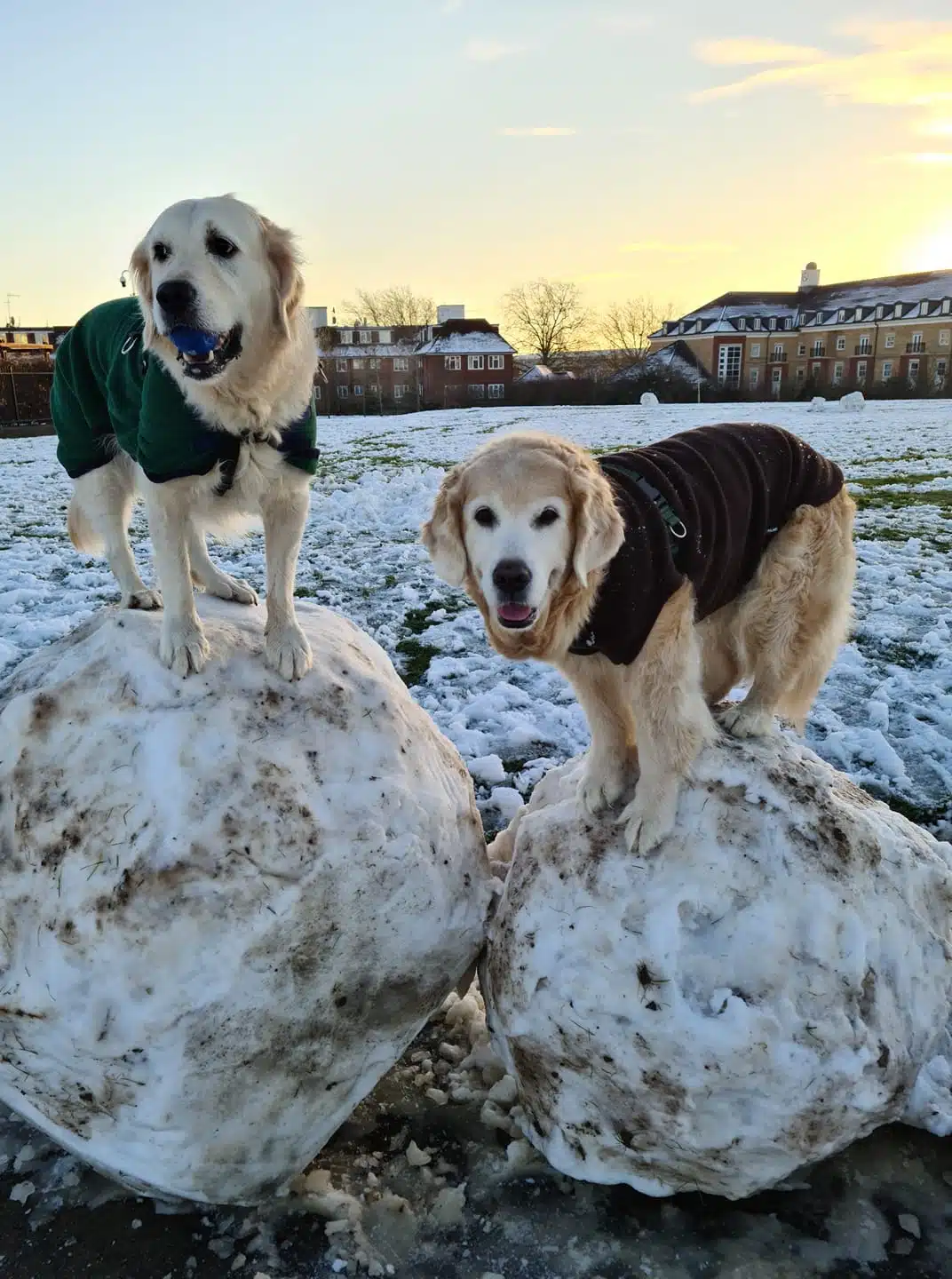
Cold weather can affect older dogs differently.
One senior dog may happily potter around on a frosty morning. Another may become stiff, reluctant to leave home or noticeably uncomfortable much sooner.
There is no single winter rule that suits every older dog.
I look at the weather, but more importantly I look at the dog.
This guide covers practical ways to keep your senior dog warm and comfortable at home, how to adapt winter walks, what to watch for when joints or mobility become harder in colder conditions, and when a change deserves veterinary advice.
Senior dog winter care at a glance
- Older dogs may need extra care in cold weather due to factors like coat type, health, and mobility.
- Provide a warm, dry resting area, and consider using a well-fitted coat for dogs that need one.
- Adapt winter walks to suit the dog’s needs, including shorter routes and avoiding slippery surfaces.
- Regularly check paws for debris and irritation after walks, and dry your dog if they get wet.
- Watch for behaviour changes that indicate discomfort in cold weather, and consult a vet if necessary.
Table of contents
- Do older dogs feel the cold more?
- How can you tell if your senior dog is cold?
- 1. Give your older dog a warm, comfortable bed
- Do not forget the floor underneath the bed
- 2. Keep resting areas away from draughts
- Be careful with direct heat
- 3. Consider whether your dog needs a coat
- Check movement once the coat is on
- Not every old dog needs clothes indoors
- 4. Adapt winter walks rather than automatically stopping them
- There is no universal cold-weather cut-off
- 5. Take extra care on ice and slippery surfaces
- Slipping can matter more than distance
- 6. Check paws after winter walks
- Do not let your dog lick road grit from their paws
- 7. Dry your senior dog properly
- Have the towel ready before you leave
- 8. Keep older dogs appropriately active indoors
- Rest is allowed too
- 9. Watch stiff joints more carefully in winter
- Keep prescribed treatment consistent
- 10. Watch for changes that are bigger than the weather
- When is being cold an emergency?
- Winter hazards are not limited to cold
- Antifreeze
- Frozen ponds
- Darker walks
- Mud and wet leaves
- Winter walks in Finchley
- What I notice with older dogs in winter
- Should senior dogs eat more in winter?
- Warm water on food?
- Senior dogs staying at home while you travel in winter
- My winter walking policy
- Related senior dog guides
- Frequently asked questions about senior dogs and winter
- Do older dogs feel the cold more?
- How cold is too cold for a senior dog?
- Does my senior dog need a winter coat?
- Should my old dog still walk in winter?
- Why is my dog stiffer in winter?
- Should I give my dog more food during winter?
- Are heated beds safe for old dogs?
- Is road salt dangerous for dogs?
- Should I walk my senior dog on ice?
- Can my dog walk in snow?
- Why does my old dog suddenly refuse winter walks?
- When should I contact my vet?
- Final thoughts
Do older dogs feel the cold more?
Some do.
Age is only one factor.
How well your dog copes with cold weather can also depend on:
- coat type
- body condition
- size
- health
- mobility
- activity
- whether they are wet
- wind
- how long they are outside
- what they are accustomed to
The PDSA winter advice for dogs and other pets specifically notes that older dogs, along with young, thin-coated and some unwell dogs, may need extra help staying warm.
That does not mean every twelve-year-old dog needs a jumper.
It means watching your individual dog.
How can you tell if your senior dog is cold?
Do not wait for a particular temperature on your weather app.
Watch your dog.
Possible signs that they are uncomfortable in the cold can include:
- shivering
- slowing down
- repeatedly lifting paws
- trying to turn towards home
- seeking shelter
- appearing tense or hunched
- becoming reluctant to continue
- repeatedly stopping
- seeking warm places as soon as they return
A change in behaviour matters.
A dog who normally loves cold walks but suddenly refuses them may need more than a thicker coat.
If the change is new or persistent, speak to your vet.
My guide to signs your senior dog may be slowing down explains the wider changes worth monitoring.
1. Give your older dog a warm, comfortable bed
Start with somewhere comfortable to sleep.
A senior dog’s resting area should ideally be:
- dry
- comfortable
- easy to enter
- away from cold draughts
- somewhere they can rest undisturbed
- surrounded by flooring they can grip
Extra washable blankets can help some dogs stay comfortable.
The important part is choice.
Your dog should be able to move away if they become too warm.
Do not bury a dog under layers they cannot easily escape from.
Do not forget the floor underneath the bed
Cold is not the only issue.
Many older dogs struggle with smooth floors.
If your dog’s bed sits on laminate or tiles, getting up may be much harder than lying down.
A secure rug or runner around the bed can give your dog something to push against when standing.
For a full room-by-room guide, read Adapting Your Home for a Senior Dog.
2. Keep resting areas away from draughts
Check where your dog actually sleeps.
Older houses can have chilly areas around:
- doors
- windows
- conservatories
- hallways
- external walls
A bed that worked perfectly in July might be considerably less comfortable in January.
You do not necessarily need to redesign the room.
Sometimes moving the bed a short distance or adding suitable bedding is enough.
Avoid placing your dog so close to a radiator, heater or fire that they cannot regulate their own temperature safely.
Be careful with direct heat
I would remove the old advice on this page recommending heated floor mats and heated beds as a general solution.
Direct heating products need considerably more thought than an ordinary blanket.
Dogs with reduced mobility, impaired sensation or difficulty moving away may be less able to reposition themselves when they become uncomfortable.
If your dog has a medical condition that makes temperature management difficult, ask your vet what is suitable.
Simple warmth, suitable bedding and choice are a better starting point.
3. Consider whether your dog needs a coat
Some dogs genuinely benefit from a coat in cold or wet weather.
The Dogs Trust cold-weather guide recommends considering extra warmth for dogs who do not naturally have substantial protection from their coat.
PDSA also highlights older, young, thin-coated, underweight and some unwell dogs as dogs who may need more protection.
A useful winter coat should be:
- correctly fitted
- non-restrictive
- comfortable around the shoulders
- suitable for the weather
- easy to put on without painful twisting
- compatible with your dog’s normal walking equipment
A coat should help your dog.
It should not make walking more difficult.
Read my guide on: Does my dog need a coat
Check movement once the coat is on
This matters particularly with senior dogs.
Watch your dog walk in it.
Can they:
- extend their front legs normally?
- turn comfortably?
- toilet without difficulty?
- wear their harness correctly?
- move without fabric rubbing behind their legs?
A warm coat that restricts movement is not a good coat.
Not every old dog needs clothes indoors
I would also remove the old blanket recommendation that senior dogs should routinely wear sweaters indoors.
Some dogs may benefit from an extra layer in a particularly cool home.
Others will be perfectly comfortable without one.
Provide suitable resting choices and watch the dog.
If you are worried that your dog cannot remain comfortably warm indoors despite a reasonable environment, speak to your vet.
4. Adapt winter walks rather than automatically stopping them
Cold weather does not mean senior dogs should spend the entire winter on the sofa.
Many older dogs still benefit from appropriate opportunities to:
- walk
- sniff
- toilet
- explore
- maintain movement
- enjoy their normal routine
The walk may simply need adjusting.
Depending on your dog and the conditions, that might mean:
- a shorter route
- slower pace
- staying closer to home
- avoiding slippery ground
- choosing a more sheltered route
- additional sniffing
- returning home earlier
My Dog Walks for Older Dogs are one-to-one, so I can adapt the outing around the individual dog rather than asking a senior dog to keep pace with a group.
There is no universal cold-weather cut-off
I do not use one temperature and declare every dog safe or unsafe.
A fit dog with a thick double coat may be delighted by a cold morning.
A small, elderly or short-haired dog may become uncomfortable far sooner.
I consider:
- temperature
- wind
- rain
- ground conditions
- the dog’s coat
- health
- mobility
- normal tolerance
- how the dog is behaving
My wider guide to how weather affects dog walks explains why I use the individual dog rather than a single temperature rule.
5. Take extra care on ice and slippery surfaces
Cold weather creates another problem for older dogs.
Grip.
A senior dog who is already stiff or less stable may find:
- black ice
- frost
- frozen mud
- wet leaves
- compacted snow
much harder than a younger dog.
Sometimes the safest winter route is the less exciting one.
I may choose a gritted, flatter pavement rather than a beautiful but icy woodland path.
That is not a poor-quality walk.
It is sensible risk management.
Slipping can matter more than distance
An older dog may be perfectly capable of a thirty-minute walk on a dry surface but struggle with ten minutes on ice.
Think about the surface, not just the mileage.
Avoid repeatedly testing whether your dog can manage something they clearly find difficult.
If slipping or balance has become a regular problem rather than an occasional winter issue, tell your vet.
For more about mobility changes, read When Movement Causes Pain: Recognising Mobility Changes in Older Dogs.
6. Check paws after winter walks
Winter pavements can expose paws to:
- grit
- road salt
- ice
- snow
- wet mud
Dogs Trust recommends wiping a dog’s legs, feet and belly after winter walks because road grit and dampness can irritate the skin.
After a walk:
- check between the toes
- remove obvious grit or debris
- rinse or wipe paws where needed
- dry them properly
- look for cracks or soreness
My dedicated guide to rock salt, road grit and dogs covers this winter hazard in more detail.
Do not let your dog lick road grit from their paws
If paws are covered in winter road residue, clean them rather than allowing your dog to lick it off.
This is another reason I like having a towel ready near the door during winter.
It makes the after-walk routine simple.
7. Dry your senior dog properly
Being wet changes how comfortable cold weather feels.
After a rainy, snowy or muddy walk:
- dry the coat
- pay attention to the belly
- dry feet
- check between toes
- change wet clothing
- make sure bedding has remained dry
Some older dogs dislike vigorous towelling.
Be gentle, particularly if movement or handling has become uncomfortable.
Your dog does not need an enthusiastic full-body massage every time they come through the door.
Have the towel ready before you leave
This sounds simple because it is.
I would rather have:
- towel
- dry bed
- water
- anything else the dog needs
ready before the walk than leave a cold wet senior dog standing on a slippery kitchen floor while I search the airing cupboard.
Preparation makes the return home calmer.
8. Keep older dogs appropriately active indoors
Some winter days make a normal walk less sensible.
That does not mean you need to replace every missed mile with frantic indoor exercise.
A senior dog can enjoy quieter activities such as:
- simple scent searches
- easy food searches
- gentle training
- a suitable food toy
- calm interaction
- supervised sniffing games
The PDSA guide to keeping dogs active in cold weather recommends indoor games and enrichment when weather restricts normal outdoor exercise.
For an older dog, adapt every activity to their mobility.
My Gentle Brain Games for Senior Dogs and Dogs on Restricted Exercise gives you low-pressure alternatives.
Rest is allowed too
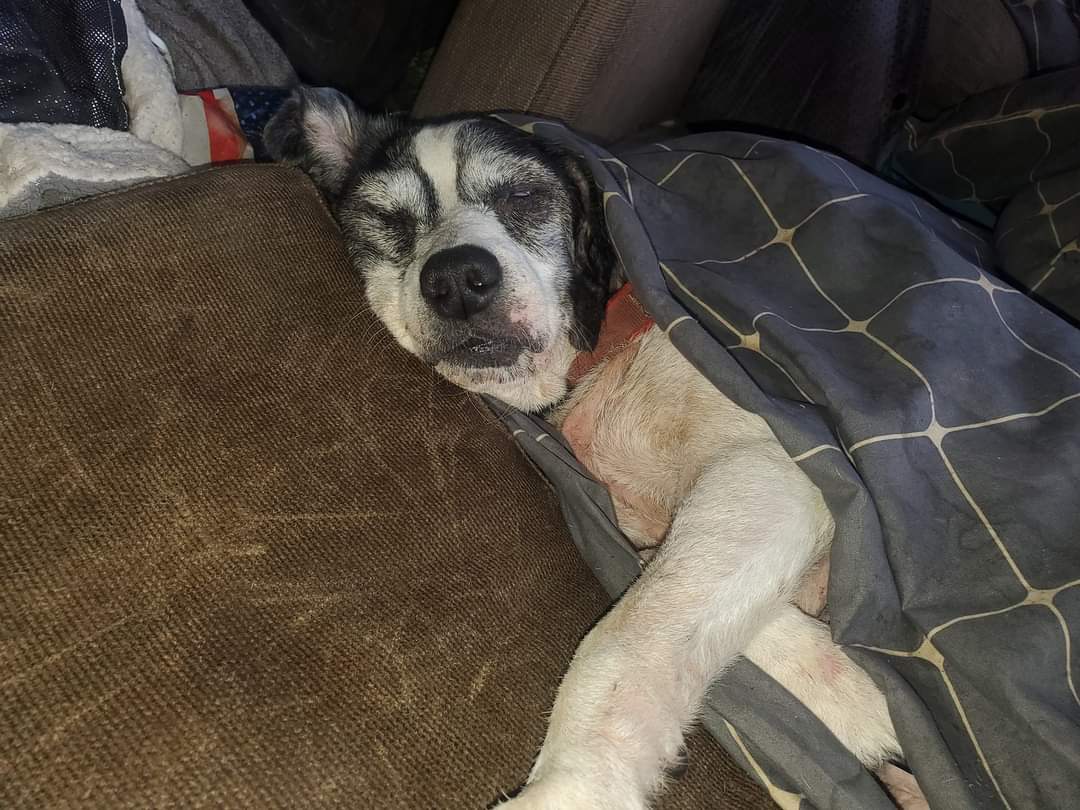
Your senior dog does not need an activity schedule covering every waking minute.
Poor weather can mean:
shorter walk
a little sniffing
some food enrichment
then sleep.
That is fine.
Rest is part of a senior dog’s routine.
9. Watch stiff joints more carefully in winter
Some owners notice that an older dog appears stiffer during cold or damp conditions.
What matters is not arguing about whether the weather itself caused the problem.
What matters is recognising a meaningful change in mobility.
Watch for:
- stiffness after sleep
- slower first steps
- reluctance to go outside
- difficulty with stairs
- avoiding jumping
- struggling to settle
- repeated slipping
- a change in walking pace
Do not assume this is simply something an old dog must tolerate.
My guide to recognising pain and mobility changes explains why persistent changes deserve veterinary assessment.
Keep prescribed treatment consistent
If your dog already has diagnosed arthritis or another mobility condition, continue following the treatment and exercise plan given by your veterinary team.
Do not:
- increase medication because it is cold
- reduce medication because your dog looks better
- add human painkillers
- start supplements without checking
- dramatically increase exercise on a milder day
If their existing plan no longer seems to be working, contact your vet.
10. Watch for changes that are bigger than the weather
Winter can make a change more noticeable.
It should not automatically explain it.
Contact your vet if your senior dog develops:
- marked reluctance to exercise
- persistent stiffness
- unexplained weight loss
- appetite changes
- increased drinking
- toileting changes
- coughing
- breathing changes
- significant behavioural changes
- difficulty standing
- unusual weakness
My Five Signs of Ill Health in Older Dogs explains several changes that should not simply be dismissed as ageing.
When is being cold an emergency?
A dog who becomes seriously cold or unwell needs veterinary help.
Warning signs of significant deterioration can include:
- marked weakness
- confusion
- collapse
- severe lethargy
- breathing changes
- inability to stand normally
- becoming poorly responsive
Move your dog somewhere dry and sheltered and contact a vet promptly if you believe they are seriously affected by cold.
Do not try to rapidly heat a seriously unwell dog using very hot water, direct heaters or other improvised methods.
For wider emergency preparation, read my Dog Health and First Aid Guide.
Winter hazards are not limited to cold
Cold weather brings several other risks.
Antifreeze
Antifreeze can be extremely dangerous if swallowed.
Keep products securely stored and clean spills promptly.
If you think your dog has swallowed antifreeze, contact a vet immediately.
Do not wait for symptoms to develop.
Frozen ponds
Do not encourage your dog onto frozen ponds, lakes or other bodies of water.
The surface may not support their weight.
Dogs Trust specifically advises keeping dogs away from frozen ponds and not going onto the ice yourself if a dog falls through.
Darker walks
Winter means more walking in poor light.
Check your dog’s:
- harness
- collar
- lead
- identification
Consider visibility for both you and your dog.
Dogs Trust recommends making dogs visible during dark winter walks and checking walking equipment regularly because wet weather can affect fittings and clips.
Mud and wet leaves
Mud and wet leaf litter can be particularly difficult for dogs who already have reduced stability.
I sometimes avoid familiar woodland routes during poor winter conditions because a flatter pavement route is safer.
For me, the aim is not to produce the most photogenic dog walk.
It is to bring the dog home safely and comfortably.
Winter walks in Finchley
Around Finchley and Muswell Hill, winter walking can vary enormously.
One day may be bright and dry.
The next can bring rain, mud and wet leaves.
Then a hard overnight frost can leave shaded paths icy the following morning.
Places such as Coldfall Woods and other local woodland routes can become slippery after prolonged wet weather or frost.
With an older dog, I may choose:
- flatter local streets
- a shorter route
- better-drained paths
- somewhere closer to home
The route should suit that day’s conditions.
What I notice with older dogs in winter
Senior dogs are particularly good at reminding you that dogs do not read weather rules.
One older dog may walk out into a crisp winter morning as though they have been waiting all year for it.
Another gets halfway down the road, looks at me, and makes it very clear that the heating is back at home.
What interests me is change.
If a dog who normally walks comfortably suddenly starts:
- falling behind
- lifting paws
- hesitating
- seeking shelter
- looking towards home
I pay attention.
I am not interested in winning an argument with an old dog about whether the walk was supposed to last thirty minutes.
Sometimes going home is the right answer.
Should senior dogs eat more in winter?
Not automatically.
A pet dog living in a heated home does not necessarily need a major increase in food simply because it is winter.
Senior dogs can also become less active during bad weather, which may reduce rather than increase calorie requirements.
Do not use cold weather as a reason to add large quantities of:
- treats
- rich leftovers
- homemade casseroles
- supplements
without considering your dog’s complete diet.
My Senior Dog Nutrition Guide explains feeding, weight, treats and appetite in more detail.
If your dog is losing weight unexpectedly, speak to your vet.
Warm water on food?
If your dog normally eats a suitable food and you want to add a little warm water, that may make a meal smell more appealing for some dogs.
But it is not necessary for “warming them from the inside”.
More importantly, do not use broth, stock cubes or human sauces without checking the ingredients.
Some human foods can be unsuitable or unsafe for dogs.
If appetite has changed, investigate the reason rather than continually trying to make meals more exciting.
Senior dogs staying at home while you travel in winter
Winter routines matter when somebody else is caring for your dog too.
Tell your sitter:
- where your dog normally sleeps
- whether they wear a coat
- how they cope with cold
- normal walk duration
- surfaces they struggle with
- medication
- heating arrangements
- what changes would concern you
Older dogs can benefit from maintaining familiar home arrangements while their owners are away.
My Holiday Care for Senior Dogs explains how to prepare.
You can also read about my house-sitting service in Finchley and North London.
My winter walking policy
I provide calm, one-to-one dog walks around Finchley and Muswell Hill.
During winter, I do not insist on completing the normal route when:
- ice makes the surface unsafe
- the dog is becoming too cold
- rain and wind make the outing inappropriate
- the dog is struggling
- another weather hazard changes the risk
A normal walk may become:
- a shorter local walk
- a sniffing walk
- a toilet break
- calm care at home
My full Extreme Weather Policy explains how I make these decisions.
For older dogs needing an individual pace, see my Dog Walks for Older Dogs.
Related senior dog guides
For the complete overview, start with Senior Dog Care: A Complete Guide to Supporting Your Older Dog.
For changes in walking, sleep, behaviour and mobility, read Is My Dog Just Getting Older? Signs Your Senior Dog May Be Slowing Down.
For pain and movement, read When Movement Causes Pain.
For making indoor movement easier, see Adapting Your Home for a Senior Dog.
For appropriate walks, read Dog Walks for Older Dogs.
For exercise and mental stimulation, see Senior Dog Exercise and Enrichment.
For indoor activities, see Gentle Brain Games for Senior Dogs.
For feeding and weight, read Senior Dog Nutrition.
For the broader weather picture, read How Weather Affects Dog Walks.
Frequently asked questions about senior dogs and winter
Do older dogs feel the cold more?
Some do. Age, health, coat, body condition and mobility all affect how a dog copes with cold weather. Watch your own dog’s behaviour rather than relying on age alone.
How cold is too cold for a senior dog?
There is no single temperature that applies to every dog. Wind, rain, coat type, health, activity and duration outside all matter. Shorten or change the outing when your dog appears uncomfortable.
Does my senior dog need a winter coat?
Some older dogs benefit from a well-fitting coat, particularly if they are thin-coated, underweight, unwell or clearly uncomfortable in cold conditions. Other senior dogs do not need one.
Should my old dog still walk in winter?
Many senior dogs continue to benefit from suitable regular walks. Adapt the route, duration and pace to the individual dog and conditions.
Why is my dog stiffer in winter?
Cold or wet weather may make mobility difficulties more noticeable, but persistent stiffness should not simply be blamed on the weather. Ask your vet to assess a meaningful change.
Should I give my dog more food during winter?
Not automatically. Many household dogs are warm indoors and some become less active during winter. Feed according to your dog’s body condition, health and veterinary advice.
Are heated beds safe for old dogs?
I would not recommend a heated bed as a universal senior-dog product. Dogs with mobility or sensory problems may have individual considerations. Speak to your vet if you believe your dog needs additional heating beyond normal suitable bedding and room warmth.
Is road salt dangerous for dogs?
Road grit and salt can irritate paws and should be removed after walks. Prevent your dog from licking residue from their feet and contact your vet if you are concerned they have swallowed a harmful substance.
Should I walk my senior dog on ice?
Avoid surfaces where your dog cannot maintain safe footing. Older dogs with reduced strength or mobility may be particularly vulnerable to slips.
Can my dog walk in snow?
Some dogs enjoy snow, but consider temperature, footing, paw comfort and the individual dog. Check and dry paws afterwards and do not allow dogs onto frozen ponds.
Why does my old dog suddenly refuse winter walks?
Cold, pain, slippery surfaces, reduced eyesight, fear and other health changes are all possible factors. A new or persistent reluctance to walk deserves investigation.
When should I contact my vet?
Contact your vet when you notice a new or persistent change in mobility, appetite, weight, drinking, toileting, breathing, behaviour or general comfort.
Final thoughts
Winter care for an older dog is not really about buying piles of special equipment.
It is about paying attention.
Give them somewhere warm and comfortable to sleep.
Keep them dry.
Improve their grip.
Use a suitable coat when the individual dog benefits from one.
Change the walk when the ground or weather makes the normal route difficult.
And listen when your dog tells you that they have had enough.
An older dog’s winter walk does not have to be long to be worthwhile.
A quiet fifteen-minute sniff around familiar streets followed by a warm bed can be exactly the right outing.
For year-round advice about supporting your dog as they age, return to my Senior Dog Care Hub.
Veterinary disclaimer: This guide provides general information about winter care for older dogs. It is not a substitute for veterinary advice. New or persistent changes in mobility, behaviour, appetite, breathing, drinking, toileting or ability to regulate temperature should be discussed with your veterinary practice. Seek prompt veterinary assistance if your dog becomes severely weak, confused, collapses, has breathing difficulties or otherwise appears seriously unwell.
C