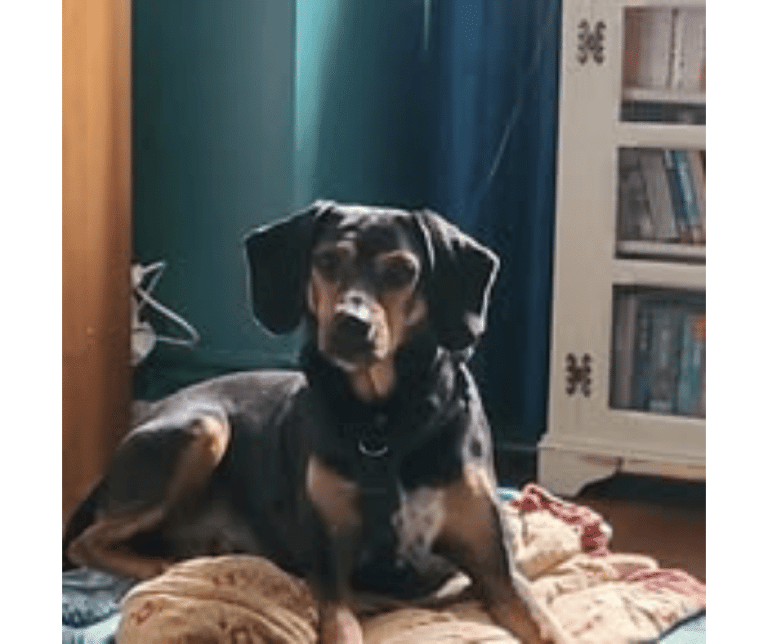
Going on holiday should be something to look forward to. But when you have a dog, one of the biggest decisions is deciding who will look after them while you’re away.
Home boarding can be a good option for some dogs. Instead of staying in traditional kennels, your dog lives in somebody else’s home for the duration of your holiday.
That sounds straightforward, but there are quite a few things I would check before making a booking.
I’ve been caring for dogs professionally around Finchley and North London since 2011. I’ve learnt that a dog’s happiness depends on much more than whether somebody is kind and has a comfortable house.
The daily routine, other animals, handling arrangements and how the dog copes when you leave all matter.
Some dogs happily settle into a different household. Others find the change difficult, particularly nervous dogs, older dogs and those who are uncomfortable around unfamiliar animals.
In this guide, I’ll explain how to choose a suitable home boarder, what questions to ask, how to prepare your dog and what to pack before you go away.
Quick summary: What should you check before booking home boarding?
- Check the home boarder’s local-authority licence where required, along with suitable insurance.
- Visit the property and meet the person who will actually care for your dog.
- Ask how many other dogs will be staying and how introductions and separation are managed.
- Find out how long your dog will be left without human company.
- Discuss walks, feeding, sleeping arrangements and emergency procedures.
- Arrange suitable introductions and a trial stay where appropriate.
- Provide your dog’s normal food, routine, medication information and familiar bedding.
- Choose an alternative if your dog appears unlikely to cope comfortably with the arrangement.
Table of contents
- Quick summary: What should you check before booking home boarding?
- What is dog home boarding?
- Does a dog home boarder need a licence in the UK?
- Questions to ask a dog home boarder before booking
- Visit the home before you confirm a booking
- Should you arrange a trial stay before home boarding?
- What if your dog is nervous around other dogs?
- What about puppies and senior dogs?
- Vaccinations and medical information
- What should you pack for your dog’s home-boarding stay?
- Should you buy new enrichment toys for boarding?
- What should you agree before paying a deposit?
- How to help your dog settle when you drop them off
- When might house sitting be a better alternative?
- Frequently asked questions about home boarding
- My final advice on home boarding your dog
- Related guides
What is dog home boarding?
Home boarding means your dog stays in somebody else’s home while you’re away.
The boarder may have their own dogs, accept visiting dogs from several households or offer a quieter service for one household at a time.
The exact arrangements vary.
Home boarding is different from house sitting, where a sitter stays in your home and your dog remains in familiar surroundings.
Neither option is automatically better.
A confident, sociable dog might be perfectly happy living with another family for a week.
A nervous rescue dog who relies on familiar routines may find that considerably harder.
Before looking for a home boarder, think about what your own dog is likely to enjoy and tolerate.
If you’re still comparing your holiday-care options, read my Boarding Your Dog: How to Choose the Right Holiday Care guide.
Does a dog home boarder need a licence in the UK?
This is one of the first things I would check.
In England, commercial home boarding for dogs generally requires a licence from the local council under the Animal Welfare (Licensing of Activities Involving Animals) (England) Regulations 2018.
There are exceptions to which activities count as a licensable business, so the rules should not be described as applying to every informal arrangement between friends or family.
For a professional home-boarding business, ask to see its current licence.
The licence should identify the operator and the number of dogs permitted.
The licence holder’s name and licence number must also be displayed prominently on a website used for the licensed boarding activity.
England also uses a star-rating system for licensed animal activities. The rating is useful information, although it does not replace visiting the property and checking whether it suits your dog.
You can read the current GOV.UK statutory guidance for dog home boarding.
What about Scotland, Wales and Northern Ireland?
Licensing arrangements differ across the UK.
The English regulations and star-rating requirements should not automatically be applied to businesses operating elsewhere.
If you’re booking outside England, check the relevant local council’s requirements.
For Finchley and the surrounding areas, the English licensing guidance applies.

Questions to ask a dog home boarder before booking
I would never choose a home boarder based solely on photographs, reviews or a friendly conversation.
Those things can help, but you need to understand what happens throughout a normal day.
Here are the questions I would ask.
1. Can I see your licence and insurance?
Ask to see the relevant licence and confirmation that the business has appropriate insurance.
Check the name, premises, expiry date and permitted number of dogs.
You can also confirm licensing details with the issuing council.
Insurance is important, but it is not a substitute for a licence where licensing is required.
2. How many dogs will be staying?
This is particularly important if your dog is shy, nervous or easily overwhelmed.
A boarder might have a licence allowing several dogs but choose to accept fewer.
Ask:
- How many visiting dogs could be present?
- Are there resident dogs?
- Are dogs from different households allowed to mix?
- What happens if two dogs do not get along?
- Can the dogs be separated safely for sleeping, resting and feeding?
Under England’s home-boarding standards, dogs from different households may only be boarded together with the written consent of every owner concerned.
The provider must also have arrangements for separating dogs when necessary.
It is not enough to assume that every dog will become friends once they spend time together.
3. Where will my dog sleep?
Ask to see the actual sleeping area.
Will your dog sleep in the kitchen, living room, bedroom or another suitable space?
Is there somewhere quiet where they can rest without being disturbed?
Does the boarder allow dogs on furniture? If your dog normally sleeps in a particular place, will the new arrangement be manageable?
Dogs need suitable sleeping and resting accommodation under the licensing standards.
I would not want a dog to spend its holiday constantly unsettled because the sleeping arrangements are completely different from what it knows.
4. How will walks be managed?
A garden is useful, but it does not automatically replace suitable walks, opportunities to sniff or appropriate enrichment.
Ask where the boarder walks the dogs and whether they go out individually or in groups.
I would also ask:
- Will my dog travel in a car or van?
- How will they be secured during travel?
- Will they be walked with unfamiliar dogs?
- Will they ever be allowed off-lead?
- What happens if they become nervous or refuse to walk?
- Can the boarder follow any existing restrictions on exercise?
Under the English home-boarding standards, owners must give written consent for walking outside the property, off-lead exercise and walks with dogs from other households.
I would never assume a dog should be let off-lead simply because it has good recall at home.
Different surroundings can change how a dog responds.
5. How long will my dog be left alone?
This is one of the questions I think owners should ask more often.
Some people imagine that home boarding means somebody will be with their dog continuously.
It is better to ask exactly what happens.
The English licensing guidance states that home-boarded dogs must have human company and must not routinely be left alone for more than three hours in a 24-hour period, or for shorter periods when their individual needs require it.
Ask how the boarder meets that requirement and who provides cover if they need to go out.
If your dog cannot comfortably cope with being left, make that clear before booking.
6. What happens if my dog becomes unwell?
I would want to know:
- Which veterinary practice will be used?
- What happens outside normal opening hours?
- How will you be contacted?
- What happens if you cannot be reached?
- Who authorises emergency treatment?
- How are unexpected veterinary bills handled?
- What is the backup plan if the boarder becomes ill?
A professional boarder should be able to explain their emergency procedures clearly.
Agree the arrangements in writing before your holiday.
7. What happens if my return is delayed?
Flights get cancelled, trains are delayed and emergencies happen.
Ask whether the boarder can extend the stay and what would happen if they are already booked for another dog.
Agree an emergency contact who could help if you cannot return when planned.
I would rather have that conversation before leaving than discover there is no backup arrangement when something goes wrong.
Visit the home before you confirm a booking
A meet-and-greet is an important part of choosing a home boarder.
I would want to visit the property where the dog will actually stay, not just meet the boarder in a park.
Look at the home from your dog’s point of view.
Is the garden secure?
Are gates and doors managed carefully?
Are there quiet areas away from other dogs and household activity?
Can dogs retreat somewhere comfortable if they need a break?
Are resident dogs relaxed, or is the environment noisy and chaotic?
A household does not need to be completely silent or look like a show home.
It does need to be suitable for the animals living there.
Watch how the boarder interacts with your dog
A good introduction should allow your dog time to investigate the new surroundings.
They should not be forced into contact with unfamiliar dogs or people.
I particularly value carers who can recognise when a dog needs space.
A confident dog might explore immediately.
A nervous dog may prefer to stand back and watch.
Neither reaction is automatically a problem, but both provide useful information.
If your dog appears frightened, don’t assume they will simply get used to it after you leave.
A good boarder should be willing to discuss whether the arrangement is genuinely suitable.
Should you arrange a trial stay before home boarding?
Yes, I would recommend an appropriate trial before committing to a longer holiday.
An initial meeting is useful, but it does not always tell you how your dog will behave once you leave.
A short trial can help establish whether your dog will eat, settle, sleep and cope with the household routine.
If several dogs will be present, the English licensing guidance requires documented familiarisation trials, including introductions to resident dogs.
There are additional overnight trial requirements for multi-dog businesses meeting particular higher standards.
Rather than assuming every business follows an identical trial process, ask the boarder how their assessment works and what they will do if your dog does not settle.
A trial is not a test your dog has to pass.
It is an opportunity to establish whether this is the right environment.
If the boarder recommends a different arrangement, take that advice seriously.
You may also find my Getting Your Dog Used to a Sitter guide useful when planning gradual introductions.
What if your dog is nervous around other dogs?
Some dogs enjoy the company of other dogs.
Others prefer their own space.
A dog who is relaxed around familiar companions at home may respond differently when sharing an unfamiliar house with strangers.
I would be particularly careful if your dog:
- Becomes worried when dogs approach
- Guards food, toys or resting places
- Needs considerable space when resting
- Has a history of conflict with unfamiliar dogs
- Is frightened by sudden movement or noise
- Finds it difficult to settle in new environments
The boarder needs to know about these behaviours before accepting the booking.
Never hide a concern because you’re worried the boarder might say no.
It is much better for somebody to decline a booking than to discover halfway through your holiday that they cannot safely meet your dog’s needs.
For rescue dogs, my House Sitting vs Boarding for Rescue Dogs guide explores the decision in greater detail.
What about puppies and senior dogs?
Age can make a difference to the type of care a dog needs, but I would avoid making assumptions based on age alone.
Puppies
Puppies may need more frequent toilet breaks, suitable rest and a carefully managed routine.
They may also be partway through their vaccination programme.
Ask the boarder whether they accept puppies of your dog’s age and how they manage exercise, social experiences, toilet training and supervision.
Do not introduce lots of new experiences in the hope of making your puppy cope with boarding.
Gradual, positive familiarisation is far more useful.
Senior dogs
Older dogs may need medication, gentle exercise, help on slippery floors or more frequent opportunities to go outside.
They may also find changes to their normal routine difficult.
Some senior dogs settle happily with a suitable home boarder.
Others may be more comfortable staying in their familiar home.
If your dog has pain, mobility problems, significant medical needs or changes in behaviour, discuss the arrangement with your vet beforehand.
Vaccinations and medical information
Do not leave vaccinations until the week before your holiday.
Licensed home boarders in England must check relevant veterinary vaccination records, and their requirements may include kennel cough vaccination.
Your dog’s individual vaccination programme should be discussed with your vet.
PDSA recommends preparing well in advance and ensuring the carer has the information needed to manage medication and emergencies.
Its Guide to Pet Boarding, Kennels and Holiday Care provides useful veterinary advice.
If your dog takes medication, provide the prescribed medicine in its original packaging with clear written instructions.
Confirm that the boarder is competent and willing to administer it as directed.
Also tell them about allergies, previous illnesses, medical restrictions and any changes your vet wants monitored.
What should you pack for your dog’s home-boarding stay?
You don’t need to buy a completely new set of equipment.
In fact, familiar items can be much more helpful.
I would prepare the following:
Your dog’s normal food
Provide enough of their usual food for the entire stay, plus a reasonable extra allowance in case your return is delayed.
Label it clearly and include the normal feeding quantities and times.
Changing food unnecessarily may upset your dog’s stomach.
Familiar bedding
Ask the boarder whether you can bring your dog’s usual blanket or suitable bed.
Something that smells familiar can help your dog settle.
However, check that the bedding is suitable for the environment and does not create a risk if your dog chews or destroys fabric.
Collar, identification and walking equipment
Provide a correctly fitted harness, a reliable lead and the equipment your dog normally uses.
Make sure the identification arrangements meet legal requirements and that your dog’s microchip details are current.
The English home-boarding licensing rules also require dogs outside the premises to wear identification showing the licence holder’s name and contact details.
Medication and care instructions
Leave all necessary prescribed medication and clear instructions, along with veterinary and emergency contact information.
Familiar toys
If your dog has a favourite toy that they use safely, ask whether the boarder can accommodate it.
I would be cautious about giving high-value chews or food toys in a household with several dogs.
Competition over food and toys can create tension.
The boarder should be able to manage these activities separately where needed.
A written routine
I consider this one of the most valuable things you can provide.
Include:
- Feeding and toilet times
- Normal walking arrangements
- Sleeping routines
- Medication and health information
- Fears, triggers and behaviour concerns
- What helps your dog settle
- Your contact details and those of an emergency contact
- Veterinary and insurance information
- Permissions about walks, off-lead exercise and other dogs
Even an experienced professional cannot know your dog’s individual routine unless you explain it.
Should you buy new enrichment toys for boarding?
I would not introduce a completely new toy or food activity on the day your dog goes away.
If your dog already enjoys a suitable, correctly sized KONG or another familiar enrichment toy, it may be useful to discuss bringing it.
The boarder should supervise the activity appropriately and avoid giving valuable food toys to several unfamiliar dogs together.
You can read my Complete Guide to KONG Toys for sizing, fillings and safety information.
Affiliate disclosure: The optional product link below is an advertising affiliate link. If you buy through it, I may earn a small commission at no extra cost to you. As an Amazon Associate, I earn from qualifying purchases.
View the KONG Classic on Amazon UK
You do not need to buy one simply because your dog is going into boarding.
Use what is already suitable, familiar and approved by your boarder.
For more activities that do not require buying extra equipment, see my Dog Enrichment Guide.
What should you agree before paying a deposit?
Before confirming a booking, ask for the terms in writing.
Check the total price, what is included, when payment is due and what happens if plans change.
I would also check:
- Whether the deposit is refundable
- The cancellation policy
- Charges for late collection
- Whether medication or additional care costs extra
- The arrangements if the boarder cancels
- What happens if a trial stay reveals that the dog is unsuitable
- Whether you will receive regular updates
- Who has permission to care for or transport your dog
Do not assume that a deposit is automatically non-refundable simply because somebody describes it that way. Read the terms and ask questions before paying.
If something is unclear, get clarification in writing.
How to help your dog settle when you drop them off
Once you have chosen a suitable boarder and completed the preparation, the final handover should be straightforward.
Follow the arrangements agreed during your trial and familiarisation visits.
Make sure the boarder knows whether your dog has eaten, exercised, had medication or experienced anything unusual that morning.
A calm handover is generally preferable to making the departure a large event.
However, don’t try to conceal serious distress.
If your dog is clearly struggling, discuss it with the boarder rather than assuming that leaving quickly will solve the problem.
Agree when you will receive your first update and what information you would like to know.
When might house sitting be a better alternative?
Home boarding can work very well for some dogs.
However, not every dog wants to spend its holiday living in somebody else’s house.
For nervous dogs, senior dogs and those who find change difficult, remaining at home may be worth considering.
With house sitting, your dog keeps its normal sleeping area, familiar surroundings and usual neighbourhood.
This can also be useful for households with dogs, cats and other pets who would otherwise need several different care arrangements.
How I provide house sitting
I offer overnight pet and house sitting in Finchley and selected nearby areas of North London.
I do not offer home boarding. Dogs do not come to live in my house.
Instead, I stay in your home and follow your pets’ agreed routine as closely as practical.
I care for one house-sitting household at a time and do not mix your dogs with unfamiliar animals.
My standard service includes overnight care with agreed daytime absences. A separate continuous-care option may be available for suitable pets needing more supervision.
You can find the full details, current prices and availability information on my Pet and House Sitting Service.
Frequently asked questions about home boarding
Is home boarding better than kennels?
Not necessarily. Some dogs enjoy a domestic home-boarding environment, while others settle well in suitable kennels. The quality of the care and your dog’s individual needs matter more than the name of the service.
Is dog home boarding legal without a licence?
In England, commercial home boarding generally requires a local-authority licence, subject to the rules determining whether an activity is a licensable business. Informal arrangements and the rules elsewhere in the UK may differ. Always check with the relevant council.
How many dogs can a home boarder look after?
There is no single number that applies to every premises. The licence specifies the maximum number permitted at that property. Ask how many visiting and resident dogs will be there during your dog’s stay.
Should I visit the boarder’s home?
Yes. I recommend visiting the property where your dog will stay, meeting the carer and discussing the daily routine before booking.
Does my dog need a trial stay?
A trial is a sensible way to check suitability. English licensing rules include documented familiarisation requirements for dogs being boarded together, and additional overnight trial requirements apply to certain higher-standard boarding arrangements.
Should I provide my dog’s normal food?
Yes, unless your vet or the boarder has agreed another suitable arrangement. Keeping food familiar avoids adding an unnecessary dietary change.
Will my dog be left alone during home boarding?
Ask the boarder to explain their actual supervision arrangements. English home-boarding guidance restricts how long dogs may routinely be left without human company, and some dogs need even closer supervision.
Is home boarding suitable for reactive or anxious dogs?
It depends on the individual dog and the environment. Some dogs can cope with a carefully managed boarding arrangement. Others may find unfamiliar dogs, people and routines distressing. A quieter home or house sitting may be more suitable.
Does Finchley Dog Walker provide dog home boarding?
No. I provide house sitting in the client’s home rather than taking dogs into my own home. This allows suitable pets to remain in their familiar surroundings while their owners are away.
My final advice on home boarding your dog
Choosing holiday care isn’t simply about finding somebody who has space available.
It is about finding an arrangement where your dog can feel safe, comfortable and properly cared for.
Some dogs will settle happily in a good home-boarding environment.
Others will need a quieter arrangement, fewer unfamiliar animals or the reassurance of remaining at home.
Take your time.
Visit the property, meet the person who will care for your dog and ask questions about the things that matter.
And if a boarder tells you that your dog may not be suited to their household, don’t see that as a failure.
It means you have useful information before leaving your dog somewhere they may struggle.
If you live in Finchley or nearby and think your dog would be happier remaining at home, you are welcome to contact me about house sitting.
WhatsApp: 07707 763344
Read more about my Pet and House Sitting Service.
Related guides
- Boarding Your Dog: How to Choose the Right Holiday Care
- How to Choose a Pet Sitter in the UK
- Getting Your Dog Used to a Sitter
- House Sitting vs Boarding for Rescue Dogs
- Dog Enrichment Ideas for Calmer Dogs
- Finchley Dog Walker Welcome Pack
The licensing information in this guide relates principally to England. Always check the current requirements with the relevant local authority. Veterinary and behavioural concerns should be discussed with an appropriately qualified professional.
First published: 13 September 2022
Substantially updated: 7 November 2026