Table of contents
- Why Both Physical and Mental Enrichment Matter
- Use Sniff Walks to Meet Their Sensory Needs
- Switch to Interactive Feeding Instead of the Bowl
- Add Short Training Sessions for Focus and Fun
- Plan Rest Days to Avoid Overstimulation
- Offer Choices and Let Your Dog Decide
- Rotate Activities to Keep Things Fresh
- FAQ
- Start Building a Balanced Week That Works for You
It’s easy to focus on walking your dog every day and assume that’s enough. But if you’ve ever noticed your dog still full of energy after a long walk, or getting up to mischief while you’re trying to relax, something is missing.
That missing piece is mental enrichment.
Dogs don’t need movement. They need opportunities to sniff, think, problem-solve and make choices. When you combine physical exercise with mental stimulation, you meet more of your dog’s needs. That leads to calmer behaviour, better sleep, and a happier dog overall.
This blog gives you a complete weekly plan to help you balance physical and mental enrichment. It includes examples you can try straight away, whether you live in a flat or the countryside. You don’t have expensive gear or lots of time. Small changes add up.
If you’ve wondered how to tire out a dog without walking for miles, or whether your current routine is actually working, this is for you.
Why Both Physical and Mental Enrichment Matter
Daily walks matter. They keep your dog fit, help manage weight and support joint health. But physical exercise alone isn’t enough, especially for young, clever, or working breeds.
Mental stimulation helps your dog process the world, learn new skills, and release stress in a healthy way. It also improves focus, confidence and behaviour.
If your dog chews furniture, barks at everything or seems constantly restless, boredom is often the cause.
Ask yourself:
- Does your dog have to think for any part of their day?
- Do they have any choices or problem-solving activities?
- Are they tired in a good way, or just wired and unsettled?
When you mix both kinds of stimulation across the week, you reduce the risk of overexcitement or under-stimulation. It gives your dog the chance to move, rest and think.
Use Sniff Walks to Meet Their Sensory Needs
A sniff walk isn’tisn’tt distance. It’s letting your dog explore the world at their own pace.
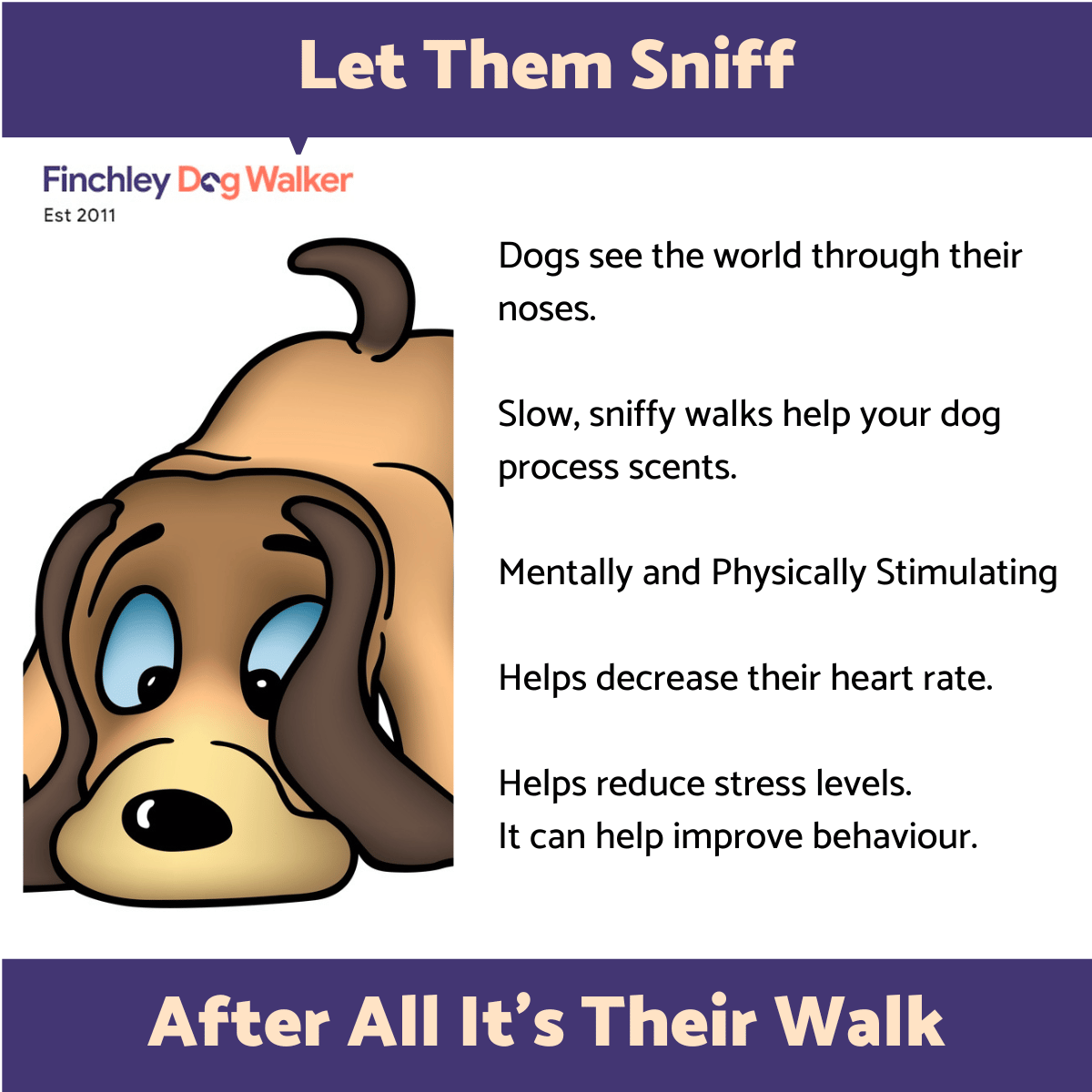
Dogs experience their surroundings primarily through scent. Letting them sniff freely activates their brain, helps regulate their nervous system and builds confidence.
Here’Here’sto get started:
- Slow down and let your dog choose the direction
- Visit new locations for different smells
- Walk in quiet times to reduce distractions
- Try taking your dog to good “sniff” areas like woods, hedgerows or long grass
Even ten minutes of relaxed sniffing can help calm an anxious or energetic dog. You can also scatter a few treats in the grass during walks and encourage your dog to find them.
If your dog pulls constantly, you can still build sniff time into structured walks. Just choose a few minutes to offer sniff breaks when your dog can follow their nose without cues.
Related Tip: Dogs Trust explains that scent work is one of the best ways to reduce stress in reactive or anxious dogs. It gives them a job they feel good at.
Switch to Interactive Feeding Instead of the Bowl
Most dogs eat too fast as they see it as an opportunity.
Dogs are natural foragers. They enjoy working for food far more than being given it. Ditching the bowl at feeding time can be one of the best ways to offer mental stimulation.
Try:
- Kongs filled with soaked kibble or soft food
- Lick mats to slow eating and encourage calm
- Cardboard boxes or egg cartons with food hidden inside
- Snuffle mats for sniffing and searching
- Scattering food in the garden or across a towel
Rotate methods to keep your dog interested. Start easy and build complexity over time.
Interactive feeding ideas for dogs are everywhere, but keep safety in mind. Always supervise at first, especially with cardboard or new puzzle toys.
If you feed twice a day, you’ve built-in chances for enrichment without adding anything extra to your schedule.
Add Short Training Sessions for Focus and Fun
Youdon’tt want to spend hours training. Five minutes here and there can make a real difference.
Training gives your dog something to focus on. It also helps you build communication and trust.
Try:
- Teaching your dog to touch your hand with their nose
- Asking them to lie on a mat while you cook or eat
- Teaching helpful cues like “wait”, “leave it”, “and “middle”
- Introduce tricks like spin, weave or tidy up
Use your dog’s dog food or small, soft treats. Keep sessions short, end on success and avoid drilling the same thing over and over.
If your dog gets overexcited, go slower. If they lose interest, make it more rewarding or reduce distractions.
Expert Insight: The Kennel Club recommends short, reward-based sessions as the most effective way to help dogs learn without pressure.
Plan Rest Days to Avoid Overstimulation
Some dogs never seem to settle. But often it’s because of stress or anxiety, and they don’t have enough opportunity to decompress.
Dogs need rest, just like we do. Without proper downtime, even the most social, energetic dog can become overstimulated.
Rest doesn’t mean doing nothing at all. It means calm, low-key activities.
Ideas for rest days for dogs:
- Slow, short lead walks in quiet areas
- Long-lasting chews in a quiet space
- Calm music or scent-based enrichment
- Lick mats or simple snuffle games
- Time alone in their bed without interruptions
Rest is essential after:
- Busy weekends
- Social events
- Vets or grooming appointments
- Training or daycare
Ask yourself: Is my dog tired, or overloaded?
A rest day every few days can help your dog recover and reset.
Offer Choices and Let Your Dog Decide
Dogs have very little control over their lives. We decide when they go out, what they eat, who they see, and where they rest.
That can lead to frustration, especially in clever or independent breeds.
Giving your dog small choices helps reduce anxiety and builds their confidence.
Try letting your dog:
- Choose between two toys
- Pick the route for a walk
- Decide when to start or stop a game
- Say no to specific interactions
Watch their body language. If they move away, lower their head or stop responding, that’s a pause or a change in the activity.
This doesn’t mean let your dog do whatever they want. It means listening to their feedback and offering some control where appropriate.
Real-life example: A client started refusing to go for walks. We changed to a shorter sniff route where she could set the pace. Within a week, she was excited to go again.
Rotate Activities to Keep Things Fresh
Doing the same thing every day can lead to boredom, even with enrichment.
Instead of cramming everything into one day, spread it across the week. Rotate toys, walk locations, games and feeding methods.
Here’s a sample weekly routine for mental and physical enrichment for dogs:
Monday:
- Morning: Sniff walk
- Evening: Kong feeding and rest
Tuesday:
- Morning: Short lead walk
- Afternoon: Trick training for 5 minutes
- Evening: Scatter feed and chew
Wednesday:
- Morning: Scent game in the garden
- Afternoon: Lick mat and nap
- Evening: Slow sniff walk
Thursday:
- Rest day with short garden breaks
- Lick mat or chew in a quiet spot
Friday:
- Morning: Training or puzzle feeder
- Evening: Social walk or longer outing
Saturday:
- Enrichment box or snuffle mat
- Rest with calm play
Sunday:
- Off-lead run (if safe) or long lead walk
- Evening: Short training and calming chew
You can adjust this to suit your dog’s health and preferences.
FAQ
How do I know if my dog is mentally tired?
A mentally stimulated dog will often relax after a task. They may settle more easily, yawn or choose to nap. Overstimulation shows as restlessness or whining.
What if my dog destroys puzzle toys?
Start with more manageable tasks or supervised play. Use stronger toys, such as rubber Kongs or safe boxes. Gradually increase the challenge as your dog learns.
Can I do too much enrichment?
Yes. Overloading your dog with constant activities can be just as unhelpful as doing too little. Balance is key. Always include calm days.
Do senior dogs still need this kind of enrichment?
Definitely, older dogs benefit from scent games, gentle training and puzzle feeding. Just adjust for mobility or health needs.
Start Building a Balanced Week That Works for You
Mental and physical enrichment for dogdoesn’t’t have to be complicated. It’s about offering a mix of activities that meet your dog’s needs, while also giving space to rest and reset.
Start small. Pick one or two new things to try this week. Watch how your dog responds. Notice what they enjoy. Build on that.
If you’re not sure what your dog needs, or you’d like help putting together a personalised routine, I offer 1-to-1 guidance. It’s practical, friendly, and tailored to your dog’s life.
Explore my services or get in touch for support that actually works.
Find out more about the new year and new habits, and the advice from K9 and Kats
Useful links:
Below are some other posts you might be interested in
Key Takeaways
- Walking your dog is important, but combine it with mental enrichment to create a calmer, happier dog.
- Incorporate activities such as sniff walks, interactive feeding, and short training sessions to stimulate your dog’s mind and body.
- Plan rest days to prevent overstimulation and give your dog time to decompress after busy days.
- Offer your dog choices to give them some control over their activities.
- Rotate enrichment activities throughout the week to keep your dog engaged and prevent boredom.