

Summer Dog Safety Guide
Updated May 2026
Summer can be brilliant for dogs.
Longer daylight. More time outside. More chances to sniff, explore and slow down a bit.
But summer also brings risks that many owners underestimate until their dogs struggle in the heat and humidity
Every year, I see dogs being walked too late into hot afternoons, struggling on pavements that are far too warm, or becoming stressed because their normal routine suddenly stops working.
A lot of summer dog safety is not about doing more.
It is about slowing down, adjusting expectations and changing routines before problems start.
This guide covers the practical things I would focus on during warmer weather, especially for:
- rescue dogs
- nervous dogs
- older dogs
- flat-faced breeds
- puppies
- dogs that struggle with heat or stress
Why summer can be harder for dogs than owners realise
Dogs do not cool themselves the same way we do.
They mainly cool down through panting and limited sweat glands in their paws. That means heat can build quickly, especially during:
- humid weather
- still air
- direct sun
- stressful environments
- over-excitement
- busy parks
- long walks
In places like Highgate Woods, Coldfall Woods and Cherry Tree Wood, shaded routes help, but even woodland walks can become difficult on humid days.
The biggest issue I often see is owners assuming their dogs still need the same level of exercise in hot weather.
Usually, they do not.
Many dogs cope better with:
- shorter walks
- slower sniffing walks
- enrichment at home
- shaded routes
- split routines
- early morning outings
The biggest hot weather mistakes I see
Walking at the wrong time
The hottest part of the day is often much later than people expect.
Pavements and artificial grass can stay hot well into the evening.
During heatwaves, I often move walks to:
- very early mornings
- late evenings
- shaded decompression routes
- garden visits
- enrichment drop-ins instead of full walks
Sometimes skipping a walk is the safer option. A dog has never died from skipping a walk, but they have fr heatstroke on a walk
Assuming all dogs cope equally
Some dogs struggle far more in heat, including:
- bulldogs
- pugs
- French bulldogs
- overweight dogs
- senior dogs
- puppies
- nervous dogs
- double-coated breeds
Rescue dogs can also struggle because stress itself increases body temperature.
Throwing balls repeatedly in hot weather
High-arousal games and repetitive sprinting can quickly push dogs into overheating.
This is especially risky in parks where dogs stay over-excited for long periods without proper rest.
In summer, I focus far more on:
- sniffing
- wandering
- shaded exploration
- calm enrichment
- slower walks
That usually tires dogs more safely anyway.
When it is too hot to walk your dog
There is no perfect universal temperature.
Humidity, breed, age, fitness and environment all matter.
But generally:
- 20°C can already be difficult for some dogs
- 23°C and above need much more caution
- 25°C+ often means adjusting or shortening walks
- Heatwaves may mean replacing walks completely
I would pay more attention to:
- how humid it feels
- whether your dog is panting heavily early
- whether pavements still feel warm
- whether your dog is slowing down unusually
If your dog looks uncomfortable, stop.
Pavement burns and hot surfaces
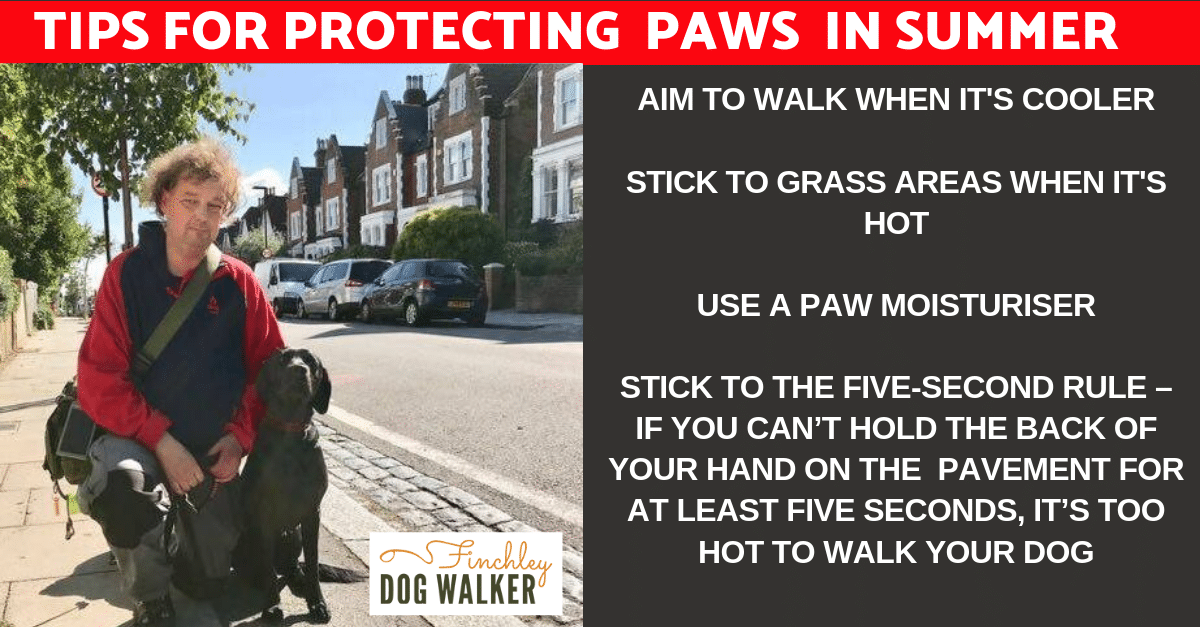
Pavements can become dangerously hot surprisingly quickly.
Artificial grass, decking, car parks and metal drains can also burn paws.
A simple rule:
If you cannot comfortably hold your hand on the surface for several seconds, it is too hot for your paws.
This matters even more in built-up North London streets where heat reflects between buildings.
What I would focus on first
- grass routes where possible
- shaded streets
- woodland walks
- shorter outings
- avoiding midday walks entirely
Signs of heatstroke in dogs
Heatstroke is an emergency.
Early signs:
- excessive panting
- drooling
- bright red gums
- slowing down suddenly
- confusion
- seeking shade constantly
More serious signs:
- vomiting
- collapse
- wobbling
- diarrhoea
- seizures
If you suspect heatstroke:
- Move your dog somewhere cool immediately
- immerse them in cold water
- Contact your vet urgently
Do not wait to see if it improves.
External advice:
Better alternatives to long summer walks
One of the biggest mindset shifts for owners is realising that dogs do not always need long physical exercise in summer.
Mental enrichment often works better.
Safer summer alternatives
- scatter feeding in the garden
- sniffing games indoors
- frozen enrichment toys
- short decompression walks
- shaded sniff walks
- training games
- lick mats
- calm garden time
- scent trails
This is especially helpful for:
- rescue dogs
- reactive dogs
- older dogs
- dogs recovering from injury
Related guide:
The Sniff and Decompress
Keeping dogs mentally tired in hot weather
Mental work can tire dogs safely without overheating them.
I often recommend:
- cardboard destruction games
- frozen Kongs
- snuffle mats
- hidden treats
- calm training sessions
- food puzzles
Recommended essentials
- Cooling mat
[Amazon affiliate link – recommended product] - Travel water bottle
[Amazon affiliate link – recommended product] - Dog cooling Bandanna
[Amazon affiliate link – recommended product] - Snuffle mat
[Amazon affiliate link – recommended product]
Affiliate disclaimer: Some product links on this page may be affiliate links. Derek Chambers of Finchley Dog Walker may earn a small commission if you buy through them, at no extra cost to you. I only recommend products I would genuinely use myself.
Related guide:
Hot Weather Dog Kit
Summer safety for puppies and older dogs
Puppies can overheat quickly because they struggle to regulate their body temperature.
Older dogs often tire faster and recover more slowly.
I usually recommend:
- shorter walks
- shaded routes
- more rest breaks
- avoiding busy parks
- calm enrichment at home
This is where puppy visits or home drop-ins can work much better than long walks during heatwaves.
Related guide:
Puppy Visits and Puppy Support
Summer safety for rescue and reactive dogs
Summer can make reactive behaviour worse.
Hot dogs are often:
- more frustrated
- less tolerant
- more sensitive to noise
- quicker to become overwhelmed
Busy parks and crowded green spaces can become harder environments during school holidays and warm evenings.
For many nervous dogs, quieter early morning solo walks work far better.
Related guide:
Rescue Dog Support in Finchley
Holiday and travel safety
Cars become dangerous very quickly in summer.
Even with windows open, temperatures rise fast.
Never leave dogs unattended in vehicles during warm weather, as dogs can die in hot cars
For holidays:
- bring familiar bedding
- pack enough medication
- keep routines predictable
- avoid sudden over-exercise
- plan shaded rest breaks
A simple checklist
Before travelling:
- water packed
- cooling towel packed
- shade available
- emergency vet researched
- travel harness secured
- familiar food packed
Related guide:
Dog Staycation Packing List
Top summer dangers for dogs
Garden and BBQ risks
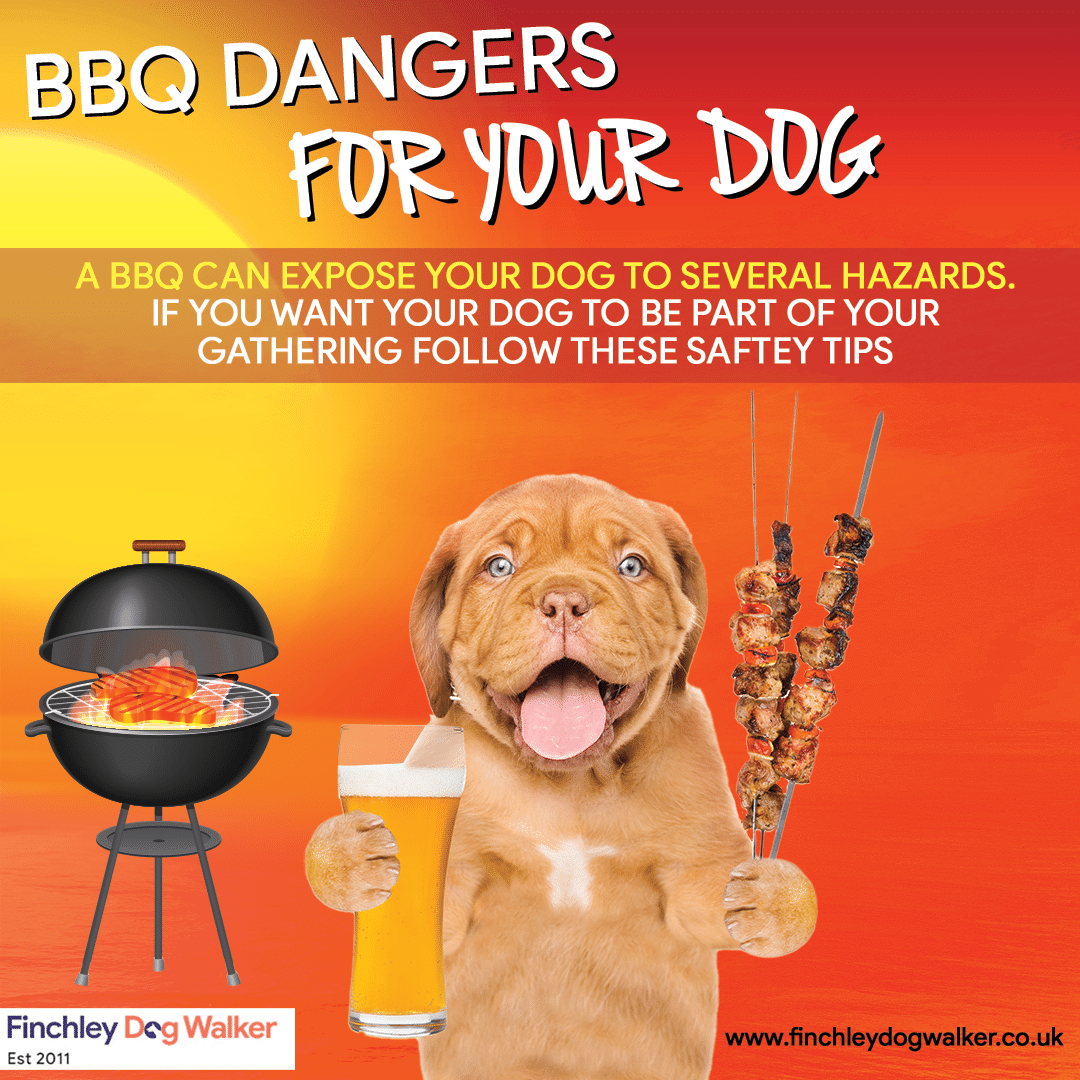
Summer gardens bring extra risks:
- heat exhaustion
- toxic foods
- citronella products
- BBQ skewers
- open garden gates
- algae in paddling pools
Common dangerous foods:
- onions
- corn on the cob
- grapes
- alcohol
- cooked bones
I would also be careful with artificial grass during heatwaves, as it can become extremely hot.
What I would avoid in the summer
Personally, I would avoid:
- forced exercise in heat
- repetitive ball throwing
- crowded dog parks during heatwaves
- long midday walks
- poorly ventilated cars
- heavy training sessions in hot weather
- expecting dogs to cope normally during extreme heat
Summer routines often need adjusting.
That is normal.
A simple way to think about summer dog safety
The safest summer dogs are usually the ones allowed to slow down.
Most dogs do not need:
- endless exercise
- intense fetch
- crowded parks
- long hikes during heatwaves
They usually need:
- calm routines
- shade
- water
- slower walks
- enrichment
- rest
Related guides
- Seasonal Pet Safety in Finchley
- How to tire a dog without long walks
- Solo Dog Walks
- Hot Weather Dog Kit
- Puppy Support Guide
- The Sniff and Decompress
- Holiday Care for Dogs and Cats
- Dog & Cat Care Guides hub
FAQs
How hot is too hot to walk a dog in the UK?
That depends on humidity, breed, fitness and shade. Many dogs already struggle above 20°C, especially flat-faced breeds and older dogs.
Can dogs get heatstroke in the shade?
Yes. Humidity, stress and poor airflow can still cause overheating even without direct sun.
Is artificial grass dangerous for dogs in summer?
It can become extremely hot and may burn paws during heatwaves.
Should I walk my dog later in the evening during hot weather?
Sometimes. But pavements can stay hot well into the evening after sunny days.
Are cooling mats safe for dogs?
Most are safe when used correctly and under supervision. Choose durable products designed for pets.
Do dogs still need walks during a heatwave?
Some dogs benefit more from enrichment and short, shaded outings rather than full walks during extreme heat.
Summer should still be enjoyable for dogs.
Usually, it just means slowing things down a little and adapting routines properly.
If you need calm solo walks, puppy visits, rescue dog support or stay-at-home pet care during hot weather in Finchley or North London, you can find more information through the services pages across the site. I focus on quieter, one-to-one care that works around the dog in front of me, especially during stressful weather conditions.