Practical, calm advice for everyday dog owners
If you spend enough time out walking dogs, you realise how quickly small things can turn into bigger problems if you’re not prepared.
I’ve dealt with limping after a bad landing in Coldfall Woods, overheating on an unexpectedly warm day in Highgate Woods, and the odd paw cut from broken glass on pavements around Finchley.
This page pulls together the first aid basics I actually use. Nothing complicated. Just what helps you stay calm, spot problems early, and know when to step in or call the vet.
After the main guide, I’ll also share what I carry with me on walks and what I recommend you keep at home.
Affiliate note: Some links on this page may earn me a small amount at no extra cost to you.
What dog first aid really means
First aid is not about treating everything yourself.
It’s about:
• keeping your dog safe in the moment
• preventing things from getting worse
• knowing when something needs a vet
In most cases, your job is to stabilise and observe, not fix.
The most common issues I see on walks
These come up far more often than people expect:
• cuts to paws from glass or sharp stones
• overheating, even on mild days
• sudden limping after running or jumping
• allergic reactions to plants or insect stings
• ticks picked up in woodland areas
• dogs trying to eat things they shouldn’t
If you know how to handle these calmly, you’re already ahead.
Choking in dogs
Choking is rare, but when it happens, it’s urgent.
Signs to watch for:
• pawing at the mouth
• distress or panic
• difficulty breathing
• gagging with no sound
What I do:
• stay calm and keep the dog still
• gently check the mouth if it’s safe
• if I can see the object clearly, I remove it carefully
• if not, I get to a vet immediately
Do not blindly put your hand into a distressed dog’s mouth. That’s how bites happen.
Heatstroke
This is one of the biggest risks, especially in London, where heat and, more importantly, humidity build quickly
Early signs:
• heavy panting
• slowing down or refusing to walk
• drooling more than usual
Serious signs:
• vomiting
• wobbling or collapsing
• confusion
What I do:
• move into shade immediately
• offer small amounts of water
• cool gradually with water on the body, not ice
• contact a vet urgently
I avoid midday walks in summer and stick to shaded routes like Coldfall Woods or the brook when possible
Toxic foods and things dogs shouldn’t eat
I’ve had dogs try to grab everything from dropped takeaway to mystery scraps in bushes.
Common dangers:
• chocolate
• grapes and raisins
• onions and garlic
• cooked bones
• xylitol (found in some sweets and peanut butter)
If your dog eats something questionable, don’t wait for symptoms.
Call your vet or check guidance from the RSPCA:
RSPCA guide
Also viist by toxic food for dogs guide
Ticks
Ticks are common in places like Coldfall Woods, especially in warmer months.
What I do after walks:
• check around ears, neck, and under legs
• remove ticks promptly using a proper tool
Tick removal kit from Amazon
Avoid twisting with fingers or using oils. A clean removal reduces risk.
Read my guide on the dangers of ticks for more info
Ticks
Cuts and wounds
Paw cuts are probably the most common injury I deal with.
What I do:
• clean with water or saline
• apply light pressure if bleeding
• use a clean wrap if needed
• keep the dog from licking
TheDogTag vo first aid kit fom amazon
If the cut is deep or keeps bleeding, it’s straight to the vet.
Read my guide on dogs and cuts for more info
cuts
Limping
Limping can range from minor to serious.
What I look for:
• sudden vs gradual onset
• whether the dog can bear weight
• swelling or heat
What I do:
• stop the walk
• keep movement minimal
• monitor over 24 hours
If it doesn’t improve or gets worse, it needs to be checked properly.
Allergic reactions
These can come on quickly, often from stings or plants.
Signs:
• swelling around the face or muzzle
• itching or rubbing
• hives
More serious:
• breathing difficulty
• collapse
Mild reactions can settle, but anything affecting breathing is urgent.
Post-walk checks, I always do
This is one of the simplest ways to prevent problems.
After every walk, I check:
• paws for cuts or debris
• legs for ticks
• coat for anything stuck
• eyes and ears for irritation
It takes two minutes and saves a lot of trouble later.
Emergency signs you should never ignore
Go straight to a vet if you see:
• collapse or unresponsiveness
• difficulty breathing
• repeated vomiting
• seizures
• pale gums
• signs of severe pain
You know your dog. If something feels off, trust that instinct.
What I carry in my dog first aid kit
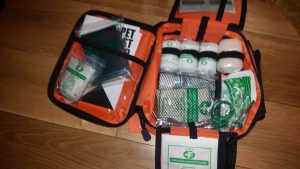
I keep this simple and practical. – full detail son dog first aid kits can be read in my first aid kit guide
My essentials:
• saline solution
• gauze and bandage wrap
• tick remover
• antiseptic wipes
• spare lead
• towel
[Amazon affiliate link – compact dog first aid kit]
At home, you can keep a more complete kit, but for walks, it needs to be light and easy to use.
Useful extras for safer walks
Some gear makes a real difference day to day:
• a long line for controlled freedom
Waterproof and easy to clean long line from amazon
• a well-fitted harness such as the one from Perfect Fit
• enrichment items to reduce scavenging
Treat pouch with a poo bag dispenser and a belt
If a dog is mentally engaged, they’re far less likely to pick up something dangerous.
When to call the vet
If you’re unsure, call.
You are not expected to diagnose anything.
For trusted advice, the PDSA has clear guidance:
https://www.pdsa.org.uk/pet-help-and-advice
A quick word on confidence
First aid is as much about your mindset as your knowledge.
Dogs pick up on how you respond. If you stay steady, they settle faster.
You don’t need to know everything. You just need to handle the moment in front of you.
FAQ
What should I keep in a dog’s first aid kit?
Basic items like bandages, saline, antiseptic wipes, and a tick remover are enough for most situations.
How do I know if my dog’s limp is serious?
If your dog won’t put weight on the leg, shows pain, or it lasts more than a day, it needs to be checked.
Can I treat my dog at home instead of going to the vet?
You can manage minor issues, but anything that worsens or is unclear should be seen by a vet.
How quickly does heatstroke happen?
Faster than most people think. It can develop within minutes on warm days.
Should I remove ticks myself?
Yes, using a proper tool. It’s best done quickly and cleanly.
Updated March 2026
This guide has been reviewed and updated to reflect current UK veterinary guidance and real-world walking experience in North London.
If you found this guide helpful, you can support the site via Buy me a coffee
If you’d like to see how I work or need support with your dog, you can explore my services or read more guides on the site.
I am part of a Blog Circle, and you find out what Flawless Paws VA has to say about why first aid is not optional for pet business owners