
Updated: June 2026
Bringing a puppy home is exciting. It’s also a little overwhelming.
One minute you’re buying beds, bowls and toys. Next, you’re wondering whether your puppy is sleeping too much, biting too hard or getting enough exercise.
Most new owners ask the same questions.
Am I doing this right?
Should my puppy be walking further?
Why do they seem full of energy one minute and asleep the next?
When can they go outside?
How do I stop them chewing everything?
The good news is that most of these worries are completely normal.
During the first year your puppy changes almost every week. They learn about the world, build confidence and develop habits that can last a lifetime. There isn’t one perfect routine that suits every puppy. What matters is giving them time, patience and experiences that help them grow into confident adult dogs.
What they dont need
Over the years I’ve met plenty of young dogs on solo walks, enrichment visits and through house sitting. One thing I’ve learnt is that puppies don’t need everything at once.
They don’t need endless exercise.
They don’t need constant entertainment.
They don’t need to meet every dog they see.
Instead they need calm guidance, sensible routines and plenty of opportunities to explore the world at their own pace.
This guide brings together everything I think new owners should know during the first year.
Whether you’re collecting your puppy next week or you’ve already had them for a few months, I’ll explain what has worked for me, what I often see owners worry about, and how you can make life easier for both you and your puppy.
This guide also links to more detailed articles throughout the site if you’d like to explore individual topics in greater depth.

This page may contain affiliate links, including Amazon links. As an Amazon Associate, I earn from qualifying purchases. If you choose to buy through these links, I may earn a small commission at no extra cost to you. It helps support Finchley Dog Walker and allows me to continue creating free dog care guides.
Before You Bring Your Puppy Home
Preparation makes the first few days much easier.
Your puppy has already experienced a huge change. They’ve left their mother, littermates and familiar surroundings.
The quieter and more predictable you can make those first few days, the better.
Before collecting your puppy, I recommend having:
- a comfortable bed
- food recommended by the breeder or rescue
- stainless steel food and water bowls
- puppy-safe toys
- a crate if you intend to use one
- baby gates where needed
- poo bags
- cleaning products suitable for pet accidents
- a well-fitting harness
- a lightweight lead
- an ID tag
- Puppy kong for enrichment
Try not to buy dozens of toys immediately.
Most puppies are happier with a few simple toys that you rotate regularly than a huge pile left out all the time.
Puppy-Proof Your Home
Puppies investigate everything.
Usually with their mouths.
Spend half an hour looking around your home from your puppy’s point of view.
Could they reach:
- electrical cables
- houseplants
- children’s toys
- shoes
- medicines
- cleaning products
- bins
- chocolate
- raisins
- cooked bones
Small changes now, puppy proofing your home can prevent accidents later.
You can read the RSPCA advice on puppy-proofing the home.
The Journey Home
The journey home is often your puppy’s first experience away from everything they’ve ever known.
Keep it calm.
Avoid stopping to introduce them to family and friends.
Avoid busy parks.
Avoid shopping centres.
Instead:
- speak softly
- allow them to rest
- offer water if needed
- keep the journey as quiet as possible
Remember that everything is new.
Your Puppy’s First Day
Many people imagine spending the first day playing constantly.
In reality, most puppies become overwhelmed quite quickly.
Your job isn’t to entertain them.
Your job is to help them feel safe.
Keep visitors to a minimum.
Let your puppy explore one room at a time.
Give them plenty of opportunities to rest.
Don’t worry if they seem unsure.
Confidence grows over time.
One thing I often notice is that owners accidentally overstimulate puppies because they’re excited.
The puppy has already had one of the biggest days of its life.
Sometimes the best thing you can do is simply sit quietly together.
The First Night
Almost every new owner worries about the first night.
Some puppies settle immediately.
Others cry.
Some wake every couple of hours.
This is completely understandable.
Remember where they slept only twenty-four hours earlier.
Surrounded by littermates.
Surrounded by familiar smells.
Completely different from your home.
I usually suggest keeping the evening calm.
Feed at the normal time.
Allow time for a toilet break.
Avoid exciting games just before bedtime.
Many puppies settle better if they have something carrying the scent of their breeder or littermates.
A soft blanket can make a surprising difference.
If your puppy cries, respond calmly.
You don’t need to panic.
Equally, don’t expect them to cope completely alone immediately.
Those first few nights are about helping them feel secure.
Feeding Your Puppy
Food is much more than nutrition.
Every meal is an opportunity to teach your puppy something.
Rather than simply filling a bowl every time, think about adding gentle enrichment.
Simple ideas include:
- scatter feeding in the garden
- using a snuffle mat
- feeding from a Kong
- hiding part of their meal in one room
- simple food puzzles
Ditching the bowl and trying these activities encourage sniffing, problem-solving and confidence.
They also slow fast eaters down.
I don’t recommend changing your puppy’s food immediately unless your vet advises otherwise.
If you want to change foods, do it gradually over several days. A lot of poeple now prefer to home cook but remember many foods are toxic for dogs
Always provide fresh water.
Building a Healthy Feeding Routine
Most young puppies eat three or four meals each day.
As they grow, this gradually reduces.
Consistency helps.
Feed at similar times each day.
Take your puppy outside after eating.
Reward calm behaviour around food.
Avoid feeding immediately before energetic play.
If you’re using treats for training, remember they count towards your puppy’s daily food allowance.
Many owners accidentally overfeed because training treats soon add and they can easiy become overweight
Using part of your puppy’s normal kibble during training can work just as well.
Sleep Is Just
As Important As Exercise
One of the biggest surprises for new owners is just how much puppies sleep.
Many sleep between sixteen and twenty hours every day.
That isn’t laziness.
It’s a healthy development.
Growing bodies and developing brains need enormous amounts of rest.
A tired puppy often looks like an overexcited puppy.
Biting increases.
Zoomies begin.
Listening disappears.
Rather than adding another walk, your puppy may simply need a quiet nap.
Give them somewhere peaceful where they won’t be disturbed.
Avoid waking sleeping puppies unless absolutely necessary.
Good sleep helps learning, confidence and behaviour.
Building a Daily Routine
Puppies thrive on routine.
That doesn’t mean every minute needs planning.
It means life becomes predictable.
A simple day might include:
- toilet break
- breakfast
- rest
- short training session
- quiet play
- nap
- lunch
- enrichment activity
- toilet break
- more sleep
Notice how much of the day involves resting.
That’s exactly how it should be.
Trying to keep a puppy busy all day usually creates an overtired puppy rather than a happy one.
Many behaviour problems I see begin because owners think more activity automatically means a calmer dog.
Often the opposite is true.
Read more abut dog enrichment here
Exercise, Enrichment and Your Puppy’s Development
How Much Exercise Does a Puppy Need?
This is probably the question I’m asked most by new puppy owners.
The answer isn’t as straightforward as giving a number of minutes.
Every puppy is different.
Breed, age, confidence, health, weather and personality all play a part.
Many people still follow the old “five minutes per month of age” rule. For example, a four-month-old puppy would have around 20 minutes of structured walking.
While this can be a useful guide, it isn’t a strict rule and doesn’t suit every puppy. Some breeds are ready for more gentle activity, while others need less. What matters more is watching your puppy rather than watching the clock.
Ask yourself:
- Are they still moving happily?
- Are they slowing down?
- Are they choosing to stop and sniff?
- Are they becoming overexcited?
- Are they struggling to settle afterwards?
Your puppy will often tell you when they’ve had enough.
Growing joints, bones and muscles are still developing. Too much repetitive exercise can put unnecessary strain on them.
It’s better to enjoy several short adventures than one long walk.
Read the The Kennel Club guidance on exercising puppies for more info.
Exercise Isn’t Just Walking
One of the biggest myths I hear is:
“My puppy needs another walk to tire them out.”
Sometimes that’s true.
Often it isn’t.
Physical exercise is only one part of a puppy’s day.
Mental exercise can be just as tiring.
Sniffing.
Learning.
Problem solving.
Exploring different surfaces.
Meeting new sights and sounds.
All of these help a puppy use their brain as well as their body.
A puppy that has spent ten minutes exploring a new environment calmly will often settle better than one that’s been marched around the block for an hour.
That’s why I don’t judge a walk by distance. I judge it by quality.
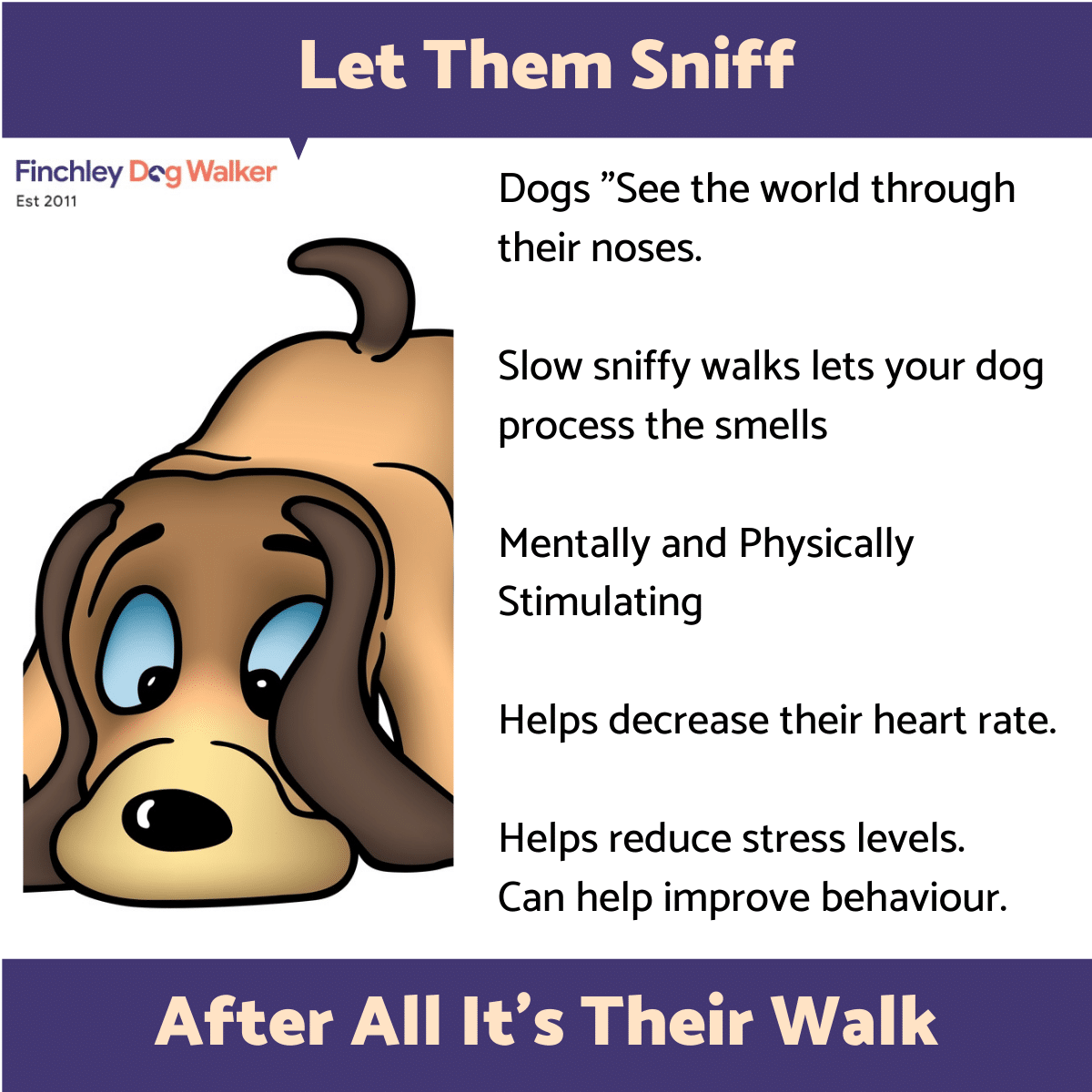
Why Sniffing Is More Important Than Walking Further
When people think about dog walking, they often think about covering miles.
Puppies don’t.
Their world is all about gathering information.
Every scent tells them something.
Who has been here?
Was another dog here this morning?
What animal crossed this path overnight?
That information is fascinating to a puppy.
When I walk dogs around Coldfall Woods or Cherry Tree Wood, some puppies are happy to spend several minutes investigating one patch of ground.
That’s not wasted time.
That’s learning.
Sniffing naturally slows the heart rate for many dogs and encourages calmer behaviour.
Rather than encouraging your puppy to hurry along, give them opportunities to investigate safely.
Those few minutes often provide far more enrichment than simply walking another street.
My Sniff and Decompress Walks are very popular with puppies, new dogs and rescies
Mental Stimulation Matters Just As Much
Young puppies become mentally tired very quickly.
That’s why enrichment can be so valuable.
Simple activities include:
- Scatter feeding.
- Snuffle mats.
- Stuffed Kong toys.
- Cardboard boxes with treats hidden inside.
- Easy scent games.
- Food puzzles suitable for puppies.
- Basic clicker training.
- Learning new cues.
These activities help develop confidence and problem-solving skills without putting pressure on growing joints.
find out about my recommended products
Don’t Overdo It
One mistake I often see is trying to create the “perfect puppy.”
Owners book training classes, puppy parties, walks, family visits and play sessions all within a few days.
The puppy rarely gets enough rest.
Instead of building confidence, they become overtired.
Signs your puppy may have had too much include:
- biting more than usual
- zooming around the house
- struggling to settle
- ignoring cues they normally know
- becoming mouthy
- barking more than usual
Sometimes the answer isn’t another activity.
It’s a nap.
Socialisation Isn’t Meeting Every Dog
Good socialisation isn’t about quantity.
It’s about quality.
A confident puppy doesn’t need to greet every dog they see.
In fact, they shouldn’t.
Instead, focus on helping your puppy experience the world calmly.
This could include:
- watching traffic from a distance
- hearing children playing
- seeing cyclists
- meeting friendly adults
- walking on different surfaces
- hearing buses
- visiting new places
Confidence grows through positive experiences, not overwhelming ones.
Some of the calmest adult dogs I’ve worked with didn’t meet hundreds of dogs as puppies.
They simply had good experiences with the world around them.
Vaccinations and Going Outside
Many owners ask me:
“When can my puppy go for a walk?”
Your own vet should always advise you based on your puppy’s vaccination schedule and local disease risk.
While you’re waiting, your puppy can still experience the world safely.
Ideas include:
- carrying them around your neighbourhood
- sitting outside a café
- short car journeys
- watching people from a bench
- listening to traffic
- meeting healthy vaccinated dogs if your vet agrees
These experiences help build confidence without unnecessary risk.
Once your vet confirms it’s safe, begin with short, positive walks.
Remember, puppies don’t need miles.
They need experiences.
Choosing the Right Walking Equipment
I like to keep things simple.
For most puppies I recommend:
- a comfortable Y-shaped harness
- a lightweight lead
- an ID tag
- treats for rewarding calm behaviour
- poo bags
- fresh water during warmer weather
I avoid equipment that causes discomfort or relies on punishment.
A puppy learns best when they feel safe and confident.
AFFILIATE LINK: Puppy Harness
AFFILIATE LINK: Double-ended Training Lead
AFFILIATE LINK: Silicone Treat Pouch
Loose Lead Walking Starts From Day One
Many owners wait until their puppy starts pulling before thinking about lead training.
I prefer to start much earlier.
At first, simply reward your puppy for choosing to stay close.
Stop often.
Allow sniffing.
Keep sessions short.
Don’t expect perfection.
Loose lead walking isn’t taught in one afternoon.
It’s built over hundreds of calm, positive experiences.
If your puppy gets distracted, that’s normal.
Everything is new.
Your job isn’t to stop them exploring.
It’s to guide them gently.
When Might Puppy Visits Help?
Life doesn’t always fit around a young puppy.
If you’re returning to work or need help during the day, puppy visits can keep routines consistent.
During a visit I can provide:
- toilet breaks
- gentle play
- enrichment activities
- feeding if needed
- calm interaction
- short training practice
- photo updates
Keeping routines steady often helps puppies settle much more easily than spending long periods alone.
Quick Checklist
Ask yourself:
✓ Is my puppy getting enough sleep?
✓ Am I focusing on quality rather than distance?
✓ Am I allowing plenty of sniffing?
✓ Does my puppy have daily enrichment?
✓ Am I keeping training short and positive?
✓ Have I avoided overwhelming them with too much in one day?
If you’ve answered yes to most of these, you’re already giving your puppy a great start.
Toilet Training Your Puppy
Toilet training is rarely a straight line.
Some puppies seem to understand within a few days. Others take weeks or even months. That’s perfectly normal.
Rather than thinking about accidents as your puppy being naughty, think about why they happened.
Ask yourself:
- Did I leave it too long?
- Was my puppy asleep just before?
- Had they just eaten or been playing?
- Did I miss the signs?
Young puppies usually need the toilet:
- after waking up
- after eating
- after drinking
- after playing
- before settling down to sleep
The more opportunities you give your puppy to succeed, the faster they’ll learn.
When they get it right, reward them calmly with praise or a small treat.
If they have an accident indoors, simply clean it up thoroughly and move on.
Punishing accidents often makes toilet training take longer because puppies can become worried about toileting in front of you.
Common Mistakes New Puppy Owners Make
Nobody gets everything right.
I’ve made mistakes with dogs over the years, and most owners do too.
The important thing is recognising them early.
Walking Too Far
Long walks don’t create calm puppies.
They often create tired, overstimulated puppies.
Quality matters far more than distance.
Read my puppy’s first walk guide
Expecting Too Much Too Soon
Puppies are babies.
They forget things.
They get distracted.
They make mistakes.
Keep your expectations realistic.
Not Allowing Enough Rest
One of the biggest causes of puppy “bad behaviour” is overtiredness.
Many puppies simply need more sleep.
Skipping Mental Enrichment
Exercise is important.
But enrichment often tires a puppy more effectively than another lap around the park.
Simple food games, sniffing and short training sessions all count.
INTERNAL LINK: Dog Enrichment Guide
Meeting Every Dog
Your puppy doesn’t need dozens of dog friends.
They need positive experiences.
Sometimes watching another dog calmly from a distance teaches more than an excited greeting.
Buying Too Much Equipment
It’s easy to fill the house with puppy gadgets.
Most puppies don’t need twenty toys.
Rotate a few good-quality toys instead.
This keeps them interesting.
Seasonal Puppy Care
Spring
Watch out for:
- bluebells
- pesticides
- grass seeds later in the season
Summer
Puppies overheat much more quickly than adult dogs.
Walk early.
Provide shade.
Carry water.
Keep training sessions short.
More info can be found by reading my Summer Dog Safety Hub
Autumn
Be aware of:
- mushrooms
- conkers
- acorns
- darker evenings
Winter
Young puppies lose body heat more quickly.
Keep walks shorter during icy weather.
Dry paws after muddy walks.
Watch for road salt.
Read my Winter Dog Walking Guide
When Extra Support Can Help
Every puppy develops differently.
Sometimes an extra helping hand makes life easier.
Depending on your circumstances, I offer:
Puppy Visits
Ideal if you’re returning to work or need someone to pop in during the day.
Visits can include:
- feeding
- toilet breaks
- enrichment activities
- gentle play
- basic routine reinforcement
- photo updates
Solo Puppy Walks
When your puppy is old enough and your vet confirms they’re ready, solo walks allow them to explore at their own pace without the pressure of keeping up with a group.
House Sitting
If you’re going away, house sitting allows your puppy to remain in familiar surroundings with their normal routine.
This often works particularly well for young or sensitive dogs.
Cat Sitting and Small Animal Care
Many households have more than one type of pet.
If you’re away, I can also care for cats and small animals, helping to keep everyone’s routine as consistent as possible.
Frequently Asked Questions
How much exercise does an eight-week-old puppy need?
Very little structured exercise.
At this age, play, exploring safely and short periods of movement are usually enough. Your puppy should spend much of the day sleeping and learning about the world.
Can puppies have too much exercise?
Yes.
Too much repetitive exercise can place unnecessary strain on growing joints and muscles.
Watch your puppy rather than the clock.
If they’re becoming overtired, shorten the activity and allow more rest.
Does sniffing count as exercise?
Absolutely.
Sniffing provides valuable mental stimulation and helps many puppies feel calmer afterwards.
I often value a slow, sniff-filled walk over a longer walk where the puppy barely has time to investigate anything.
Should I walk my puppy every day?
Once your vet advises it’s safe, short daily walks are beneficial.
Remember that walks are only one part of your puppy’s development.
Rest, enrichment and training all matter too.
How long should training sessions be?
Keep them short.
Two to five minutes is often enough for young puppies.
Finish while they’re still enjoying themselves.
What if my puppy seems frightened?
Don’t force them towards whatever is worrying them.
Give them space.
Allow them to observe calmly.
If you’re concerned about persistent fear or anxiety, speak to your vet or a qualified reward-based behaviour professional.
Related Guides
You might also find these helpful:
- Dog Enrichment Guide
- Ditch the Bowl at Mealtimes
- Sniff and Decompress Walks
- Solo Dog Walks
- Puppy Visits
- Rescue Dog Support
- House Sitting
- Dog and Cat guides
If you’re looking for puppy visits, one-to-one walks, enrichment visits, house sitting or care for your other pets, have a look through my services or explore some of the related guides above.
My aim is always to support both you and your puppy in a calm, practical way.
About the Author
About Del
I’m Del, owner of Finchley Dog Walker.
Since 2011 I’ve helped dogs across Finchley and the surrounding areas through calm one-to-one walks, puppy visits, enrichment, rescue dog support, house sitting and cat sitting.
I enjoy helping owners build confidence, routines and positive habits using patient, reward-based methods that fit everyday life.
Disclaimer
This guide is intended for general information only and should not replace advice from your vet.
Every puppy develops differently. If you’re worried about your puppy’s health, behaviour or development, always seek advice from your veterinary practice or a suitably qualified, reward-based behaviour professional. Nothing in this guide should be interpreted as diagnosing or treating a medical or behavioural condition under the UK Veterinary Surgeons Act.
