
Feeding Ideas for Happier Mealtimes
Estimated reading time: 12 minutes
Updated May 2026
Most dogs enjoy their food.
Some enjoy it so much that it disappears in seconds.
For years, I fed dogs from a normal bowl because it was easy and familiar. Then I started paying closer attention to how dogs behaved on walks. They sniffed. They searched. They worked things out. They used their noses far more than we often give them credit for.
That made me look at mealtimes differently.
Feeding your dog does not have to mean putting food in a bowl and walking away. With a few simple changes, mealtimes can become a chance for sniffing, problem-solving and calm mental activity.
This is often called enrichment feeding.
It does not mean bowls are bad. It does not mean every meal has to become a complicated activity. It simply means using some of your dog’s daily food in a way that gives them something useful to do.
In this guide, I’ll share simple dog enrichment feeding ideas you can try at home, including scatter feeding, snuffle mats, lick mats, puzzle feeders and easy homemade options.
As an Amazon Associate, I earn from qualifying purchases.
This article is for general information only and does not replace veterinary advice. If you are worried about your dog’s health, behaviour or safety, contact your vet.
This article offers general guidance only. If your dog is showing serious fear, aggression, anxiety or sudden behaviour changes, speak to a qualified reward-based behaviour professional or your vet.
What is enrichment feeding?
Enrichment feeding means giving your dog some of their food in a way that encourages natural behaviour.
That might mean:
scattering dry food on the grass
hiding food in a snuffle mat
stuffing food into a Kong
using a lick mat
putting food in a puzzle feeder
hiding small piles of food around a room
rolling food inside a towel
Your dog then has to sniff, search, lick, nudge, move or think to get the food.
This can make mealtimes last longer and give your dog more mental engagement. Dogs Trust includes lick mats, puzzle feeders, and filled rubber toys as examples of food-based enrichment. Blue Cross also notes that puzzle feeders can keep a dog’s mind busy while encouraging them to use their senses.
Why ditching the bowl can help
A bowl is quick. That can be helpful when you are short on time.
But for many dogs, a bowl meal is over almost as soon as it starts.
Some dogs then wander off looking for something else to do. Some bark. Some chew. Some pester. Some struggle to settle.
That does not always mean the dog is being difficult. It can simply mean they still have energy in their brain.
Enrichment feeding can help by giving your dog a job.
They get to use their nose.
They have to slow down.
They have to search.
They get a little problem to solve.
They may feel more satisfied afterwards.
I often think of it as making food work a bit more like a walk. Not in the physical exercise sense, but in the way dogs get to sniff, investigate, and take in information.
That is one reason enrichment-led walks suit many dogs, especially those who do not cope well with busy group walks or being bundled into vans.
When a bowl may still be the right choice
I do not like making people feel guilty for using a dog bowl.
There are times when a bowl is absolutely fine.
A bowl may be best if your dog is unwell, exhausted, elderly, recovering from surgery or struggling with pain. It may also suit dogs who become frustrated by puzzles or dogs who need very careful food monitoring.
Some dogs like enrichment feeding. Some tolerate it. Some find certain types annoying.
The aim is not to make food harder.
The aim is to make mealtimes more useful, enjoyable and safe.
If your dog looks worried, gives up, guards the toy, chews the feeder aggressively or becomes frantic, make the activity easier or go back to a bowl for that meal.
Easy enrichment feeding ideas
You do not need a cupboard full of dog toys to start.
In fact, some of the best feeding enrichment is very simple.
Scatter feeding
Scatter feeding is often the easiest place to begin.
Take part of your dog’s normal dry food and scatter it across:
a clean floor
a towel
a blanket
the garden
safe short grass
a quiet room
Let your dog sniff out the pieces.
Start with a small area so your dog succeeds. Once they understand the game, you can spread the food a little wider.
Scatter feeding is especially useful for dogs who enjoy sniffing but get overwhelmed by complicated puzzle toys.
Snuffle mats
A snuffle mat is made with fabric strips or folds that you can hide dry food in.
Your dog has to push their nose through the fabric to find the pieces.
This can be a good option for rainy days, puppies, older dogs and dogs who benefit from slower, quieter activities.
Dogs Trust has a simple guide to making a snuffle mat, which is useful if you want a low-cost option.
AFFILIATE LINK: Amazon UK – snuffle mat for dogs
Lick mats
Lick mats are usually made from silicone or rubber with a textured surface.
You can spread soft food on them, such as part of your dog’s wet food, soaked kibble, dog-safe yoghurt or suitable mashed food.
Licking can be calming for some dogs, although it is not a magic fix for anxiety.
Use a lick mat for a quieter activity. It can work well after a walk, during grooming practice or when you want to help your dog settle.
Always use dog-safe food and avoid anything containing xylitol, which may also be labelled as birch sugar.
Recommended lick mat from Amazon
Kongs and stuffable toys
Stuffable rubber toys can make meals last longer.
Start easy. Put loose food inside so your dog can get it out with minimal effort. As your dog learns, you can make it slightly harder with soaked food or layers.
Some people freeze stuffed toys. This can work well for some dogs, but it is not suitable for every dog. A dog who gets frustrated may chew the toy too hard or give up.
Keep it simple at first.
Take a moment to read my Complete Guide to Kongs
Puzzle feeders
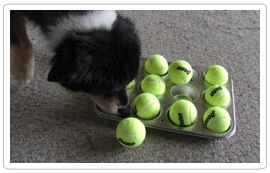
Puzzle feeders ask your dog to move pieces, slide covers or nudge parts to get the food.
They can be useful, but choose carefully.
A confident dog may enjoy a puzzle. A nervous dog may prefer scatter feeding or a snuffle mat. A flat-faced dog may struggle with some feeder shapes. A strong chewer may need tougher products and closer supervision.
Blue Cross advises supervising dogs while they use puzzle feeders. That is sensible advice.
Amazon UK –dog puzzle feeder
Towel roll feeding
This is a simple homemade option.
Put some dry food on a towel. Roll the towel loosely. Let your dog unroll it to find the food.
For beginners, keep it loose and easy. Do not tie the towel in knots unless you know your dog will not chew and swallow fabric.
This is a supervised activity, not something to leave unattended.
Find it games
Hide a few pieces of food around the room and say, “Find it.”
Start very easily. Let your dog see where some pieces go. Then make it a little harder.
This can be lovely for dogs who enjoy using their nose, and it is a good way to add calm engagement indoors.
You can also use this outside in a secure garden.
Feeding enrichment for puppies
Puppies are learning all the time.
Enrichment feeding can help them build confidence, but it must be easy and age-appropriate.
Good puppy options include:
a small scatter feed on a towel
a simple snuffle mat
a loosely rolled towel
a very easy puppy-safe food toy
short find it games
Keep sessions short. Puppies can get tired quickly.
Do not use difficult puzzles that frustrate them. The aim is to help them succeed.
Feeding enrichment for nervous or rescue dogs
For nervous dogs, I usually start with the easiest option.
That may be a few pieces of food scattered on a towel or floor. No pressure. No complicated toy. No hovering over them.
Some rescue dogs have not had many chances to play or problem-solve. Others may worry about new objects, noises or surfaces.
Go slowly.
Let your dog choose whether to take part. Keep the activity predictable. Use familiar food. Watch their body language.
Signs the activity may be too hard include:
backing away
lip licking
freezing
pacing
frantic grabbing
guarding the food or toy
chewing the item instead of working it out
For many sensitive dogs, sniffing and searching can be more useful than fast, exciting games.
That same thinking sits behind calm, one-to-one walks. Some dogs need space, choice and time to process their surroundings.
Feeding enrichment for fast eaters
Some dogs inhale their food.
A slow feeder, snuffle mat, scatter feed or puzzle feeder may help slow things down. Guide Dogs notes that interactive feeders and toys can help dogs who eat too quickly.
But fast eating can also have health risks for some dogs, especially if they gulp, retch, vomit, cough or seem uncomfortable after meals.
Speak to your vet if your dog suddenly starts eating unusually fast, seems bloated, struggles after meals or has any worrying symptoms.
Amazon Affiliate link slow feeder bowl
Safety tips for enrichment feeding
Keep enrichment feeding safe and simple.
Supervise new activities.
Choose toys that suit your dog’s size and chewing style.
Use part of your dog’s normal meal allowance.
Clean food toys properly after use.
Avoid tiny parts that could be swallowed.
Remove damaged toys.
Do not use unsafe foods.
Do not make puzzles so hard that your dog becomes frustrated.
Avoid scatter feeding in areas treated with chemicals.
Do not leave fabric toys with dogs who chew and swallow material.
Guide Dogs advises choosing safe activities, using part of the dog’s daily meal allowance and supervising to prevent accidents or choking..
Common mistakes with enrichment feeding
Making it too difficult
A puzzle that is too hard is not enriching. It is frustrating.
Start easy. Let your dog win.
Using too many extra treats
Use part of your dog’s normal food where possible. This helps avoid accidental overfeeding.
Leaving dogs unsupervised with new toys
Even good toys can become unsafe if a dog chews them apart.
Watch your dog until you know how they use the item.
Expecting enrichment to fix everything
Enrichment can support calm behaviour, but it will not solve pain, fear, separation distress or serious behaviour problems on its own.
Using the same activity every day
Dogs can get bored. Rotate two or three simple options.
One day might be scatter feeding. Another might be a lick mat. Another might be a stuffed toy.
A simple weekly enrichment feeding plan
You do not need to ditch the bowl every day.
Try this:
Monday: scatter feed breakfast on a towel
Tuesday: Use a snuffle mat for part of dinner
Wednesday: bowl meal, but hide a few pieces for “find it”
Thursday: use a lick mat with part of the meal
Friday: loosely rolled towel feed
Saturday: simple puzzle feeder
Sunday: normal bowl meal if your dog needs an easy day
You can adjust this to suit your dog.
A senior dog, a puppy, a nervous dog, or a dog recovering from illness may need less. A young, active dog may enjoy it more.
Useful feeding tools
Some dogs do well with homemade activities. Others benefit from purpose-made feeding tools.
Useful options include:
snuffle mats
lick mats
Kongs and similar stuffable toys
beginner puzzle feeders
slow feeder bowls
treat balls
silicone mats
washable enrichment trays
Choose items that are easy to clean, suitable for your dog’s size, and not too difficult to handle.
I have a list of Recommended products
How this links with calmer walks
Food enrichment and calm walks work well together.
A dog who has chances to sniff, search and think at home may find it easier to settle into a steady routine. That does not mean every dog becomes calm overnight. It simply gives them more appropriate outlets.
On my walks around Finchley, North Finchley, East Finchley, Finchley Central and Muswell Hill, I see how much dogs benefit from time to sniff and process their environment.
That is why I focus on calm one-to-one walks from the dog’s own front door. No vans or cars. No group walks. No rushing from one dog to the next.
For some dogs, especially rescue, nervous or reactive dogs, that slower approach matters.
Quick checklist before you start
Use part of your dog’s normal food.
Start with an easy activity.
Stay nearby and supervise.
Choose safe, washable items.
Make it easier if your dog gets frustrated.
Speak to your vet if you have concerns about eating, digestion, pain or sudden behaviour changes.
Speak to a qualified reward-based behaviour professional if your dog guards food or becomes distressed.
Related guides
- Dog and Cat Care Guides Hub
- Dog Enrichment Guide
- Sniff and Decompress Walks
- Walking Kit for Nervous or Reactive Dogs
Need calm, enrichment-led dog walks in Finchley?
If your dog benefits from sniffing and routine, gentle handling, I offer calm one-to-one dog walks in Finchley and nearby North London areas.
I do not use vans, cars or group walks. Walks start from your dog’s own front door and are built around what your dog can cope with on the day.
This can suit dogs who are older, sensitive, nervous, recently rescued or easily overwhelmed.
Find out more about my services
FAQs
Is enrichment feeding good for dogs?
For many dogs, yes. Enrichment feeding can give dogs a chance to sniff, search, lick, chew and problem-solve. It can make mealtimes more interesting and may help some dogs settle better afterwards.

Should I stop using my dog’s bowl completely?
No. You do not have to stop using a bowl. Some dogs do well with a mixture of bowl meals and enrichment feeding. Some dogs may need a bowl because of age, illness, pain or frustration with food toys.
What is the easiest enrichment feeding idea?
Scatter feeding is usually the easiest. Put some of your dog’s dry food on a clean floor, towel, blanket or safe patch of grass and let them sniff it out.
Are snuffle mats safe for dogs?
Snuffle mats can be safe when used properly and supervised. They may not suit dogs who chew and swallow fabric. Remove the mat after use and check it regularly for damage.
Can enrichment feeding help a nervous dog?
It can help some nervous dogs, especially when the activity is easy and low-pressure. Start with gentle sniffing games and avoid anything noisy, frustrating or too difficult.
Can enrichment feeding help my dog eat more slowly?
It may help slow your dog down. Snuffle mats, slow feeders, scatter feeding and puzzle feeders can all make eating take longer. Speak to your vet if your dog gulps food, vomits, retches, bloats or seems uncomfortable after meals.
Below are some other guides you may be interested in
