
Updated July 2026
Last legally reviewed: July 2026
Sharing your life with a dog brings responsibilities as well as enjoyment.
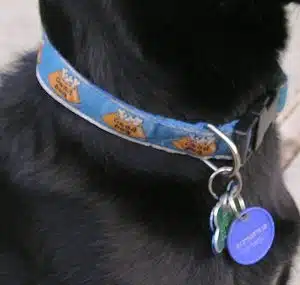
Most dog owners understand that they need to provide suitable food, exercise, veterinary care and a safe home. However, several legal responsibilities are less obvious.
You may need to know:
- when your dog must be microchipped
- what information belongs on their identification tag
- where local lead rules apply
- what “dangerously out of control” means
- which dog types are prohibited
- how the XL Bully rules operate
- what happens when a dog worries livestock
- when a road collision involving a dog must be reported
- whether a landlord can refuse a request to keep a pet
- who is legally responsible when someone else walks your dog
This guide concentrates mainly on the law in England and Wales because Finchley Dog Walker is based in North London. Some rules differ in Scotland and Northern Ireland.
The law changes over time, and local councils can introduce additional restrictions. Always check current government, council and professional legal guidance when a specific incident or decision affects you.
For practical everyday walking advice, read Dog Walking Safety Tips Every Owner Should Know.
Quick legal checklist for dog owners
Check that:
- your dog is microchipped and registered on an approved database
- your current address and telephone number are recorded
- your dog wears a collar and legally compliant identification tag in public
- gates and boundaries prevent escape
- your dog remains under suitable control
- you follow local signs and Public Spaces Protection Orders
- you carry enough waste bags
- your dog does not approach people, dogs, livestock or wildlife without control
- anyone walking your dog is capable of managing them safely
- you understand any restrictions applying to your dog
- your landlord’s permission is recorded where required
- veterinary and emergency contact details are current
Responsible ownership involves more than responding after something goes wrong.
It means reducing foreseeable risks before they become an incident.
1. Your dog must be microchipped
All dogs in the UK must normally be microchipped and registered on an approved database by the time they are eight weeks old.
The microchip number must be linked to the current keeper’s details.
You are responsible for updating the database when:
- you move
- your telephone number changes
- ownership changes
- another important contact detail changes
A dog that has a chip but is not correctly registered may still be difficult to reunite with its owner.
GOV.UK states that owners can be fined up to £500 when a dog that should be microchipped is not correctly microchipped and registered.
Read the current GOV.UK microchipping guidance.
Check the database, not only the chip
A vet, rescue centre or dog warden can scan the dog and provide the microchip number.
The number then needs to be checked against the database holding the registration.
Do not assume that:
- the breeder completed everything correctly
- your previous address was automatically updated
- changing veterinary practice updated the chip database
- your insurance company changed the record
- the database will find your new number elsewhere
Microchip databases are separate from veterinary and insurance records.
Keep a note of:
- the microchip number
- database name
- login information
- database contact details
Buying or adopting a dog
Before taking responsibility for a dog, ask for evidence of microchipping.
This may appear on:
- the microchip certificate
- veterinary records
- adoption documents
- a pet passport or travel document
- insurance records
Make sure the registration is transferred into your details.
Do not accept a seller’s assurance that the paperwork will be completed later without confirming the correct process.
2. A microchip does not replace an identification tag
Most dogs must wear a collar with the owner’s name and address when they are on a highway or in another public place.
This requirement comes from the Control of Dogs Order 1992.
The information may be:
- written on the collar
- engraved on a tag
- shown on another plate or badge attached to the collar
A telephone number is sensible and may help someone contact you quickly, although the legal requirement specifically refers to the owner’s name and address.
The dog’s own name is not legally required.
There are limited exceptions for particular working dogs while they are performing specified duties. (Legislation.gov.uk)
Read the Control of Dogs Order 1992.
What should appear on the tag?
A practical tag might contain:
D ChambersHouse number, street and postcodeTelephone number
Check that:
- the writing remains readable
- the ring has not opened
- the tag cannot become trapped easily
- the collar fits securely
- your address is current
A decorative tag that contains only the dog’s name does not meet the normal legal requirement.
For a fuller explanation, read Why Dogs Need Both a Microchip and Identification Tag.
3. The Animal Welfare Act applies throughout the dog’s life
The Animal Welfare Act 2006 requires people responsible for an animal to take reasonable steps to meet its welfare needs.
These include the need for:
- a suitable environment
- a suitable diet
- suitable companionship or separation
- opportunities to show normal behaviour
- protection from pain, suffering, injury and disease
Responsibility can be permanent or temporary.
This means that the person walking, sitting or temporarily caring for a dog may also have legal responsibilities while the animal is in their charge. (Legislation.gov.uk)
Read the Animal Welfare Act 2006.
What does this mean in everyday life?
Meeting welfare needs includes more than providing food and water.
Depending on the individual dog, it may involve:
- enough suitable exercise
- opportunities to toilet
- protection from extreme weather
- veterinary attention
- appropriate rest
- secure housing
- suitable social contact
- protection from frightening or painful handling
- suitable equipment
- medication given as prescribed
There is no single routine that is correct for every dog.
A puppy, senior dog, rescue dog and dog recovering from surgery may all need very different care.
Leaving your dog with someone else
The owner should take reasonable steps to choose someone capable of providing appropriate care.
Before handing over your dog, explain:
- health conditions
- medication
- behaviour around people and dogs
- escape risks
- walking equipment
- recall
- feeding
- veterinary arrangements
- emergency contacts
- handling concerns
Do not hide a bite history, reactivity or inability to cope alone.
Accurate information helps the person in charge protect your dog and other people.
Read How to Choose a Dog Walker and What Dog-Walker Accreditation Really Means.
4. Dogs must not be dangerously out of control
The Dangerous Dogs Act applies to dogs of every breed, size and type.
In England and Wales, it is against the law for a dog to be dangerously out of control in:
- a public place
- another person’s home or garden
- the owner’s home
- most other private places
A dog may be considered dangerously out of control when it:
- injures someone
- causes someone reasonably to fear that it may injure them
A court may also consider attacks on other animals and whether a person feared injury while attempting to protect their animal.
Read the official GOV.UK guidance on controlling dogs.
A bite does not have to occur
Owners sometimes assume the law applies only after a bite.
That is not correct.
A dog may create a serious legal problem by:
- chasing someone
- cornering a visitor
- rushing repeatedly at a person
- jumping in a way that causes genuine fear of injury
- escaping and threatening people
- preventing a worker from safely entering or leaving
- attacking another animal while someone tries to intervene
The person in charge needs to act before the dog reaches that point.
Visitors, tradespeople and delivery workers
Plan how you will manage your dog when:
- someone repairs an appliance
- a carer enters
- a parcel is delivered
- a child visits
- a cleaner works in the property
- a dog walker or sitter arrives
- someone enters the garden
Practical precautions may include:
- using a secure internal door
- placing the dog behind a stair gate
- keeping a lead ready
- asking visitors to call before entering
- providing a quiet room
- carrying out gradual introductions
- placing a postbox outside the dog’s accessible area
A warning sign does not remove your responsibility to manage the dog.
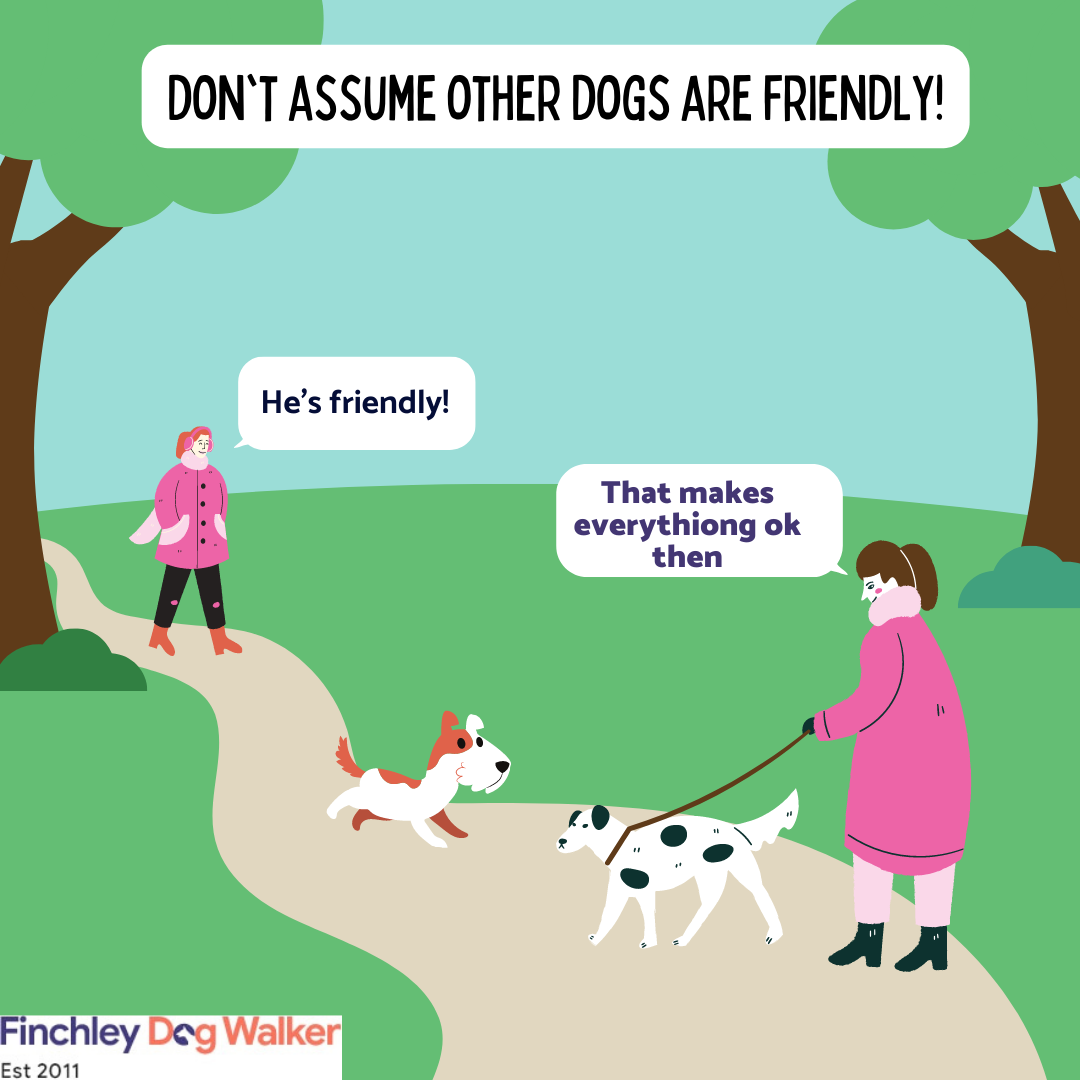
“My dog is friendly” is not enough
You may know that your dog intends to play.
The person or dog being approached does not know that.
Your dog should not be allowed to:
- run towards strangers
- jump on people
- enter another dog’s space
- follow a frightened person
- chase children
- ignore recall
- block a narrow path
Read “My Dog Is Friendly”: Responsible Dog Walking Etiquette.
5. Owners and people temporarily in charge may both be responsible
The Dangerous Dogs Act identifies both:
- the owner
- the person currently in charge
A dog walker, friend, family member or sitter cannot assume that all responsibility remains with the owner.
Likewise, an owner should not assume that handing the lead to another person automatically removes every responsibility.
The exact legal position depends on the circumstances. Section 3 of the Dangerous Dogs Act includes a defence for an owner who was not in charge when they reasonably believed that the person handling the dog was fit and proper to do so. (Legislation.gov.uk)
This reinforces the importance of choosing carers carefully.
6. Certain dog types are prohibited
The prohibited types in England and Wales are currently:
- Pit Bull Terrier
- Japanese Tosa
- Dogo Argentino
- Fila Brasileiro
- XL Bully
The law considers physical characteristics rather than simply the breed name recorded by a breeder, vet or microchip database.
It is against the law to:
- sell a prohibited dog
- give one away
- abandon one
- breed from one
- possess one without a valid legal exemption
A dog may be seized even when it has not behaved aggressively. (GOV.UK)
Read the current GOV.UK banned-dog guidance.
The XL Bully rules
An XL Bully dog in England and Wales may only be legally kept when it has a valid Certificate of Exemption and all continuing conditions are followed.
These normally include:
- neutering
- microchipping
- keeping the dog securely so it cannot escape
- using a lead and muzzle in public
- producing the exemption certificate when required
- notifying the Index of Exempted Dogs of specified changes
The rules concern type and physical appearance rather than a DNA result or the label used when the dog was sold.
Insurance requirements changed in July 2026
The old version of this article said owners of exempt prohibited dogs must maintain third-party liability insurance.
That requirement was removed from 1 July 2026 because the available insurance product was withdrawn.
Other exemption conditions remain in place. (GOV.UK)
Owners should rely on their current exemption documentation and GOV.UK guidance rather than older articles or social-media posts.
New child-supervision condition from November 2026
From 1 November 2026, owners of exempt prohibited dogs must not allow a child under 12 to remain in close contact with the dog in a private place without adult supervision.
The supervising person must be over 18.
This includes homes, gardens and other non-public settings covered by the exemption condition. (GOV.UK)
The wider safety principle remains sensible for every dog:
Young children should always be actively supervised around dogs, regardless of breed or legal status.
7. Follow Public Spaces Protection Orders
Local councils can introduce Public Spaces Protection Orders, usually shortened to PSPOs.
Depending on the area, a PSPO may require you to:
- keep your dog on a lead
- put the dog on a lead when instructed
- keep dogs out of particular places
- limit the number of dogs being walked
- remove dog faeces
- carry suitable bags
The old Dog Control Order system has largely been replaced by PSPOs.
Ignoring a dog-control PSPO can lead to a fixed penalty notice or a court fine of up to £1,000.
Read the current GOV.UK PSPO guidance.
Read the signs where you are walking
Rules may differ between:
- parks
- playgrounds
- sports areas
- cemeteries
- nature reserves
- farmland
- beaches
- public rights of way
- communal gardens
A dog being allowed off lead in one part of a park does not mean the same rule applies beside a playground, café or sports pitch.
Check signs each time you enter an unfamiliar area.
Current Barnet dog-control rules
Barnet’s borough-wide PSPO includes requirements concerning:
- removing dog faeces
- exercising no more than six dogs
- placing a dog on a lead when lawfully instructed
Barnet can issue a £100 fixed penalty notice for breaching the relevant PSPO, with higher court penalties possible
Read Barnet Council’s current PSPO information.
Although the current order permits up to six dogs in applicable circumstances, that number is not a recommendation or target.
The handler must still be capable of controlling every dog safely and comply with insurance and land-specific restrictions.
My own walks are one-to-one and do not involve group collection rounds.
Public rights of way
Barnet Council states that dogs may use public rights of way but should remain within the width of the route and under control.
Moving away from the route onto private land may amount to trespass.
A right of way gives you the right to pass along the path. It does not give your dog unrestricted access across the surrounding field, crops or private garden.
8. Pick up after your dog
Dog owners and people in charge should remove faeces immediately wherever a local PSPO or other applicable rule requires it.
Being unaware that the dog fouled or failing to carry a bag may not be accepted as a reasonable excuse under many orders.
Carry more than one bag.
This allows for:
- more than one bowel movement
- a torn bag
- helping another owner
- safely double-bagging when necessary
In Barnet, bagged dog waste can be placed in ordinary public litter bins as well as dedicated dog-waste bins.
What if you cannot find a bin?
Carry the bag until you find a suitable bin or return home.
Do not:
- leave it beside a full bin
- hang it from a tree
- place it behind a hedge
- leave it on the path for later
- throw it into private land
The bag does not stop being litter simply because the faeces have been picked up.
9. Dogs around livestock
Dogs should be kept under close control around:
- sheep
- cattle
- goats
- pigs
- horses
- poultry
- alpacas
- llamas
- other farmed animals
Chasing is not harmless play.
It can cause:
- panic
- injury
- pregnancy loss
- separation of young animals
- damage to fencing
- road incidents
- death
Use a lead before entering or approaching land containing livestock.
Do not wait for your dog to begin chasing.
Livestock law changed in March 2026
The Dogs (Protection of Livestock) (Amendment) Act 2025 came into force in England and Wales on 18 March 2026.
The changes include:
- an unlimited maximum fine
- wider police investigation powers
- protection for incidents on roads and paths
- camelids such as alpacas and llamas within the protected livestock definition
- clearer distinction between attacking and worrying livestock
The offence can involve a dog attacking, chasing or causing distress to livestock.
Read the government’s 2026 livestock-worrying update.
Can a farmer shoot a dog?
The old article said a farmer could shoot any dog seen near livestock.
That is too broad.
The Animals Act 1971 provides a limited civil defence where someone acts to protect livestock in specified circumstances. These include situations where a dog is worrying or about to worry livestock, no reasonable alternative is available and other legal conditions are satisfied.
The practical message for owners is simple:
Never allow your dog to chase, approach or enter a livestock field without reliable control.
Do not rely on legal arguments after an incident has occurred.
What should you do around cattle?
Keep your dog close and follow signs.
When cattle approach or chase you, government countryside advice generally recommends letting go of the lead so you can move to safety rather than remaining physically attached to the dog.
This is an emergency response, not permission to allow dogs to chase livestock.
Read Walking Your Dog in the Countryside before rural walks.
10. Road and pavement safety
The Highway Code says dogs should:
- not be allowed onto a road alone
- be kept on a short lead beside roads and on pavements
- be suitably controlled on paths shared with cyclists or horse riders
It also says animals in vehicles should be suitably restrained so they cannot distract the driver or injure themselves or other people during sudden stopping. (GOV.UK)
Read the official Highway Code rules about animals.
A lead does not remove every risk
Even on a lead, a dog may:
- step into the road
- wrap the lead around a person
- lunge towards a cyclist
- frighten a horse
- pull the handler over
- escape from poorly fitted equipment
Near roads, use equipment that:
- fits securely
- remains in good condition
- gives suitable control
- does not extend unpredictably into traffic
I do not use retractable leads during professional walks.
Dogs travelling in vehicles
Suitable restraint may include:
- a properly fitted seat-belt harness
- a suitable carrier
- a secure travel crate
- an appropriate dog guard
The best arrangement depends on the dog and vehicle.
A loose dog can distract the driver and may be seriously injured during sudden braking or a collision.
For broader journey preparation, read Travelling With a Dog.
11. Road collisions involving dogs
Section 170 of the Road Traffic Act 1988 includes dogs within the animals covered by the driver’s duty after a collision.
When a vehicle injures a dog on a road or other public place, the driver must stop.
When required by someone with reasonable grounds, the driver must provide:
- their name and address
- the vehicle owner’s name and address
- the vehicle’s identifying details
When those details are not provided at the scene, the accident must be reported to the police as soon as reasonably practicable and within 24 hours.
Read Section 170 of the Road Traffic Act.
What should you do when a dog is hit?
Your immediate priorities should be:
- Protect yourself from traffic.
- Call for emergency veterinary assistance.
- Avoid moving the dog unnecessarily.
- Remember that pain may cause defensive behaviour.
- record vehicle and witness details where safe.
- Contact the police where legally required or when a driver leaves.
- Contact the dog’s owner where known.
Do not risk another collision by standing in an active road.
Read my Dog First Aid Guide for general emergency preparation.
12. Persistent barking may become a legal nuisance
Occasional barking is a normal dog behaviour.
However, prolonged or repeated barking may be investigated as a statutory noise nuisance when it unreasonably and substantially interferes with another person’s use or enjoyment of their home or affects health.
Councils can investigate complaints and may serve an abatement notice requiring the noise to stop or be reduced. Failing to comply can lead to prosecution. (GOV.UK)
Read the official GOV.UK noise-nuisance guidance.
Do not simply punish the barking
Barking may be connected to:
- separation-related distress
- pain
- fear
- people passing the window
- boredom
- frustration
- noise sensitivity
- territorial behaviour
- age-related changes
Shouting or using an aversive device may increase distress without resolving the cause.
Use a camera to understand what happens when you are away, and contact your vet when the behaviour begins suddenly or appears connected to fear or illness.
Read Leaving Your Dog Home Alone.
13. Keeping a dog in rented accommodation
The Renters’ Rights Act 2025 changed the position for many private assured periodic tenancies in England from 1 May 2026.
A tenant covered by the rules may ask in writing for permission to keep a pet.
The request should describe the pet.
The landlord:
- must normally respond in writing within 28 days
- cannot refuse without a fair reason
- may request further relevant information
- should explain a refusal
A landlord may have a reasonable basis for refusal where, for example:
- the property is unsuitable
- another resident has a serious allergy
- a superior lease or freeholder restriction prevents pets
- the animal would be illegal to keep
Keeping a dog without required permission may still breach the tenancy.
Read the current GOV.UK guidance for tenants requesting a pet.
Get permission in writing
Keep copies of:
- your written request
- information supplied
- the landlord’s response
- any agreed conditions
- details of repairs or damage
Do not rely only on a conversation with a letting agent.
Different rules may apply to:
- social housing
- licences
- lodgers
- temporary accommodation
- leasehold properties
- tenancies outside England
Obtain housing or legal advice when your situation is unclear.
14. Your dog should not cause repeated damage or nuisance
Legal responsibility can extend beyond dog-specific legislation.
Problems may arise through:
- repeated uncontrolled barking
- damage to rented property
- allowing a dog to escape
- fouling
- threatening behaviour
- damage to livestock
- road incidents
- entering private land
Good management includes:
- secure fencing
- suitable supervision
- meeting the dog’s needs
- addressing behaviour before it escalates
- responding to neighbour concerns
- obtaining qualified help
- maintaining appropriate insurance where useful
Third-party liability insurance is not compulsory for ordinary dog ownership in the same way as vehicle insurance.
It may nevertheless provide useful protection, depending on the policy.
Check the exclusions and do not assume every incident is covered.
15. Training is not legally defined as perfect obedience
The law does not generally require every family dog to pass a particular obedience course.
However, owners and handlers must manage their dog safely.
Useful everyday skills include:
- returning when called
- waiting at doors
- walking without entering the road
- allowing equipment to be fitted
- moving away from people and dogs
- settling when visitors arrive
- leaving dropped food
- remaining close around livestock and wildlife
Training should use reward-based methods that protect welfare.
Avoid:
- choke chains
- prong collars
- electric shock collars
- intimidation
- physical punishment
- lead jerks
- deliberate flooding
Management is equally important.
A dog who cannot reliably return around distractions should remain on a suitable lead or long line where permitted.
16. Local rules can change
National law is only part of the picture.
Councils, parks and landowners may introduce:
- lead-only areas
- dog-exclusion areas
- seasonal restrictions
- limits on dog numbers
- fouling rules
- wildlife protection measures
- local byelaws
Check:
- entrance signs
- council websites
- park notices
- temporary notices
- event restrictions
- countryside signs
Barnet Council maintains separate information about its PSPOs, public rights of way and park byelaws. (Barnet Council)
An article cannot replace the sign in front of you.
How these responsibilities affect my dog-walking service
When I walk a client’s dog, I become temporarily responsible for their welfare and control.
My arrangements include:
- one household at a time
- walks beginning and ending at the client’s home
- no group collections
- no cars or vans
- secure equipment
- checking identification
- following owner instructions
- following local signs and restrictions
- keeping dogs under suitable control
- avoiding forced greetings
- adapting routes around livestock, wildlife and hazards
- following an extreme-weather policy
- carrying veterinary and emergency information
I do not let a dog off lead merely because the owner says their recall is usually good.
The decision must also consider:
- written permission
- the environment
- local rules
- wildlife and livestock
- the individual dog
- insurance conditions
- current behaviour
Read about my Solo Dog Walks in Finchley and Muswell Hill.
Frequently asked questions
Does my dog need both a microchip and identification tag?
Yes, in most ordinary circumstances.
Dogs must normally be microchipped and registered. They must also wear a collar displaying the owner’s name and address in public. (GOV.UK)
Does the tag need my telephone number?
The Control of Dogs Order requires the owner’s name and address.
A telephone number is sensible because it may help someone contact you quickly.
Does my dog’s name need to be on the tag?
No.
The dog’s name is not part of the normal legal requirement.
Can my dog be dangerously out of control inside my home?
Yes.
The Dangerous Dogs Act applies in public and private places, including the owner’s home, subject to limited legal provisions concerning trespassers.
Does my dog have to bite someone?
No.
A dog may be considered dangerously out of control when someone reasonably fears that it may injure them.
Which dog types are banned?
The current list includes Pit Bull Terrier, Japanese Tosa, Dogo Argentino, Fila Brasileiro and XL Bully types. The assessment is based on appearance and physical characteristics rather than the stated breed alone.
Does an exempt XL Bully still need insurance?
No.
The statutory third-party insurance requirement for exempt prohibited dogs was removed from 1 July 2026. The other exemption conditions remain. (GOV.UK)
Can an XL Bully be left with a child?
From 1 November 2026, an exempt prohibited dog must not be left in close contact with a child under 12 in a private place without supervision by someone over 18. (GOV.UK)
Must dogs always be on a lead?
There is no single national rule requiring every dog to remain on a lead everywhere.
A lead may be required by:
- a PSPO
- a park rule
- a byelaw
- livestock rules
- the dog’s exemption conditions
- instructions from an authorised officer
The dog must still remain under suitable control.
How many dogs can someone walk in Barnet?
Barnet’s current borough-wide PSPO prohibits exercising more than six dogs.
That is a maximum under the order, not proof that six dogs are suitable for one handler. (Barnet Council)
Can a farmer legally shoot a dog?
There is a limited defence under the Animals Act 1971 when specified conditions are met, including protection of livestock where no reasonable alternative is available.
It is not a general right to shoot any dog merely seen near a field.
What changed about livestock worrying in 2026?
From 18 March 2026, the law extended protection to roads and paths, included camelids, strengthened police powers and increased the maximum fine to an unlimited amount.
Must a driver report hitting a dog?
The driver must stop.
When the required details are not provided at the scene, the collision must be reported to the police as soon as reasonably practicable and within 24 hours.
Can a landlord refuse a dog?
For many assured periodic tenancies in England, the landlord cannot refuse a written pet request without a fair reason.
The rules do not mean every request must be approved, and other housing arrangements may be treated differently.
Can someone else be responsible for my dog?
Yes.
A dog walker, sitter, friend or family member may have legal responsibility while they are in charge of the dog.
The owner may also retain responsibilities depending on the circumstances.
Can I be fined for not carrying dog-waste bags?
Some PSPOs require the person in charge to carry a suitable means of picking up.
Check the local order and signs.
Is this article legal advice?
No.
It is a general guide to help owners identify subjects they need to check. Contact a solicitor experienced in animal law when a specific incident, seizure, prosecution, tenancy dispute or exemption issue affects you.
Responsible ownership is largely about prevention
Most dog-law problems do not begin in a courtroom.
They begin with an unsecured gate, outdated microchip record, uncontrolled greeting, missed sign or person handling a dog they cannot safely manage.
Check the identification.
Read local signs.
Use suitable equipment.
Keep your dog away from livestock.
Supervise children.
Choose carers carefully.
Act before a situation becomes frightening or dangerous.
For practical everyday guidance, read Dog Walking Safety Tips Every Owner Should Know.
For countryside responsibilities, read Walking Your Dog in the Countryside.
Related Finchley Dog Walker guides and services
- Dog Walking Safety Tips
- Walking Your Dog in the Countryside
- Why Dogs Need a Microchip and Identification Tag
- Responsible Dog Walking Etiquette
- How to Choose a Dog Walker
- What Accredited Dog Walker Means
- Solo Dog Walks
- Rescue Dog Support
- Dog First Aid Guide
- Emergency Pet Care Plan
- Extreme Weather Policy
Legal-information disclaimer
This guide provides general information about dog ownership and control in England and Wales.
It is not legal advice and cannot assess the facts of an individual incident, prosecution, seizure, exemption, tenancy dispute or civil claim.
Laws, commencement dates, government guidance, council orders and court interpretations can change.
Check current information from GOV.UK, the relevant local authority or a suitably qualified solicitor before relying on this guide for a legal decision.


