
Updated April 2026
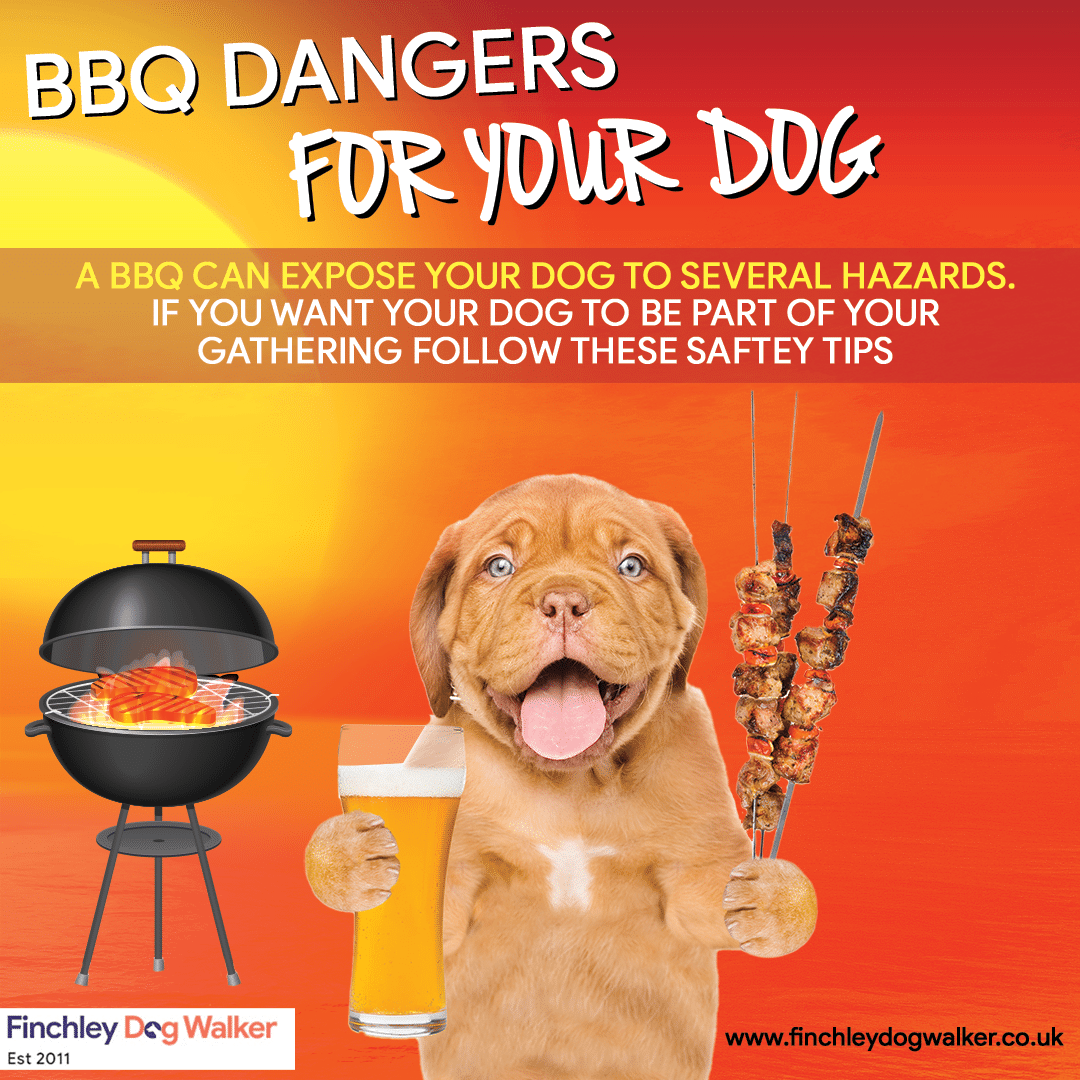
BBQs sound simple. Friends over, food cooking, dogs wandering around the garden.
But in reality, they are one of the most common times I see dogs get into trouble.
Not because owners don’t care.
Because everything changes at once.
- more people
- more food
- more noise
- more opportunity
And most dogs are not used to that combination.
I’ve seen it go wrong in small ways and serious ones.
Food issues. Burns. Escapes. Fights. Stress that gets missed until it escalates.
This guide is about what actually happens.
And what I would do differently if you’re planning a BBQ with a dog around.
Why BBQs are harder for dogs than they look
A normal day has structure.
A BBQ doesn’t.
Your dog suddenly has:
- strangers moving unpredictably
- food everywhere at nose level
- doors and gates opening
- smells that are hard to ignore
- less supervision than usual
Even calm dogs can struggle with that.
And if your dog is young, reactive, or food-driven, the risk goes up quickly.
The most common problems I see
Food they shouldn’t eat
This is the big one.
Dogs don’t understand that BBQ food is different. They just see food.
The usual issues:
- cooked bones from chicken or ribs
- fatty meat causing stomach problems
- onions in burgers or marinades
- corn on the cob, which can block the gut
- chocolate desserts left low down
It only takes seconds.
And it often happens when everyone assumes someone else is watching the dog.
Guide: Toxic food for dogs
Burns from BBQs and hot surfaces
Dogs are curious.
They will go closer than you expect.
I’ve seen:
- noses too close to hot grills
- tails brushing against BBQs
- paws stepping on dropped hot trays
This is more likely in small gardens where space is tight.
Overstimulation and stress
This one gets missed.
Dogs don’t always show stress in obvious ways.
At BBQs, you might see:
- pacing
- panting when it’s not that hot
- jumping up more than usual
- barking or reacting to guests
- hiding or trying to get indoors
If that builds up, it can turn into snapping or conflict with another dog or person.
Escapes
Gates get left open.
People don’t know your dog’s boundaries.
Someone tries to be helpful and lets them out “for a run”.
This is one of the most common reasons dogs go missing in summer.
Children and dogs mixing without structure
BBQs often mean kids around.
Even well-meaning children can:
- feed the dog scraps
- approach when the dog is overwhelmed
- run, shout, or grab
That’s a lot for a dog already dealing with everything else.
What I would focus on first
If you are planning a BBQ, this is where I would start
- decide where your dog will be during the busiest part
- plan how food will be managed
- make sure gates and exits are secure
- give your dog a quiet space away from guests
- do not rely on “they’ll be fine”
That one assumption causes most problems I see.
Simple ways to make BBQs safer for your dog
Give your dog a clear role
Dogs cope better when they know what’s expected.
Options I often suggest:
- inside with a calm setup and enrichment
- a separate part of the garden with a boundary
- a quiet room with a chew or lick mat
Not every dog needs to be part of the event.
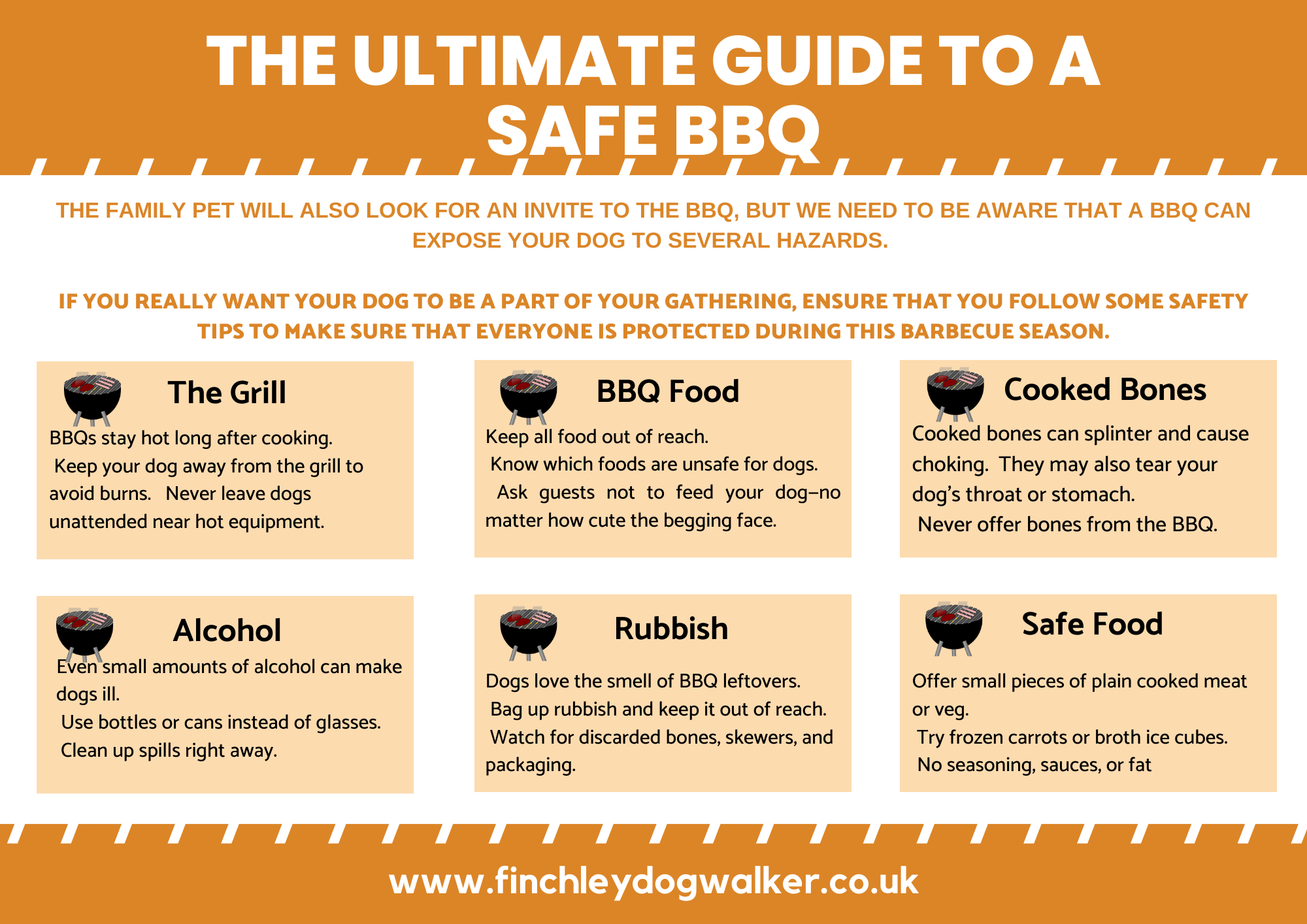
Control food, don’t just hope
- keep plates off the ground
- clear leftovers quickly
- brief guests not to feed your dog
- avoid bones entirely
If your dog is food-driven, assume they will try.
Create a calm space
Even social dogs need a break.
Set up:
- a bed or crate they already use
- water that won’t get knocked over
- something to occupy them
This reduces stress before it builds.
Think ahead about heat
BBQs usually happen in warm weather.
Combine heat and excitement, and dogs struggle faster.
Make sure:
- there is shade
- water is always available
- exercise is adjusted earlier in the day
You can read more in my guide on hot weather dog care (link this to your Hot Weather Dog Kit page).
When it’s better to keep your dog out of it
Some dogs are not suited to BBQ environments.
That includes:
- reactive dogs
- rescue dogs still settling in
- dogs with a history of guarding food
- very young puppies
In those cases, I would not try to “train through” a BBQ.
It’s too much at once.
This is where planning ahead really helps.
Real-world option: don’t have your dog there at all
This is often the safest and calmest choice.
If you want to enjoy the day without worrying, you have options:
- a solo walk earlier in the day to settle them
- house sitting so they stay in their normal routine
- a quiet visit to break up the day
For many dogs, especially rescues or sensitive types, staying out of the BBQ environment is actually kinder.
You can see how I handle this here:
- dog walking in Finchley
- pet and house sitting services
A simple checklist
Before your BBQ starts
- secure gates and exits
- decide where your dog will stay
- remove risky foods
- brief guests
- set up water and shade
During the BBQ
- keep an eye on stress signs
- stop food sharing early
- give your dog breaks
After
- check for leftovers on the ground
- make sure your dog hasn’t eaten anything unusual
What I would avoid
- assuming your dog will “just cope”
- letting multiple people manage your dog
- leaving food within reach
- forcing your dog to socialise
- ignoring early stress signs
Small decisions early prevent bigger problems later.
Related guides
You might also find these useful
- Dog & Cat Care Guides hub
- Summer pet safety advice
- How to spot stress in dogs
- Dog staycation packing list
FAQs
Can dogs eat BBQ food safely
Some plain meat is fine in small amounts, but BBQ food often contains fat, seasoning, onions, or bones. It is safer to avoid sharing altogether.
Are BBQs stressful for dogs?
They can be. Noise, people, and food all increase stimulation. Some dogs cope well, others don’t.
Should I let guests feed my dog?
No. It is one of the main causes of stomach upset and behaviour issues during BBQs.
Is it better to keep my dog inside
In many cases, yes. A calm indoor setup is often safer than a busy garden.
What if my dog gets overwhelmed
Remove them early. Give them space, water, and a calm environment. Do not wait for behaviour to escalate.
If you’re planning a BBQ and are not sure how your dog will cope, it’s worth thinking about it in advance rather than reacting on the day.
Some dogs are fine with it. Others are much happier sticking to their usual routine.
If you need a hand, whether that’s a solo walk earlier in the day or a weekend- big walk, so your dog stays settled at home, that’s something I can help with locally in Finchley and the surrounding areas.
Below are some other posts you may be interested in
