October is National Pet Wellness Month, which makes it a good time to think about dog wellness and what we actually mean when we say a dog is “well
It is easy to think of wellness purely in physical terms.
Is your dog eating normally? Are they a healthy weight? Are their vaccinations and parasite treatments up to date? Do they get enough exercise?
All of those things matter.
But after walking and caring for dogs in Finchley and the surrounding areas since 2011, I see a bigger picture.
A dog’s wellbeing includes their physical health, but it also includes how they feel, how well they cope with everyday life, whether they get enough opportunity to rest and sniff, and whether their individual needs are being met.
Sometimes the small everyday things tell us quite a lot.
Key Takeaways
- National Pet Wellness Month encourages a broader view of dog wellness beyond just physical health.
- Wellness includes meeting a dog’s physical, emotional, and mental needs, which vary individually.
- Adequate rest and mental enrichment are crucial components of a dog’s overall wellbeing.
- Understanding a dog’s behaviour is essential; changes in behaviour can indicate health issues.
- Wellness needs to adapt as dogs age, ensuring their routine stays suited to their changing requirements.
Wellness Is About the Whole Dog
A healthy-looking dog isn’t necessarily a dog whose needs are completely being met.
For me, good canine wellbeing means looking at the whole dog.
That includes:
- physical health
- appropriate exercise
- nutrition and body condition
- sleep and rest
- mental enrichment
- opportunities to sniff and explore
- emotional wellbeing
- feeling safe
- predictable routines
- positive relationships with people
- the ability to make appropriate choices
And importantly, those needs aren’t identical for every dog.
A young Labrador may have very different needs from a 13-year-old terrier. A confident dog who enjoys meeting other dogs differs from a rescue dog that finds unfamiliar dogs worrying.
Wellness shouldn’t mean trying to make every dog fit the same lifestyle.
More Exercise Isn’t Always Better
One of the easiest traps to fall into is assuming that a tired dog must be a happy dog.
Exercise matters, but simply adding more and more physical activity isn’t always the answer.
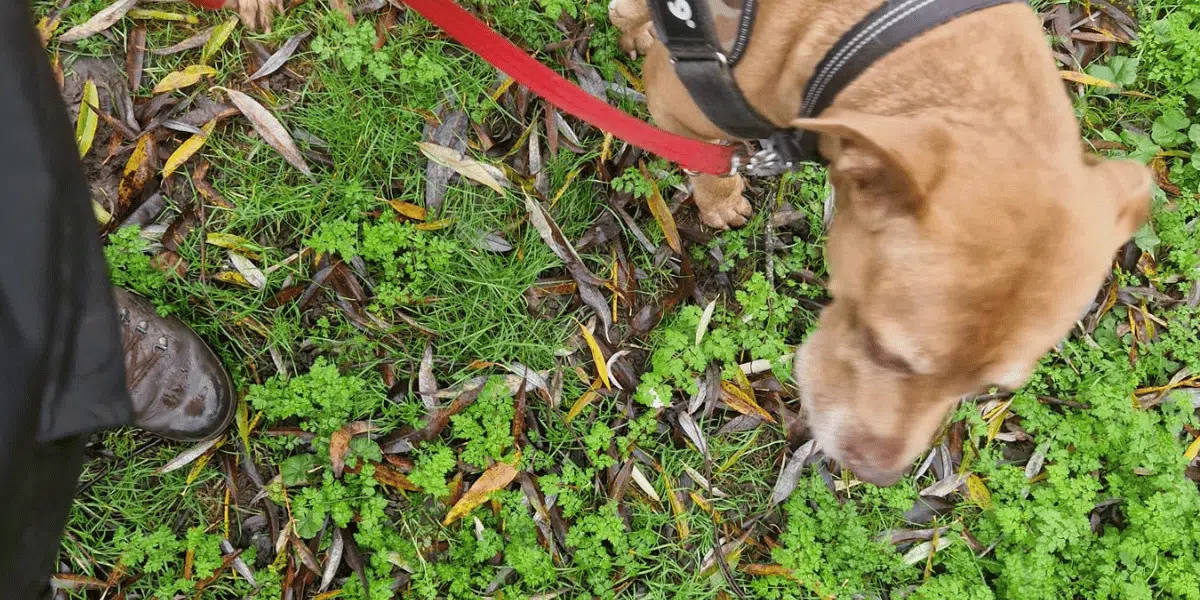
Some dogs benefit much more from a slower walk with plenty of time to sniff than from marching several miles at a fast pace.
Sniffing is an important part of how dogs investigate and understand their environment.
That is one reason my solo dog walks in Finchley aren’t about covering the greatest possible distance. I want the dog to have a walk that suits the individual in front of me.
Sometimes that means walking.
Sometimes it means stopping.
Sometimes it means spending what feels like an extraordinarily long time investigating one particularly fascinating patch of grass.
To us, nothing appears to be happening.
To the dog, quite a lot may be happening.
Mental Exercise Matters Too
Physical exercise is only one form of activity.
Food puzzles, scent games, searching, appropriate chewing, simple training exercises and opportunities to investigate can all provide mental enrichment.
And enrichment doesn’t have to mean buying increasingly complicated dog toys.
Scatter a few treats in the grass.
Hide some food around the house.
Let your dog investigate a cardboard box.
Practise a simple skill for a few minutes.
Allow more sniffing on your normal walk.
The best enrichment is something that your individual dog actually enjoys.
You can find more practical ideas in my Dog Enrichment Ideas That Actually Help Calm and Tire Your Dog guide.
Rest Is Part of Wellness
This is something that’s easy to forget.
Dogs need downtime.
A dog’s life doesn’t need to be filled with constant walks, games, training classes, play dates, visitors and entertainment.
Rest is important too.
Some dogs are also very good at following us around the house rather than properly switching off. A busy household can make settling particularly difficult for some dogs.
Providing a comfortable, quiet place where your dog can sleep without being disturbed can be just as important as planning their next activity.
This is especially true for puppies and adolescent dogs, where overtiredness can sometimes look remarkably like a dog that needs even more exercise.
Emotional Wellbeing Counts
A dog can be physically fit but still find everyday life difficult.
Perhaps they are worried by traffic.
Maybe unfamiliar dogs make them uncomfortable.
They might struggle when visitors arrive, dislike being handled or find busy environments overwhelming.
That doesn’t make them a “bad” dog.
Behaviour is information.
Growling, barking, moving away, freezing, hiding, or becoming unusually clingy can all tell us how a dog is feeling.
Rather than concentrating only on stopping the behaviour, it is worth asking:
Why might my dog be doing this?
Learning to recognise your dog’s body language can make an enormous difference because it allows you to respond before they feel they have to shout.
My Dog Behaviour & Body Language hub has more guidance on understanding some of these signals.
Sometimes Behaviour Changes Are Health Changes
This is one reason I think it is so important to know what is normal for your own dog.
Behaviour changes aren’t always “behaviour problems”.
A dog who suddenly becomes reluctant to walk, doesn’t want to jump into the car, sleeps somewhere different, becomes less tolerant of handling or starts behaving differently around other dogs may be telling us that something has changed.
Pain and illness can affect behaviour.
That doesn’t mean every little change is an emergency, but persistent or unexplained changes are worth noticing and discussing with your vet.
As a dog walker and pet sitter, I’m in a useful position because I see some dogs regularly.
If a dog who normally races to the door suddenly doesn’t want to get up, or a dog starts moving differently on a familiar walk, I can mention it to their owner.
I’m not diagnosing the problem. That’s a vet’s job.
I’m simply saying:
“This is different from what I normally see.”
Sometimes those small observations are useful.
A Healthy Weight Matters
Weight is another important part of overall wellness.
A dog’s weight can creep up easily because we see them every day.
Treats, chews, leftovers and training rewards all contribute to their overall food intake, even when they don’t look like part of their normal meals.
Equally, the number on the scale doesn’t tell the whole story.
Body condition matters too.
My Dog Food & Nutrition hub covers feeding, healthy weight, treats, changing foods and understanding dog food in more detail.
If you are concerned about your dog’s weight or nutritional needs, your vet or veterinary nurse is the appropriate person to ask for individual advice.
Wellness Changes as Dogs Get Older
What worked for your dog five years ago might not be what they need today.
As dogs age, we may need to change the length or pace of walks, reconsider activities, make flooring easier to navigate or provide more opportunities for rest.
That doesn’t necessarily mean doing nothing.
Older dogs can still enjoy sniffing, exploring, training and enrichment. We may simply need to adapt how we provide it.
The same principle applies throughout a dog’s life.
Puppy wellness isn’t identical to adolescent dog wellness, and neither is identical to caring for a senior dog.
We should adapt with them.
Don’t Forget the Ordinary Things
Pet wellness doesn’t have to involve buying something.
Some of the best things we can give our dogs are remarkably simple:
Time to sniff.
A comfortable place to sleep.
Fresh water.
Appropriate food.
Exercise suited to the individual.
Mental stimulation.
Choice where it is safe and practical.
Gentle handling.
Predictable routines.
Positive interaction.
Regular veterinary care.
And someone who notices when something isn’t quite right.
What Does Wellness Look Like for Your Dog?
No single routine works for every dog.
One dog may thrive on long countryside walks.
Another may be perfectly happy with shorter, quieter walks and plenty of sniffing.
One dog may love meeting everyone in the park.
Another may be much happier given space.
For me, good canine wellbeing means looking at the whole dog. The PDSA also provides useful guidance on the five welfare needs of dogs, covering their environment, diet, behaviour, companionship and health.
Don’t just ask:
“Am I doing enough?”
Ask:
“Is what I’m doing right for the dog in front of me?”
When we start looking at wellness from the dog’s point of view, physical health, emotional wellbeing, enrichment, exercise, rest and behaviour all become parts of the same picture.
And sometimes improving a dog’s wellbeing doesn’t require doing more.
It requires noticing more.
About Finchley Dog Walker
I’m Del from Finchley Dog Walker. Since 2011, I’ve provided calm, one-to-one dog walking and pet care across Finchley and surrounding parts of North London.
I work with one household at a time, with a particular interest in rescue dogs and dogs who need a little more space, patience or confidence.
You can find out more about my solo dog walks, house sitting, cat sitting, rescue dog support and one-to-one dog training support elsewhere on the Finchley Dog Walker website.
October Blog Circle: National Pet Wellness Month
This article is part of our October Blog Circle for National Pet Wellness Month.
Different pet professionals around the circle look at pet wellness through their own experience and area of expertise.
Next in the Blog Circle: [ADD NAME, ARTICLE TITLE AND LINK HERE]
Follow the link above to continue around the circle and discover another perspective on helping our pets live happy, healthy lives.