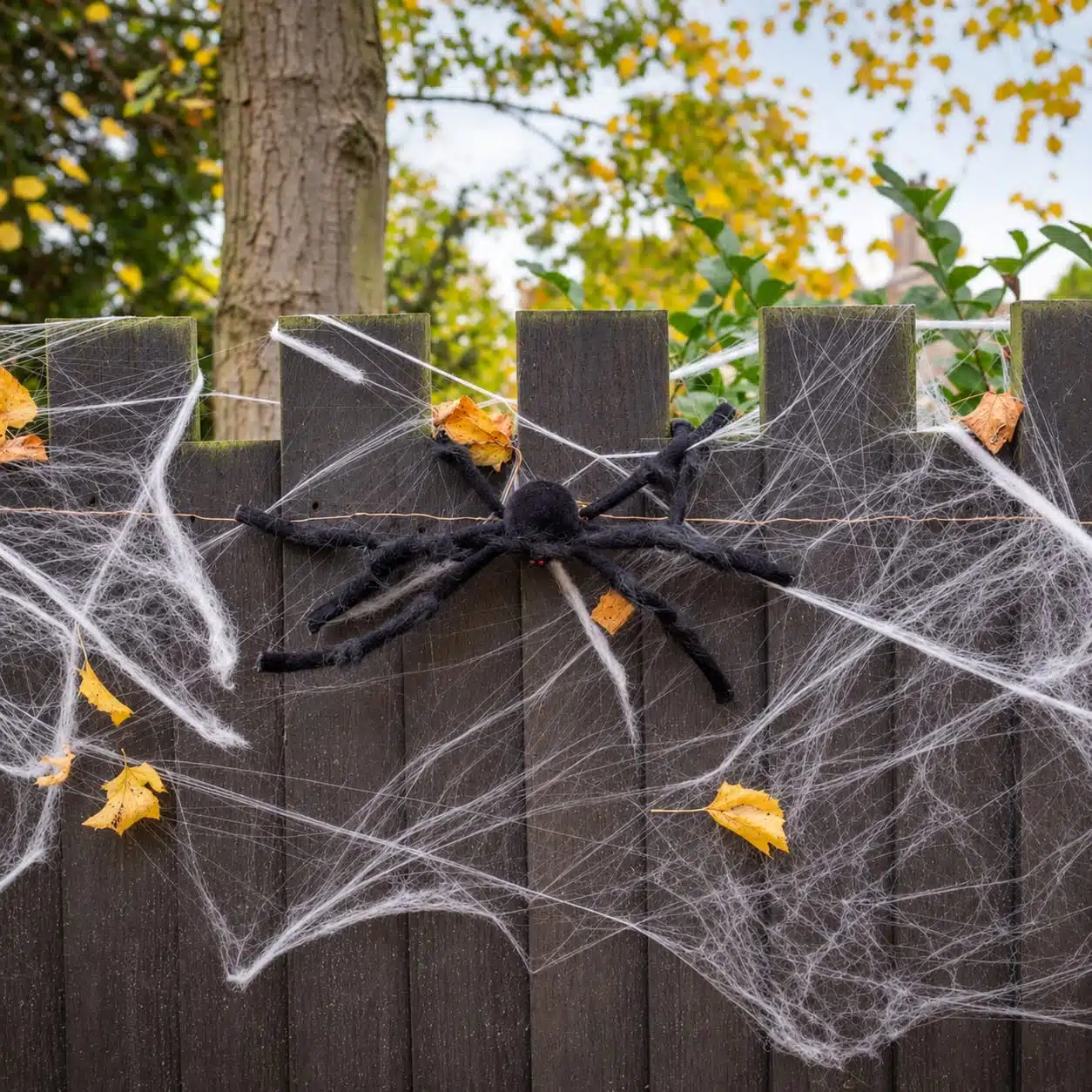
Halloween decorations seem to appear earlier every year. Pumpkins on doorsteps, skeletons in gardens and those stretchy white artificial cobwebs covering hedges, fences and bushes.
They certainly create a spooky atmosphere, but many people don’t realise something about fake Halloween cobwebs.
They can be dangerous to wildlife.
Birds, bats and small animals can become tangled in the fine fibres, sometimes suffering serious injuries. Our own cats and dogs can also be at risk if they play with, chew or swallow the material.
As someone who spends a lot of time walking dogs around Finchley and North London, I’m always aware of what animals encounter in our streets, parks and gardens.
Halloween should be fun, but we can enjoy the decorations without accidentally putting animals in danger.
Key Halloween Takeaways
- Fake Halloween cobwebs can entangle and injure wildlife like birds, bats, and small animals.
- Cats and dogs are also at risk from artificial cobwebs, which can cause choking or digestive obstructions.
- Alternatives to artificial cobwebs include paper silhouettes, reusable decorations, and real spider webs.
- To keep wildlife safe, avoid using artificial cobwebs outdoors and remove any left after Halloween.
- Being mindful of Halloween decorations helps protect pets and local wildlife in our gardens and streets.
Why are fake Halloween cobwebs dangerous?
The artificial cobwebs sold for Halloween are designed to stretch into thin, tangled strands.
People often drape them across hedges, wrap them around bushes or attach them to garden fences to create the appearance of giant spider webs.
Unfortunately, those same fine fibres can trap real animals.
The RSPB warns that artificial Halloween cobwebs can entangle birds and other wildlife.
A tangled animal may panic and struggle to escape. This can tighten the fibres around its body, wings or feet.
Possible consequences include:
- Injuries to wings, legs and feet.
- Restricted movement or an inability to fly.
- Exhaustion and distress while struggling to escape.
- Increased vulnerability to predators.
- Serious injury or death if the animal cannot be rescued.
Even when the decorations are removed, small pieces can remain caught in vegetation or blow away.
Many artificial cobwebs contain synthetic fibres that do not readily biodegrade, creating an additional litter problem.
Birds are particularly vulnerable
Think about the birds that visit our North London gardens.
Robins, sparrows, blackbirds, blue tits and other familiar garden birds regularly move through hedges and shrubs looking for food and shelter.
Now imagine a fine web of artificial fibres stretched across their usual route.
A bird may not recognise the obstacle until it is too late.
Its wings, feet or claws can become caught, and attempts to escape can make the situation worse.
Northumberland Wildlife Trust has specifically warned about birds becoming entangled in outdoor Halloween spider webs and suffering wing injuries.
For me, that’s reason enough to leave artificial cobwebs off garden hedges and trees.
What about bats, hedgehogs and insects?
Birds aren’t the only animals we need to consider.
Bats may encounter artificial webbing while flying close to buildings or vegetation. Becoming tangled can leave them injured or unable to escape.
Hedgehogs and other small ground-dwelling animals may also encounter decorations draped low down or fallen into gardens.
Insects can become caught in the fibres too.
All of these creatures have a place in our local environment.
We are fortunate to have green spaces such as Cherry Tree Wood, Coldfall Wood and Highgate Wood nearby, but wildlife doesn’t stay within the boundaries of parks and woodland.
Our gardens, hedges and residential streets are part of their habitat.
Something as simple as changing how we decorate can make those spaces safer.
Fake cobwebs can also be dangerous to cats
If you’ve ever watched a cat investigate a dangling ribbon or piece of string, you’ll understand why artificial cobwebs might be tempting.
Some cats will paw at them, pull at the strands or try to chew them.
The danger isn’t only becoming tangled.
If a cat swallows strands of artificial webbing, the material could become lodged in its digestive system and cause a potentially serious obstruction.
String-like material can be particularly dangerous because it may become caught internally and damage the intestines.
Both Cats Protection and Battersea advise owners to take care with Halloween decorations.
My advice is to avoid placing artificial cobwebs anywhere a cat can reach them, whether inside or outside the home.
If you suspect your cat has swallowed artificial webbing or string, contact your vet immediately, even if your cat seems well. Never pull visible strands from the mouth or bottom, as this could cause serious injury.
For more everyday cat welfare advice, visit my Cat Care Advice Hub.
Are artificial cobwebs dangerous to dogs?
Dogs can be curious about anything that looks or smells unfamiliar.
A puppy might investigate Halloween decorations with its mouth. Another dog might pick up a fallen plastic spider or grab some discarded webbing while out walking.
The main concerns are:
- Swallowing artificial fibres that could cause a digestive obstruction.
- Choking on loose material or small decorations.
- Becoming tangled in decorations placed at ground level.
- Injuries from sharp or broken decorative objects.
I’m particularly careful with dogs that like to investigate or pick up things on walks.
During October and early November, I keep an eye out for Halloween litter, sweet wrappers and discarded decorations.
Artificial cobwebs are another item worth watching for.
I’ve also written about the dangers of discarded glow sticks and luminous bracelets, which you may find on the ground after Halloween parties and fireworks displays.
If your dog swallows artificial cobweb material, contact your vet promptly rather than waiting to see whether symptoms develop.
Are cotton or biodegradable Halloween cobwebs safer?
You may come across Halloween cobweb decorations advertised as natural, cotton or biodegradable.
Depending on what they contain, these may reduce some of the problems associated with persistent plastic litter.
However, that doesn’t automatically make them safe for wildlife.
The main concern is entanglement.
Even natural fibres can wrap around an animal’s wings, legs, or feet.
My preference would be to avoid loose, stretchy cobweb decorations outdoors altogether.
Safer ways to decorate for Halloween
You don’t need artificial cobwebs to create a suitably spooky Halloween display.
There are plenty of alternatives that can look effective without leaving loose fibres around the garden.
1. Use paper Halloween silhouettes
Cut out shapes such as bats, ghosts, spiders or pumpkins and place them inside windows.
They’re inexpensive, can be made with children and won’t leave tangled webbing in your hedges.
2. Try reusable window decorations
Halloween window stickers or securely attached reusable decorations can create a similar effect.
Position them safely away from pets who might chew or pull at them.
3. Choose pumpkins with battery-operated lights
A carved pumpkin is a Halloween classic.
Battery-operated LED lights are generally preferable to exposed candles, as long as the lights and batteries stay safely out of reach of pets and children.
Remember to dispose of old pumpkins responsibly rather than leaving mouldy decorations in places where pets might eat them.
4. Use solid, securely fixed decorations
Wooden signs, painted pumpkins and reusable decorations can work well.
Choose items without loose strings, sharp edges or small detachable parts.
5. Let real spiders do the decorating
Perhaps the simplest option of all!
Autumn is a wonderful time to notice real spider webs in gardens, especially on damp mornings.
There’s something quite beautiful about a genuine web covered in tiny droplets of dew.
And the spiders have already done all the work.
What should you do if you find an animal trapped in artificial cobwebs?
Finding a trapped bird or other wild animal can be upsetting.
The important thing is not to panic or pull the animal free.
Tangled fibres can tighten around delicate wings, legs and feet, and pulling may cause further injury.
If you discover an animal trapped in artificial webbing:
- Keep dogs, cats and people away to minimise additional stress.
- Avoid pulling on the trapped animal or attempting to force it free.
- Contact an appropriate wildlife rescue organisation for advice as quickly as possible.
- Follow the advice you receive on whether and how to handle the animal.
- Once the animal has been safely dealt with, remove the remaining webbing to prevent further incidents.
For trapped or injured wild birds in England and Wales, contact the RSPCA on 0300 1234 999.
If you find a trapped bat, contact the Bat Conservation Trust, which operates the National Bat Helpline on 0345 1300 228.
Avoid handling bats with bare hands. Follow specialist guidance because bat bites and scratches carry a small but important health risk.
If you’re unsure which organisation can help, Help Wildlife provides details of wildlife rescue organisations around the UK.
Don’t forget to clear up after Halloween
Decorations can become a problem even after Halloween.
Loose cobweb strands can blow into bushes, trees and flowerbeds, while discarded plastic spiders and other ornaments may end up on pavements or in parks.
Before putting decorations away:
- Check hedges, fences and shrubs for leftover material.
- Remove loose strands carefully, checking first that no animals are trapped.
- Collect fallen decorations from the garden.
- Dispose of damaged synthetic webbing responsibly.
- Store reusable decorations safely for next year.
If you’re walking your dog after Halloween, it’s worth paying a little extra attention to what has been left behind.
My Autumn Dangers for Dogs Guide covers other seasonal hazards including conkers, acorns, mushrooms and hidden rubbish.
Frequently asked questions
Can fake Halloween cobwebs kill birds?
Yes. Birds can become trapped in artificial fibres, suffer injuries, or become unable to fly or escape. Wildlife organisations have warned that entanglement can sometimes be fatal.
Are artificial cobwebs safe indoors?
Indoor decorations don’t present the same direct danger to wild birds, but they can still be risky for pets. Cats and dogs may chew, swallow or become tangled in the material. I would choose solid decorations instead, particularly in homes with curious pets.
Can I put fake cobwebs on a garden hedge?
I wouldn’t recommend it. Hedges are used by birds, insects and other wildlife, and the fine strands can become an entanglement hazard.
What if I have already put artificial cobwebs outside?
There’s no need to feel embarrassed. Many people simply aren’t aware of the potential risks.
Check carefully for trapped animals and then remove the decorations, collecting as many loose fibres as possible.
Are fake cobwebs made from cotton safer than plastic ones?
Not necessarily. Although material choice may affect the environmental impact, any loose fibres capable of tangling around animals can pose a hazard.
A small change that could make a real difference
I’m not suggesting we stop celebrating Halloween.
I enjoy seeing the creativity people put into their decorations, and there’s nothing wrong with wanting to make a house look spooky.
But when something as simple as a handful of artificial webbing could seriously injure a bird, bat or other animal, I think it’s worth choosing something different.
Our wildlife has enough challenges without us accidentally creating another one.
This Halloween, perhaps we can leave the cobwebs to the spiders.
If you’re preparing for the celebrations, my Halloween Safety Guide for Dogs has more advice on decorations, chocolate, visitors and helping nervous dogs.
You can also explore my Seasonal Pet Safety Hub for practical advice throughout the year.
A little thought can help make Halloween safer for our pets, our gardens and the wildlife we share North London with.
Del
Finchley Dog Walker
Providing calm, one-to-one pet care in Finchley and the surrounding areas since 2011.