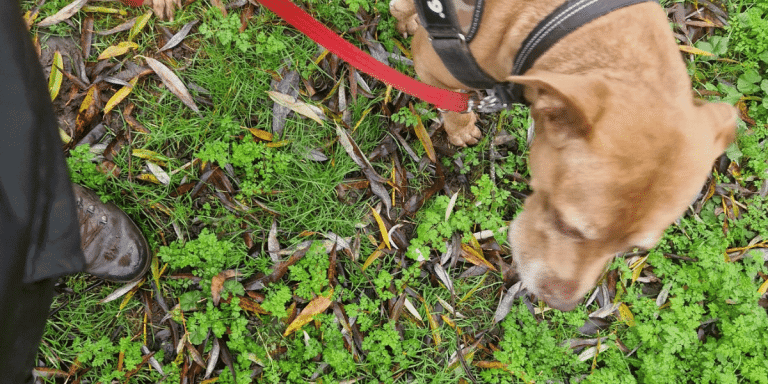
Your dog has just returned from a lovely walk. Unfortunately, they have also brought half the woodland home with them.
Mud covers their legs, something suspicious sits on their shoulder, and they smell like they’ve enjoyed themselves far more than you have.
Do they need a bath, or will a towel and brush do the job?
As a professional dog walker in Finchley and Muswell Hill since 2011, I’ve spent plenty of time dealing with muddy paws, dirty coats and the occasional dog who considers fox poo an excellent perfume.
One question I often hear is, “How often should I bathe my dog?”
The answer is simpler than you might think.
Most healthy dogs only need a full bath when they are dirty or smelly enough to need one. Their coat type, skin condition and lifestyle matter much more than a fixed timetable.
Summary
Most healthy dogs do not need frequent baths. Bathe your dog when their coat is genuinely dirty or smelly, using a suitable dog shampoo and lukewarm water. For everyday mud, brushing, a towel or rinsing with plain water may be enough. Dogs with allergies, skin conditions or prescribed treatments may need a different routine recommended by their vet.
How often should you bathe your dog?
No single bathing schedule suits every dog.
Some dogs may need bathing every few weeks because of their coat, lifestyle or veterinary requirements. Others can go several months between baths.
Healthy dogs often need much less washing than their owners expect.
The PDSA’s advice on grooming pets explains that dogs generally don’t need bathing too often, as excessive shampooing can remove natural oils from their coats.
I would consider five things before deciding whether a bath is needed:
- How dirty is the dog?
- Does their coat smell unpleasant?
- What type of coat do they have?
- Does their skin become dry, itchy or irritated?
- Has their vet recommended a particular bathing routine?
My own dogs have generally needed very few full baths. Often, a good brush and a quick rinse after a muddy walk have been enough.
However, I wouldn’t use that routine as a rule for everybody else.
A dog who enjoys rolling in unpleasant things may need washing more often than one who spends most walks investigating the same few lampposts.
Does coat type make a difference?
Yes.
A short-coated dog may be relatively easy to keep clean with a soft brush or grooming mitt.
A longer-coated dog may collect mud, grass seeds, leaves and other debris.
Curly coats can trap dirt and develop mats that require regular professional grooming.
Double-coated dogs may need particular care when washing and drying because moisture can remain trapped beneath the outer coat.
Some breeds also have specialist grooming requirements.
For broader advice about brushing, coat care and helping dogs enjoy handling, see my guide to grooming your dog at home.
Does your dog need a bath after every muddy walk?
Usually not.
Anyone who regularly walks dogs around Coldfall Wood, Highgate Wood or Cherry Tree Wood knows how muddy North London’s paths can become.
However, a muddy dog does not automatically need shampoo.
For light mud
Use a towel to remove loose dirt.
If the mud is dry and your dog’s coat allows it, brushing may remove most of it.
For muddy paws and legs
Gently rinse the affected areas with lukewarm water.
Check between the toes and around the paw pads.
Dry carefully, especially between the toes and wherever moisture tends to collect.
For thick mud or a very dirty coat
A fuller rinse or bath may be necessary.
If the mud has dried into tight tangles, don’t pull at them or try cutting close to the skin. Ask a suitable groomer for advice.
You can find more practical advice in my guide to muddy dog walks and cleaning your dog’s paws.
My approach is to clean what needs cleaning rather than automatically washing the entire dog.
How to bathe your dog safely at home
If your dog really does need a bath, preparation makes an enormous difference.
A slippery bath, unexpected water pressure and unfamiliar smells can quickly turn a simple wash into an unpleasant experience.
Here is the routine I recommend.
1. Get everything ready first
Have your dog shampoo, towels, brush and rewards within easy reach.
Use a non-slip mat so your dog feels secure.
If your dog is large, elderly or has mobility difficulties, think carefully about how they will safely get into and out of the bath.
2. Brush before bathing
Remove loose hair and gently work through any manageable tangles.
Water can make existing mats tighter and more uncomfortable.
If your dog’s coat is badly matted, professional grooming may be safer than trying to remove the mats yourself.
3. Use lukewarm water
Check the temperature before bringing your dog into the bath.
Avoid water that feels hot or uncomfortably cold.
Introduce the water gradually, particularly if your dog is nervous.
4. Wet the coat gently
Start around the body rather than directing water at the face.
Be careful around the eyes, ears, nose, and mouth.
Some dogs find a gentle flow of water much less worrying than a powerful shower.
5. Use a suitable dog shampoo
Choose a product formulated for dogs and follow its instructions.
You don’t necessarily need a heavily scented product.
If your dog has sensitive skin, a fragrance-free or mild dog shampoo may be more appropriate, but ask your vet if they have recurring problems.
6. Rinse thoroughly
This is one of the most important parts.
Leftover shampoo can irritate the skin.
Check around the chest, belly, legs, and anywhere the coat is particularly thick.
7. Dry your dog carefully
Use clean towels and keep your dog somewhere comfortably warm.
Pay particular attention to skin folds and thick areas of fur where moisture may remain.
If your dog tolerates a dryer, use a suitable low-temperature, gentle setting and keep it moving. Never force a frightened dog to tolerate the noise or airflow.
8. Finish on a positive note
Offer a reward and allow your dog to relax.
Bath time shouldn’t become a struggle you both dread.
Woodgreen Pets Charity’s dog bathing advice also recommends gentle introductions, appropriate shampoo, non-slip surfaces and rewards.
What if your dog has rolled in fox poo?
Ah, fox poo.
A smell that can make even the most devoted dog owner question their life choices.
Dogs sometimes roll in fox poo or other unpleasant substances. Several theories explain why they do this, but we don’t need to settle that debate before getting them clean.
The important thing is to remove the contamination safely.
I would recommend:
- Keeping your dog away from soft furnishings until cleaned.
- Wearing gloves if handling contaminated fur.
- Removing obvious material carefully.
- Washing the affected coat with a suitable dog shampoo.
- Rinsing and drying thoroughly.
- Washing your hands and cleaning anything contaminated afterwards.
You may have heard the old advice about using tomato ketchup.
I wouldn’t recommend it as a routine cleaning method. It isn’t a necessary dog-grooming product, may contain unsuitable ingredients and can encourage your dog to lick the affected area.
A suitable dog shampoo is a more sensible option.
If your dog has swallowed fox poo, develops vomiting or diarrhoea, or seems unwell afterwards, contact your vet for advice.
Which shampoo should you use for your dog?
Not every shampoo is suitable for dogs.
Human skin and canine skin have different requirements, and products made for people can irritate some dogs.
For regular baths, choose a shampoo made specifically for dogs.
Choose based on your dog’s age, coat, and skin condition.
Avoid experimenting with:
- Human shampoo or shower gel.
- Washing-up liquid and household detergents.
- Essential oils or homemade herbal mixtures.
- Strongly perfumed cleaning products.
- Medicated shampoos not recommended for your dog.
- Flea treatments selected without appropriate professional advice.
A label saying “natural” or “pH neutral” is not, by itself, proof that a product is suitable.
For dogs with diagnosed skin conditions, follow your veterinary team’s instructions.
Can bathing your dog too often cause problems?
It can.
Frequent shampooing with an unsuitable product may remove natural oils and contribute to dry or irritated skin.
You might notice:
- Flaking or dryness.
- Increased scratching.
- Redness.
- A dull or uncomfortable coat.
- Your dog repeatedly licking or rubbing particular areas.
However, these signs do not automatically mean your dog has been overbathed.
Parasites, allergies, infections and other skin conditions can cause similar problems.
If your dog is becoming increasingly itchy, don’t simply stop bathing and assume the problem will disappear.
Speak to your vet.
Some dogs with diagnosed skin conditions actually need regular bathing with a prescribed treatment. In those circumstances, the veterinary plan takes priority over general advice about washing less frequently.
Should you bathe your dog if they have fleas or ticks?
Bathing is not a substitute for suitable parasite treatment.
If your dog has fleas
Don’t assume that a strong flea shampoo will solve the problem.
Fleas can also be present in bedding, carpets and other parts of the home.
The PDSA’s guidance on fleas in dogs explains that flea shampoos are often ineffective and that managing an infestation requires appropriate treatment for the animals and their environment.
Speak to your vet about a suitable product, particularly if your dog is very young, elderly, unwell or has reacted to parasite treatments before.
Remember that some dog parasite treatments are dangerous to cats. Never assume a dog product is suitable for another animal in the household.
If your dog has a tick
A bath is not the correct way to remove an attached tick.
Ticks need to be removed carefully using an appropriate tool and technique.
You can follow the PDSA’s advice on removing ticks from dogs and cats.
If you’re unsure, ask your veterinary practice for help.
It’s worth checking your dog after woodland walks, especially around the ears, neck, armpits and other areas where ticks may attach.
See my six simple checks to make after a dog walk.
It is also worth keeping a tick tool handy in your kit
What about dogs with allergies or sensitive skin?
These dogs need particular care.
A dog with allergies may have irritated paws, recurring ear problems, inflamed skin or persistent itching.
Frequent washing with unsuitable products may make matters worse.
However, a vet may recommend regular rinsing or a specially formulated medicated shampoo to help manage a diagnosed condition.
The correct approach depends on the cause.
Don’t assume your dog has pollen allergies simply because they scratch after walking through grass.
Fleas, infections and other skin problems can produce similar symptoms.
I’ve covered this in more detail in my guide to pollen allergies in dogs.
If a shampoo has been prescribed, follow the instructions about frequency, application, contact time and rinsing.
Helping nervous and rescue dogs cope with bath time
Some dogs genuinely dislike being bathed.
Others are frightened of slippery floors, water pressure, unfamiliar rooms or being physically restrained.
For rescue dogs, previous experiences may also affect how comfortable they feel with handling.
I prefer to build confidence gradually rather than force a dog through a stressful experience.
Start with simple steps.
Let your dog explore the bathroom without expecting them to bathe.
Reward them for approaching the bath or standing on a non-slip mat.
If they’re comfortable, introduce the sound of running water at a low level.
Keep the sessions short and stop before your dog becomes overwhelmed.
Some dogs will need much more preparation than others.
If your dog freezes, tries desperately to escape, growls or becomes increasingly distressed, stop and reassess.
A reward-based trainer or suitable behaviour professional may be able to help with a gradual plan.
My one-to-one dog training support in Finchley focuses on building confidence and practising everyday skills at a pace that suits the dog.
If a dog urgently needs cleaning but cannot safely tolerate handling, ask your vet for advice rather than risking injury or severe distress.
What about puppies and older dogs?
Bathing puppies
Young puppies can become chilled easily, so avoid unnecessary full baths.
Use gentle cleaning for small dirty areas when possible.
If bathing is needed, use an age-appropriate product, keep the room warm and dry your puppy carefully.
Introduce grooming and bathing gradually with positive experiences.
Bathing senior dogs
Older dogs may have arthritis, reduced mobility or difficulty standing on slippery surfaces.
A full bath may be tiring or uncomfortable.
Support their footing, avoid awkward lifting and consider whether cleaning individual areas would be kinder.
If your older dog suddenly starts struggling with grooming or handling, speak to your vet. Pain may be contributing.
After surgery or illness
Don’t bathe a dog with a healing surgical wound unless your vet has confirmed that it is safe.
Follow any restrictions associated with medication or parasite treatments, including instructions about bathing before or after applying a spot-on product.
When should you contact your vet?
Bathing should help your dog feel clean and comfortable.
It shouldn’t become a way of covering up an ongoing health problem.
Contact your veterinary practice if you notice:
- Persistent itching or scratching.
- Red, inflamed or broken skin.
- Unexplained hair loss.
- Repeated skin or ear infections.
- An unusual smell that returns soon after bathing.
- Pain when your dog is touched.
- A sudden change in their coat or skin condition.
- Reactions after using a shampoo or treatment.
A persistent smell may indicate a skin, ear or other medical problem rather than poor hygiene.
For more general information, visit my Dog Health and First Aid Guide.
Frequently asked questions
Is it OK to bathe a dog once a month?
For some dogs, yes. Others need washing much less often, while certain skin conditions require more frequent medicated baths. The right frequency depends on the dog’s coat, skin, lifestyle and veterinary advice.
Can I wash my dog’s paws every day?
You can gently clean muddy or contaminated paws when necessary. Plain lukewarm water is often sufficient. Avoid unnecessary shampoo and dry carefully, particularly between the toes. If frequent washing causes irritation, ask your vet for advice.
Can I use baby shampoo on my dog?
I would choose a shampoo specifically formulated for dogs rather than assume a baby shampoo is suitable. If your dog has sensitive skin or a medical condition, ask your vet which product to use.
Does my dog need a bath after swimming?
It depends on where they swam and what they came into contact with. Rinsing off salt, sand or dirt with clean water may be appropriate. If you suspect exposure to polluted water or your dog becomes unwell, seek veterinary advice.
Can I bathe my dog every week?
Most healthy dogs don’t need weekly baths. However, some dogs with veterinary skin-care plans may need weekly or more frequent treatment baths. Follow your vet’s instructions rather than a general rule.
Read my guide on how often to bathe your dog
Why does my dog smell shortly after a bath?
The problem may be more than ordinary dirt. Persistent odour can sometimes be linked to skin, ear, or other medical conditions. If the smell keeps returning, arrange a veterinary check.
What if my dog hates having a bath?
Don’t force them into a frightening situation. Try gradually introducing the bathroom, non-slip surfaces and water with rewards. If your dog is in serious distress, seek appropriate professional help.
Keeping your dog comfortable matters more than keeping them spotless
I’ve been walking dogs around Finchley and Muswell Hill since 2011, and I can safely say most dogs care far less about muddy paws than their owners.
A little mud is part of enjoying the outdoors.
My approach is to clean what needs cleaning, check the dog afterwards and avoid unnecessary washing.
If your dog needs a bath, make it gentle, safe and comfortable.
And if they have discovered fox poo?
Well, sometimes a bath really is unavoidable.
If you’re looking for calm, individual care, I provide one-to-one dog walks in Finchley and Muswell Hill, with walks adapted to the needs of the dog in front of me.
No vans. No pack walks. Just local, personal care.
Related Guides
- Dog Grooming Tips: How to Groom Your Dog at Home
- Muddy Dog Walks: Cleaning Your Dog and Protecting Their Paws
- Summer Dog Grooming: Coat Care and Comfort
- Check Your Dog After a Walk: Six Simple Checks
- Pollen Allergies in Dogs: Signs and Veterinary Advice
About the Author
I’m Derek (Del) Chambers, the owner of Finchley Dog Walker.
I’ve provided professional dog walking and pet care in Finchley, Muswell Hill and nearby North London since 2011.
My work focuses on calm, one-to-one care, rescue dogs, confidence-building and reward-based handling.
I hold an Ofqual Level 3 qualification in Canine First Aid and continue to develop my knowledge through professional education.
This article provides general pet-care information and does not replace individual veterinary advice. If your dog has a skin condition, unexplained itching or a reaction to a grooming product, please consult your veterinary practice.
First published: 21 October 2022
Substantially updated: November 2026