

Updated August 2026
Leaving your dog home alone is not simply a matter of finding enough toys to keep them entertained.
Your dog needs to feel safe enough to settle, sleep, drink, move around comfortably and wait for you to return. Some dogs cope well with short periods alone. Others begin to worry within minutes.
Puppies, newly adopted rescue dogs, senior dogs and dogs whose household routine has recently changed may need particularly careful planning.
With schools returning and many households moving back into their normal September routines, now is the time to consider what your dog’s day will look like when the house becomes quieter.
Key Takeaways
- Leaving your dog home alone requires careful planning; some dogs can cope with short absences while others may need additional support.
- The RSPCA recommends not leaving dogs alone for more than four hours, depending on individual needs such as age and health.
- Introduce quiet periods gradually at home and practice manageable absences to help your dog adjust.
- Use a camera to observe your dog’s behaviour when left alone, but avoid stressful situations during monitoring.
- If your dog shows signs of distress, consult a vet and consider seeking professional help rather than punishment.
How long can you leave a dog home alone?
There is no single length of time that is right for every dog.
The RSPCA advises that dogs should generally be left for no longer than four hours so they have opportunities to exercise, go to the toilet and spend time with people. Dogs Trust gives similar guidance.
Four hours should be treated as an upper welfare guideline for a settled adult dog, not a target that every dog must learn to reach.
Your dog may need a much shorter absence because of their:
- age
- health
- bladder or bowel needs
- medication
- mobility
- previous experiences
- confidence
- normal routine
- ability to settle
- response to being separated from you
A dog who can physically hold their bladder for several hours may still be frightened, lonely or unable to rest.
Puppies cannot manage an adult working day
A young puppy needs frequent toilet opportunities, meals, sleep, supervision and calm social contact.
They should not suddenly be expected to cope with several hours alone because the school holidays have ended or an owner has returned to work.
Start with tiny periods of separation while you remain at home. Gradually build from there while making sure the puppy’s basic needs have been met.
My guide to preparing your dog to be left alone explains how to safely introduce short separations.
If you need help breaking up your puppy’s day, you can also read about puppy visits and puppy support in Finchley.
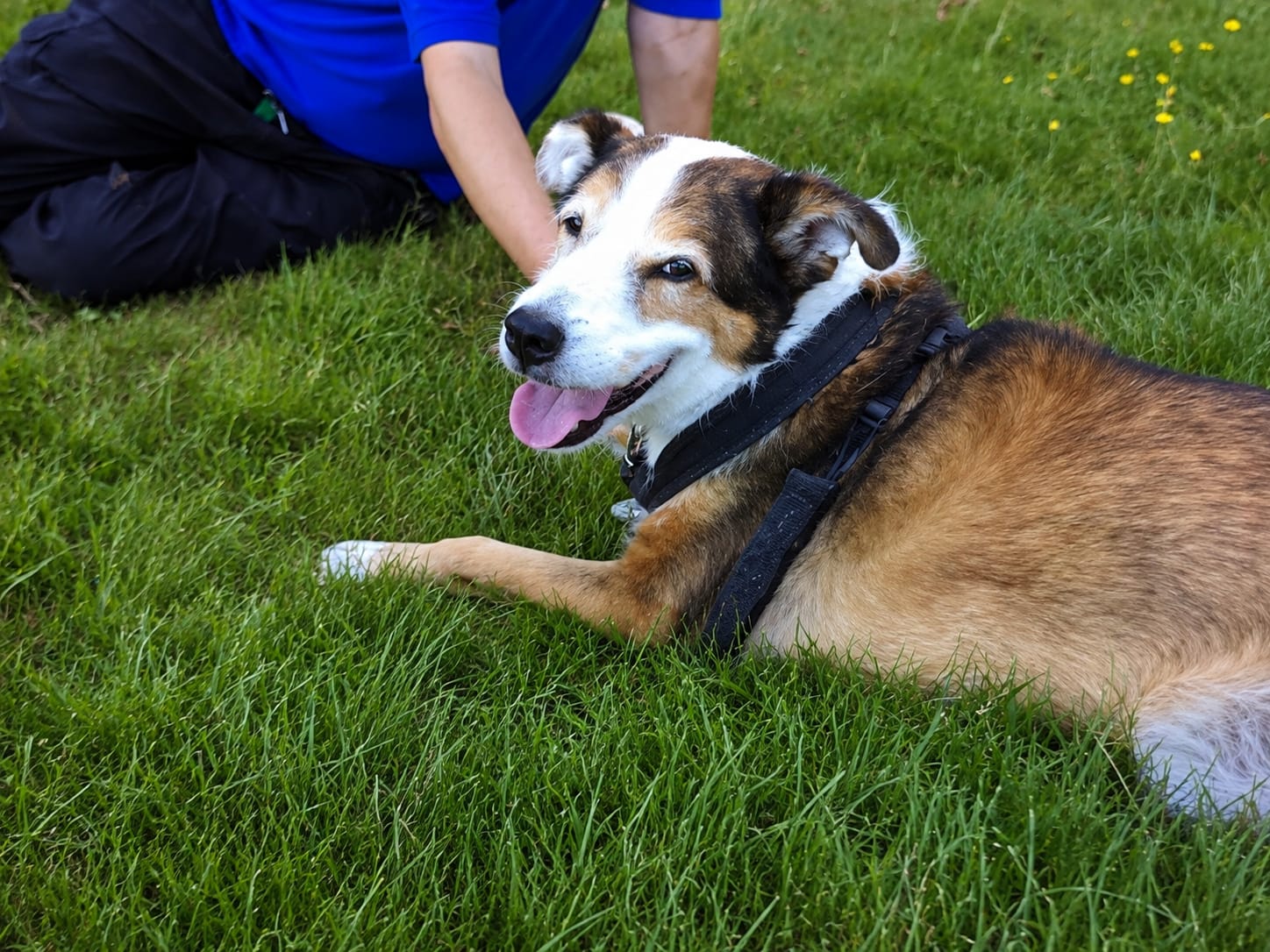
Senior dogs may need more frequent support
Older dogs often sleep more, but that does not automatically mean they can be left for longer.
A senior dog may need:
- more frequent toilet opportunities
- medication at particular times
- help moving safely
- easier access to water
- a warmer or cooler resting place
- shorter, gentler walks
- reassurance if their eyesight or hearing is changing
- more frequent checks if they have cognitive changes
If an older dog suddenly becomes unsettled when left, begins toileting indoors or changes their normal sleeping pattern, arrange a veterinary check. Behavioural changes can sometimes be linked to pain, illness or age-related changes.
What to do before work and school routines return
A sudden move from a busy house to several hours of silence can be difficult for some dogs.
The next ten to fourteen days can be used to make the transition more manageable.
Move towards the new routine gradually
Begin adjusting feeding, walking, and resting times to match the schedule your dog will experience once work and school restart.
You do not need to make every change on the same day.
Create ordinary periods of quiet
Your dog does not need constant entertainment while everybody is at home.
Allow them to rest while you work, read, prepare meals or move around the house. This helps quiet periods become a normal part of the day.
You are not ignoring your dog. You are giving them opportunities to learn that they can relax without somebody continually interacting with them.
Practise manageable absences
Practise leaving for a period your dog can already cope with comfortably.
That might initially be:
- stepping into another room
- closing a stair gate briefly
- walking outside for a few seconds
- taking a short trip to the bin
- walking around the block
- leaving for a brief local errand
Return before your dog becomes distressed.
Do not jump from a successful five-minute absence to an hour. Build gradually according to what your dog shows you.
Test your home camera
Set up a camera or spare phone before you need it.
Check that it shows your dog’s normal resting area, the doorway and any windows they tend to watch.
Observe what happens after you leave. Avoid speaking through the camera repeatedly, as hearing your voice without being able to see you may make some dogs more unsettled.
Arrange daytime support now
If your working day will be longer than your dog can comfortably manage, arrange help before the new routine begins.
This could be:
- a trusted relative
- an agreed neighbour
- a professional dog walker
- a puppy visit
- an enrichment or welfare visit
- adjusted working hours
- working from home for part of the week
Do not wait until the first full day back to discover that your dog cannot cope.
Boredom and separation distress are not the same
A bored dog and a distressed dog can both chew, bark or become restless, but the reason for the behaviour may be very different.
Possible signs of boredom
A bored dog may:
- investigate bins or worktops
- chew accessible objects
- look for food
- play with household items
- bark at activity outside
- settle after finding something to do
- readily eat food left for them
- appear generally relaxed on camera
Boredom may improve when the dog receives an appropriate balance of walking, sniffing, enrichment, social contact and rest.
Possible signs of separation distress
A worried dog may:
- begin pacing before you leave
- follow you closely as you prepare to go
- pant when the room is not hot
- tremble or drool
- whine, bark or howl
- scratch or bite at doors
- damage windows or exit points
- toilet indoors despite being house-trained
- refuse food they would normally enjoy
- remain beside the door
- repeatedly move between windows
- become unable to lie down or sleep
- try to escape
- injure themselves
A dog does not have to bark to be distressed. Some dogs become very still or sit silently by the door throughout the absence.
Read Is My Dog Pining for Me? for more help recognising quieter signs of separation-related distress.
Your dog is not being spiteful
Dogs do not damage furniture, use the toilet indoors, or bark for hours to punish their owners for leaving.
These behaviours may be connected to:
- fear
- frustration
- boredom
- an unmet physical need
- insufficient preparation
- an unsuitable environment
- pain or illness
- separation-related distress
Punishing your dog when you return will not teach them what they should have done earlier.
It may make them more anxious about your return and add another layer of worry to future absences.
Clean up calmly, check that your dog has not swallowed anything dangerous and consider what the behaviour may be telling you.
Use a camera to see what really happens
Many owners assume their dog sleeps throughout the day because the dog is lying down when they return.
A home camera can show you:
- how quickly your dog settles
- whether they sleep
- whether they remain beside the door
- whether they respond to outside noises
- whether they eat
- whether they pace or pant
- when any barking begins
- whether a planned visit helps them settle afterwards
Record several ordinary absences rather than judging your dog from one unusual day.
Use the camera to observe, not to test how distressed your dog can become.
If you see panic or repeated escape attempts, return as soon as you safely can and avoid repeating the same length of absence.
Prepare a safe and comfortable area
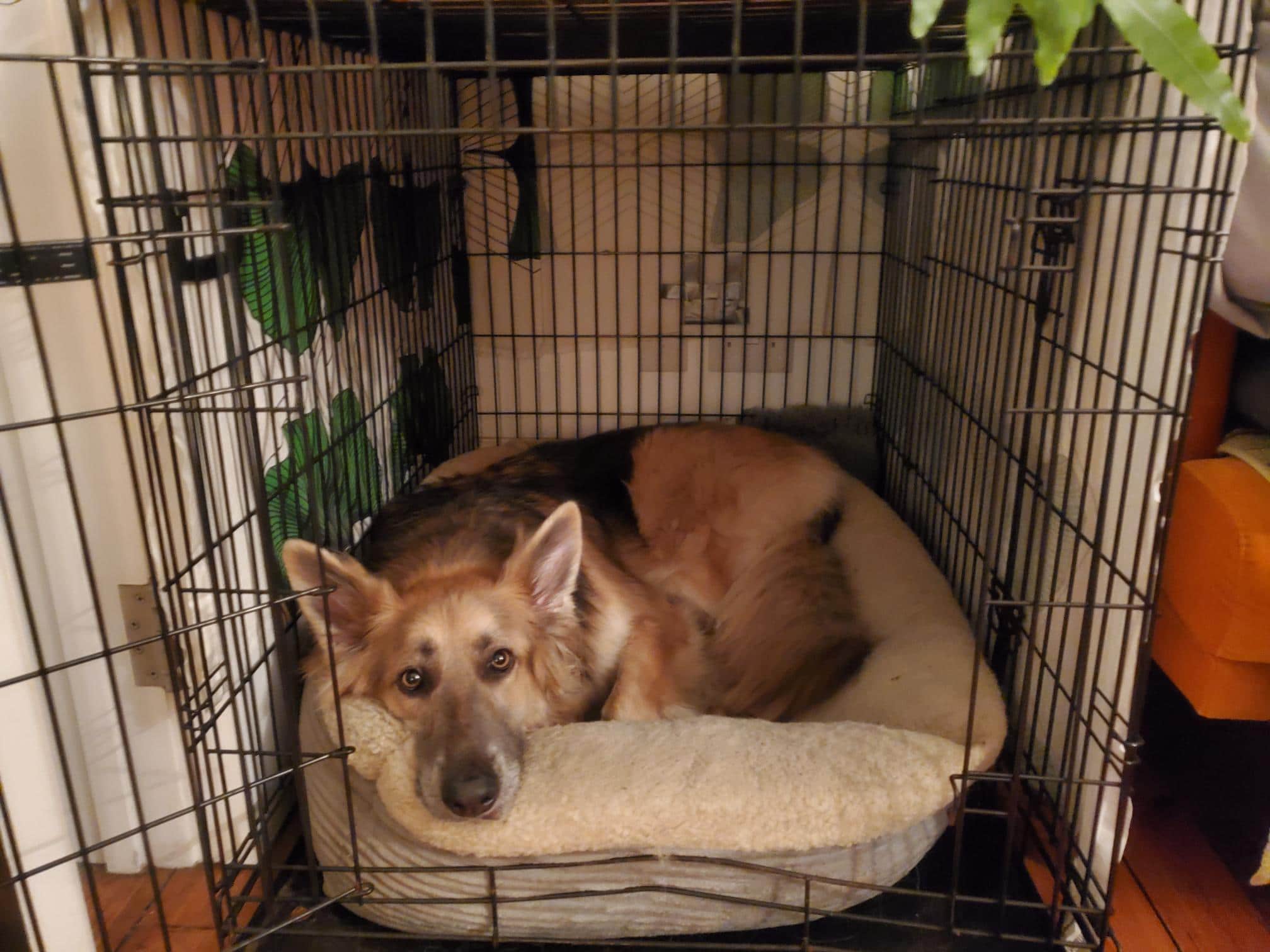
Your dog’s resting area should be familiar before you leave them there.
It should provide:
- clean, fresh water
- comfortable bedding
- enough room to stand, turn and change position
- a safe temperature
- ventilation
- protection from direct sun
- freedom from obvious household hazards
- a quieter option away from windows if outside activity triggers barking
Some dogs settle well in one familiar room. Others become distressed when shut behind a new door or barrier.
Do not suddenly confine your dog to an unfamiliar room on the morning everybody returns to work or school.
Check for household hazards
Before leaving, remove or secure:
- electrical cables
- medicines
- cleaning products
- food packaging
- accessible bins
- children’s toys
- batteries
- sharp objects
- string, ribbon and elastic bands
- clothing that could be swallowed
- toxic plants
- food that is poisonous to dogs
- damaged toys
- anything your dog has previously chewed or investigated
Close external doors, gates and accessible windows securely.
Do not leave your dog in a conservatory, vehicle, shed, or any other space where the temperature could rise dangerously.
Can a dog be left in a crate while you work?
A crate may be a comfortable resting place for a dog who has been positively introduced to it and chooses to relax there.
It should not be used to confine a frightened dog for an entire working day or simply to prevent damage.
A dog who panics when confined may injure their teeth, claws or body trying to escape.
Closing a dog in a crate does not treat separation anxiety. Read my calm, positive guide to crate training before deciding whether a crate is suitable.
Prepare your dog before you leave
A suitable morning routine may help your dog feel ready to rest.
Depending on the individual dog, this might include:
- A toilet opportunity.
- A calm walk at an appropriate pace.
- Time to sniff and explore.
- Fresh water.
- Breakfast or part of their normal meal.
- A short period to settle before you leave.
Avoid trying to exhaust your dog with intense exercise.
A dog who returns home highly aroused, thirsty or panting may find it harder to settle. Nervous, reactive, senior and young dogs may particularly benefit from a slower, more thoughtful walk.
My dog enrichment guide explains how sniffing, choice, suitable activity and rest can be balanced.
Can enrichment keep a dog happy while alone?
Enrichment may help a comfortable dog settle, but it cannot cure separation anxiety.
Some dogs enjoy part of their normal meal in a familiar food toy. Others become frustrated, guard the item or try to destroy it.
A highly distressed dog may ignore food completely.
Before leaving any product with your dog:
- introduce it while you are present
- choose the correct size
- watch how your dog uses it
- check for chewing or damage
- make the activity easy enough
- account for the food within their normal daily allowance
- consider dietary and medical restrictions
- separate dogs in multi-dog households
- remove the item if your dog becomes frustrated
- never assume that a product is indestructible
A KONG Classic Dog Toy on Amazon may be suitable for a dog who has already used one safely under supervision. Start with an easy, loosely filled toy rather than making it difficult or freezing it immediately.
A LickiMat Classic on Amazon may suit some dogs during supervised settling time. Do not leave it unattended if your dog tries to chew, tear or swallow the mat.
Cardboard games, fabric snuffle mats, busy buckets and complicated puzzles generally require supervision. They should not automatically be left with an unattended dog.
Read Dog Enrichment Safety before choosing an activity.
You can also see the dog and pet products I recommend.
Should you leave the television or radio on?
Familiar background noise may help some dogs by softening the sounds from neighbours, deliveries, or people passing by.
Other dogs find movement on television or particular sounds exciting.
Introduce any background sound while you are home. Keep the volume comfortable and make sure your dog can move to a quieter area.
Music, television and radio should not be used to conceal barking or replace help for a distressed dog.
A midday walk or visit can break up the day
A suitable daytime visit can provide:
- a toilet opportunity
- fresh water
- calm company
- an appropriate solo walk
- sniffing and exploration
- part of a meal
- agreed medication
- a short enrichment activity
- a welfare check
- an update for the owner
The right option depends on the dog.
A young, energetic adult may benefit from a one-to-one walk. A senior dog, a recovering dog, or a dog who finds the outside world difficult may be better suited to a shorter home visit.
My solo dog walks in Finchley and Muswell Hill begin and finish at your door. There are no vans, group collections or unfamiliar dogs.
My canine enrichment visits in Finchley provide calm company and appropriate home-based activity for dogs who may not benefit from a full walk.
A walk or visit can support a dog’s routine, but it cannot diagnose or treat separation anxiety.
A sample working-day routine
This is an example, not a timetable every dog should follow.
Before leaving
- toilet opportunity
- calm sniffing walk where appropriate
- breakfast and fresh water
- time to settle
- safe resting area prepared
During the morning
- quiet rest
- a familiar safe activity where suitable
- camera observation during the first few days
Around the middle of the day
- solo walk, puppy visit or enrichment visit
- toilet opportunity
- water check
- calm interaction
- short written or photographic update
During the afternoon
- rest after the visit
- another safe period alone within the dog’s coping ability
When you return
- calm, friendly greeting
- toilet opportunity
- fresh water
- an appropriate walk or quiet activity
- time to reconnect and settle
The routine must fit your dog’s age, health, confidence and ability to cope.
What should you do when you return?
You do not have to ignore your dog.
Come in calmly and greet them kindly without turning every arrival into a highly exciting event.
Offer a toilet opportunity where needed and continue with the normal routine.
If your dog is very excited, give them space to move and settle before introducing energetic play.
Never punish barking, damage or toileting that happened while you were away.
Newly adopted and rescue dogs need time
An adult rescue dog should not automatically be expected to cope with a full working day.
They may be adjusting to:
- unfamiliar people
- new household sounds
- different sleeping arrangements
- changed feeding times
- unfamiliar streets
- the loss of previous attachments
- a history you know very little about
Some rescue dogs settle quickly. Others need significantly more time.
If your dog follows you from room to room, do not suddenly shut them away for several hours. Begin with manageable periods of distance and observe their body language.
My rescue dog support in Finchley is designed around calm, individual support rather than expecting a nervous dog to fit into a group routine.
When leaving your dog alone is not currently safe
Do not continue increasing absences if your dog:
- panics before you leave
- vocalises continuously
- cannot settle
- refuses food whenever left
- damages doors or windows
- tries to escape
- injures themselves
- pants or drools heavily
- toilets because of distress
- becomes increasingly fearful
- shows a sudden change in behaviour
Contact your vet first, particularly when the behaviour is new or worsening. Pain, illness, sensory changes and other medical problems can affect behaviour.
Your vet may recommend referral to an appropriately qualified behaviour practitioner. The Animal Behaviour and Training Council practitioner register can help you find assessed professionals.
For a fuller explanation, read Separation Anxiety in Dogs.
Planning for evenings and overnight absences
A dog who can cope with a few hours alone is not automatically ready to be left for an entire evening or overnight.
For longer commitments, consider:
- an evening pet sitter
- a trusted person staying in your home
- an overnight house sitter
- continuous house sitting where the dog cannot manage normal daytime absences
House sitting can help a dog remain in familiar surroundings and follow their usual routine. It is not a treatment for separation anxiety, and the sitter must be told honestly how the dog responds when left.
Read about house sitting and in-home pet care in Finchley.
Need help breaking up your dog’s day?
I provide calm, one-to-one pet care in Finchley, North Finchley, Finchley Central, East Finchley and Muswell Hill.
Depending on your dog’s needs and my local availability, support may include:
- solo dog walks
- canine enrichment visits
- puppy visits
- rescue-dog support
- evening sitting
- house sitting
I work with one household at a time. There are no vans, group walks or collection rounds.
Contact me to discuss your dog’s routine or WhatsApp me on 07707 763344.
Frequently asked questions
How long can an adult dog be left home alone?
UK welfare organisations generally advise no more than four hours for an adult dog. Some dogs can only cope with a much shorter period. Consider the individual dog’s health, toileting needs and emotional response.
How long can a puppy be left alone?
Puppies need much more frequent opportunities to go to the toilet, feeding, sleep, and supervision than adult dogs. Begin with very short separations and build gradually. A puppy should not be left for an adult working day.
Is my dog bored or suffering from separation anxiety?
A bored dog may investigate, chew, or look for entertainment, but still eat, rest, and behave relatively normally. A distressed dog may pant, pace, drool, vocalise, refuse food, remain by the door or try to escape. Camera footage can help you understand what is happening.
Should I leave toys with my dog?
Only leave items your dog has already used safely under supervision. Avoid damaged toys, unfamiliar chews, cardboard activities and anything that could be torn apart or swallowed.
Should I leave a KONG with my dog?
A correctly sized KONG may be suitable if your dog already uses it calmly and does not damage it. Introduce it while you are present and start with an easy filling.
Should I leave the television on?
Familiar background sound may help some dogs, but it does not replace preparation or behavioural support. Introduce it while you are home and keep the volume comfortable.
Should I ignore my dog when I return?
No. You can greet your dog calmly and kindly. Avoid making every return highly exciting, but there is no need to deliberately ignore them.
Can I crate my dog while I am at work?
A crate is not suitable for confining a dog for an entire working day. It may be a comfortable resting place for a positively crate-trained dog, but it should not be used to contain a frightened dog or prevent separation-related damage.
Will another dog stop separation anxiety?
Not necessarily. Some dogs are specifically distressed by separation from a person. Getting another dog may add another set of welfare and management responsibilities without solving the original problem.
Can a dog walker cure separation anxiety?
No. A dog walker can provide company, a chance to use the toilet, and an appropriate break during the day. Separation anxiety may require veterinary assessment and help from a qualified behaviour professional.
My dog used to cope alone. Why are they struggling now?
Changes in health, pain, routine, household members, hearing, eyesight or a frightening experience can affect a previously settled dog. Arrange a veterinary check if the change is sudden or unexplained.
Related guides
- How to Prepare Your Dog to Be Left Alone
- Separation Anxiety in Dogs
- Is My Dog Pining for Me?
- Working From Home With a Dog
- Dog Enrichment Ideas
- Dog Enrichment Safety
- Solo Dog Walks in Finchley
- Canine Enrichment Visits in Finchley
Final thoughts
The goal is not to force every dog to tolerate the same length of time alone.
It is to understand what your dog can manage comfortably and build a routine around their welfare.
Prepare before work and school routines change. Use a camera to observe what actually happens. Arrange a walk or visit when the day will be too long, and seek professional help if your dog is frightened.
A dog who feels safe enough to rest does not need constant entertainment.
They need a suitable environment, a predictable routine and confidence that somebody will return.
Important disclaimer
This guide provides general information on dog care and behaviour. It does not replace veterinary advice, a diagnosis or an individual behavioural assessment.
Contact your vet if your dog’s behaviour changes suddenly, they show significant distress, or they injure themselves while alone. A vet can investigate possible medical causes and recommend an appropriately qualified behaviour professional where needed.


