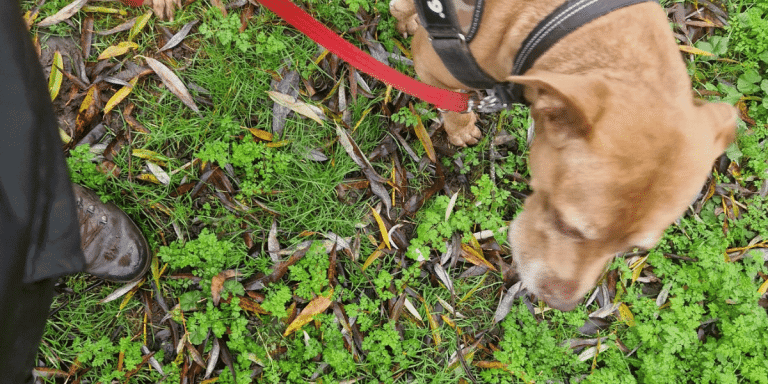
There’s something wonderful about a woodland walk with your dog.
The smells change throughout the year; there’s plenty to investigate, and even a familiar route can feel different after a night of rain.
I’ve been walking dogs professionally around Finchley and Muswell Hill since 2011, and I regularly use local woodland areas such as Coldfall Wood, Cherry Tree Wood and Highgate Wood.
But walking in the woods isn’t always as straightforward as it looks.
Narrow paths, hidden hazards, wildlife, unfamiliar dogs and changing weather can all turn a pleasant outing into something more complicated.
And while some dogs love exploring woodland, others find the combination of smells, noises and unexpected encounters rather overwhelming.
The aim isn’t to make woodland walking frightening or complicated.
It’s to understand the environment, make sensible decisions and give your dog the freedom to explore safely.
Here’s what I look out for when planning woodland walks, including the risks that are easy to miss.
summary: Safe woodland walks with dogs
- Woodland walks offer dogs opportunities to sniff, explore and enjoy natural surroundings.
- Check local access rules, signs and any lead restrictions before walking.
- Keep your dog under effective control and prevent them from chasing or disturbing wildlife.
- Use a suitable harness and lead, particularly around narrow paths, other dogs and sensitive habitats.
- Watch for seasonal hazards including ticks, grass seeds, poisonous mushrooms and contaminated water.
- Avoid unsafe ground, fallen branches, unstable trees and woodland during thunderstorms.
- Adapt routes for nervous dogs, puppies, seniors and dogs with health or mobility problems.
- Check your dog’s paws, coat, ears and general condition after returning home.
Table of contents
- summary: Safe woodland walks with dogs
- Are woodland walks good for dogs?
- 1. Choose a suitable woodland route
- 2. Keep your dog safely under control
- 3. Give other dogs and people enough space
- 4. Protect woodland wildlife
- 5. Watch for poisonous mushrooms and plants
- 6. Check for ticks and grass seeds
- 7. Be careful around ponds and standing water
- 8. Look out for unstable ground and fallen branches
- 9. Know what to do if your dog encounters an adder
- 10. Take extra care with puppies and senior dogs
- 11. Woodland walks with nervous and rescue dogs
- 12. What should you take on a woodland dog walk?
- 13. Check your dog after a woodland walk
- Frequently asked questions about woodland walks with dogs
- My approach to woodland walks in Finchley
- Related guides
- About the author
- Veterinary and safety disclaimer
Are woodland walks good for dogs?
For many dogs, yes.
Woodland provides a variety of smells, surfaces and opportunities for natural exploration.
A dog may spend several minutes investigating the base of a tree or following an interesting scent along a path.
That can be a perfectly worthwhile part of a walk.
I don’t believe every outing needs to involve long distances, repeated ball throwing or constant training exercises.
Sometimes the most useful thing you can do is allow your dog to explore at a comfortable pace.
However, not every woodland suits every dog.
A narrow path with limited visibility and unfamiliar dogs approaching from both directions may be difficult for a nervous or reactive dog.
A dog with arthritis may struggle with uneven ground and slippery roots.
The important question is whether the environment suits the individual dog.
My Sniff and Decompression Walks Guide explains why slowing down can be more useful than simply walking further.
1. Choose a suitable woodland route
Before setting off, think about where you’re going.
A woodland that looks peaceful in photographs might be extremely busy at weekends.
Some have wide, reasonably level paths.
Others contain steep sections, exposed roots, muddy tracks and narrow entrances.
I consider:
- How busy the woodland is likely to be.
- Whether the paths are wide enough to give other dogs space.
- The condition of the ground.
- How easily I can change direction.
- Whether there are safe entrances and exits.
- Any lead restrictions or conservation rules.
- The dog’s age, health, confidence and mobility.
You don’t need to complete every marked trail.
If a path becomes unsuitable, turn around.
A shorter walk that your dog enjoys is better than pushing them through an environment they find difficult.
Know how to get home
Larger woodlands can be surprisingly confusing.
Paths often look similar, particularly when trees are in leaf or daylight is fading.
Check your route before leaving, keep your phone charged and remember that mobile reception isn’t guaranteed everywhere.
For unfamiliar areas, a downloaded map can be useful.
The Woodland Trust’s walking advice also recommends checking access arrangements and routes beforehand.
2. Keep your dog safely under control
One of the biggest misunderstandings about woodland walking is that being away from roads means dogs can automatically run wherever they like.
That isn’t the case.
Woodlands are shared spaces.
You’ll encounter other dogs, families, runners, cyclists, wildlife and sometimes horses or livestock.
Some visitors may be frightened of dogs or simply prefer not to interact.
Does your dog need to stay on a lead?
It depends on the woodland, the dog and the circumstances.
Some places have specific lead requirements or seasonal restrictions.
Others allow dogs off lead provided they remain under effective control.
Check the signs at the entrance and follow the land manager’s rules.
The Government’s Countryside Code advises keeping dogs under control, preventing them from disturbing wildlife and respecting local access restrictions.
There are also specific legal requirements on certain open-access land.
Don’t assume every woodland operates under identical rules.
What does effective control mean?
For me, it means your dog is not running up to people, chasing wildlife, disappearing into undergrowth or interfering with somebody else’s walk.
If your dog doesn’t reliably return when called, a suitable lead is the sensible option.
There’s nothing wrong with keeping a dog on a lead.
Plenty of dogs enjoy excellent woodland walks without ever being let off.
I use fixed-length leads for everyday walking and avoid retractable leads.
In open, appropriate spaces, a long line may be useful for some dogs. However, I wouldn’t use a long line carelessly on narrow woodland paths, around trees or where it could entangle people and animals.
For equipment advice, read my Guide to Dog Leads and Harnesses.
3. Give other dogs and people enough space
Woodland paths can create awkward encounters.
You may come around a corner and discover another dog immediately in front of you.
Or find yourself on a narrow track with no easy way to move aside.
For a confident dog, that might be unremarkable.
For a nervous or reactive dog, it can be difficult.
I prefer to notice potential encounters early and make the situation easier.
That might involve:
- Stepping onto a suitable wider part of the path.
- Turning around before the dogs meet.
- Waiting for somebody to pass.
- Keeping the lead short enough to prevent an unwanted approach.
- Rewarding your dog for calmly checking in with you.
- Choosing quieter routes at busy times.
I never assume another dog wants to say hello simply because mine is friendly.
And I don’t insist that a nervous dog greet somebody to help them become confident.
Confidence develops through appropriate experiences, not by forcing a dog into uncomfortable situations.
My Walking Kit for Nervous or Reactive Dogs explains how I prepare for walks where extra space and management may be necessary.
4. Protect woodland wildlife
Woodlands aren’t just places for dog walking.
They’re homes to birds, mammals, insects, reptiles and many other species.
A dog chasing a squirrel might seem harmless, but repeated disturbances can affect wildlife, particularly during nesting and breeding seasons.
The Woodland Trust asks dog owners to keep dogs under control, follow lead signs and protect sensitive areas.
Its Dog Walker’s Code is a useful guide.
Keep dogs away from nesting birds
Some birds nest on or near the ground.
A dog doesn’t need to catch a bird to cause a problem. Running through vegetation may disturb nesting birds or damage their habitat.
During sensitive periods, stay on established paths and use a lead where required to help protect wildlife.
Don’t allow dogs to chase animals
I don’t encourage dogs to chase deer, squirrels, rabbits or other wildlife.
Beyond welfare concerns, a dog following an animal can disappear from sight and become lost or injured.
A reliable recall helps, but management remains important.
Protect plants and woodland habitats
Bluebells and other woodland plants can be damaged by repeated trampling.
I try to keep dogs on suitable paths rather than letting them crash through flowers or dig around tree roots.
This is particularly important in ancient woodland and sensitive conservation areas.
For more seasonal advice, read my Dogs and Bluebells Guide.
5. Watch for poisonous mushrooms and plants
Wild mushrooms can appear suddenly after wet weather.
You may find them beneath trees, among fallen leaves or growing beside a path.
Some mushrooms are harmless.
Others can cause serious poisoning.
Unfortunately, it’s difficult to tell the difference by appearance alone.
I don’t try to identify every mushroom I see during a walk.
Instead, I prevent dogs from eating unidentified fungi.
This is particularly important for puppies and dogs who enjoy picking things up.
If your dog eats a wild mushroom, contact your vet immediately, even if they appear well.
Some serious effects can be delayed.
Don’t wait for symptoms or try to make your dog vomit at home.
My Mushroom Poisoning in Dogs Guide explains the risks and what information to give your vet.
Other seasonal hazards
Depending on the time of year, woodland paths may also contain:
- Conkers and acorns.
- Fallen fruit.
- Mouldy food.
- Berries and potentially toxic plants.
- Discarded food or rubbish.
- Grass seeds.
- Sharp sticks and broken branches.
Not everything a dog picks up is poisonous, but that doesn’t make it safe to swallow.
For a wider seasonal checklist, see my Autumn Dangers for Dogs.
6. Check for ticks and grass seeds
Ticks are one of the hazards I pay particular attention to after woodland walks.
They can be present in grass, scrub and vegetation, including areas around woodland paths.
They attach to animals and feed on blood.
Some can transmit infections, including Lyme disease.
Where should you check for ticks?
After walking through areas with vegetation, check:
- Around the ears.
- The head and neck.
- Armpits.
- Groin.
- Between toes.
- The underside of the body.
Remove ticks promptly and correctly.
Don’t squeeze, burn or cover an attached tick with oil.
A suitable tick-removal tool can help, but use it as directed.
If you’re unsure how to remove a tick, ask your vet.
The PDSA’s tick-removal guide provides step-by-step advice.
You can also read my updated Fleas and Ticks on Dogs Guide.
What about grass seeds?
Grass seeds are another reason I check paws and coats carefully.
During the warmer months, dry seed heads can become caught in fur and sometimes penetrate the skin.
They may lodge between toes or enter ears, eyes and other sensitive areas.
If your dog suddenly starts limping, shaking their head or licking one paw excessively after a walk, contact your vet.
For more information, read my Grass Seeds and Dogs Guide.
7. Be careful around ponds and standing water
Woodland ponds can look inviting.
But I wouldn’t automatically allow a dog to drink from or swim in unfamiliar water.
Potential concerns include:
- Blue-green algae.
- Contaminated standing water.
- Leptospirosis.
- Submerged rubbish.
- Deep water or difficult banks.
- Floodwater and dangerous currents.
Blue-green algae, also known as cyanobacteria, can produce toxins that can cause severe illness and death.
You can’t always identify a dangerous bloom just by looking at the water.
If you suspect blue-green algae exposure, contact your vet immediately.
The PDSA’s Blue-Green Algae Poisoning Guide explains the warning signs.
I carry clean drinking water when necessary rather than relying on natural water sources.
If you think your dog has been exposed to contaminated water, tell your vet where the incident happened.
8. Look out for unstable ground and fallen branches
Woodland paths change throughout the year.
After rain, familiar tracks may become slippery.
Exposed tree roots can be particularly awkward, and deep mud may hide uneven ground or sharp objects.
I pay attention to where the dog and I put our feet.
This matters even more for older dogs and those with mobility difficulties.
Walking after strong winds
High winds and storms can damage trees.
Branches may fall without much warning, and apparently familiar paths can become unsafe.
I avoid wooded areas when strong winds or storm damage make falling trees or branches a concern.
Don’t assume you’re safe simply because the path is open.
What about thunderstorms?
Woodland is not a safe place to shelter during lightning.
If thunderstorms are forecast, I would choose a different walk or adjust the timing.
If thunder begins while you’re outside, prioritise reaching suitable enclosed shelter rather than standing beneath trees.
Don’t throw sticks for dogs
Sticks are everywhere in woodland, and many dogs find them irresistible.
However, throwing sticks can cause serious mouth and throat injuries.
A dog running onto a stick can be badly injured, even during an ordinary game of fetch.
I prefer suitable toys used in an appropriate location, or simply allowing a dog to sniff and explore.
There is no need to make woodland walks into a high-speed retrieving session.
9. Know what to do if your dog encounters an adder
Adders are Britain’s only native venomous snake.
They occur in suitable habitats, including heathland, grassland and some woodland edges.
That doesn’t mean you should expect to encounter one on every woodland walk.
Most dogs will never have an incident.
But it is worth understanding the risk.
If you suspect your dog has been bitten by an adder:
- Keep your dog as calm and still as possible.
- Contact a vet immediately.
- Carry your dog if practical and safe.
- Avoid unnecessary movement.
- Do not attempt to cut the wound, suck out venom or apply a tourniquet.
Pain, swelling, weakness, vomiting, breathing problems or collapse are possible signs.
Don’t delay treatment while trying to identify the snake.
The PDSA’s Snake Bites in Dogs Guide explains when emergency veterinary care is needed.
10. Take extra care with puppies and senior dogs
Woodland walks can be enjoyable at different stages of a dog’s life, but the experience needs adapting.
Puppies
A puppy doesn’t need to cover miles through woodland to benefit from visiting.
Short, positive outings with plenty of opportunities to explore can be more appropriate.
Consider:
- Veterinary advice about suitable public environments and vaccinations.
- Age-appropriate exercise.
- Uneven ground.
- Overexcitement.
- Picking up unsafe objects.
- Encounters with unfamiliar dogs.
- The ability to rest and recover.
Don’t force a puppy to keep going because you planned a particular route.
Older dogs
Senior dogs may need more predictable footing and a slower pace.
Look for changes such as stiffness, hesitation, slipping, or difficulty negotiating roots and slopes.
A familiar woodland walk may need to be shortened or changed as a dog ages.
Some older dogs still love visiting the woods.
Others are more comfortable on flatter paths.
Neither is wrong.
The walk should work for the dog, not the other way around.
11. Woodland walks with nervous and rescue dogs
I work with nervous and rescue dogs who can find busy outdoor environments difficult.
Some love the relative quiet of woodland.
Others become more alert because they can’t see what is approaching around bends or through dense vegetation.
A dog may appear calm while sniffing but suddenly become frightened when another dog emerges nearby.
I try to avoid putting these dogs in situations where they have no comfortable way out.
How I make woodland walks easier
Depending on the individual dog, I may:
- Choose a quieter entrance.
- Walk at less busy times.
- Stay on wider paths.
- Use a suitable fixed-length lead.
- Reward calm check-ins.
- Allow sniffing without constantly rushing the dog.
- Turn around before a difficult encounter.
- Avoid forcing greetings.
- Shorten the walk if the dog is becoming overwhelmed.
I don’t believe every dog needs to become comfortable with every situation.
Sometimes a different route is the best solution.
For more guidance, explore my Dog Behaviour and Body Language Hub.
12. What should you take on a woodland dog walk?
You don’t need to carry half a pet shop into the woods.
For an ordinary local walk, I focus on a small amount of reliable equipment.
My usual considerations include:
- A properly fitted harness or suitable collar.
- A secure fixed-length lead.
- Identification and up-to-date microchip details.
- Poo bags.
- A charged mobile phone.
- Suitable rewards for the dog.
- Drinking water when needed.
- A small first-aid kit for longer outings.
- A spare lead or suitable backup equipment where appropriate.
- Weather-appropriate clothing and footwear for the person walking.
The equipment should fit your dog and the route.
You don’t need a long line simply because you’re entering woodland.
And a costly gadget isn’t automatically more useful than a reliable lead and a few treats.
An optional walking lead I recommend
For everyday walking, I prefer a dependable lead that is comfortable to hold and lets me shorten the distance between me and the dog when necessary.
The Halti double-ended training lead is one option in my existing equipment recommendations.
Halti Training Lead, large black 2m, Amazon
Check the appropriate size and strength for your dog, inspect the clips and use it in a way that avoids unnecessary pressure.
I don’t recommend using any lead to jerk, correct or drag a dog.
You can compare other suitable equipment in my Dog Leads and Harnesses Guide.
13. Check your dog after a woodland walk
Before your dog settles down at home, give them a quick check.
This is a habit I find particularly useful after woodland walks.
Look at:
- Paws and between toes.
- Paw pads and nails.
- Ears.
- Coat and skin.
- Areas beneath the harness or collar.
- Any obvious cuts or swelling.
- Changes in movement or behaviour.
Gently remove loose leaves, mud, and debris.
Watch for ticks and grass seeds.
If your dog is limping, has a painful area, repeatedly shakes their head or appears unwell, contact your vet.
My Check Your Dog After a Walk guide explains the simple checks I recommend.
Frequently asked questions about woodland walks with dogs
Can dogs walk off lead in UK woodlands?
Sometimes, but not everywhere. Rules vary according to the site, access rights and seasonal restrictions. Your dog must remain under effective control. Follow signs and use a lead when required or when reliable control is not possible.
Are woodland walks good for nervous dogs?
They can be, particularly when the route is quiet and provides enough space. However, narrow paths, wildlife and unexpected dogs may make some woodland routes difficult. Choose the environment that suits your dog.
Can dogs catch ticks in the woods?
Yes. Ticks may be found in woodland, grassland and scrub. Check your dog after walks and discuss suitable parasite prevention with your vet.
Should I let my dog drink from woodland ponds?
I wouldn’t recommend it. Natural water may be contaminated, and blue-green algae can pose a serious risk. Offer clean drinking water instead.
Are mushrooms in the woods dangerous to dogs?
Some are. Because identification is difficult, prevent your dog from eating unidentified wild mushrooms. Contact your vet immediately if you suspect ingestion.
Should dogs chase squirrels in the woods?
No. Chasing can disturb wildlife and may cause dogs to get lost or injured. Use suitable management and reward-based recall training to reduce the risk.
Is it safe to walk in the woods after a storm?
It may not be. Strong winds can damage trees and leave unstable branches. Check local closures and conditions, and choose an alternative route when falling branches or other storm damage may create a danger.
What is the best lead for woodland walks?
A suitable fixed-length lead is often practical, particularly on narrow or busy paths. A long line may be appropriate in a clear, open area when it can be used safely and is permitted.
How long should a woodland walk be?
There is no single correct duration. Age, health, fitness, confidence, weather and terrain all matter. A shorter, enjoyable sniffing walk may be more suitable than a long, exhausting outing.
My approach to woodland walks in Finchley
I’m fortunate to have lovely woodland areas near where I work.
Coldfall Wood, Cherry Tree Wood and Highgate Wood provide interesting walks throughout the year.
But I don’t assume visiting the woods is automatically the best choice for every dog, every day.
Some dogs need quieter routes.
Some need level ground.
Some benefit from simply walking around familiar streets with plenty of time to sniff.
And sometimes the woodland is too busy, muddy or uncomfortable for the dog in front of me.
Because I provide one-to-one dog walks, I can make those decisions without managing a van full of unrelated dogs.
I work locally on foot, starting and finishing walks at your dog’s home.
No pack walks, no vans and no pressure to complete a particular route when it isn’t suitable.
If you’d like to know more, visit my Solo Dog Walking Service in Finchley and Muswell Hill.
Related guides
- Safe Dog Walking: Roads, Leads and Other Dogs
- Autumn Dangers for Dogs
- Mushroom Poisoning in Dogs
- Fleas and Ticks on Dogs
- Check Your Dog After a Walk
- Dog First Aid Kit for Home and Walks
- Seasonal Pet Safety Hub
About the author
I’m Derek (Del) Chambers, owner of Finchley Dog Walker.
I’ve provided professional one-to-one dog walking and pet care around Finchley, Muswell Hill and nearby areas since 2011.
I hold an Ofqual Level 3 qualification in Canine First Aid, and my ongoing professional development includes canine body language, reward-based training and working with nervous and reactive dogs.
My approach is based on calm handling, individual care and recognising when a dog needs a different plan.
I am not a veterinary surgeon or clinical animal behaviourist.
Veterinary and safety disclaimer
This article provides general guidance on woodland dog walking and does not replace veterinary treatment, professional behaviour assessment or site-specific legal requirements.
Always follow local woodland signs, access restrictions and wildlife protection rules.
If your dog has eaten a potentially poisonous substance, suffered a suspected snakebite, been exposed to blue-green algae or sustained a serious injury, contact a veterinary professional immediately.
First published: 26 July 2014
Substantially updated: 2nd Nov 2026