You don’t have to travel far from Finchley to find some surprisingly interesting places to walk your dog.
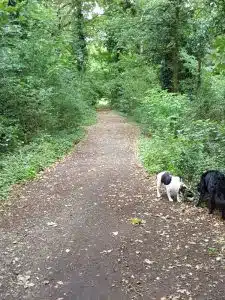
One of my favourite things about working in North London is the variety of green spaces tucked between busy roads, residential streets and playing fields.
A walk from Finchley towards Muswell Hill can take you through open grassland, nature reserves, woodland paths and quieter areas that many people drive past without realising they’re there.
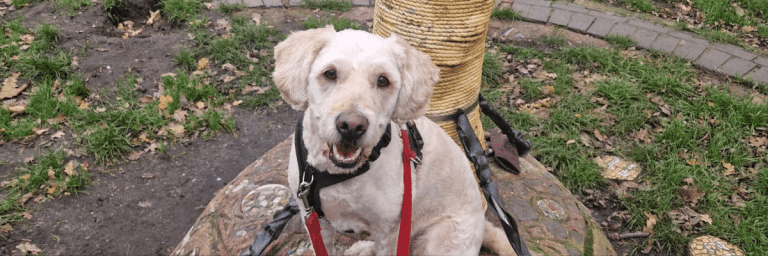
I originally wrote about this route in 2017, following a walk with Missy and my rescue Border Collie, Roxy.
We started near Summers Lane, explored the Glebelands and Coppetts Wood, then continued towards Muswell Hill Playing Fields and Coldfall Wood.
It was a lovely day out, although looking back, there are things I would do differently now.
After walking dogs professionally since 2011, particularly nervous and rescue dogs, I’ve become much more interested in choosing the right environment, giving dogs space and allowing them to explore without rushing.
This updated guide introduces the places along that original walk, explains what to look out for and helps you decide whether the full route, or a shorter section, would suit your dog.
summary: Walking from Finchley to Muswell Hill
- The original walk starts around Summers Lane in Finchley and explores Glebelands and Coppetts Wood.
- You can then continue towards Muswell Hill Playing Fields and Coldfall Wood.
- The route includes nature reserves, open grassland and woodland paths.
- The A406 North Circular and Colney Hatch Lane require particular attention when planning safe pedestrian crossings.
- Keep your dog under effective control, especially near roads, wildlife habitats and other visitors.
- Some paths may be muddy, uneven or unsuitable for dogs with mobility difficulties.
- Nervous dogs may benefit from shorter routes and quieter times.
- You don’t need to complete the entire walk to enjoy the local green spaces.
Table of contents
- summary: Walking from Finchley to Muswell Hill
- Where does the Finchley to Muswell Hill walk go?
- 1. Starting near Summers Lane and the Glebelands
- 2. Exploring Coppetts Wood Nature Reserve
- 3. Getting from Coppetts Wood towards Muswell Hill
- 4. Muswell Hill Playing Fields
- 5. Continuing into Coldfall Wood
- Is the full Finchley to Muswell Hill walk suitable for every dog?
- What are the main hazards along the route?
- What should you take on the walk?
- Frequently asked questions about walking from Finchley to Muswell Hill
- My approach to local dog walking
- One-to-one dog walking in Finchley and Muswell Hill
- Related guides
- About the author
- Important walking and safety information
Where does the Finchley to Muswell Hill walk go?
The original route connects four main green spaces:
- Glebelands, near Summers Lane.
- Coppetts Wood Nature Reserve.
- Muswell Hill Playing Fields.
- Coldfall Wood.
Together, they offer a mixture of grassland, woodland and established walking paths.
The route also includes residential streets and the busy North Circular corridor.
I would not describe this as a completely traffic-free woodland walk.
Check the precise route against current pedestrian crossings, entrances, paths, and any temporary closures before setting off.
Some sections include steps or uneven ground, so don’t assume the whole walk is suitable for wheelchairs, pushchairs or dogs with limited mobility.
You can enjoy each area separately rather than joining all four into one outing.
1. Starting near Summers Lane and the Glebelands
The Glebelands is one of those places many people know from driving through North Finchley without ever exploring it properly.
It includes open grassland and natural habitats close to Summers Lane and the North Circular.
The contrast can be quite striking.
You may hear traffic in the background while standing among trees, grasses and plants that provide habitat for wildlife.
What makes the Glebelands interesting?
The wider Glebelands and Coppetts Wood area includes:
- Open grassland.
- Woodland and scrub.
- Wetland habitats.
- Ponds and seasonal wet areas.
- Established walking paths.
- Areas used for sport and recreation.
This variety makes it interesting for dogs who enjoy investigating new smells.
However, not every part of the reserve is suitable for dogs to wander through.
Sensitive wetland areas support wildlife, including amphibians.
The local conservation group asks visitors to remain on designated paths and avoid disturbing newts and other animals.
You can learn more about the reserve from Coppetts Wood and the Glebelands Conservationists.
Walking your dog through the Glebelands
I would use a suitable lead wherever the route approaches roads, sensitive habitats or places with limited visibility.
Let your dog investigate appropriate areas without encouraging them to enter ponds, damage vegetation or chase wildlife.
The aim is to enjoy the reserve while leaving it in good condition for everybody else.
2. Exploring Coppetts Wood Nature Reserve
Coppetts Wood is one of North London’s smaller woodland treasures.
Despite being close to busy roads and residential areas, it has the character of a proper nature reserve.
Established paths run through woodland and scrub, with plenty of opportunities to spot wildlife and seasonal changes.
According to Barnet Council’s Coppetts Wood information, the site contains woodland, grassland, ponds and scrub habitats.
The council also identifies a nature trail.
A little local history
Coppetts Wood was once part of the much larger Finchley Common.
Over the centuries, the surrounding landscape changed considerably as roads, buildings and other development appeared.
The woodland survived as a smaller natural area.
Its history includes associations with highwaymen, sporting activities and later industrial uses in neighbouring areas.
Today, conservation volunteers help care for its habitats and maintain the nature reserve.
The Woodland Trust’s Coppetts Wood page provides more background.
What I enjoy about woodland walks
For dogs, the greatest attraction is often something we hardly notice.
Smell.
Foxes, squirrels, birds, and countless other animals may use the area.
A dog can spend several minutes investigating one small patch of ground.
I don’t regard that as wasted walking time.
For many dogs, sniffing is one of the most rewarding parts of being outside.
I prefer allowing suitable opportunities for exploration rather than constantly encouraging the dog to keep moving.
Protect the wildlife
My original 2017 article mentioned the dogs enjoying chasing squirrels.
That’s something I would change today.
I don’t encourage dogs to chase wildlife.
A dog doesn’t need to catch an animal to disturb it, and a chase can also leave the dog lost or injured.
Keep your dog under effective control and follow any local lead restrictions.
For broader guidance, read my Woodland Walks With Dogs: UK Safety Guide.
3. Getting from Coppetts Wood towards Muswell Hill
This is the section where planning matters most.
The A406 North Circular is a major road, and Colney Hatch Lane also carries substantial traffic.
My original walk included continuing out of the woodland, using Colney Hatch Lane and heading towards the Muswell Hill side.
I would not recommend simply following a description written in 2017 without checking the current layout.
Plan your road crossings carefully
Before attempting the complete route:
- Identify the available official pedestrian crossings.
- Check that the intended crossing is open and accessible.
- Keep your dog securely on a suitable lead.
- Allow extra time rather than rushing across roads.
- Be aware of traffic turning at junctions.
- Don’t assume a route shown on a phone is automatically the safest pedestrian option.
- Choose an alternative if you cannot identify a safe crossing.
There are pedestrian connections around the Coppetts Wood and North Circular corridor, including a footbridge near Coppetts Close, but you should confirm which crossing is suitable for your intended route.
Some approaches involve steps or slopes.
If you’re unfamiliar with the area, check current mapping and the access arrangements before travelling.
I would never recommend trying to cross the carriageway of the North Circular itself.
For dogs who become frightened by heavy traffic, this connecting section may be unsuitable.
There’s nothing wrong with enjoying Coppetts Wood as a separate walk and visiting Muswell Hill Playing Fields another day.
4. Muswell Hill Playing Fields
Once you reach the Muswell Hill side, the landscape changes again.
Muswell Hill Playing Fields offers much more open space than the woodland.
The site includes grass sports pitches, recreational areas and paths connecting with neighbouring spaces.
According to the Friends of Coldfall Wood and Muswell Hill Playing Fields, there are several entrances, including access from Coppetts Road, nearby residential streets and Coldfall Wood.
Is it suitable for dog walking?
For many dogs, yes.
The open areas provide different smells and surroundings from the woodland.
However, these are shared playing fields rather than an exclusive dog exercise area.
You may encounter:
- Football matches and training.
- Children and families.
- Cyclists and other path users.
- Other dogs.
- People using the sports and play facilities.
Give sports activities and other visitors plenty of space.
Avoid allowing dogs to interfere with games or chase footballs.
Follow local signs concerning where dogs may go and whether a lead is required.
Should you let your dog off the lead?
Only where permitted and when your dog is reliably under control.
A large open field doesn’t automatically mean every dog should be allowed to run freely.
For nervous dogs, older dogs or those with unreliable recall, a lead walk may be more appropriate.
Dogs can enjoy a good walk without being off lead.
My How to Exercise a Dog on the Lead guide explains how to make lead walks interesting and rewarding.
5. Continuing into Coldfall Wood
Coldfall Wood is a particularly enjoyable place to finish a walk.
It connects directly with Muswell Hill Playing Fields and contains a network of woodland paths.
I’ve spent many hours walking dogs here.
The woodland changes considerably throughout the year.
Spring brings new growth and woodland flowers.
Summer offers shaded areas.
Autumn brings fallen leaves and different smells.
Winter can make the paths muddy and slippery.
What should you expect?
Coldfall Wood has:
- Established woodland paths.
- Mature trees.
- Damp and occasionally muddy areas.
- Small bridges and path connections.
- Wildlife habitats.
- Several entrances from surrounding streets.
The Friends of Coldfall Wood provide local information about the site, its history and conservation work.
Be careful around the wetter sections
Some areas of Coldfall Wood become particularly damp after rain.
The locally known Everglades is associated with wet woodland conditions.
I don’t encourage dogs to charge through sensitive wetland areas or enter unfamiliar water.
Apart from environmental concerns, standing water may be contaminated or conceal hazards.
If the ground is especially wet or unstable, choose a firmer path.
For more practical advice, read my Muddy Dog Walks Guide.
Can you walk back through the wood?
You can choose a suitable shorter circuit within Coldfall Wood or leave through one of its established entrances.
However, don’t assume every path makes a simple loop back to where you started in Finchley.
Check your return arrangements in advance.
If you’re completing a longer one-way outing, make sure you can return home without leaving your dog exhausted.
Is the full Finchley to Muswell Hill walk suitable for every dog?
No.
And that’s something I’d emphasise much more strongly today than I did when I first wrote about the walk.
The route includes several different environments.
Some are open and straightforward.
Others involve woodland paths, roads, traffic noise and changing ground conditions.
Nervous and reactive dogs
For a nervous dog, I would probably choose one of the quieter sections rather than attempting the entire route.
A dog who struggles around traffic or unfamiliar dogs may find the road connections difficult.
A narrow woodland path can also become uncomfortable when another dog approaches.
I would choose a route with enough space to turn around or move away when necessary.
Don’t force your dog through situations they find frightening simply because you want to complete the walk.
Senior dogs
Older dogs may enjoy the interesting smells and variety.
However, their walking ability matters.
Consider:
- Joint discomfort.
- Arthritis or mobility problems.
- Uneven surfaces.
- Steps and slopes.
- Slippery ground.
- How far they normally walk comfortably.
- How they recover afterwards.
Sometimes a short visit to the playing fields or a gentle woodland sniff is a much better option.
Puppies
For puppies, keep outings appropriate to their age, health, development and experience.
A puppy doesn’t need to complete a long multi-area walk.
Short, positive visits to suitable places can be enough.
Discuss suitable public environments and vaccination precautions with your vet.
What are the main hazards along the route?
The greatest risks depend on the time of year and the individual dog.
Traffic and road crossings
The North Circular and Colney Hatch Lane are significant considerations.
Keep dogs securely managed and use appropriate pedestrian crossings.
Ticks and grass seeds
Woodland, scrub and grassland can provide suitable habitats for ticks.
During warmer months, grass seeds can also become trapped in paws or coats.
Check your dog after walking through vegetation.
Mushrooms and fallen plants
Wild mushrooms may appear after wet weather.
Some can cause serious poisoning.
Prevent your dog from eating unidentified fungi and contact your vet immediately if ingestion is suspected.
Read my Mushroom Poisoning in Dogs Guide.
Deep mud and slippery paths
After prolonged rain, some paths can become difficult.
Watch for exposed roots, wet leaves, deep mud and slippery surfaces.
Wildlife and sensitive habitats
Keep dogs away from ponds, nesting birds, protected habitats and wildlife.
Respect conservation signs and keep to appropriate paths.
Other dogs and people
Many different visitors use these areas.
Don’t let your dog run up to someone else just because you think they’re friendly.
What should you take on the walk?
I would keep things simple.
For an ordinary local outing, I’d consider:
- A comfortable, properly fitted harness or suitable collar.
- A dependable fixed-length lead.
- Identification with up-to-date details.
- Poo bags.
- Water and a suitable drinking container.
- Appropriate rewards.
- A charged mobile phone.
- Footwear suitable for the conditions.
- Any medication or equipment your dog genuinely needs.
- A small first-aid kit for a longer outing.
You don’t need expensive gadgets to enjoy a walk.
And you certainly don’t need to buy equipment simply because somebody has included it in an online packing list.
For a longer day out, make sure your dog has suitable opportunities for rest, water and toilet breaks.
Frequently asked questions about walking from Finchley to Muswell Hill
Can you walk from Finchley to Muswell Hill through green spaces?
Yes. The area includes connected green spaces, including Glebelands, Coppetts Wood, Muswell Hill Playing Fields, and Coldfall Wood. However, the full route also includes roads, so you must plan appropriate pedestrian crossings.
Is Coppetts Wood suitable for dogs?
Dogs can enjoy the established paths, provided they are kept under effective control and local rules are followed. The nature reserve contains sensitive wildlife habitats that need protecting.
Are dogs allowed in Muswell Hill Playing Fields?
Dogs can use appropriate public areas, subject to local restrictions and responsible control. Respect sports activities, play areas and other visitors.
Is Coldfall Wood muddy?
It can be, particularly after prolonged rain. Some sections are naturally damp, so suitable footwear and a willingness to change routes are useful.
Can nervous dogs enjoy woodland walks?
Yes, depending on the individual dog and the conditions. Choose quieter times, suitable paths and enough space to avoid unwanted encounters.
Is this walk suitable for older dogs?
Some parts may be suitable, but the complete route may be too demanding for dogs with mobility problems. Consider shorter sections and avoid difficult surfaces.
Can I let my dog chase squirrels in the woods?
I wouldn’t recommend it. Chasing can disturb wildlife and may lead to your dog becoming lost or injured. Use a lead or suitable management to prevent it.
How long does the walk take?
That depends on the exact route, detours, ground conditions and your dog’s pace. I wouldn’t give a fixed time for the full journey without checking the current route on foot. Plan conservatively and allow time for rest and sniffing.
My approach to local dog walking
I still love exploring the green spaces between Finchley and Muswell Hill.
Some of my favourite walks have been the ones where we haven’t gone particularly far.
The dog has had time to sniff, investigate and enjoy being outside, and we’ve returned home without rushing.
Walking with Roxy has helped shape how I think about dogs and their needs.
Over the years, I’ve become less interested in how many miles a dog covers and more interested in whether the walk is actually good for them.
That might mean enjoying the open spaces at Glebelands.
It might mean exploring a familiar path in Coppetts Wood.
Or it might mean choosing a much shorter walk around Coldfall Wood.
Every dog is different.
And the best route is the one that suits the dog in front of you.
One-to-one dog walking in Finchley and Muswell Hill
I provide calm, individual dog walks around Finchley, Muswell Hill and selected nearby areas.
My walks start and finish at your dog’s home.
I don’t collect dogs in vans, mix unrelated dogs into pack walks or expect every dog to follow the same route.
That means I can adapt walks according to their confidence, mobility, health and the conditions on the day.
For nervous, rescue or senior dogs, that flexibility can make a real difference.
If you’re looking for individual care, you can learn more about my Solo Dog Walking Service.
No vans. No pack walks. Just calm, local care.
Related guides
- Woodland Walks With Dogs: A Practical UK Safety Guide
- How to Exercise a Dog on the Lead
- Muddy Dog Walks: Cleaning Paws and Staying Safe
- Mushroom Poisoning in Dogs
- Autumn Dog Walking Tips
- Check Your Dog After a Walk
- Dog Behaviour and Body Language Hub
About the author
I’m Derek (Del) Chambers, owner of Finchley Dog Walker.
I’ve provided professional dog walking and pet care around Finchley, Muswell Hill and nearby parts of North London since 2011.
My work includes calm, one-to-one dog walks and support for nervous, rescue and senior dogs.
I hold an Ofqual Level 3 qualification in Canine First Aid, and my ongoing professional development includes canine body language, enrichment and reward-based handling.
My approach is based on recognising the individual dog’s needs and making sensible decisions about their environment.
Important walking and safety information
This article provides general information about local walking areas.
Paths, entrances, access arrangements, road crossings, local restrictions and ground conditions can change.
The route described is based on an original walk from 2017, supplemented with current publicly available information. I have not independently re-walked it in full for this update.
Before following the complete route, check current maps, official pedestrian crossings, local signs and any temporary closures.
Always keep your dog under appropriate control and contact your vet about medical concerns.
First published: 20 August 2017
Substantially updated: 2nd Nov 2026
.