
Staying safe around dogs
Practical Advice for Adults and Children
Updated June 2026
Dogs do not need to be aggressive to frighten or accidentally injure someone.
A friendly but excited dog may jump up. A nervous dog may bark when someone moves too close. A dog in pain may react when touched. Children can also miss the early signs that a dog wants to be left alone.
The safest approach is simple. Give dogs space, ask before approaching and pay attention when a dog tries to move away.
I work with dogs around Finchley and North London every day. Busy paths, park entrances and narrow pavements can make close encounters difficult. Slowing down and creating a little more distance often prevents a situation from becoming stressful.
Quick answer: How do you stay safe around dogs?
To stay safe around a dog, remain calm, avoid running or shouting and give the dog room to move away. Ask the handler before approaching. Do not hug, grab or lean over the dog. If the dog looks worried, stop interacting and increase the distance between you.
If an unfamiliar dog runs towards you, stand still, keep your arms close and look slightly away. If you are knocked down, curl into a ball and protect your head and neck.
Why do dogs jump, chase or bark?
There is no single reason.
An excited dog may jump because jumping has previously gained attention. A young dog may chase a runner because fast movement starts a game. A worried dog may bark to make someone move farther away.
Possible reasons include:
- excitement
- frustration
- fear
- lack of experience
- chasing behaviour
- discomfort or pain
- guarding food, toys or space
- feeling trapped by a lead, doorway or narrow path
Try not to label every barking or lunging dog as aggressive.
The more useful question is: what does this dog need right now?
Often, the answer is more space.
[Internal link – Reactive and Nervous Dog Support]
How should you approach a dog safely?
Always ask the handler before approaching.
A dog may be nervous, recovering from surgery, learning not to jump or simply uninterested in meeting people. A yellow lead cover, warning label or muzzle should be treated as a clear request for space.
If the handler says it is safe:
- Stop a short distance away.
- Turn your body slightly to the side.
- Keep your hands relaxed.
- Allow the dog to choose whether to come closer.
- Stroke the shoulder or chest rather than reaching over the head.
- Pause after a few seconds and see whether the dog asks for more contact.
Do not push your hand towards the dog’s nose. The dog can gather plenty of scent information without having a hand placed near its face.
If the dog stays away, turns its head or returns to its handler, accept that answer.

Which dogs should you leave alone?
Do not approach a dog that is:
- eating or chewing
- sleeping
- caring for puppies
- inside a car
- tied outside a shop
- behind a gate or fence
- playing with a valued toy
- injured or unwell
- trying to hide
- moving away from you
- Wearing equipment that requires space
A wagging tail is not automatic permission to touch a dog. Look at the whole body and the situation.
What are the signs that a dog wants more space?
Dogs often communicate quietly before they bark, growl or snap.
Early signs of discomfort can include:
- turning the head away
- moving away
- avoiding eye contact
- Licking the lips when no food is present
- yawning when not tired
- lifting one paw
- lowering the body
- putting the ears back
- closing the mouth suddenly
- becoming very still
- showing the whites of the eyes
- tucking the tail
One signal on its own does not tell you everything. Look at the dog’s whole body, the environment and what happened immediately beforehand.
For example, a dog may lick its lips after eating. That is different from repeatedly licking its lips while a child hugs it.
A growl is important communication. Do not punish it. Stop what is happening and give the dog space.
What should you do when an unfamiliar dog approaches?
First, try not to panic.
Stop moving towards the dog. Stand still or move slowly behind a solid barrier if one is close. Keep bags, coats and food close to your body.
Avoid:
- running
- screaming
- waving your arms
- kicking at the dog
- staring directly into its eyes
- bending over it
- trying to stroke it
- grabbing its collar
Ask the handler to call and secure their dog.
If there is no handler nearby and the dog remains calm, allow it space to investigate without reaching towards it. Move away slowly when it disengages.
If the dog is barking, growling, or repeatedly rushing towards you, keep your movements controlled and, where possible, place a barrier such as a bench, gate, bin, or parked car between you and the dog.
How do you use the “Be a Tree” technique?
“Be a Tree” is an easy phrase for children to remember when a loose or overexcited dog comes close.
Be a Tree
- Stop moving.
- Bring your arms close to your body.
- Keep your hands still.
- Look down or slightly away.
- Stay quiet.
- Wait for an adult or the dog’s handler to help.
Standing still reduces movement that might encourage chasing or jumping.
It does not guarantee that every dog will move away. Adults should intervene and create a safe exit as soon as possible.
Practise the position at home without a dog present. A child is more likely to remember it when surprised if they have rehearsed it calmly.
What should you do if a dog knocks you over?
The existing “Be a Stone” technique is also useful to practise.
Be a Stone
If you fall:
- curl into a ball
- bring your knees towards your chest
- cover the back of your neck
- Protect your face
- Stay as still and quiet as you can
- wait for adult help
Do not try to get up while the dog is still jumping over you. Rise slowly once the dog has been secured or moved away.
Any bite that breaks the skin should receive appropriate medical attention. Call the emergency services when someone is in immediate danger.
[External link – Government guidance on controlling dogs in public]
How can children stay safe around dogs?
Children need active adult supervision around dogs, including the family dog.
Supervision means being close enough to notice discomfort and step in. It does not mean watching from another room or checking occasionally.
Teach children to:
- Ask before touching a dog
- leave dogs alone while they eat or sleep
- avoid climbing, sitting or lying on dogs
- avoid hugs and kisses around the face
- Never take food or toys from a dog
- walk rather than run past dogs
- Stop when a dog moves away
- Call an adult if a loose dog approaches
- Use Be a Tree if they feel worried
Do not expect a dog to tolerate uncomfortable handling because they are “good with children”.
Dogs Trust advises giving dogs choice and avoiding affection that can make them feel trapped.
A simple child-friendly rule
Quiet hands. Walking feet. Give the dog space.
How can you make interactions safer at home?
Many incidents occur in everyday family life rather than during meetings with strange dogs.
Use simple management:
- Give the dog a quiet resting area.
- Teach children not to enter that space.
- Separate dogs and young children during meals.
- Pick up high-value chews when close supervision is not possible.
- Use stair gates or room dividers when everyone needs a break.
- Make sure the dog can leave an interaction.
- Arrange veterinary advice if behaviour changes suddenly.
- Seek qualified behaviour support when a dog regularly appears worried around children.
A gate or barrier is not a punishment. It can give both the dog and the child a chance to relax.
[Amazon affiliate link – sturdy indoor pet gate]
Dog safety in Finchley parks and streets
North London walks often involve close spaces.
You may meet dogs:
- near the park gates
- on narrow paths
- outside cafés
- beside school entrances
- on shared pavements
- around blind corners
- near football games or running children
When I walk a nervous or easily overwhelmed dog, I may cross the road, pause behind a parked car or choose a quieter route. This is not avoidance for its own sake. It prevents unnecessary pressure and gives the dog a better chance to remain calm.
Give dogs on a lead space, especially when your own dog is off lead. A dog on a lead cannot always move away freely.
Recall your dog before they reach another dog or person. “My dog is friendly” does not make an unwanted approach safe.
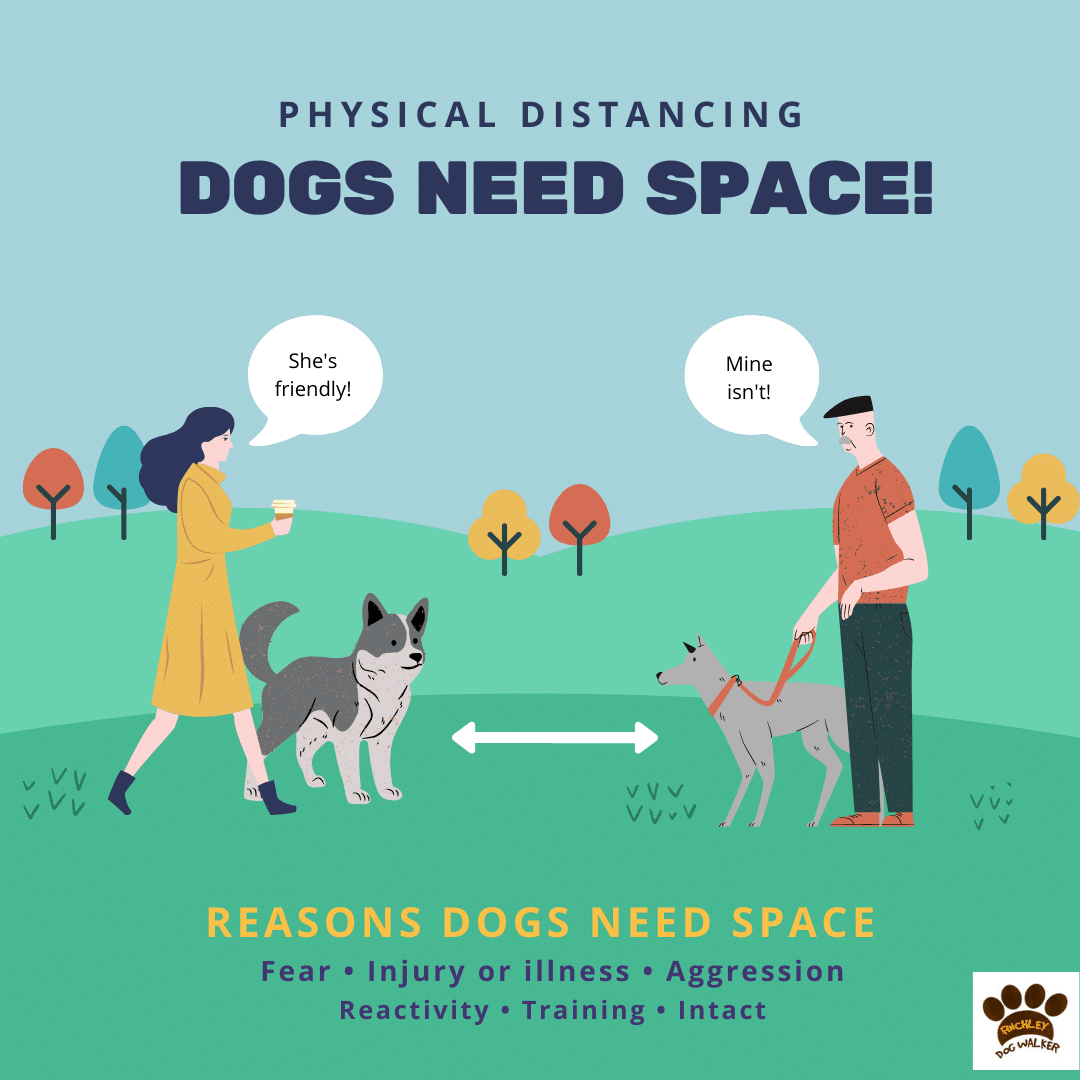
Take a moment to read my guide on what every dog owner should know
What can dog owners do to prevent unwanted approaches?
Owners also have an important role.
- Use secure, comfortable walking equipment.
- Practise recall away from distractions.
- Keep your dog on a lead near children, roads, and busy entrances.
- Do not allow your dog to rush up to strangers.
- Create distance when your dog appears worried.
- Avoid forcing greetings.
- Tell people clearly when your dog needs space.
- Choose quieter routes when appropriate.
For dogs that become overwhelmed in busy places, calm one-to-one walks can be more suitable than crowded group walks or transport in a van.
You may also want to check out my recommended walking kit, including suitable long leads
A final safety checklist
When you are near a dog:
- Ask before approaching.
- Let the dog choose whether to interact.
- Keep your movements calm.
- Never chase, corner or restrain the dog.
- Stop when the dog moves away.
- Give eating and sleeping dogs space.
- Supervise children closely.
- Stand still if an unfamiliar dog rushes over.
- Protect your head and neck if you are knocked down.
- Ask for professional help when a dog regularly appears fearful or uncomfortable.
Frequently asked questions
Should I hold my hand out for a dog to sniff?
Not as a default. A hand moving towards the face can worry some dogs. Ask the handler, remain still and allow the dog to approach in their own time.
What should I do if a dog runs towards me?
Stop running. Stand still, keep your arms close and look slightly away. Ask the handler to call the dog. Move behind a barrier if you can do so calmly.
Is a wagging tail always friendly?
No. Tail movement can occur during excitement, uncertainty or tension. Look at the dog’s entire body and the situation.
Should children hug dogs?
It is safer not to encourage hugs. Some dogs tolerate them, but many find restraint uncomfortable. Gentle contact that the dog can leave is a better choice.
Why does a dog become completely still?
Sudden stillness can be a sign that the dog is uncomfortable and deciding what to do next. Stop the interaction and create more space.
What should I do if a dog growls?
Stop approaching or touching the dog. Move away calmly and identify what made the dog uncomfortable. Do not punish the growl.
Can a friendly dog still cause an injury?
Yes. A friendly but excited dog may knock someone over, scratch them or frighten them. Owners should prevent unwanted approaches even when their dog enjoys people.
Are children safe alone with a family dog?
Young children should not be left unsupervised with a dog. Familiarity does not remove the need for active adult supervision.
Related dog care guides
- Dog and Pet Care Guides Hub
- Dog Safety Hub
- Reactive and Nervous Dog Walking in Finchley
- Rescue Dog Help in Finchley
- Dog Walking Tips Everyone Should Know
- Calm One-to-One Enrichment Walks
- Dogs and Children
Calm walking support in Finchley
Some dogs cope well in busy places. Others need more distance, slower introductions and predictable routes.
I provide calm, one-to-one dog walks and puppy support in Finchley and nearby parts of North London. I do not use group walks or vans. Each walk is planned around the individual dog, including nervous and rescue dogs that need a quieter approach.
Why not drop me a whatsapp on 07707 763344 to discuss
