

Rain does not automatically make a dog walk unsafe.
Some dogs enjoy wet weather and barely seem to notice it. Others step outside, feel the first drop and immediately decide that the sofa was the better option.
The important question is not simply whether it is raining. I also consider wind, visibility, flooding, thunder, slippery surfaces, falling branches and how the individual dog is coping.
A normal walk may sometimes become a shorter local sniff walk. On other days, a quick toilet opportunity followed by calm indoor care is the safer choice.
That is not a failed walk. It is sensible dog care.
My broader guide to how weather affects dog walks explains how I adapt walks for heat, cold, rain, wind, ice, and snow. This article focuses specifically on heavy rain, storms, strong winds and thunder.
Should you walk your dog in stormy weather?
It depends on the conditions and the dog.
Moderate rain may be perfectly manageable when:
- visibility remains good
- there is no thunder or lightning
- the wind is light
- paths are not flooded
- the route is familiar and safe
- your dog is comfortable
- you have suitable clothing and equipment
A walk may need to be shortened, moved or replaced when:
- thunder can be heard
- lightning is visible
- strong winds are moving branches or debris
- trees appear damaged or unstable
- roads and paths are flooding
- visibility is poor
- your dog is frightened or trying to return home
- the dog is becoming cold
- the surface is unusually slippery
- an official warning indicates a serious local risk
I check the forecast and the current Met Office weather warnings, but I also assess what is happening on the route itself. Weather warnings describe possible impacts across an area. Conditions can still vary considerably between streets, parks and woodland.
Rain is not the same as a thunderstorm
A wet walk and a thunderstorm should not be treated as the same thing.
Many dogs can still have a suitable walk in ordinary rain. I may choose a better-drained route, reduce the distance or spend more time allowing the dog to sniff close to home.
Thunder and lightning change the decision.
The Met Office advises that once you hear thunder, you are already within range of a possible lightning strike. Its guidance recommends seeking safe enclosed shelter and avoiding trees, exposed high ground, water, metal objects and wire fencing. (Met Office)
I would not begin a normal dog walk when thunder or lightning presents an immediate risk.
Check the weather before leaving
Storms can develop or intensify quickly.
Before leaving home, check:
- the local hourly forecast
- current weather warnings
- whether thunderstorms are expected
- the likely wind strength
- local flood information
- whether the worst conditions are expected during the walk
- whether there has already been heavy rain
- whether your planned route contains trees, streams or low ground
Do not rely only on the weather symbol displayed on your phone. Read the warning details because a yellow warning can cover different hazards and levels of likely disruption.
Where thunderstorms are forecast, the Met Office recommends reconsidering outdoor plans and staying up to date, as warnings can change.
Moving the walk to an earlier or later time may solve the problem, provided the new time has been agreed and the conditions are genuinely safer.
Walking dogs in heavy rain
Heavy rain creates risks beyond simply getting wet.
It can affect:
- visibility
- traffic noise
- stopping distances
- grip underfoot
- the depth of puddles
- stream levels
- drainage covers
- the stability of muddy paths
- your dog’s ability to hear and concentrate
On a wet day in Finchley, I may avoid the muddiest sections of Coldfall Woods, Highgate Woods or Cherry Tree Wood and use a firmer local route instead.
A shorter pavement and sniffing walk can sometimes be more suitable than trying to complete the normal route through deep mud.
Do not force a dog who hates the rain
Dogs do not all feel the same way about wet weather.
A comfortable dog may continue happily in moderate rain. Another dog may become worried, cold or reluctant to move.
Signs that your dog is not coping can include:
- repeatedly turning towards home
- refusing to continue
- shivering
- lifting their paws
- hunching their body
- tucking their tail
- becoming unusually alert
- trying to hide
- pulling towards doorways or shelter
- being unable to concentrate
- becoming more reactive than usual
Forcing a frightened or uncomfortable dog around the park does not improve the walk.
I may keep the goal simple:
- Allow the dog to toilet.
- Allow a little calm sniffing.
- Complete a short familiar loop where appropriate.
- Return home before the dog becomes increasingly stressed.
Nervous and rescue dogs may find weather changes particularly difficult because wind, moving objects and unfamiliar noises can make a familiar environment feel very different.
My rescue dog support in Finchley is based on responding to the dog in front of me rather than forcing them to complete a predetermined route.
Strong winds can make familiar places unsafe.
Wind is sometimes underestimated because the ground may appear dry and the sky may look clear.
However, strong winds can bring down branches, move unsecured objects and make walking beside damaged fences or buildings dangerous. The Met Office advises avoiding trees and buildings during dangerous winds and staying indoors as much as possible when conditions are severe.
I may avoid:
- wooded areas
- paths beneath mature trees
- exposed playing fields
- scaffolding
- damaged fencing
- loose advertising boards
- overflowing bins
- construction sites
- routes with hanging branches
- narrow paths with limited escape space
After earlier wind, I also watch for damage that may remain once the worst weather has passed.
A tree or fence does not have to fall during the walk to create a problem. Branches may already be weakened, gates may no longer close securely, and debris may be lying across the route.
Wind can also change a dog’s behaviour
Strong wind changes the environment.
Leaves, bags, bins, branches and signs may move unexpectedly. Smells travel differently, and background noise can become louder.
A dog who usually walks calmly may become:
- more watchful
- easily startled
- distracted
- reluctant to move
- more reactive towards dogs or people
- determined to chase moving debris
- less responsive to familiar cues
This does not necessarily mean their training has suddenly failed.
The environment has become harder for them.
I stay closer to home, use a familiar route and allow more distance from anything the dog finds worrying.
Should you walk your dog during thunder and lightning?
No normal dog walk is worth taking an unnecessary lightning risk.
When thunder is forecast nearby, I usually adjust the timing or replace the walk with suitable indoor activity.
When thunder is heard while already outside:
- stop continuing away from home
- move towards safe enclosed shelter
- avoid isolated trees
- avoid high or exposed ground
- stay away from streams, ponds and other water
- avoid metal fencing and railings
- do not shelter in an underpass or other low area that could flood
- keep your dog securely attached to you
- return home when it is safe to do so
The Met Office advises finding safe enclosed shelter if thunder is heard and warns against sheltering beneath or close to trees. It also advises moving away from elevated locations and avoiding low-lying spaces that may flood rapidly.
Because my walks begin and end at the dog’s home, I can usually choose a familiar route that keeps us within a sensible distance of shelter.
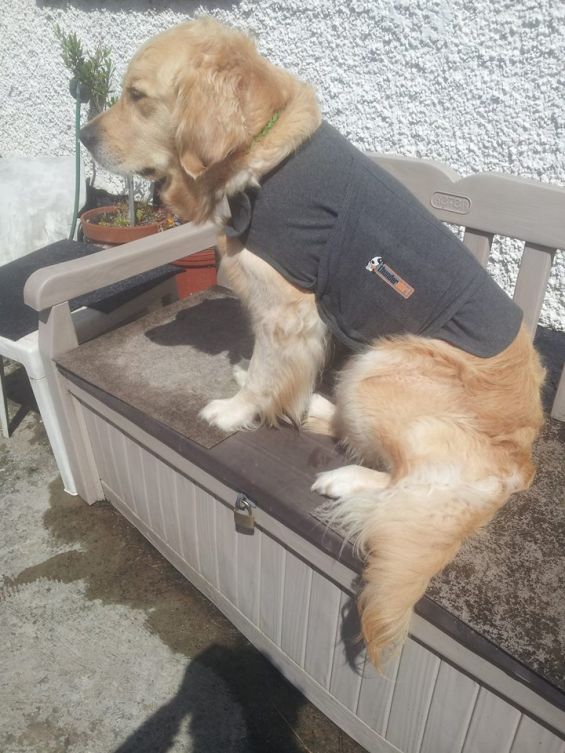
Dogs frightened by thunderstorms.
Some dogs begin showing anxiety before owners can hear the thunder.
Changes in wind, rain, air pressure and other storm conditions may contribute to their reaction. Signs can include panting, shaking, drooling, pacing, hiding, whining, barking, toileting indoors or trying to escape. (Blue Cross)
A frightened dog should not be pushed into the garden or taken for a walk simply because they have not yet toileted.
Instead:
- secure doors, windows and garden exits
- close curtains or blinds if flashes are upsetting
- provide access to a familiar safe place
- use calm background noise
- allow the dog to hide
- remain calm
- offer quiet reassurance when the dog seeks it
- avoid punishment
- do not drag the dog from their hiding place
Blue Cross advises allowing worried dogs to use a safe enclosed space and confirms that comforting a frightened dog will not make their fear worse. It also recommends speaking to a vet or appropriately qualified behaviour professional when storm anxiety is persistent or severe.
Make sure your dog’s microchip details and identification information are current because frightened dogs may try to escape.
Never enter floodwater with your dog.
Floodwater can be deeper and faster-moving than it looks.
It may also contain:
- sewage
- chemicals
- broken glass
- sharp debris
- damaged paving
- uncovered drains
- submerged branches
- uneven ground
- strong currents
GOV.UK advises people not to walk or drive through floodwater because it may contain sewage and conceal damaged roads, pavements, rubbish and open drain covers. Floodwater can also contain contaminants hazardous to people and animals.
Do not allow your dog to:
- walk through flooded roads
- swim in floodwater
- drink from flooded areas
- investigate submerged drains
- enter fast-flowing streams
- retrieve toys from floodwater
Turn around and use another route.
A missed section of a walk is far less important than the risk of injury, contamination or being swept into deeper water.
Puddles are not always harmless.
An ordinary shallow puddle on a known path is different from standing water after heavy rain.
Avoid water when you cannot see:
- its depth
- the ground beneath it
- whether a drain cover is secure
- whether broken objects are submerged
- whether it is connected to contaminated floodwater
Do not encourage your dog to jump into every pool of water simply because they enjoy splashing.
Visibility around roads
Heavy rain and dark skies can make dogs and pedestrians harder for drivers and cyclists to see.
I stay particularly cautious around:
- road crossings
- parked vehicles
- entrances to driveways
- shared paths
- cycle routes
- narrow residential roads
- busy junctions
Useful equipment may include:
- a well-fitted harness
- a standard fixed-length lead
- reflective material
- a light attached to suitable equipment
- visible waterproof clothing for the person walking
- a small torch when it is dark
I do not use retractable leads. They provide less dependable close control around traffic, poor visibility and sudden hazards.
Reflective or illuminated equipment can help other road users see you, but it does not make a hazardous route safe. Route choice and close control remain more important.
Slippery paths and muddy ground
Rain can make pavements, wooden bridges, leaves, slopes and woodland paths slippery.
This matters particularly for:
- senior dogs
- dogs with arthritis
- dogs recovering from injury
- dogs with limited mobility
- puppies who are still physically developing
- large or strong dogs who pull
- handlers with reduced balance or mobility
I may choose:
- a flatter route
- firmer surfaces
- wider paths
- quieter streets
- a slower pace
- a shorter walk
- more sniffing and fewer miles
There is little value in taking an older dog through deep mud when a comfortable local walk would meet their needs more safely.
What should your dog wear in wet weather?
Some dogs benefit from a properly fitted waterproof coat.
This can be especially helpful for:
- short-haired dogs
- small dogs
- older dogs
- dogs who become cold easily
- dogs with certain health or mobility needs
A coat should not restrict:
- shoulder movement
- breathing
- toileting
- vision
- normal walking
- the fit of the harness
Not every dog needs one. A thick-coated dog who remains comfortable may be happier without additional clothing.
For professional walks, I only use coats, boots, paw products or similar equipment that the owner has supplied or specifically approved, as set out in my Extreme Weather Policy.
What to carry on a stormy walk
For a short local walk, useful items may include:
- a charged phone
- secure house keys
- poo bags
- a small torch
- visible clothing
- a towel waiting at home
- any agreed dog coat
- emergency contact information
The best equipment does not replace good judgement.
A waterproof coat cannot protect you from a falling branch. A flashing collar does not make floodwater safe. A longer lead does not make thunder less dangerous.
Sometimes the right item to use is the front-door key.
What to do after a wet walk
Once home:
- Towel-dry your dog.
- Check their paws and legs.
- Look between the toes.
- Remove mud and visible debris.
- Check for small cuts or grazes.
- Remove wet clothing.
- Make sure the dog has a warm, dry resting place.
- Clean and hang up wet equipment.
Pay particular attention to long coats, skin folds and areas beneath wet harnesses.
Blue Cross recommends towel-drying dogs and keeping them warm until their coat is properly dry.
Contact your vet if you find:
- a deep cut
- persistent limping
- swelling
- significant pain
- breathing difficulty
- collapse
- unusual weakness
- suspected contact with contaminated water
- anything else that causes concern
My canine first-aid guide explains why first aid supports veterinary care rather than replacing it.
What can you do instead of a normal walk?
You do not need to recreate an hour-long outdoor walk through constant indoor activity.
Depending on the dog, alternatives can include:
- a brief safe toilet opportunity
- scattering part of their normal meal
- a simple scent search
- food in an appropriate Kong
- a LickiMat
- calm handling or grooming
- a short training exercise
- a cardboard-box search
- gentle play
- quiet companionship
- rest
Avoid turning the house into a frantic exercise course.
The old version of this article suggested stair sprints and indoor obstacle courses. I would not now recommend racing repeatedly up and down stairs as a general replacement for a walk. It may be unsuitable for puppies, senior dogs, dogs with mobility problems and dogs who become highly aroused.
My rainy-day activities for dogs include calmer ways to meet a dog’s needs indoors.
Any food game should remain easy enough for the dog to enjoy. Read Dog Enrichment Safety: When a Brain Game Becomes Frustrating before making puzzle activities increasingly difficult.
How I adapt professional dog walks
Every dog I walk is considered individually.
During poor weather, I may:
- change the route
- move the time where this is practical and agreed
- shorten the outdoor part of the service
- avoid parks or woodland
- remain close to home
- provide a toilet opportunity
- replace strenuous activity with calm enrichment
- provide quiet companionship
- cancel where no safe alternative is available
The decision depends on:
- the individual dog
- their age and health
- mobility
- behaviour
- the forecast
- official warnings
- local conditions
- the safety of the route
- whether the property can be reached safely
This is one advantage of my one-to-one solo dog walks.
I do not need several dogs to follow the same route at the same pace. I can adapt the service around the needs of the dog in front of me.
The full arrangements are explained in my Finchley Dog Walker Extreme Weather Policy. The current policy covers heavy rain, flooding, thunder, lightning, strong winds and suitable alternative care.
Frequently asked questions
Can dogs walk in ordinary rain?
Many dogs can still walk safely in moderate rain. Consider the wind, visibility, surface, temperature, route and your dog’s response. Shorten or change the walk when your dog is becoming cold, frightened or uncomfortable.
Should I walk my dog during a thunderstorm?
Do not begin or continue a normal outdoor walk when thunder or lightning creates an immediate hazard. Seek safe enclosed shelter and avoid trees, water, exposed areas and metal fencing.
Is it safe to walk a dog in strong winds?
It depends on the severity and local conditions. Strong winds can bring down branches and move debris. Avoid woodland, exposed routes, damaged structures and other obvious hazards. Follow official warnings and stay home when the risk is significant.
Can my dog walk through floodwater?
No. Floodwater may be contaminated and can conceal sharp objects, damaged surfaces, drains and strong currents. Use another route. (
What should I do when my dog is frightened of thunder?
Keep them indoors, secure exits and provide access to a familiar safe place. Allow them to hide and give calm reassurance if they seek it. Do not punish or force them outside. Speak to your vet when the fear is persistent or severe.
Will missing one walk harm my dog?
Replacing one unsafe walk with a toilet break, calm enrichment and rest is unlikely to undermine an otherwise suitable routine. Safety should come before distance or duration.
Does Finchley Dog Walker cancel walks because of rain?
Not automatically. I assess the dog, route and wider conditions. Moderate rain may only require a route change, while lightning, flooding, dangerous winds or another serious hazard may require a brief toilet visit or alternative indoor care.
The safest walk is sometimes the shorter one.
Dogs do not measure the quality of a day by the number of miles recorded on a phone.
A calm toilet break, some sniffing and quiet time at home can be more appropriate than struggling through a dangerous storm.
Check the forecast. Watch the conditions. Pay attention to your dog.
When thunder, floodwater, falling branches or severe winds make the normal route unsafe, change the plan.
Your dog can walk another day.

