A calm, practical guide from a Finchley dog walker
Leaving your dog with someone else isn’t just about finding availability. It’s about knowing your dog will be understood, handled properly, and kept safe while you’re not there.
My first dog loved kennels and meeting new friends and new people, but my rescue came back from boring, anxious, overstimulated, and really not herself. So you see ive seen both sides of this
Most of the time, the difference comes down to who you chose and how the care was set up and to some degree previous history of the dog
This guide will help you think it through properly.
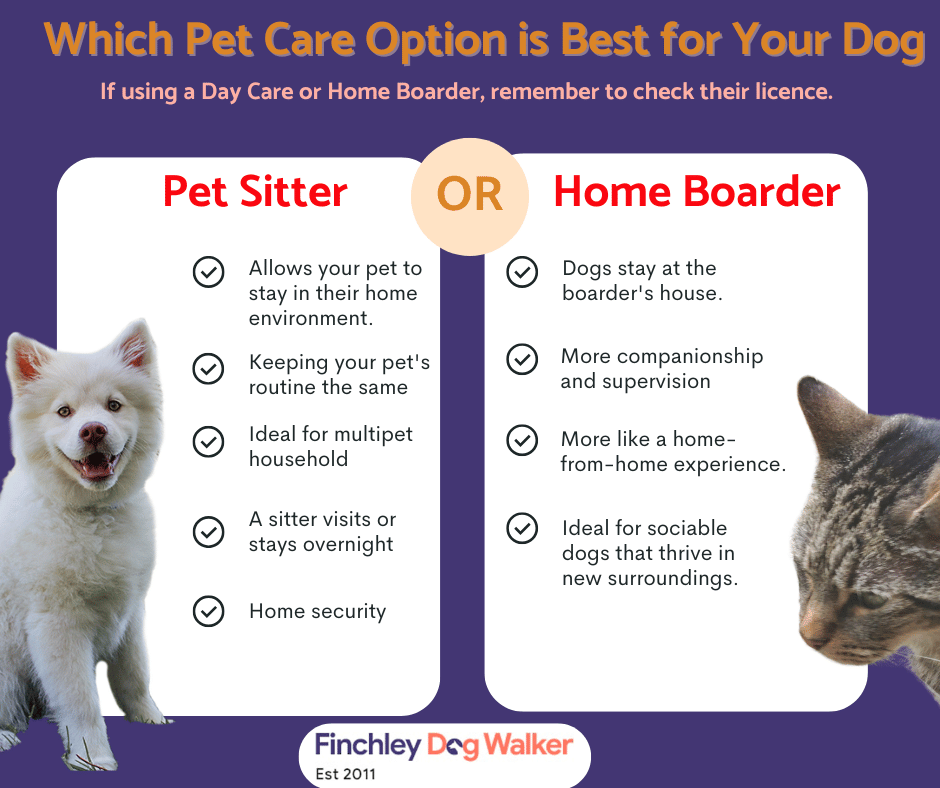
Start Here: Sitting or Boarding?
Before anything else, decide what type of care suits your dog.
Dog sitting (your home)
Someone stays in your home or visits regularly.
This tends to suit dogs who:
- rely on routine
- are nervous or reactive
- don’t settle easily in new places
- are older or need a slower pace
Your dog keeps their normal environment. That alone can prevent a lot of stress.
Dog boarding (their home)
Your dog stays with a licensed boarder.
This can work for dogs who:
- are confident and adaptable
- enjoy being around other dogs
- cope well with change
But it depends heavily on the setup. A calm home boarder with one or two dogs is very different from a busy multi-dog household.
Why Licensing and Insurance Really Matter
This is the part many people overlook.
There’s been a quiet shift in how councils deal with unlicensed animal businesses. It’s no longer just small fines.
In one recent case, a dog breeding business was ordered to repay over £100,000. Not as a fine, but as income taken back.
What led to that?
- Repeated online adverts,
- “spaces available,” post
- , clear patterns of trading over time
No one needed to catch them in the act. The evidence was already there.
This matters because dog boarding, day care, and breeding all fall under the same law:
The Animal Welfare (Licensing of Activities Involving Animals) (England) Regulations 2018.
So the focus is shifting from:
“Do they need a licence?”
To:
“How long have they been operating without one?”
And there are powers under the Proceeds of Crime Act to recover that income.
What this means for you is simple.
If someone is running:
- dog boarding
- dog day care
- any pet care business
They should be licensed.
If they’re not, they’re not under the radar. They’re building a record.
What About Dog Sitters and Walkers?
Dog sitters who stay in your home may not always require a licence, depending on how they operate.
But at a minimum, they should have:
- insurance
- canine first aid training
- clear emergency procedures
The same applies to dog walkers.
If someone is handling your dog regularly, they should be insured and trained to respond if something goes wrong.
What I Look for When Recommending Someone
I keep it simple and practical.
Calm environment
Too many dogs change their behaviour quickly.
Look for:
- low numbers
- dogs that can settle
- clear supervision
Experience with different dogs
Not just easy ones.
Ask about:
- rescue dogs
- nervous dogs
- dogs that react or need space
I offer both rescue dog support and house sitting for rescue dogs
Clear, honest answers
They should be able to explain:
- how walks are handled
- how dogs are introduced
- what they do if a dog becomes stressed
If answers feel vague, trust that feeling.
Proper paperwork
For boarders:
- council licence
- insurance
For sitters and walkers:
- insurance
- first aid knowledge
Questions Worth Asking
Keep it straightforward.
- How many dogs do you care for at once?
- Where will my dog sleep?
- How are walks managed?
- What happens if dogs don’t get on?
- Can we do a trial stay?
You’re not being difficult. You’re protecting your dog.
Trial Stays Matter
Even a short stay can tell you a lot.
Watch for:
- appetite changes
- unsettled behaviour
- clinginess or withdrawal
Some dogs hold it together while they’re there and only show stress after.
Signs Something Isn’t Right
You don’t need expert knowledge to spot this.
Be cautious if:
- there are lots of dogs in one space
- everything feels noisy or chaotic
- dogs seem constantly overexcited
- your questions aren’t answered clearly
I’ve worked with dogs after stays like this. It can take time to get them settled again.
Helping Your Dog Settle During a Stay
Preparation helps more than people expect.
Keep things familiar
- bedding
- food
- walking setup
Stick to routine
Try not to change everything before the stay.
Be honest about your dog
Let them know:
- what your dog struggles with
- what helps them settle
- how they behave on walks
A Real Example from North London
I worked with a dog from Finchley who struggled after a boarding stay.
Before, he was steady. After, he became reactive, especially in busier spots like Highgate Woods.
But he’d spent a week in a busy environment with several dogs and constant stimulation.
We had to slow everything down. Quieter routes. More space. Less pressure.
He settled again, but it took time.
Local Factors to Think About
North London walks aren’t always straightforward.
Busy parks, off-lead dogs, narrow paths.
If your dog is staying locally, ask:
- where they walk
- when they go out
- how they manage other dogs
Coldfall Woods and Cherry Tree Wood can be calm at the right times. But they can also become busy quickly.
External Guidance Worth Reading
The RSPCA provides clear guidance on choosing pet care and what standards to expect. This fits naturally when you’re checking credentials and welfare.
If your dog has any medical needs, speak to your vet before any stay. I don’t give medical advice, in line with the Veterinary Surgeons Act.
Common Mistakes I See
- choosing based on price alone
- skipping trial stays
- assuming all dogs enjoy group care
- not checking licences
- changing routine too much beforehand
FAQ
Yes. If they are running a business, they must be licensed by their local council.
Yes. Anyone caring for your dog should have insurance as a basic standard.
It can be, especially in busy environments. Some dogs cope well. Others don’t.
For many dogs, yes. Especially those that rely on routine or are sensitive to change.
Ask for their licence details or check with your local council.
Final Thoughts
The best setup is the one where your dog can relax.
Not the busiest. Not the most advertised.
Just calm, predictable, and well managed.
If your dog is more comfortable staying in their own space, I offer house sitting alongside calm one-to-one walks. I also support rescue and sensitive dogs who need a quieter approach.
You’re always welcome to get in touch via whatsapp on 07707 763344 if you want to talk it through.
f you found this guide helpful, you can support the site via Buy me a coffee
Updated March 2026
About Derek Del Chambers
I’m a Finchley-based dog walker and house sitte working one-to-one with dogs on finchley, muswell hill and surrounding areas. I focus on calm, structured walks and support for rescue and sensitive dogs, helping them feel more settled day to day
You can explore my services or read another guide if you’d like to learn more.