Updated October 2026 | By Derek (Del) Chambers, Finchley Dog Walker
When I’m walking dogs around Finchley and Muswell Hill, I’m not just thinking about exercise, enrichment or which route to take.
I’m also watching what’s happening around us.
A discarded chicken bone beside a bin. A puddle that’s been sitting there for days. Long grass along a footpath. A dog approaching from the opposite direction. Something suspicious spilled near a parked car.
Most of these things wouldn’t attract much attention during an ordinary walk.
But when you’re responsible for somebody else’s dog, noticing small details can make a real difference.
I’ve been walking and caring for dogs professionally since 2011, and I’ve learnt that good dog walking involves more than keeping hold of the lead.
It means recognising potential problems early, understanding the individual dog and making sensible decisions before a situation becomes difficult.
I also believe dogs should enjoy their walks.
They need opportunities to sniff, explore and make appropriate choices. Safety shouldn’t mean marching them along without allowing them to investigate their surroundings.
The aim is to balance freedom, enrichment and sensible management.
In this guide, I’ll explain the everyday environmental hazards I watch for, how I reduce risks, and which pieces of equipment I genuinely find useful.
Quick answer: What environmental hazards should you watch for when walking your dog?
Common dog-walking hazards include:
- Contaminated puddles, ponds and standing water.
- Blue-green algae in lakes and other bodies of water.
- Grass seeds, ticks and potentially harmful plants.
- Discarded food, cooked bones and rubbish.
- Antifreeze, garden chemicals and other substances.
- Hot pavements, icy paths and unsafe weather.
- Broken glass, sharp objects and damaged surfaces.
- Uncontrolled dogs and crowded walking routes.
- Wildlife, bicycles and unexpected distractions.
The most useful precautions are to pay attention to your surroundings, choose suitable routes, use comfortable and secure equipment, keep your dog away from suspected hazards, and check them after walks.
If your dog may have swallowed something toxic or been exposed to blue-green algae or antifreeze, contact your vet immediately.
Affiliate disclosure
This article contains affiliate links, including links to Amazon. If you make a qualifying purchase, I may earn a small commission at no additional cost to you.
As an Amazon Associate, I earn from qualifying purchases.
I only recommend equipment that fits my force-free, welfare-led approach. You don’t need to buy everything mentioned here; the right equipment depends on your individual dog.
1. Contaminated puddles and standing water
Dogs can be remarkably enthusiastic about drinking from puddles.
You may have a perfectly clean bowl of fresh water waiting at home, but apparently the muddy puddle beside the footpath is far more interesting.
During walks through places such as Cherry Tree Wood and Coldfall Wood, I’m particularly aware of water that has been standing for some time.
The problem is that you cannot reliably tell whether a puddle is safe simply by looking at it.
Standing water may contain bacteria, animal waste or other contaminants.
Leptospirosis
Leptospirosis is a bacterial infection that can spread through water or soil contaminated with the urine of infected animals.
Dogs may become exposed through contaminated environments, particularly where infected wildlife or rodents have been present.
It’s one reason I discourage dogs from drinking from stagnant puddles.
It doesn’t mean every puddle is infected, but it’s sensible to avoid unnecessary exposure.
Vaccination may help protect against certain forms of leptospirosis. Discuss suitable vaccination arrangements with your vet.
What I do on walks
I watch for dogs lowering their heads towards questionable water.
If I notice them showing an interest, I calmly guide them away before they start drinking.
I don’t use sharp lead corrections.
Instead, I use appropriate lead handling, distance and familiar reward-based cues.
Where needed, I offer clean drinking water.
Equipment that may help
I prefer a suitable travel water bottle or collapsible bowl rather than allowing dogs to drink from unknown sources.
Travel Dog Water Bottle – Amazon affiliate link
Collapsible Dog Water Bowl – Amazon affiliate link
Choose equipment that is easy to clean, convenient to carry and suitable for the dog’s size.
2. Blue-green algae in ponds and lakes
Blue-green algae is a different issue from ordinary muddy puddles.
Despite its name, it is a type of bacteria known as cyanobacteria.
Some blooms produce toxins capable of causing severe illness or death in dogs.
They may be present in still or slow-moving water, particularly during warmer weather.
Importantly, potentially harmful water isn’t always obviously green or covered in visible scum.
What I look for
I watch for warning signs around ponds and lakes, especially notices advising people to keep dogs out of the water.
I also consider whether the water is stagnant and whether there are reports of contamination.
But I wouldn’t assume that water is safe just because there is no warning sign.
What I do on walks
I prevent dogs from entering or drinking from water where blue-green algae may be present.
I avoid encouraging swimming or retrieving toys from unfamiliar ponds.
If I suspect exposure, I treat it seriously.
When to contact your vet
If your dog may have swallowed water or contacted a suspected blue-green algae bloom, contact your vet immediately.
Do not wait for vomiting, weakness or other symptoms to develop.
Follow your vet’s instructions to prevent further ingestion from contaminated fur.
For independent veterinary guidance, read PDSA: Blue-Green Algae Poisoning in Dogs.
For wider information about water activities, visit my Seasonal Pet Safety Hub.
3. Grass seeds and hidden problems in longer grass
Grass seeds are one hazard I pay particular attention to during late spring and summer.
They’re small, easily overlooked and can become caught in a dog’s coat.
Certain grass seeds have sharp, pointed structures that can lodge between toes or enter the ears, eyes and skin.
Once embedded, they may move deeper into the tissues.
This can result in pain, infection and sometimes more complicated veterinary treatment.
Where I check
After walks around long or drying grass, I pay particular attention to:
- Between the toes.
- Around the paw pads.
- Inside and around the ear flaps.
- Beneath the front legs.
- Around the chest and belly.
- Areas with long or feathered fur.
Dogs with longer coats or floppy ears may require particularly careful checks.
Signs I take seriously
A dog may suddenly:
- Start limping.
- Repeatedly lick one paw.
- Shake their head.
- Scratch at one ear.
- Squint or rub an eye.
- Sneeze repeatedly.
- Develop swelling or a painful area.
I don’t assume the dog is simply being awkward.
Sudden changes during a walk may indicate early discomfort.
What I do on walks
When grass seeds are particularly troublesome, I choose clearer paths and avoid unnecessary movement through dense, dry grass.
I also check dogs during and after walks when appropriate.
If I suspect an embedded seed, I stop the activity and arrange veterinary advice through the owner.
A grooming comb may help remove loose seeds from the coat, but it won’t safely remove an embedded seed.
Never dig into the skin or ear canal to retrieve one.
My Grass Seeds and Dogs Guide explains what owners should look for in more detail.
You can also read PDSA’s Grass Seed Advice.
4. Ticks, sharp plants and other vegetation
Grass seeds aren’t the only concern around vegetation.
Depending on the season and location, dogs may encounter ticks, thorny branches, stinging plants or other hazards.
Ticks can attach to dogs when they move through suitable vegetation.
Some ticks can transmit infections, including Lyme disease.
My approach
I don’t believe dogs should be prevented from enjoying natural environments.
But I do think route choice matters.
I pay attention to:
- Dense undergrowth.
- Areas where ticks may be present.
- Thorny plants near narrow paths.
- Long grass that could conceal sharp objects.
- Changes in a dog’s movement or comfort.
After appropriate walks, I check for anything unusual on the coat and skin.
If you find a tick, remove it safely using an appropriate method. Seek veterinary advice if you’re unsure or if your dog becomes unwell.
Don’t apply oils, heat or household chemicals to an attached tick.
For advice about seasonal outdoor hazards, see my Seasonal Pet Safety Guide.
5. Discarded food, chicken bones and scavenging
This is one of the most common urban hazards I encounter.
Food waste can appear almost anywhere.
Beside public bins.
Around picnic areas.
Near takeaway shops.
Along residential streets.
And sometimes right in the middle of a footpath.
I’ve seen dogs get interested in something on the ground before I can identify it.
That’s why I watch their body language and where they’re looking.
What might be dangerous?
Potential problems include:
- Cooked chicken bones.
- Chocolate.
- Foods containing onion or garlic.
- Grapes and raisins.
- Food contaminated with mould.
- Discarded chewing gum containing xylitol.
- Packaging and plastic.
- Unknown leftovers or substances.
Not everything a dog finds is toxic, but don’t assume discarded food is safe.
Cooked bones can splinter and cause injury or obstruction.
Some human foods can cause poisoning.
Packaging can also become a choking or intestinal obstruction hazard.
For specific food risks, see my Toxic Foods for Dogs Guide.
What I do before a dog grabs something
I watch for sudden changes in movement and attention.
A dog may slow down, lower their head or become particularly interested in a small area.
Where possible, I guide them away before they reach the item.
I also practise useful reward-based behaviours such as moving away from something, checking in and exchanging an object safely.
I don’t rely on shouting or yanking the lead.
What if the dog has already picked something up?
Don’t automatically reach into a dog’s mouth, particularly if they are frightened or likely to guard what they have found.
If it is safe and the dog understands a familiar exchange cue, that may help.
If you suspect something dangerous has been swallowed, contact your vet immediately and explain what the item may have been.
Do not induce vomiting unless your vet specifically instructs you to.
When might a basket muzzle help?
For dogs with a repeated history of swallowing dangerous objects, a suitably fitted basket muzzle may be an important management tool.
However, introduce it gradually using positive, reward-based training.
The muzzle must allow comfortable panting, drinking and suitable movement, and its design must prevent the particular scavenging risk.
Not every basket muzzle prevents every type of food from being picked up.
A muzzle isn’t a substitute for attentive handling or professional training.
Read Dogs Trust: How to Train Your Dog to Wear a Muzzle.
6. Chemicals, weed treatments and antifreeze
Not every hazard is something a dog can easily recognise as food.
Some are substances left on the ground or spilled near vehicles, paths and gardens.
Potential exposures include:
- Antifreeze and vehicle fluids.
- Slug pellets.
- Garden pesticides.
- Weed treatments.
- Cleaning products.
- Unknown powders or liquids.
- Road salt and de-icing substances.
The severity of the risk depends on the substance, amount and type of exposure.
Why antifreeze is particularly serious
Some antifreeze contains ethylene glycol, which is highly toxic to dogs.
Even small quantities can cause severe kidney damage.
Dogs may swallow antifreeze directly or ingest residues after walking through a spill and licking their paws.
If I see a suspicious liquid beneath a parked vehicle, I don’t allow a dog to investigate or drink it.
If exposure is suspected, urgent veterinary help is essential.
Read PDSA: Antifreeze Poisoning in Dogs.
What I do on walks
I avoid areas visibly treated with chemicals or where warning notices are displayed.
I keep dogs away from suspicious spillages.
If an unknown substance gets onto a dog’s paws or coat, I prevent licking and seek appropriate veterinary advice, particularly if the substance may be toxic.
A damp cloth or suitable water rinse can help with ordinary dirt and certain residues, but it should not delay urgent professional guidance when poisoning is suspected.
7. Hot pavements and unsafe ground temperatures
Hot surfaces can become a problem during warmer weather, even in the UK.
Tarmac and paving can absorb heat and become uncomfortable or damaging to paws.
But hot ground is only one concern.
Dogs can also overheat through exertion, particularly when temperatures and humidity are high.
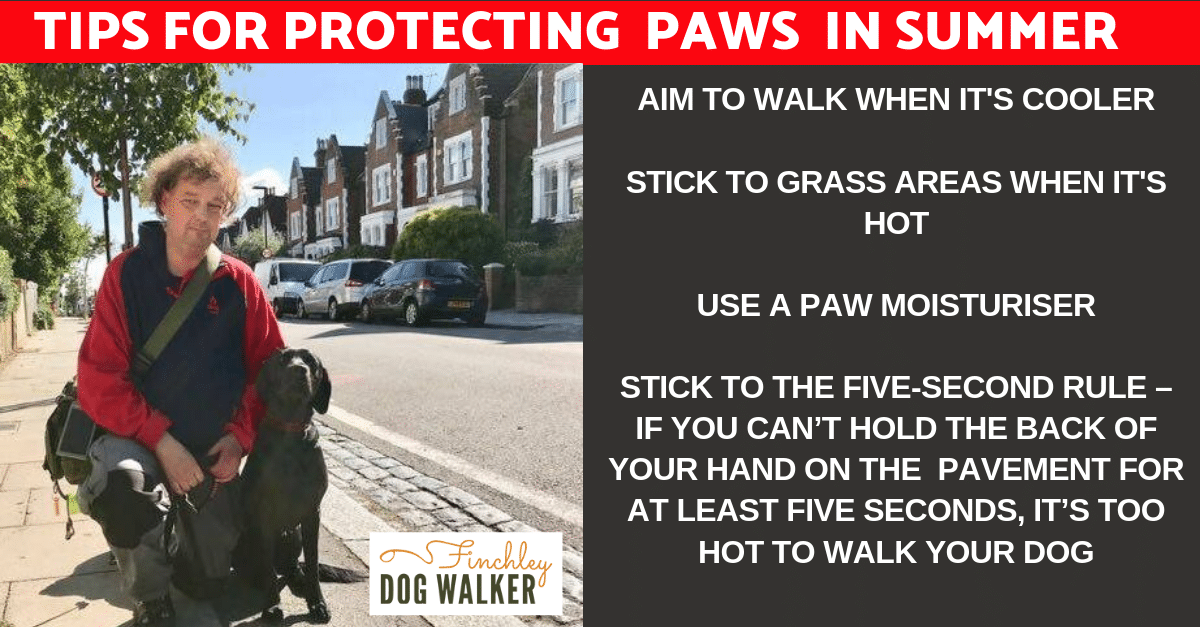
The problem with relying on the hand test
You may have heard advice to place your hand on the pavement to judge whether it is too hot.
Feeling a surface may alert you to a problem, but it doesn’t prove that the ground or weather conditions are safe for your dog.
Different surfaces heat up differently.
Individual dogs also vary in their vulnerability to heat.
I prefer to consider the full conditions rather than rely on one test.
What I do on summer walks
Depending on the weather and the dog, I may:
- Choose a cooler time.
- Shorten the walk.
- Select shaded routes.
- Avoid hot paved surfaces.
- Keep exercise gentle.
- Offer clean drinking water.
- Replace a walk with suitable home care when conditions are unsafe.
A normal-length walk isn’t worth risking heatstroke.
Read my Walking Dogs on Hot Pavements Guide and Summer Dog Safety Guide.
8. Ice, slippery paths and winter hazards
Environmental walking risks don’t disappear when summer ends.
During colder weather, I pay attention to:
- Black ice.
- Slippery pavements.
- Frozen puddles.
- Road grit.
- De-icing chemicals.
- Reduced daylight.
- Snow concealing broken glass or other debris.
- Frozen or unstable paths.
Some dogs enjoy cold conditions.
Others struggle, particularly if they’re older, have mobility difficulties or are sensitive to cold.
My approach to winter walks
I choose routes according to conditions rather than sticking rigidly to a familiar plan.
If paths are icy or unsafe, I may shorten or change the walk.
I also check paws for road salt or other residues.
If your dog develops sore paws, lameness or unusual behaviour, seek appropriate veterinary advice.
For more detailed guidance, see my Winter Dog Care Guide and Extreme Weather Policy.
9. Broken glass, litter and sharp objects
Not every walking hazard is seasonal or biological.
Broken bottles, sharp metal, discarded packaging and other rubbish can create risks throughout the year.
I am especially careful around:
- Public bins.
- Picnic areas.
- Busy shopping streets.
- Areas after outdoor events.
- Overgrown path edges.
- Places where broken glass may be hidden.
What I do
I watch the ground ahead and move around suspicious areas.
If a dog suddenly begins limping or holding up a paw, I stop and check what is happening.
I don’t keep walking in the hope the problem will go away.
Small superficial debris may be visible, but deeply embedded objects, significant cuts or ongoing lameness need veterinary attention.
For practical first-aid preparation, see my Dog First Aid Hub.
10. Other dogs and unpredictable encounters
Not every walking risk involves something on the ground.
Sometimes the most significant challenge is another dog approaching unexpectedly.
Some dogs are comfortable with unfamiliar dogs.
Others are nervous, reactive, recovering from illness or simply not interested in social interaction.
I don’t assume that every dog wants to say hello.
And I don’t believe that a dog needs to greet unfamiliar dogs to have a successful walk.
What I look for
I watch:
- How the approaching dog is moving.
- Whether the handler appears to have control.
- Changes in the dog I’m walking.
- Available space on the path.
- Whether the environment allows us to move away comfortably.
I would rather create distance early than wait until a dog is barking, lunging or overwhelmed.
What I do
Depending on the situation, I may cross the road, change direction or move into a wider space.
I reward appropriate engagement and avoid forceful corrections.
For nervous or spirited dogs, quieter routes and predictable encounters can make walks more enjoyable.
My Respect My Dog’s Space Guide explains why giving other dogs space matters.
For wider help with communication and stress, visit my Dog Behaviour and Body Language Hub.
11. Wildlife, cyclists and crowded paths
A dog walk may also involve cyclists, runners, children, wildlife and other people using the same space.
Some dogs are particularly interested in movement.
Others may be frightened by bicycles, sudden sounds or people passing very close.
This is one reason I prefer appropriate control and careful route choice.
Around wildlife
Dogs should not chase or disturb wildlife or livestock.
In some environments, the law or local restrictions require dogs to be kept on leads.
Even where off-lead exercise is legally permitted, a reliable recall and appropriate management remain important.
Around cyclists and runners
On shared paths, I keep dogs close enough to allow other people to pass safely.
A long line is not suitable for busy shared paths where it could create a trip or entanglement hazard.
I prefer clear communication, suitable spacing and calm handling.
A walk should be enjoyable for the dog without creating unnecessary problems for everybody else.
12. What I carry on professional dog walks
You don’t need to carry a bag full of expensive gadgets.
However, a few reliable pieces of equipment can make everyday walking safer and more practical.
Here’s what I generally consider useful.
Comfortable, correctly fitted harness
I prefer a secure harness that fits the dog’s body properly and allows comfortable movement.
For suitable dogs, I recommend considering the PerfectFit Harness.
Fit matters more than branding. Check the manufacturer’s guidance and consider professional fitting help if needed.
This is a direct manufacturer link, not a verified affiliate link.
Suitable fixed-length lead
For ordinary pavements and busier areas, I prefer a reliable fixed-length or double-ended lead.
This helps me manage space and respond to changes in the environment.
I don’t use retractable leads.
Waterproof long line
A suitable long line can be useful when walking in appropriate open spaces and when a dog benefits from controlled freedom.
I attach long lines to an appropriate harness, not to a choke or slip lead.
I wouldn’t use one on a busy pavement or in a crowded location.
Waterproof Long Line – Amazon affiliate link
Treat pouch
A practical treat pouch lets me reward good choices right away.
That might mean checking in, responding to a familiar cue or moving calmly away from something interesting.
I use reward-based training rather than aversive corrections.
Silicone Treat Pouch – Amazon affiliate link
Fresh drinking water
I prefer carrying clean water rather than allowing dogs to drink from questionable puddles.
Travel Water Bottle – Amazon affiliate link
Suitable treats
I carry rewards appropriate to the individual dog’s diet and preferences.
Sprats can be useful for some dogs, although they won’t suit every dog and should be given in appropriate amounts.
Sprats – Amazon affiliate link
Other practical essentials
Depending on the dog and walk, I may also carry:
- Waste bags.
- A spare lead.
- A phone with emergency contact details.
- Suitable cleaning materials.
- Basic first-aid supplies.
- Information about the individual dog’s needs.
I don’t believe equipment replaces good judgement.
It’s there to help me make better decisions during a walk.
13. My before, during and after-walk safety checklist
This is the kind of practical routine I’d encourage owners to develop.
Before leaving
- Check the weather and ground conditions.
- Consider the dog’s health, age and comfort.
- Check harness, collar and lead fit.
- Make sure identification is appropriate and up to date.
- Carry waste bags and suitable rewards.
- Take clean water if needed.
- Choose a suitable route.
During the walk
- Watch for food waste and rubbish.
- Keep away from questionable water.
- Notice grass seeds and overgrown vegetation.
- Check for chemical spillages and treated areas.
- Give unfamiliar dogs appropriate space.
- Watch for signs of discomfort or fatigue.
- Adapt the route if conditions change.
After the walk
- Check paws for cuts, debris and grass seeds.
- Look over the coat and ears where appropriate.
- Offer fresh water.
- Note any unusual behaviour.
- Allow suitable rest.
- Contact the owner or vet if something concerning happened.
This doesn’t need to become an elaborate inspection every time.
The aim is to make sensible checks part of normal care.
14. When should you contact your vet?
Some issues can be managed by changing a route or removing an obvious hazard.
Others need professional attention.
Contact your vet promptly if your dog:
- May have swallowed a toxic substance.
- Has been exposed to suspected blue-green algae.
- May have swallowed antifreeze.
- Develops sudden unexplained lameness.
- Has a suspected embedded grass seed.
- Has a painful or injured eye.
- Swallows a bone or foreign object and you are concerned.
- Develops repeated vomiting, weakness or unusual behaviour.
- Has a significant cut or injury.
Seek emergency veterinary care for collapse, seizures, difficulty breathing, suspected severe poisoning or other serious signs.
Don’t delay getting advice while searching the internet or attempting unapproved home remedies.
My Dog First Aid Hub contains further practical information.
15. Walking around Finchley: Why conditions matter
One of the things I enjoy about walking dogs locally is the variety of environments.
Cherry Tree Wood, Coldfall Wood, Highgate Wood and the Parkland Walk all offer opportunities for appropriate sniffing and exploration.
But the conditions can change from week to week.
In spring, I may be more concerned about emerging vegetation and grass seeds.
During summer, heat and dry grass become important.
After heavy rain, muddy paths and standing water may be the bigger issues.
After busy weekends, discarded food or rubbish may appear in places that were clear a few days earlier.
That’s why I don’t follow exactly the same walking plan regardless of conditions.
I consider the dog, the environment and what is happening on the day.
And if the safest choice is to alter the route or shorten the walk, that’s what I do.
16. How I support dogs who need a calmer approach
Some dogs need a little more planning during everyday walks.
That might include dogs who:
- Become worried around unfamiliar dogs.
- Scavenge frequently.
- Have poor recall.
- Find busy environments overwhelming.
- Are newly adopted.
- Need gentler exercise because of age or health.
- Are learning practical everyday skills.
I don’t describe these dogs as difficult.
Many are simply what I affectionately call ‘awkward but awesome’.
I’ve been providing professional dog care since 2011, and my approach is based on understanding the individual rather than forcing them into a standard routine.
Solo dog walking
My Solo Dog Walks in Finchley and Muswell Hill begin and finish at the dog’s own home.
I walk dogs from one household at a time, without vans or mixed-household group walks.
That allows me to adjust routes, pace, handling and enrichment according to the individual dog.
Rescue dog support
For suitable nervous or newly adopted dogs, my Rescue Dog Support focuses on confidence, routine and appropriate choice.
One-to-one training support
I also offer One-to-One Dog Training Support for practical reward-based skills, confidence and enrichment.
This is not a replacement for veterinary or clinical behavioural treatment.
You can contact me if you’d like to discuss suitable care for your dog.
Frequently asked questions
Can dogs become ill after drinking from puddles?
Yes, some contaminated water may expose dogs to harmful bacteria or other substances. It’s safer to offer clean drinking water and discourage drinking from questionable puddles.
Is blue-green algae dangerous even when the water looks clear?
Potentially. Harmful blooms aren’t always easy to recognise by appearance. If exposure is suspected, contact your vet immediately.
Can grass seeds get into a dog’s skin?
Yes. Some grass seeds can lodge in paws, ears or eyes and migrate into tissues. A vet should assess suspected embedded seeds.
Should I use a muzzle if my dog eats rubbish on walks?
A properly fitted, positively introduced basket muzzle may be useful for dogs with significant scavenging risks. The design must suit the dog and the hazard, and it shouldn’t replace attentive management.
Is a long line suitable for every walk?
No. Long lines are best reserved for suitable environments with enough space. They are inappropriate in many crowded or roadside situations.
How do I know whether the pavement is too hot?
Don’t rely on a single hand test to prove safety. Consider weather, humidity, surface temperature, your dog’s individual risk and whether exercise should be shortened or cancelled.
What should I do if my dog may have swallowed antifreeze?
Contact your vet immediately. Do not wait for symptoms or attempt home treatment unless instructed by a veterinary professional.
Should I check my dog after every walk?
Brief routine checks are useful, especially after long grass, muddy paths or other higher-risk environments. Pay attention to paws, coat, ears and changes in behaviour.
Are nervous dogs safer on solo walks?
Some nervous dogs benefit from quieter, individual walks that can be adapted to their needs. Suitability depends on the individual dog, the environment and the support required.
Final thoughts
When people see a dog enjoying a walk, they usually notice the obvious things.
The wagging tail.
The interesting smells.
The chance to explore somewhere new.
And those things matter.
But after years of walking dogs professionally, I’ve learnt that much of the important work happens in the small decisions that nobody notices.
Choosing a different path.
Spotting discarded food before a dog reaches it.
Giving another dog more space.
Checking a paw after walking through long grass.
Or deciding that the weather simply isn’t suitable for the normal route.
Good dog walking shouldn’t feel like a constant emergency.
It’s about paying attention, making sensible choices and giving dogs the freedom to enjoy themselves safely.
And that’s the approach I bring to every walk.
Further reading and trusted sources
Finchley Dog Walker
- Seasonal Pet Safety Hub
- Grass Seeds and Dogs
- Toxic Foods for Dogs
- Walking Dogs on Hot Pavements
- Dog Behaviour and Body Language
- Dog First Aid Hub
Independent UK welfare sources
- PDSA: Blue-Green Algae Poisoning
- PDSA: Grass Seeds in Dogs
- PDSA: Antifreeze Poisoning in Dogs
- Dogs Trust: Muzzle Training
- Dogs Trust: Understanding Reactive Dogs
Veterinary disclaimer: This article provides general educational advice based on my professional dog-walking experience and established UK animal welfare guidance. It doesn’t replace veterinary diagnosis or treatment. If you suspect poisoning, injury or serious illness, contact your vet promptly.
Originally published March 2026. Updated July 2026 and substantially rewritten October 2026.