
Rabbits are often described as easy first pets.
They’re small, quiet, fluffy and don’t need taking for walks.
What could be simpler?
Quite a lot, actually.
Rabbits are intelligent, social animals with surprisingly complicated needs. They need plenty of space, suitable companionship, a carefully managed diet, and access to veterinary care from someone who understands rabbits.
And although some rabbits enjoy gentle attention, many don’t particularly want to be picked up and cuddled.
I’m Del, and I’ve provided professional dog walking and home pet care around Finchley and North London since 2011.
Alongside dogs and cats, I care for suitable rabbits, guinea pigs and other small pets while their owners are away.
One thing I’ve learnt is that the smaller animals often have some of the most important daily routines.
A rabbit who stops eating isn’t simply having an off day. A blocked water bottle isn’t a minor inconvenience. And a small hutch at the bottom of the garden isn’t an adequate home just because it was sold as suitable for rabbits.
If you’re considering getting rabbits for the first time, this guide will help you understand the commitment before you decide.
This is general animal welfare guidance, not a substitute for advice from a rabbit-experienced veterinary professional.
Affiliate disclosure: This article contains a small number of Amazon affiliate links. If you buy through one, I may receive a commission at no additional cost to you. As an Amazon Associate, I earn from qualifying purchases. Products are secondary to meeting your rabbits’ welfare needs.
Key takeaways for first-time rabbit owners
- Rabbits are social animals and should normally live with at least one compatible rabbit.
- Two average-sized rabbits need a substantial, permanently accessible living area, not just a small hutch.
- Good-quality hay or suitable grass should make up most of their diet.
- Rabbits need a rabbit-experienced vet, appropriate vaccinations, and usually neutering.
- They can live for ten years or longer, making them a serious financial and practical commitment.
- Rabbits don’t generally enjoy being picked up, so they aren’t automatically suitable cuddly pets for young children.
- Daily welfare checks matter because rabbits can hide signs of serious illness.
- Think about holiday care and emergencies before bringing rabbits home.
Table of contents
- Key takeaways for first-time rabbit owners
- Are rabbits good pets for first-time owners?
- Rabbits need companionship
- How much space do rabbits need?
- Indoor rabbits or outdoor rabbits?
- What do rabbits eat?
- What equipment do you really need for rabbits?
- Rabbits aren’t usually cuddly pets
- How much does it cost to keep rabbits?
- Why finding a rabbit-experienced vet matters
- Signs your rabbit may be unwell
- Where should you get your rabbits?
- Your rabbits’ first few days at home
- How much daily work do rabbits need?
- What happens when you go on holiday?
- Preparing your home for rabbits in Finchley
- Frequently asked questions about getting rabbits
- Your first-time rabbit owner checklist
- A rabbit deserves more than a small hutch
Are rabbits good pets for first-time owners?
They can be wonderful companions for people who understand their needs.
Rabbits can be inquisitive, playful, affectionate on their own terms and genuinely enjoyable to watch.
Some will approach you for attention.
Others prefer exploring their environment or sitting comfortably near their bonded companion.
And many enjoy learning simple, reward-based activities.
However, rabbits aren’t suitable for every household.
I’d think carefully before getting rabbits if you:
- Have very little available space.
- Want an animal that enjoys being carried around.
- Cannot commit to caring for at least two compatible rabbits.
- Are looking for a low-cost pet.
- Cannot arrange suitable daily care during holidays.
- Are unwilling to manage regular cleaning.
- Have no access to a vet experienced with rabbits.
- Expect a child to take full responsibility for their care.
The Rabbit Welfare Association & Fund’s New Rabbit Owner Guide is an excellent starting point.
Rabbits need companionship
One of the most important things to understand is that rabbits are social animals.
Wild rabbits live in groups and form complex relationships.
Domestic rabbits also benefit from suitable rabbit companionship.
For most owners, the best starting point is a compatible, neutered pair.
A neutered male and neutered female are often a suitable combination, although individual compatibility still matters.
Can you keep one rabbit on its own?
Not as a normal long-term arrangement.
Human attention cannot completely replace companionship from another compatible rabbit.
A rabbit living alone may experience loneliness, frustration or stress.
In exceptional circumstances, a vet may recommend keeping a particular rabbit separately.
But I’d seek appropriate advice rather than assume one rabbit will be fine because somebody is home during the day.
Can rabbits live with guinea pigs?
Rabbits and guinea pigs shouldn’t be housed together as companions.
They have different needs and ways of communicating.
A rabbit can also accidentally injure a guinea pig, and there are disease risks to consider.
If you want guinea pigs, they should have suitable guinea-pig companionship rather than being expected to socialise with a rabbit.
What if you already have one rabbit?
Don’t simply buy another rabbit and put them in the same enclosure.
Bonding unfamiliar rabbits takes care and can lead to serious fights if introductions are handled poorly.
A rabbit rescue may be able to help with suitable matching and bonding arrangements.
For many first-time owners, adopting an already bonded pair is a sensible option.
How much space do rabbits need?
Probably more than you think.
A traditional hutch doesn’t provide sufficient living space on its own.
Rabbits need to run, stretch, jump, stand upright, explore, forage and move away from one another when they choose.
The Rabbit Welfare Association & Fund’s minimum space recommendation for two average-sized rabbits is:
At least 3 metres long × 2 metres wide × 1 metre high.
This should be one continuous, permanently accessible area.
A raised platform or upper level doesn’t count towards the 3 metre by 2 metre floor-space requirement.
Larger rabbits or groups may need more room.
Why does the space need to be continuous?
Because rabbits need room to run, not simply hop between small compartments.
Several separate little spaces don’t necessarily provide the same opportunity for normal movement as one large, suitable area.
A hutch can form part of the arrangement as a sheltered resting space, but it shouldn’t be the rabbit’s entire home.
What should their living area contain?
I’d look for:
- Enough space to move freely.
- Comfortable resting areas.
- Multiple hiding places.
- Appropriate shelter.
- Safe flooring.
- Constant access to suitable hay.
- Fresh drinking water.
- Litter trays.
- Opportunities to forage and explore.
- Suitable enrichment.
- Safe places to retreat from people and other animals.
Hides with more than one entrance can be particularly useful, helping prevent one rabbit from blocking another’s escape route.
The accommodation must also be safe at all times, not just when somebody is watching.
Indoor rabbits or outdoor rabbits?
Both arrangements can work when you meet their welfare needs properly.
Neither is automatically better.
The important thing is providing adequate space, suitable temperature management, security, companionship and opportunities to behave naturally.
Keeping rabbits indoors
House rabbits can be lovely companions.
However, they need a rabbit-proofed environment.
Rabbits may chew:
- Electrical cables.
- Charger leads.
- Furniture.
- Skirting boards.
- Houseplants.
- Carpets.
- Unsafe household objects.
Protect cables and remove hazards before letting them in.
Don’t assume rabbits understand which objects are safe to chew.
They also need somewhere quiet to rest without being repeatedly disturbed.
If you have dogs or cats, keep them securely separated. Even a friendly dog may frighten or injure a rabbit.
For more information, see the RWAF guide to indoor rabbit housing and my Pet-Friendly Home Guide.
Keeping rabbits outdoors
Outdoor accommodation must protect rabbits from:
- Predators.
- Escape.
- Rain and damp.
- Excessive heat.
- Strong winds.
- Severe cold.
- Unsafe ground conditions.
- Unwanted human or animal access.
A garden enclosure needs secure fencing and protection against digging and climbing predators.
A roof or suitable covering may be needed as part of a properly secured outdoor arrangement.
Check every gate, fastening and access point.
Rabbits can dig, squeeze through gaps and investigate weaknesses you may not have noticed.
Don’t underestimate temperature changes
Rabbits can struggle during hot weather, particularly when accommodation is exposed to direct sunlight or has poor ventilation.
Outdoor rabbits also need dry, draught-protected accommodation and reliable access to unfrozen drinking water during cold weather.
Don’t suddenly move rabbits between dramatically different temperatures without considering their normal environment and obtaining appropriate advice.
My Seasonal Pet Safety Guide includes additional information for small pets.
What do rabbits eat?
The cartoon image of a rabbit eating an enormous carrot isn’t a particularly useful feeding guide.
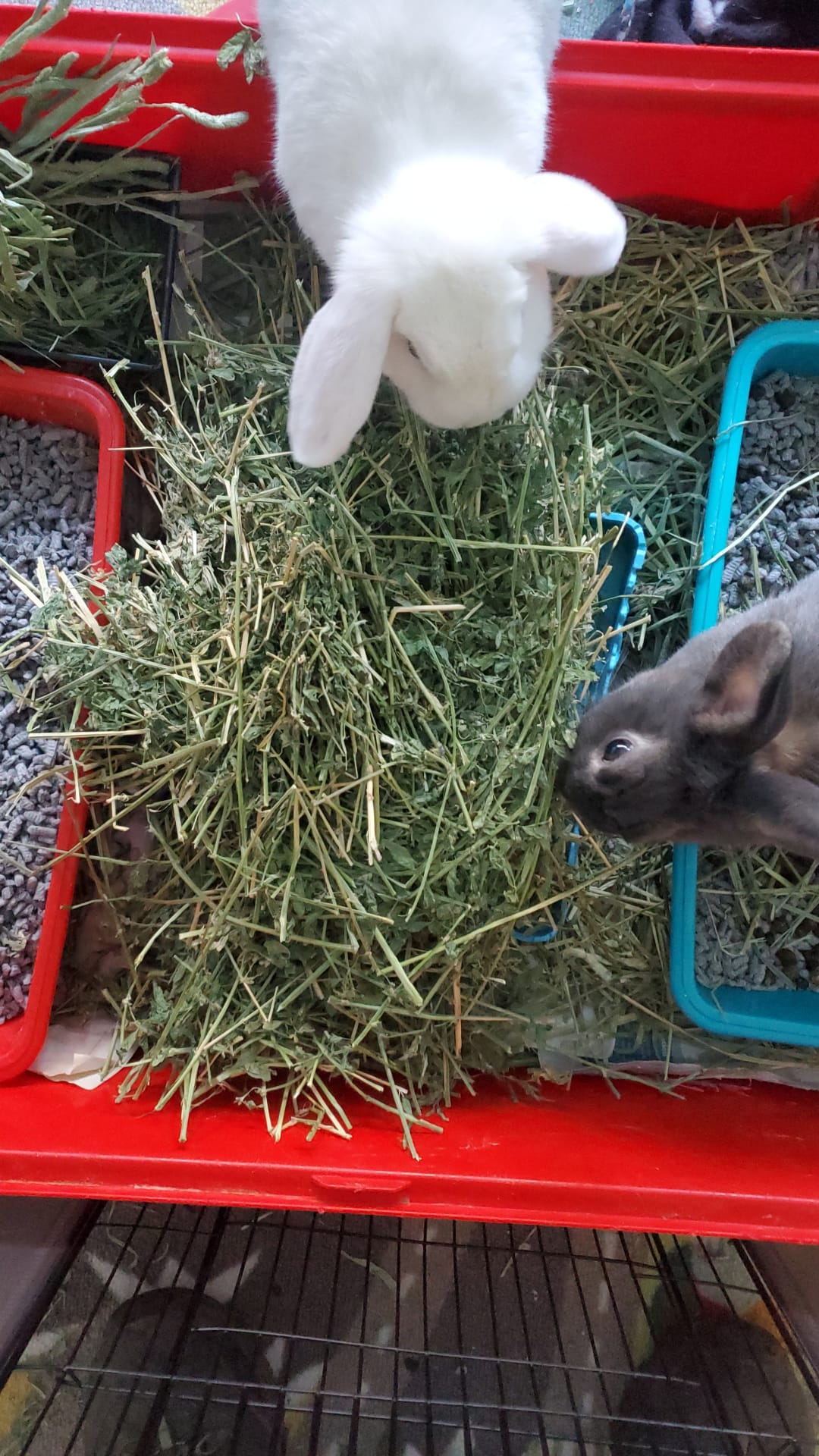
For healthy adult rabbits, the most important part of the diet is good-quality hay or suitable grass.
The RSPCA rabbit diet guide explains that an appropriate adult diet consists mainly of hay or grass, alongside suitable leafy greens and a smaller amount of rabbit pellets.
Hay is essential
Rabbits need access to good-quality feeding hay or appropriate grass throughout the day and night.
The fibre supports healthy digestion, normal feeding behaviour, and dental wear.
A rabbit’s teeth grow continuously.
Insufficient appropriate chewing can contribute to serious dental problems.
Hay should always be accessible, clean and free from mould.
Don’t restrict hay simply because you’re concerned about waste.
What about pellets?
Pellets can provide additional nutrients, but they should not replace hay.
The correct amount depends on the rabbit’s age, weight, health and diet.
I’d use guidance from a rabbit-experienced vet rather than giving every rabbit the same quantity.
Young rabbits, pregnant rabbits and those with medical conditions may have different feeding requirements.
Fresh greens
Suitable leafy greens and herbs can form part of the diet.
However, introduce unfamiliar foods carefully and avoid sudden dietary changes.
Not every plant or vegetable is safe.
Check reliable rabbit-specific guidance before offering something new.
What about carrots and fruit?
Carrots and fruit are not everyday substitutes for hay and suitable greens.
They can be high in sugar and should be offered only in appropriate small amounts, where suitable.
Don’t feed large quantities simply because rabbits enjoy them.
Fresh water
Rabbits must have fresh drinking water available at all times.
I generally prefer suitable, heavy water bowls because they’re straightforward to check, clean and refill.
If your rabbits also use a bottle, check that the nozzle works properly.
A full bottle doesn’t guarantee that water is actually coming out.
What equipment do you really need for rabbits?
You don’t need to buy every rabbit product advertised online.
I’d spend the money on suitable accommodation and good-quality care before decorative accessories.
The essentials include:
- A large, secure living area.
- Comfortable shelter and hiding places.
- Good-quality hay.
- Suitable rabbit pellets.
- Appropriate fresh foods.
- Fresh drinking water.
- Stable bowls.
- Large, suitable litter trays.
- Rabbit-safe substrate and cleaning supplies.
- Safe enrichment.
- A secure carrier for veterinary visits.
- A suitable thermometer where temperature monitoring is needed.
Choosing a feeding or water bowl
A heavy ceramic bowl can be practical because it’s more difficult to knock over than a lightweight plastic one.
One option already included in my approved product register is the Rosewood stoneware feeding bowl on Amazon UK.
Check its dimensions, weight and suitability before purchasing. It must be large enough and stable enough for your rabbits.
You may need separate or larger water bowls.
Choosing a litter tray
A large litter tray can make cleaning easier and provide a suitable place for rabbits to toilet.
Choose a tray with enough space for the animals using it and an entrance they can comfortably manage.
Use appropriate rabbit-safe litter or substrate, rather than assuming ordinary clumping cat litter is suitable.
An option from my existing rabbit-care recommendations is this rabbit litter tray on Amazon UK.
Check the current listing for size, materials and suitability.
What about toys?
Simple enrichment can be very useful.
Depending on your rabbits and the materials involved, you might use:
- Suitable cardboard hides.
- Hay-filled cardboard tubes.
- Safe tunnels.
- Foraging opportunities.
- Appropriate untreated willow items.
- Digging boxes.
- Scattering part of the normal food allowance.
- Rearranging safe enrichment occasionally.
Supervise unfamiliar items and remove anything damaged or potentially dangerous.
You don’t need to spend a fortune to give rabbits something enjoyable to do.
For a practical equipment checklist, see my Rabbit Care Essentials Guide. That article focuses on preparing supplies and routines for a pet sitter, but many of the equipment considerations are useful throughout the year.
Rabbits aren’t usually cuddly pets
This is particularly important if you’re considering rabbits for children.
Rabbits are prey animals.
Being lifted off the ground can be frightening, especially when they’re not comfortable with handling.
Some become confident around familiar people and enjoy gentle attention.
Others prefer to sit nearby or approach when they choose.
I’d encourage interactions at ground level.
Sit quietly.
Allow the rabbit to investigate.
Offer suitable food rewards where appropriate.
Let them move away when they want to.
Don’t pursue them around the enclosure or lift them repeatedly for cuddles.
Are rabbits good pets for young children?
They aren’t automatically suitable.
Young children may struggle to understand that a rabbit doesn’t want to be picked up, chased or disturbed while resting.
Rabbits are physically delicate, and frightened animals can scratch or bite.
Adults must remain responsible for care and safe supervision.
The RSPCA’s rabbit welfare advice explains why rabbits are often better suited to households where people appreciate quieter interaction.
A child can enjoy helping with appropriate tasks, but they shouldn’t be expected to provide all the daily care.
How much does it cost to keep rabbits?
More than many prospective owners expect.
And remember, you should normally plan for at least two compatible rabbits.
Before adopting, budget for:
- A suitable large enclosure or adapted room.
- Predator protection where relevant.
- Bedding and litter supplies.
- Good-quality hay.
- Pellets and suitable greens.
- Veterinary consultations.
- Vaccinations.
- Neutering, unless already completed.
- Dental treatment if needed.
- Parasite and flystrike advice.
- Emergency veterinary treatment.
- Insurance or suitable emergency savings.
- Replacement equipment.
- Professional holiday care.
- Changes to accommodation as the rabbits age.
The Rabbit Welfare Association & Fund warns that rabbit ownership can involve substantial lifetime costs, potentially reaching thousands of pounds.
The initial adoption fee may be one of the smaller expenses.
Don’t forget emergency veterinary costs
Rabbits can become seriously unwell very quickly.
Some require urgent treatment outside normal opening hours.
Before getting rabbits, find out which local veterinary practice has experience treating them and what emergency arrangements are available.
I’d also investigate suitable insurance and what it does or doesn’t cover.
You don’t want to discover the cost of emergency rabbit treatment for the first time when your animal is already unwell.
Why finding a rabbit-experienced vet matters
Not every veterinary practice has the same experience with rabbits.
I’d ask whether the practice regularly treats them and who handles rabbit emergencies outside normal hours.
Important routine care may include:
- General health examinations.
- Dental assessments.
- Weight and body-condition monitoring.
- Vaccinations.
- Neutering.
- Advice about parasites and flystrike.
- Nail and coat care where necessary.
- Assessment of mobility or other changes.
Rabbit vaccinations in 2026
Rabbits need protection against myxomatosis and rabbit viral haemorrhagic disease, including relevant strains of RVHD.
This is important for indoor rabbits too.
The Rabbit Welfare Association & Fund’s current vaccination guidance also addresses a highly virulent RVHD2 strain and recommends discussing the additional vaccine protection now available.
Its 2026 advice includes two vaccination appointments covering the relevant diseases and strains.
Your vet should confirm the appropriate products, timing, eligibility and current recommendations for your individual rabbits.
Don’t assume that an older vaccination leaflet or an appointment from several years ago reflects the current advice.
Should rabbits be neutered?
Neutering is usually recommended for pet rabbits.
It can prevent unwanted pregnancies, reduce certain health risks and help with compatible social housing.
Unneutered female rabbits have a significant risk of uterine disease.
However, discuss the procedure and timing with a rabbit-experienced vet.
If you adopt an adult bonded pair from a reputable rescue, ask whether they have already been neutered and request the records.
Signs your rabbit may be unwell
Rabbits can hide signs of illness surprisingly well.
That makes everyday observation essential.
I’d want owners to know what is normal for each rabbit:
- How enthusiastically they eat.
- Whether they consume their normal hay.
- Their usual droppings.
- How they move.
- Where they normally rest.
- Whether they approach for food.
- How they interact with their companion.
- Their normal breathing and behaviour.
When should you contact the vet?
Changes that concern me include:
- Refusing food or hay.
- Producing fewer or no droppings.
- Sitting hunched or appearing painful.
- Sudden withdrawal.
- Difficulty breathing.
- Unusual weakness.
- Limping.
- Significant changes in movement.
- Severe diarrhoea.
- Signs of flystrike.
A rabbit who stops eating or producing droppings needs urgent veterinary advice. Don’t wait until the following day.
Difficulty breathing, collapse or suspected flystrike also require emergency veterinary attention.
Never start leftover medication or attempt home treatment without veterinary direction.
The RWAF guide to recognising rabbit emergencies is essential reading for prospective owners.
Where should you get your rabbits?
I’d encourage you to consider a reputable rabbit rescue.
Rescue organisations may have bonded pairs already looking for homes.
They may also be able to provide useful information about:
- Their personalities.
- Known health concerns.
- Vaccination history.
- Neutering.
- Existing companionship.
- Preferred food.
- Their current accommodation.
- Handling preferences.
- Whether they’re suitable for your household.
An established bonded pair can help avoid the difficulties of attempting to introduce two unfamiliar rabbits yourself.
Questions to ask before adopting
I would ask:
- Are the rabbits already bonded?
- Have they been neutered?
- What vaccinations have they received?
- Are there any dental or digestive health concerns?
- What do they normally eat?
- How do they respond to handling?
- What accommodation are they used to?
- Do they have any ongoing medication?
- What are their normal personalities and routines?
- What support is available after adoption?
Don’t rush into collecting rabbits because they look appealing.
Take time to make sure your home is ready.
Your rabbits’ first few days at home
Moving to a new home can be unsettling.
Keep things manageable.
Before they arrive
Prepare the entire living area, not just a temporary cage.
Have familiar food and hay ready, along with water, litter trays and hiding spaces.
Make sure doors and enclosure catches are secure.
Choose a suitable veterinary practice and keep the emergency number available.
When they arrive
Allow your rabbits time to explore their prepared environment.
Avoid unnecessary visitors and repeated handling.
Keep established bonded companions together.
Don’t introduce unfamiliar food immediately unless advised by the rescue or vet.
Observe without constantly interfering.
During the first week
Concentrate on:
- Normal eating.
- Drinking.
- Droppings.
- Comfortable movement.
- Settling with their companion.
- Gradually becoming familiar with you.
- Learning where their hiding places are.
- Maintaining predictable routines.
You don’t need to introduce every toy or activity straight away.
A safe, calm start is more important.
If either rabbit appears unwell, contact your vet rather than assuming they’re simply adjusting to the move.
How much daily work do rabbits need?
Rabbits require care every day.
Not just when somebody remembers to visit the garden.
A practical routine might include:
Morning
- Observe both rabbits.
- Check appetite and droppings.
- Refresh water.
- Replenish hay.
- Provide agreed food.
- Spot-clean soiled areas.
- Check accommodation security and temperature.
During the day
- Make sure suitable hay and water remain available.
- Check the living environment.
- Observe activity and behaviour.
- Provide safe opportunities for exploration and enrichment.
Evening
- Check each rabbit again.
- Refresh hay and water as necessary.
- Follow the normal feeding routine.
- Inspect the enclosure.
- Check for soiling or other health concerns.
- Make sure everything is secure for the night.
Some rabbits need more frequent attention because of their health, age, housing or weather conditions.
You also need to plan regular deeper cleaning and maintenance.
This isn’t a responsibility that can simply be ignored over a weekend.
What happens when you go on holiday?
This is something I’d arrange before adopting rabbits.
Rabbits shouldn’t be left alone for several days with extra food and a large water container.
Water supplies can fail.
Food may be spilt or spoiled.
A rabbit may stop eating.
Temperature and housing conditions can change.
An animal that becomes unwell may need urgent help.
Home visits or boarding?
Many rabbits benefit from remaining in familiar accommodation with their bonded companion.
However, suitable specialist boarding may be appropriate in certain circumstances.
The important thing is ensuring the animals receive competent, reliable care and appropriate observation.
For routine home care, regular visits are essential, and twice-daily checks are often preferable, especially in hot weather or where health risks require closer monitoring.
My small-animal home visits in Finchley
I offer Small Animal Care in Finchley for suitable rabbits, guinea pigs and other small pets.
Depending on the agreed routine, visits may include:
- Feeding and fresh hay.
- Drinking-water checks.
- Basic litter and enclosure care.
- Monitoring normal eating and droppings.
- Observing movement and behaviour.
- Checking environmental conditions.
- Straightforward medication support where suitable and agreed.
- Photographs and updates.
My standard small-animal visit is £15, or £25 total for two standard visits on the same day. More involved care may require additional time and an agreed charge.
Bookings depend on your postcode, the animals’ needs and availability.
For the full preparation checklist, read my Rabbit Holiday Care Essentials and Rabbit Holiday Care FAQs.
Preparing your home for rabbits in Finchley
Whether you live in East Finchley, Finchley Central, North Finchley or Muswell Hill, the main considerations are the same.
Space, safety, security, suitable companionship and a manageable care routine.
Before adopting, check:
- Do I genuinely have enough space?
- Are the rabbits protected from predators?
- Are electrical cables and toxic plants out of reach?
- Can they move comfortably on the flooring?
- Is the accommodation secure?
- Are there suitable hiding places?
- Can they remain comfortable in hot and cold weather?
- Can I safely separate them from dogs or cats?
- Is there a vet experienced with rabbits I can use?
- Who will care for them when I’m away?
I also offer a Pet and Home Readiness Visit.
The standard visit costs £75 per household and includes up to 60 minutes at home and a personalised written checklist.
It can help you review practical pet-care routines, obvious household hazards, equipment, access and emergency arrangements.
It is not a specialist rabbit housing certification, veterinary assessment or professional property inspection.
Frequently asked questions about getting rabbits
Are rabbits good first pets?
They can suit committed owners who understand their needs, but they’re not low-maintenance pets. Rabbits require companionship, generous living space, suitable food, regular veterinary care and daily observation.
Should rabbits be kept in pairs?
Yes, rabbits should normally live with at least one compatible rabbit. A suitably bonded, neutered pair is often a good starting point.
Can I keep a rabbit with a guinea pig?
No. Rabbits and guinea pigs have different social, dietary and health requirements and shouldn’t be housed together as companions.
How big should a rabbit enclosure be?
RWAF recommends at least one continuous area measuring 3 metres by 2 metres by 1 metre high for two average-sized rabbits. Bigger rabbits or groups may need more space.
Can rabbits live indoors?
Yes. Indoor rabbits need adequate space, secure arrangements, suitable flooring, safe hiding places and protection from hazards such as electrical cables and toxic plants.
Do rabbits need vaccinations if they never go outside?
Yes. Indoor rabbits can still catch serious infectious diseases. Ask a rabbit-experienced vet about the current vaccination schedule and protection against relevant strains.
Do rabbits enjoy being cuddled?
Some enjoy gentle attention, but many dislike being picked up. Let them approach voluntarily, and interact at ground level when possible.
Are rabbits suitable pets for children?
Not automatically. Rabbits are delicate and require knowledgeable adult care and supervision. Young children may find it difficult to understand their need for space and gentle handling.
How long do rabbits live?
Well-cared-for rabbits can live around eight to twelve years, and some live longer. That makes them a long-term commitment.
Can rabbits be left alone over a weekend?
No. They need appropriate daily care and physical welfare checks. Regular visits should include observing eating, droppings, behaviour and environmental conditions.
What happens if my rabbit stops eating?
Treat it as urgent and contact a rabbit-experienced vet immediately. Don’t wait until the next scheduled meal or the following morning.
Do I need to buy expensive rabbit toys?
No. Suitable hides, safe foraging, hay, tunnels and simple rabbit-appropriate enrichment may be useful. Adequate space and companionship matter far more than expensive gadgets.
Your first-time rabbit owner checklist
Before bringing rabbits home, make sure you can answer yes to the following:
- I’ve planned for a suitable bonded pair or have specialist advice about an exceptional arrangement.
- I have enough permanently accessible living space.
- I’ve made the accommodation secure and comfortable.
- I understand the importance of unlimited suitable hay.
- I have an appropriate feeding and cleaning routine.
- I’ve found a rabbit-experienced vet.
- I understand vaccination and neutering requirements.
- I can recognise important signs of illness.
- I have suitable emergency savings or insurance.
- I can provide daily care throughout the rabbits’ lives.
- I’ve arranged holiday and emergency backup.
- Everybody in the household understands the responsibilities.
If you can’t yet tick everything, that’s useful information.
It may mean you need more preparation before adopting.
A rabbit deserves more than a small hutch
Rabbits can be fascinating companions.
They have their own personalities, preferences and ways of interacting.
Some are bold and inquisitive.
Others are quieter and prefer to observe before approaching.
Watching a happy pair explore, forage, rest together and enjoy their environment can be a lovely experience.
But the important thing isn’t how cute they look in a photograph.
It’s whether you can provide the companionship, space, nutrition, veterinary care and daily attention they need.
I’d much rather see somebody spend time preparing properly than rush into getting rabbits because they’re described as easy pets.
If you’re still deciding, visit the New & First Pet Owner Hub and the RWAF New Rabbit Owner Guide.
And if you already have rabbits and need suitable holiday care around Finchley or Muswell Hill, you’re welcome to contact me to discuss their routine.
Del Chambers
Finchley Dog Walker
Professional pet care since 2011
First published: 28 October 2026