Updated September 2026
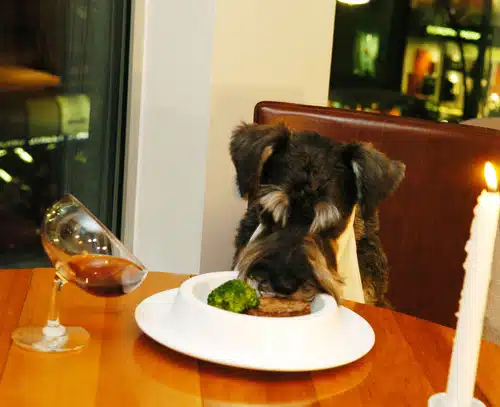
Yes, your dog can have a small taste of Christmas dinner, as long as you choose safe, plain parts.
A little boneless, skinless turkey with a few plain cooked vegetables can suit many healthy dogs. Gravy, stuffing, cooked bones, Christmas pudding, mince pies, chocolate and other festive foods can be unsuitable or genuinely dangerous.
The safest approach is not to make your dog a second human-sized Christmas dinner. Keep their normal complete food as the main meal and, if you want them to join in, add a few suitable festive extras.
PDSA gives similar advice, suggesting small amounts of plain boneless white turkey and suitable unseasoned vegetables while keeping portions modest and adjusting the dog’s normal food accordingly.
For everyday feeding, not Christmas-specific advice, start with my Dog Food & Nutrition Hub.
Key Takeaways
- Dogs can enjoy a small amount of plain turkey and selected vegetables; avoid gravy and festive treats that can be harmful.
- Safe options include plain, cooked turkey, carrots, parsnips, and green beans, kept small and unseasoned.
- Don’t share chocolate, turkey bones, stuffing, or any rich or seasoned foods with your dog.
- Watch for hazards like food wrappers, cooked bones, and bins dogs can access during the festive season.
- For dogs with special dietary needs, stick to their usual food instead of holiday treats to keep them safe.
Table of contents
- What parts of Christmas dinner can dogs eat?
- A simple dog-friendly Christmas dinner
- Can dogs eat Christmas turkey?
- Can dogs eat turkey bones?
- Which Christmas vegetables can dogs eat?
- Can dogs eat roast potatoes?
- Can dogs eat gravy?
- Can dogs eat stuffing?
- What about pigs in blankets?
- Can dogs eat Christmas pudding, Christmas cake or mince pies?
- Are dates toxic to dogs like raisins?
- Can dogs eat chocolate at Christmas?
- What about sugar-free Christmas sweets?
- Can dogs eat nuts at Christmas?
- Can dogs have cheese from the Christmas cheeseboard?
- Can dogs drink alcohol?
- Which Christmas foods are toxic and which are simply best avoided?
- How much Christmas dinner can my dog have?
- What if my dog has a sensitive stomach?
- What if my dog is on a veterinary diet or food trial?
- What can I do instead of giving my dog a big Christmas dinner?
- Can I make my dog homemade Christmas treats instead?
- What should I do if my dog steals Christmas food?
- Christmas bins and leftovers deserve attention too
- What I would do when caring for a dog over Christmas
- Frequently asked questions
- Can dogs eat turkey at Christmas?
- Can dogs eat Brussels sprouts?
- Can dogs eat Christmas gravy?
- Can dogs eat stuffing?
- Can dogs eat pigs in blankets?
- Can dogs eat roast potatoes?
- Can dogs eat Christmas pudding?
- Can dogs eat mince pies?
- Can dogs eat Christmas cake?
- Can dogs have cheese at Christmas?
- Can my dog have a full Christmas dinner?
- Keep your dog’s Christmas dinner simple
What parts of Christmas dinner can dogs eat?
For a healthy dog without dietary restrictions, the simplest dog-friendly Christmas dinner is a small amount of plain meat and dog-safe vegetables.
Suitable choices can include:
- plain, boneless, skinless white turkey
- plain cooked carrots
- plain parsnips
- green beans
- Brussels sprouts
- broccoli
- peas
- cauliflower.
Keep them free from gravy, butter, cooking fat, sauces and seasoning.
PDSA includes these among the parts of a traditional Christmas dinner that can be shared in moderation.
Just because something is safe doesn’t mean your dog needs a large portion.
Think taste rather than feast.
A simple dog-friendly Christmas dinner
I would keep this much simpler than the recipes previously on this page.
Start with your dog’s normal meal.
Then, if the dog is healthy and normally tolerates these foods, you could add a small amount of:
- plain cooked turkey with all bones and skin removed
- a small piece of carrot
- a little green bean or broccoli
- a small amount of another suitable plain vegetable.
That is enough.
You do not need olive oil, gravy, stock, seasoning or a complicated homemade recipe to make Christmas special for your dog.
If you add a meaningful amount of extra food, reduce their normal food appropriately so Christmas lunch does not quietly become an additional full meal.
For more guidance on portions, see How Much Should I Feed My Dog?
Can dogs eat Christmas turkey?
Yes, plain cooked turkey can be suitable for many dogs.
I would use a small amount of:
- thoroughly cooked meat
- with the bones removed
- without the skin
- without gravy or seasoning.
PDSA specifically suggests plain, boneless white turkey as one of the safer parts of a Christmas dinner to share
Turkey skin and very fatty pieces are less useful because Christmas food is already rich enough without deliberately adding more fat.
The portion also matters.
A little turkey used as a festive extra is quite different from filling a large bowl with meat.
Can dogs eat turkey bones?
No. I would not give your dog cooked turkey bones.
Bones can cause choking, obstruction and internal injuries. PDSA lists Christmas meat bones among foods to keep away from pets.
Put carcasses and bones somewhere your dog genuinely cannot reach them.
That includes the kitchen worktop if you have a determined counter-surfer.
The bin deserves attention too. Christmas bins can contain bones, foil, string, food packaging and other things that become much more interesting once nobody is watching.
Which Christmas vegetables can dogs eat?
A few plain vegetables from Christmas dinner can be suitable.
PDSA lists carrots, parsnips, green beans, Brussels sprouts, broccoli, peas, and cauliflower among vegetables that can be shared when served plain.
The important word is plain.
A vegetable cooked with butter, gravy, salt, onion or another ingredient is no longer the same thing as a plain vegetable.
And you don’t need to pile the bowl high because vegetables seem healthy.
They are still extras.
For everyday vegetable guidance, see my updated Dog-Friendly Vegetables Guide.
Can dogs eat roast potatoes?
I would skip the roast potatoes.
Plain cooked potato isn’t the same issue as chocolate or raisins, but Christmas roast potatoes usually contain plenty of fat and sometimes salt, garlic, seasoning, or other additions.
PDSA specifically puts roast potatoes among rich festive foods that are better avoided because of the fat and extra calories rather than describing the potato itself as a Christmas poison.
This distinction matters.
Not every food I recommend avoiding is toxic.
Sometimes it is simply an unnecessary, rich addition when easier choices are available.
Can dogs eat gravy?
I would leave gravy off your dog’s Christmas dinner.
Many gravies contain onion, garlic or related ingredients, which can be toxic to dogs. Others are also salty, fatty or otherwise unnecessary.
Onions, garlic, leeks, shallots and chives can damage dogs’ red blood cells, and the risk does not disappear simply because they have been cooked.
That is why I wouldn’t rely on appearance.
If you didn’t make the gravy yourself and don’t know exactly what is in it, don’t assume it’s safe.
Your dog does not need gravy to enjoy a small piece of turkey.
Can dogs eat stuffing?
I would not share normal Christmas stuffing with your dog.
Stuffing commonly contains onion, garlic, leeks, shallots or related ingredients, along with seasoning and fat.
PDSA specifically warns about stuffing because it may contain onion-family ingredients.
Again, the safest option is simple.
Keep the stuffing on the human plate and give the dog a tiny piece of plain turkey instead.
What about pigs in blankets?
I would leave these off the dog’s plate.
Sausages and bacon are typically rich, fatty and salty. They don’t carry the same poisoning risk as grapes or chocolate, but that doesn’t make them a good Christmas treat.
PDSA specifically groups bacon and pigs in blankets among rich foods that can upset a dog’s stomach and add unnecessary calories.
If you want your dog involved, there is no real advantage in choosing the richest part of the meal.
Can dogs eat Christmas pudding, Christmas cake or mince pies?
No.
Christmas pudding, Christmas cake and mince pies commonly contain raisins, sultanas or currants.
These are dried vine fruits and can cause severe kidney damage in dogs. Animal PoisonLine advises that even relatively small quantities can be a concern.
That also makes foods such as some panettone and stollen potentially dangerous when they contain dried vine fruits.
Keep them well out of reach.
Do not assume wrapping makes food dog-proof either. A determined dog can make surprisingly quick work of a wrapped Christmas present.
For a fuller list, read Foods Toxic to Dogs.

Are dates toxic to dogs like raisins?
Dates should not be grouped with raisins, sultanas and currants.
Raisins, sultanas and currants are dried vine fruits. They are the recognised poisoning concern and can cause kidney injury in dogs.
But they should not be described as the same toxin as raisins.
Can dogs eat chocolate at Christmas?
No.
Chocolate contains methylxanthines, including theobromine, which dogs do not process well.
The risk varies by the type of chocolate, the amount eaten, and the dog’s size. Dark chocolate and cocoa products generally contain more theobromine than milk chocolate.
Animal PoisonLine lists possible effects including agitation, tremors, convulsions and heart problems. (Animal PoisonLine)
Christmas creates plenty of opportunities for dogs to find chocolate:
- Advent calendars
- selection boxes
- wrapped presents
- chocolate decorations
- tubs of chocolates
- desserts
- handbags and guest bedrooms.
If your dog eats chocolate, contact your vet promptly rather than waiting for symptoms.
I have a separate emergency guide here: Chocolate and Dogs – What to Do If They Eat Chocolate
What about sugar-free Christmas sweets?
Check the ingredients carefully.
Some sugar-free products contain xylitol, sometimes labelled as birch sugar.
Xylitol can cause a dangerous drop in blood sugar and liver damage in dogs.
Do not assume that “sugar-free” means safer for a dog.
It can mean the opposite.
Can dogs eat nuts at Christmas?
I would keep the nut bowl away from dogs.
Macadamia nuts are a recognised toxin for dogs and can cause weakness, stiffness, tremors and increased body temperature.
Other nuts should not automatically be labelled toxic.
However, nuts are often fatty, salted or coated, and whole nuts can also present a choking risk.
Your dog does not need them.
Can dogs have cheese from the Christmas cheeseboard?
A tiny amount of plain cheese can be tolerated by some healthy dogs, but it is not something I would add automatically.
Cheese can be high in fat and calories, and some dogs tolerate dairy poorly.
If your dog has never eaten cheese before, Christmas Day isn’t a particularly good time to experiment.
This is another case where “not necessarily poisonous” and “a good idea” are two different things.
A tiny piece of familiar food is enough if you want to include your dog.
Can dogs drink alcohol?
No.
Dogs should not be given beer, wine, spirits, cocktails or food containing significant alcohol.
Animal PoisonLine advises that alcohol can cause wobbliness and drowsiness and, in severe cases, low body temperature, low blood sugar and coma.
Christmas also creates easy accidental access.
Half-finished glasses left on the floor or coffee table can be more relevant than somebody deliberately offering the dog a drink.
Clear them away.
Which Christmas foods are toxic and which are simply best avoided?
This distinction is useful.
| Christmas food | My approach | Why |
|---|---|---|
| Plain boneless turkey | Small amount can be suitable | Simple plain meat |
| Plain carrots and selected vegetables | Small amount can be suitable | Keep unseasoned |
| Gravy | Avoid | May contain onion or garlic and can be rich or salty |
| Stuffing | Avoid | Often contains onion-family ingredients |
| Roast potatoes | Skip | Usually fatty and seasoned |
| Pigs in blankets | Skip | Fatty, salty and unnecessary |
| Cooked turkey bones | Do not give | Choking and internal injury risk |
| Christmas pudding/cake/mince pies | Do not give | Often contain raisins, sultanas or currants |
| Chocolate | Do not give | Theobromine poisoning risk |
| Macadamia nuts | Do not give | Toxic to dogs |
| Other nuts | Best avoided | Often fatty, salty or a choking risk |
| Sugar-free sweets containing xylitol | Do not give | Serious poisoning risk |
| Alcohol | Do not give | Toxic |
| Plain familiar food from the dog’s normal diet | Usually simplest | Keeps routine predictable |
For the wider distinction between safe human foods, unsuitable extras and genuine poisons, see Can Dogs Eat Human Food?
How much Christmas dinner can my dog have?
Much less than a human portion.
A small amount can feel insignificant on our plate while still being a substantial extra for a dog, particularly a small dog.
PDSA advises keeping the Christmas portion small and reducing the dog’s normal food when necessary to account for those extra calories.
Remember that Christmas Day may also involve:
- training treats
- chews
- presents containing food
- snacks from visitors
- food enrichment
- scraps dropped by children
- somebody quietly sharing turkey under the table.
It all counts.
My Healthy Weight and Body Condition in Dogs guide explains why looking at the whole diet matters more than focusing on one meal.
What if my dog has a sensitive stomach?
I would probably skip the Christmas dinner altogether.
Christmas Day is not the time I would choose to test several new foods at once.
Be particularly cautious if your dog:
- has a history of pancreatitis
- has regular digestive problems
- has diagnosed food allergies
- is completing a veterinary food trial
- has diabetes
- has kidney or liver disease
- eats a prescribed veterinary diet
- needs strict weight management
- has previously reacted badly to rich food.
Their familiar normal food is not a disappointing Christmas dinner.
For many dogs, familiarity is exactly what makes it the sensible option.
What if my dog is on a veterinary diet or food trial?
Stick to the diet your veterinary team prescribed unless they tell you otherwise.
A “tiny Christmas treat” can still matter during an elimination diet or when a medical condition requires carefully controlled food.
If you want your dog involved, you may be able to turn some of their approved food into enrichment instead.
My Dog Food Allergies and Intolerances Guide explains why seemingly tiny extras can matter during a food trial.
What can I do instead of giving my dog a big Christmas dinner?
Food is only one way of including your dog.
You could:
- set aside a small portion of their normal food for a sniffing game
- give them a familiar food toy
- go for a calm sniffing walk
- give them quiet time away from visitors
- let them enjoy a familiar chew that you know suits them
- spend some one-to-one time together.
PDSA also suggests toys, puzzle feeders and extra time together as alternatives to loading a dog’s bowl with Christmas food.
My wider Christmas With Dogs Guide covers visitors, decorations, routines, rest and seasonal safety as well as food.
Can I make my dog homemade Christmas treats instead?
Yes, as long as you use suitable ingredients and remember that homemade treats are still extras.
You don’t need to use leftover Christmas pudding, stuffing, or rich roast trimmings just because they would otherwise go to waste.
I already have a dedicated guide with safer seasonal ideas:
Safe Homemade Christmas Dog Treats: Simple Seasonal Recipes
What should I do if my dog steals Christmas food?
First work out what they ate.
If possible, keep the packaging and note:
- the food or product
- the ingredients
- roughly how much is missing
- when it happened
- your dog’s approximate weight.
If the food may contain chocolate, dried vine fruits, onion-family ingredients, xylitol, alcohol or another potential toxin, contact your veterinary practice promptly.
Do not wait for symptoms to appear.
Do not make your dog vomit or give salt water unless a veterinary professional has specifically instructed you to do so.
Animal PoisonLine advises that Christmas food hazards can cause serious illness and identifies chocolate, dried vine fruits, alliums, alcohol and other common foods among the risks.
For the wider first-aid picture, use my Dog Health and First Aid Hub.
Animal PoisonLine Christmas Hazards provides specialist UK poison information.
Christmas bins and leftovers deserve attention too
Often the danger is not the food you deliberately give the dog.
It is what becomes accessible afterwards.
Christmas rubbish can contain:
- cooked bones
- foil
- roasting string
- wrappers
- chocolate
- Christmas pudding
- moulding leftovers
- cocktail sticks
- food-soaked paper
- plastic packaging.
Dogs Trust recommends keeping festive food and bins secure because curious dogs can find toxic foods very quickly during a busy Christmas gathering.
Clear food away before everyone settles down and forgets what is still sitting at dog height.
What I would do when caring for a dog over Christmas
If I am house sitting, I do not decide that Christmas is a reason to redesign the dog’s diet.
I follow the owner’s normal feeding instructions.
If an owner has specifically left an approved Christmas treat or asked me to give their dog a particular safe extra, that is different.
Otherwise, I would much rather keep:
- normal food
- normal portion
- familiar treats
- usual meal times
- familiar walking and resting routine.
Christmas already brings plenty of changes.
Visitors, decorations, different smells, food everywhere and unusual timings can be enough without changing the dog’s diet as well.
If you are planning to be away during Christmas or another holiday, you can read about my House Sitting Service in Finchley and North London.
Frequently asked questions
Can dogs eat turkey at Christmas?
Yes. A small amount of plain, thoroughly cooked, boneless and skinless turkey can be suitable for many healthy dogs.
Keep it free from gravy and seasoning.
Can dogs eat Brussels sprouts?
Plain cooked Brussels sprouts can be shared in small amounts.
There is no need to give a large serving, and some dogs may develop wind after eating vegetables they are not used to.
Can dogs eat Christmas gravy?
I would leave gravy off the dog’s meal.
It may contain onion, garlic or related ingredients and can also be salty and fatty.
Can dogs eat stuffing?
Normal Christmas stuffing is best avoided because it frequently contains onion, garlic or other unsuitable ingredients.
Can dogs eat pigs in blankets?
I would not offer them.
They are usually high in fat and salt and provide little benefit when a piece of plain turkey is available instead.
Can dogs eat roast potatoes?
It’s best to skip Christmas roast potatoes because they are usually cooked with substantial fat and may contain seasoning.
Can dogs eat Christmas pudding?
No.
Christmas pudding normally contains raisins, sultanas or currants, which can cause kidney injury in dogs.
Can dogs eat mince pies?
No.
Traditional mincemeat contains dried vine fruits such as raisins, sultanas and currants.
Can dogs eat Christmas cake?
No.
Traditional Christmas cake usually contains dried vine fruits, and some recipes also contain alcohol.
Can dogs have cheese at Christmas?
Some healthy dogs tolerate a tiny piece of plain cheese, but it is high in calories and fat and does not need to be added to the Christmas meal.
Can my dog have a full Christmas dinner?
I would not give a dog a human-sized roast dinner.
A small portion of plain turkey and suitable vegetables alongside an adjusted amount of normal food is much more sensible.
Keep your dog’s Christmas dinner simple
Your dog does not need gravy, stuffing, pigs in blankets and a slice of Christmas pudding to feel included.
For most healthy dogs, a few small pieces of plain turkey and suitable vegetables are plenty.
The important things are:
- keep portions small
- remove all cooked bones
- keep turkey plain
- avoid stuffing and gravy
- keep raisins, sultanas, currants and grapes away
- keep chocolate inaccessible
- check sugar-free products for xylitol
- keep alcohol away from dogs
- account for treats and other extras
- stick to your dog’s normal diet if it has medical or digestive problems.
And if your dog eats something potentially toxic, call your veterinary practice rather than waiting for symptoms.
For more on feeding your dog throughout the year, return to my Dog Food & Nutrition Hub.
Veterinary Disclaimer
I am a professional dog walker and pet sitter, not a veterinary surgeon or veterinary nutritionist. This guide provides general information for dog owners. Individual dogs may have medical, digestive or dietary requirements that make otherwise suitable foods inappropriate. If your dog eats something potentially toxic or becomes unwell, contact your veterinary practice promptly.