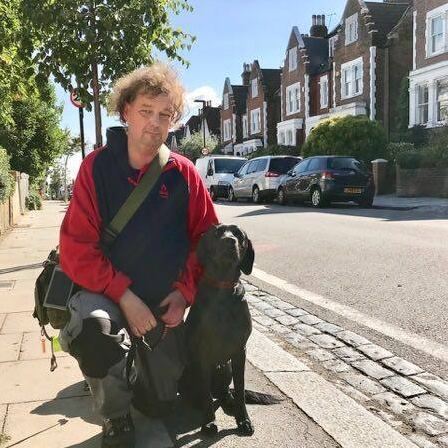
Updated October 2026 | By Derek (Del) Chambers, Finchley Dog Walker
A new year is a good opportunity to check that everything is in place for your dog’s health, safety and everyday care.
I’m not particularly interested in making elaborate New Year’s resolutions for dogs. They don’t know it’s January, and they certainly don’t need us to suddenly change everything about their lives.
But there are a few practical jobs that are easy to overlook during a busy year.
Is your dog’s microchip information still correct? When did you last check their identification tag? Are their vaccinations and parasite-prevention arrangements up to date? What would happen if you were unexpectedly taken into hospital and someone else needed to look after them?
I’ve been walking and caring for dogs professionally around Finchley and Muswell Hill since 2011. Over the years, I’ve seen how much easier life can be when owners have the important details organised before they’re needed.
This checklist isn’t about buying lots of new products or making unrealistic promises.
It’s about twelve straightforward checks that can help you start the year feeling better prepared.
And if you’re reading this in April or September rather than January, don’t worry. They’re worth doing at any time.
Quick answer: What should dog owners check at the start of a new year?
My twelve priorities are:
- Check your dog’s microchip registration.
- Inspect their collar and identification tag.
- Review vaccinations and parasite prevention with your vet.
- Arrange appropriate health and dental checks.
- Check weight, body condition and feeding.
- Review pet insurance or emergency savings.
- Inspect your home, garden and walking equipment.
- Review exercise, enrichment and rest.
- Update medication records and care instructions.
- Prepare an emergency pet-care plan.
- Arrange holiday pet care in good time.
- Review seasonal risks and choose one realistic improvement.
You don’t need to complete everything in one afternoon. Start with the important safety checks and work through the rest over the following days.
1. Check your dog’s microchip registration
This is probably the first thing I’d encourage every dog owner to do.
A microchip is useful only when the registered details are accurate.
If you’ve moved house, changed your mobile number or adopted a rescue dog, your dog’s registered details may need updating.
Check:
- The microchip number.
- Which approved database holds the registration.
- Your current telephone number.
- Your current home address.
- Whether the registered keeper’s details are correct.
- Any relevant alternative contact details supported by the database.
In England, dogs generally must be microchipped by eight weeks of age and registered on an approved database, with certain exemptions and special circumstances.
Rules can differ between UK nations, so check the legislation applicable where your dog is kept.
A microchip isn’t a GPS tracker. It won’t tell you where your dog is. It allows an authorised person with a scanner to retrieve the chip number and contact the registered keeper through the database.
For more detail, read my Guide to Dog Microchips and Identification.
You can check the official requirements through GOV.UK: Get Your Dog or Cat Microchipped.
Your New Year action: Find your dog’s microchip paperwork and confirm the registered contact details are correct.
2. Check your dog’s collar and identification tag
Microchipping does not remove the need for a suitable identification tag.
In England, dogs generally must wear a collar bearing their owner’s name and address when in a highway or public place, subject to specified exemptions.
A telephone number is a sensible addition, but it does not replace the required name and address.
I would check that the tag:
- Is still securely attached.
- Is readable.
- Displays the necessary information.
- Doesn’t contain an outdated telephone number or address.
- Is attached to a suitable collar.
Some owners prefer the identification to be engraved directly onto a collar fitting rather than using a hanging tag. Whatever arrangement you choose, make sure it meets the applicable requirements and remains readable.
You may also want to check whether your dog’s photograph is recent enough to help identify them if they become lost.
My Dog Theft Prevention Guide covers further precautions around gardens, shopping and everyday walks.
Your New Year action: Read the tag rather than assuming it still says what you think it says.
3. Review vaccinations and parasite prevention
Preventive healthcare should be appropriate to your dog, rather than based on a generic checklist copied from the internet.
Look through your dog’s veterinary records and check when their next vaccination assessment or appointment is due.
Your vet can advise which vaccinations are appropriate and how often boosters or other preventive measures are needed.
The same applies to flea, tick, worm and lungworm prevention.
The right approach depends on factors such as:
- Your dog’s age.
- Their medical history.
- Their normal activities.
- Where you live and travel.
- Whether they scavenge or hunt.
- Contact with other animals.
- The presence of children or vulnerable people in the household.
- Which parasite products are safe and effective for the individual dog.
There isn’t a blanket legal requirement for every pet dog in the UK to be wormed on the same fixed schedule.
Don’t give extra doses or combine parasite products simply because you want to be thorough. Some combinations can be harmful.
The PDSA Guide to Choosing Flea and Worm Treatments explains the importance of considering the individual dog’s risks.
Your New Year action: Check your records and ask your vet whether the current preventive-care plan is still suitable.
4. Arrange a health and dental check
When was the last time your dog had a general health assessment?
For many dogs, a regular veterinary health check is a sensible opportunity to pick up changes that may be difficult to notice at home.
The frequency should reflect your dog’s age and health. Puppies, older dogs and those with ongoing conditions may need more frequent appointments.
Useful things to discuss include:
- Weight and body condition.
- Dental health.
- Mobility and joint comfort.
- Skin, coat and ears.
- Changes in thirst or appetite.
- Hearing and vision.
- Behaviour or sleeping patterns.
- Medication and long-term conditions.
- Any lumps or unusual changes.
Dental health is particularly easy to overlook.
Bad breath, difficulty chewing, dropping food or reluctance to have the mouth touched can indicate a problem.
Don’t try to scrape away dental deposits at home using sharp tools.
I also recommend mentioning changes that seem small.
A dog who has become slower on walks or less enthusiastic about climbing stairs may need a health assessment rather than simply less exercise.
See PDSA: Healthcare for Your Dog for independent advice.
Your New Year action: Check when the next health appointment is due and write down anything you’ve noticed.
5. Check weight, body condition and feeding
A dog’s weight can change gradually, particularly as their age, activity or health changes.
The new year is a useful time to check whether your dog’s food intake still suits their needs.
Don’t rely only on the number shown on the scales.
Body condition matters too.
Depending on the dog’s breed and build, a healthy body condition will usually mean you can feel the ribs without excessive fat covering, see a waist from above and notice an abdominal tuck from the side.
Your vet or veterinary nurse can show you how to assess your individual dog.
Consider:
- Whether their weight has changed.
- Whether you can feel their ribs appropriately.
- Whether their food is suitable for their life stage.
- Whether portions are measured consistently.
- How many treats, chews and extras they receive.
- Whether health conditions require a special diet.
- Whether exercise levels have changed.
If your dog is gaining or losing weight unexpectedly, don’t make drastic dietary changes without advice.
My Dog Food and Nutrition Hub explains how to assess food labels, complete diets and everyday feeding choices.
The PDSA Guide to Keeping Your Dog’s Weight in Check also explains body condition scoring.
Your New Year action: Record your dog’s current weight and ask your vet what a healthy body condition looks like for them.
6. Review pet insurance and emergency savings
Nobody enjoys thinking about unexpected veterinary bills.
But the financial arrangements are worth checking before something happens.
If you have pet insurance, find the policy and read more than the headline cover amount.
Look at:
- The renewal date.
- Annual and condition-specific limits.
- Excess payments.
- Any percentage contribution required as your dog ages.
- Whether ongoing conditions remain covered.
- Exclusions.
- Dental cover and its conditions.
- Any change to the premium.
- Whether contact and payment details are correct.
Different types of pet insurance work differently.
A low premium doesn’t automatically mean a policy provides suitable protection.
If you don’t have insurance, consider whether you have realistic arrangements to pay for unexpected veterinary treatment.
Insurance is not a legal requirement for ordinary pet dog ownership in the UK, but planning for veterinary expenses is important.
I would also keep your regular vet’s number and nearest emergency veterinary service details easy to find.
Your New Year action: Put the policy renewal date in your diary and check you understand the cover you already have.
7. Check your home, garden and walking equipment
Safety checks don’t have to be complicated.
I would start by walking around your garden and looking at it from your dog’s point of view.
Is there a gap beneath the gate?
Has a fence panel become loose?
Could your dog squeeze through somewhere they couldn’t reach last year?
Are chemicals, tools and harmful plants safely managed?
Check:
- Fences and gates.
- Door and window security.
- Garden boundaries.
- Rubbish and compost access.
- Cleaning products and medicines.
- Items that could be swallowed.
- Suitable areas for the dog to rest.
- Collar, harness and lead condition.
I check leads and harnesses regularly because everyday wear can be easy to miss.
Look for damaged stitching, weakened clips, fraying, rubbing or changes in fit.
A harness that fitted well last year may no longer be right if your dog has grown, lost weight or developed mobility problems.
The perfi
I use comfortable, suitable walking equipment and dont ‘t recommend choke chains, prong collars, electric shock collars or retractable leads.
Useful equipment
For dogs who benefit from a fitted harness, you can explore the PerfectFit Harness manufacturer’s website.
That is a manufacturer link, not a verified affiliate link.
If you’re reviewing other suitable walking and enrichment equipment, use my established Dog Enrichment Toys and Equipment Guide, which includes selected Amazon affiliate recommendations.
There is no need to replace equipment that is still safe and fits correctly.
Your New Year action: Walk your garden boundary, inspect the walking equipment and replace only what genuinely needs replacing.
8. Review exercise, enrichment and rest
The start of the year can also be a good time to think about whether your dog’s normal activities still suit them.
But I wouldn’t automatically increase exercise simply because it’s January.
A longer walk isn’t always better.
Some dogs need more suitable movement, while others may benefit from slower walks, sniffing opportunities and more rest.
Consider whether your dog has:
- Appropriate opportunities for exercise.
- Time to sniff and explore.
- Enjoyable play or simple training.
- A comfortable resting place.
- Enough undisturbed sleep.
- Walks suited to their age and health.
- An environment they feel comfortable in.
A nervous rescue dog may find quiet, familiar routes more suitable than crowded parks.
An older dog may still enjoy walks, but need adjustments for mobility or comfort.
A puppy needs age-appropriate experiences and plenty of rest.
My Mental Stimulation for Dogs: Exercise, Enrichment and Rest guide explains how to find a sensible balance.
If you want to build a more consistent daily routine, read New Year, New Routine: Creating Healthy Habits for Your Dog.
That is a separate guide focusing on daily habits, rather than this annual care checklist.
Your New Year action: Choose one small, appropriate improvement rather than changing your dog’s entire routine overnight.
9. Update medication records and care instructions
If your dog takes prescribed medication, check that the information is current and easy to find.
That includes:
- The medication name.
- The prescribed dose and timing.
- Any administration instructions.
- The prescribing veterinary practice.
- The next prescription or review date.
- Storage requirements.
- What to do if a dose is missed, according to your vet.
- Any important medical history.
Never change a dose or stop medication without appropriate veterinary advice.
I would also keep the dog’s feeding, walking and behavioural information written down, particularly if somebody else sometimes helps care for them.
For example, does your dog need a particular harness?
Are they nervous around unfamiliar dogs?
Do they have a specific bedtime routine?
Are there foods they must avoid?
These details matter when a family member, friend or professional pet sitter takes over their care.
Your New Year action: Update your dog’s care notes and remove obsolete instructions.
10. Prepare an emergency pet-care plan
This is one of the most useful things an owner can do, and it’s surprisingly easy to postpone.
What would happen if you were suddenly taken ill, had to stay in hospital or couldn’t get home?
Would somebody know there was a dog waiting for them?
Would they have a key?
Would they know what to feed your dog, who the vet is and whether medication is needed?
I recommend making a simple emergency pet-care plan that includes:
- Your dog’s name and normal location.
- A trusted emergency contact.
- Details of a second contact where possible.
- Your vet’s name and telephone number.
- Feeding and medication instructions.
- The dog’s normal care routine.
- Important behavioural information.
- How an authorised carer can access the home.
- Your wishes about contacting a professional sitter.
If you have cats, rabbits or other pets, make sure the plan covers them too.
I’ve written a fuller guide called Emergency Pet Care Plan: Who Will Care for Your Pets?.
It’s worth reading even if you’re young, healthy and don’t expect to need emergency care.
Being prepared isn’t pessimistic. It’s responsible.
Your New Year action: Decide who would care for your pets in an unexpected emergency and make sure they know the arrangements.
11. Plan holidays and pet care early
January is also when many households start thinking about summer holidays, weekends away and family commitments.
If your dog will need professional care, it’s worth making enquiries before travel arrangements are finalised.
Not every dog is comfortable in kennels or boarding.
Some nervous rescue dogs, senior pets and multi-pet households may be happier remaining in familiar surroundings with an appropriate carer.
I offer House Sitting in Finchley and North London, staying overnight in the client’s home and following the pets’ established routines.
This can include dogs, cats and suitable small animals from the same household.
The service covers Finchley, Muswell Hill, Highgate, Whetstone and selected nearby areas, subject to availability and suitability.
A house-sitting arrangement needs to take account of the dog’s normal routine, how long they can comfortably be left, medication needs, and whether standard overnight or more continuous care is appropriate.
I only accept one house-sitting household for the same dates.
If you’re planning a holiday, contact Finchley Dog Walker with your dates, postcode and a brief outline of your pets’ needs.
Your New Year action: Put important travel dates into your calendar and arrange appropriate pet care before booking assumptions become a problem.
12. Plan for seasonal risks and choose one realistic improvement
The final check is about looking ahead.
Different times of year bring different considerations.
In spring, you may need to pay more attention to emerging plants and garden treatments.
Summer can bring heat, hot surfaces and water hazards.
Autumn often means darker walks, falling leaves, grass and woodland hazards, and fireworks.
Winter can bring icy paths, road salt, festive food and changes to normal routines.
I don’t believe pet owners need to become anxious about every possible hazard.
But understanding what to watch for makes sensible planning easier.
My Seasonal Pet Safety Hub brings together practical advice for dogs, cats, rabbits and other household pets throughout the year.
Choose one small improvement
You don’t need twelve resolutions.
Choose one improvement that will make a meaningful difference to your dog’s everyday life.
Perhaps you will:
- Allow more time for sniffing during walks.
- Start checking your dog’s paws after walks through long grass.
- Improve their resting area.
- Keep a more consistent medication record.
- Practise a simple reward-based skill.
- Review their body condition with your vet.
- Put an emergency care arrangement in place.
Small, realistic changes are more likely to become habits than ambitious resolutions that last only a week.
Your New Year action: Choose one useful change and review how it is working after a month.
Printable-style New Year dog care checklist
You can copy this checklist into your notes, print the page or tick the items off as you complete them.
- Microchip details checked and updated.
- Collar and identification tag checked.
- Vaccination and parasite-prevention plan reviewed.
- Veterinary and dental care appointments considered.
- Weight, body condition and food portions reviewed.
- Pet insurance or emergency savings checked.
- Garden, home security and walking equipment inspected.
- Exercise, enrichment and rest reviewed.
- Medication records and care notes updated.
- Emergency pet-care contacts confirmed.
- Holiday care requirements planned.
- Seasonal hazards reviewed and one realistic improvement chosen.
Keep important details together
I’d suggest having one folder, either printed or digital, containing your dog’s essential information.
That might include their microchip number, insurance details, veterinary contacts, medication instructions and emergency care arrangements.
Keep sensitive information secure and share it only with the people who genuinely need access.
Your future self, family and pet sitter may be very grateful that you took the time.
Frequently asked questions
What should I check for my dog every January?
Start with microchip details, identification, preventive healthcare, insurance, safety equipment, emergency contacts and any holiday care arrangements. Then consider whether your dog’s exercise, enrichment and rest still suit them.
Does my dog need a vet check every year?
Many adult dogs benefit from regular veterinary health checks, but the appropriate interval depends on age, health and individual needs. Puppies, senior dogs and dogs with ongoing conditions may need more frequent assessments.
Is regular worming a legal requirement in the UK?
There is no general UK law requiring every pet dog to receive routine worm treatment at one universal interval. Certain travel and other specific rules may apply. Ask your vet about prevention suitable for your dog’s risk factors.
Does microchipping replace an identification tag?
No. In England, dogs generally also need a collar displaying the owner’s name and address in public places, subject to specific legal exemptions.
Should I increase my dog’s exercise as a New Year’s resolution?
Not automatically. Exercise should be appropriate for your dog’s age, health and individual needs. Consider sniffing, enrichment, comfort and rest rather than simply walking further.
Do I need pet insurance?
Ordinary pet dog ownership in the UK does not require you to buy pet health insurance. However, it is sensible to consider how you would cover unexpected veterinary expenses, whether through a suitable policy or other financial arrangements.
Should neutering be part of the New Year checklist?
If you have questions about neutering, discuss the benefits, risks and timing with your vet. Decisions depend on the individual dog, and neutering is not a guaranteed solution to behaviour problems.
You can read PDSA’s Dog Neutering Guide.
When should I book a pet sitter for summer holidays?
As soon as your dates and care requirements are reasonably clear. Popular holiday periods can be busy, and a suitable house-sitting arrangement may require a meet-and-greet and detailed care planning.
Final thoughts
I don’t think the start of a new year should mean placing more expectations on our dogs.
They don’t need twelve ambitious resolutions or a completely different routine simply because the calendar has changed.
What they need is appropriate care, familiar people, attention to their health and opportunities to enjoy everyday life.
A few practical checks now can prevent unnecessary problems later.
Make sure their identification is correct.
Check that their healthcare arrangements still suit them.
Think about who would look after them if you couldn’t.
And perhaps give them a little more time to enjoy the interesting smells on their next walk.
For me, that’s a much better way to start the year than trying to change everything at once.
Further reading and trusted sources
Finchley Dog Walker guides
- Dog Microchipping and Identification
- Dog Food and Nutrition Hub
- Dog Enrichment and Rest
- New Year, New Routine
- Emergency Pet Care Plan
- Seasonal Pet Safety Hub
Independent UK references
- GOV.UK: Microchipping Rules
- PDSA: Healthcare for Your Dog
- PDSA: Flea and Worm Treatment Advice
- PDSA: Checking Your Dog’s Weight
- PDSA: Dog Neutering
Veterinary disclaimer: This article provides general dog-care information, not veterinary diagnosis or individual medical advice. Vaccinations, parasite prevention, feeding changes, medication and neutering decisions should be discussed with your veterinary practice.
Originally published January 2017. Updated December 2024. Substantially revised October 2026.